 Back
BackChapter 1: The Microbial World and You – Foundations of Microbiology
Study Guide - Smart Notes
 Tailored notes based on your materials, expanded with key definitions, examples, and context.
Introduction to Microbiology
Definition and Scope
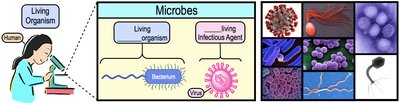
Microbiology is the scientific study of microbes, which includes both living organisms and infectious agents too small to be seen by the naked eye. The field encompasses the study of bacteria, archaea, fungi, algae, protozoa, viruses, viroids, and prions.
Microorganism: A living organism too small to be seen without a microscope.
Microbe: Includes both microorganisms and non-living infectious agents (e.g., viruses).
Cell: The smallest, most basic unit of life.
Organism: Any individual form of life, unicellular or multicellular.
Discovery of Microorganisms
Historical Milestones
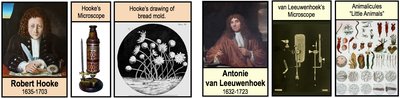
The existence of microorganisms was first revealed between 1665 and 1674. Robert Hooke and Antonie van Leeuwenhoek were pioneers in visualizing and describing microbes.
Robert Hooke (1665): First to visualize and depict a microorganism (bread mold Mucor), describing it as a "microscopical mushroom."
Antonie van Leeuwenhoek (1674): Used a microscope to observe protozoa and bacteria, which he called "animalicules."
Taxonomy: Classification of Life
Principles of Taxonomy
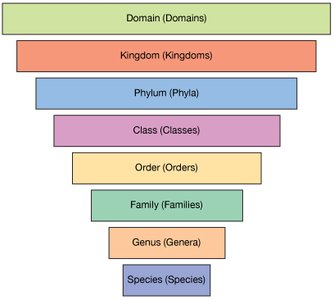
Taxonomy is the branch of science concerned with classifying, identifying, and naming organisms. It uses hierarchical categories to organize all life forms from the most inclusive (domain) to the least inclusive (species).
Taxonomy: The science of classification, identification, and naming of organisms.
Hierarchy: Domain > Kingdom > Phylum > Class > Order > Family > Genus > Species
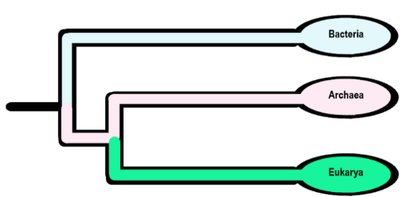
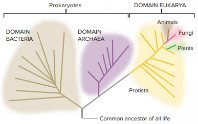
The Three Domains of Life
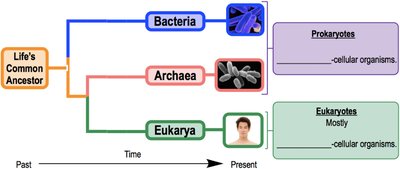
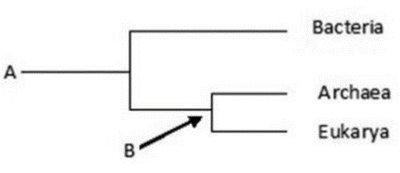
All life is classified into three domains based on cellular organization and genetic differences:
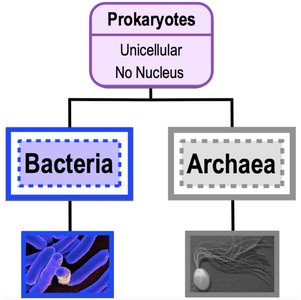
Bacteria: Prokaryotic cells, no nucleus.
Archaea: Prokaryotic cells, distinct from bacteria, often extremophiles.
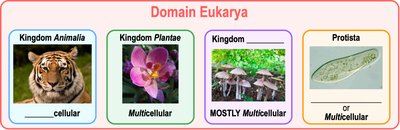
Eukarya: Eukaryotic cells, contain a nucleus; includes plants, animals, fungi, and protists.
Kingdoms of the Eukarya Domain
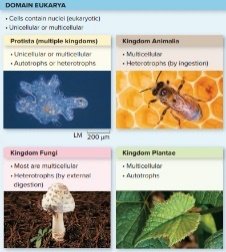
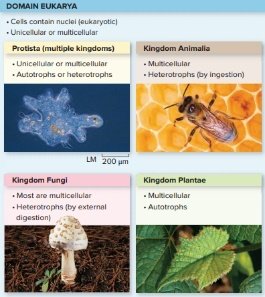
The domain Eukarya is subdivided into four main kingdoms:
Protista: Mostly unicellular, includes algae and protozoa.
Fungi: Unicellular or multicellular, heterotrophic by external digestion.
Plantae: Multicellular, autotrophic (photosynthetic).
Animalia: Multicellular, heterotrophic by ingestion.
Scientific Naming (Binomial Nomenclature)
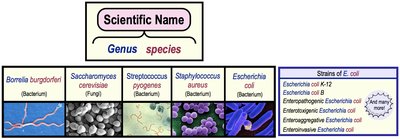
Developed by Carl Linnaeus, the binomial system assigns each organism a two-part Latin name: genus (capitalized) and species (lowercase), both italicized or underlined. Strains are genetic variants within a species.
Example: Staphylococcus aureus
Strain: Genetic variant within a species (e.g., Escherichia coli K-12)
Members of the Microbial World
Overview
The microbial world includes a vast diversity of organisms, both cellular and acellular. Cellular microbes are divided into prokaryotes (bacteria and archaea) and eukaryotes (fungi, algae, protozoa, helminths). Acellular infectious agents include viruses, viroids, and prions.
Bacteria
Bacteria are unicellular prokaryotes, typically 0.5–10 µm in length, with diverse shapes. They reproduce by binary fission and have cell walls made of peptidoglycan. Bacteria are among the most abundant and diverse organisms on Earth and are major inhabitants of the human microbiome.
Archaea
Archaea are unicellular prokaryotes with unique rRNA sequences and cell walls lacking peptidoglycan. Many are extremophiles, thriving in environments with extreme temperature, salinity, or acidity, but some live in moderate environments.
Eukarya
Eukaryotes have membrane-bound nuclei and can be unicellular or multicellular. Microbiologists study microscopic eukaryotes such as fungi, algae, protozoa, and helminths.
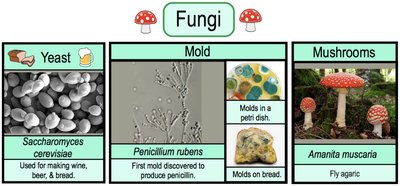
Fungi: Range from unicellular yeasts to multicellular molds and mushrooms; cell walls made of chitin; do not photosynthesize.
Algae: Photosynthetic, can be unicellular or multicellular, cell walls made of cellulose.
Protozoa: Unicellular, lack cell walls, most are motile and ingest organic material.
Helminths: Parasitic worms; not technically microorganisms, but their eggs and larvae are microscopic.
Acellular Infectious Agents
Acellular infectious agents are not made of cells and are not considered living. They include:
Viruses: Obligate intracellular parasites made of DNA or RNA in a protein coat; infect all forms of life.
Viroids: Small, circular RNA molecules that infect plants.
Prions: Infectious proteins that cause neurodegenerative diseases by inducing misfolding of normal proteins.
Importance of Microorganisms
Commercial and Environmental Roles
Microorganisms are essential for life and have numerous beneficial roles:
Production of food (bread, beer, yogurt, cheese), antibiotics, dietary supplements, biofuels, and more.
Nitrogen fixation, cellulose degradation, and bioremediation (degradation of pollutants).
Microorganisms as Research Tools
Microorganisms share fundamental metabolic and genetic features with complex organisms, making them valuable model organisms for research. They are inexpensive and grow rapidly.
Microorganisms in Health and Disease
The human body hosts trillions of microbes (normal microbiota or flora) that play crucial roles in health by competing with pathogens. Some microbes, however, are pathogenic and cause disease.
The Scientific Method in Microbiology
Steps of the Scientific Method
The scientific method is a systematic approach to answering questions and testing hypotheses:
Observation
Hypothesis formation
Experimentation
Data analysis
Conclusion
Peer review and publication
Prediction: Expected outcome of an event.
Hypothesis: Testable explanation for an observation.
Theory: Well-supported, testable explanation of many observations.
Experimental Design
Variables and Controls
Experiments test hypotheses by manipulating variables:
Independent variable: The factor changed by the scientist.
Dependent variable: The factor measured in response.
Control groups: Used to prevent false positives/negatives; can be negative (no effect expected) or positive (effect expected).
Spontaneous Generation vs. Biogenesis
Historical Experiments
For centuries, spontaneous generation (life from non-living matter) was debated. Key experiments include:
Francesco Redi: Showed maggots only appear on meat when flies can lay eggs.
John Needham: Incorrectly supported spontaneous generation due to poor experimental design.
Lazzaro Spallanzani: Disproved spontaneous generation by sealing and boiling flasks longer.
Louis Pasteur: Used swan-neck flasks to show that microbes come from the air, not spontaneous generation.
John Tyndall: Explained why some broths could not be sterilized due to heat-resistant endospores.
Summary Table: Major Groups in the Microbial World
Group | Cell Type | Cellularity | Example | Notes |
|---|---|---|---|---|
Bacteria | Prokaryotic | Unicellular | Escherichia coli | Cell wall with peptidoglycan |
Archaea | Prokaryotic | Unicellular | Halobacterium | Cell wall lacks peptidoglycan; extremophiles |
Fungi | Eukaryotic | Uni- or multicellular | Saccharomyces cerevisiae | Cell wall with chitin; non-photosynthetic |
Algae | Eukaryotic | Uni- or multicellular | Chlamydomonas | Photosynthetic; cell wall with cellulose |
Protozoa | Eukaryotic | Unicellular | Amoeba proteus | No cell wall; motile |
Helminths | Eukaryotic | Multicellular | Necator americanus | Parasitic worms; eggs/larvae are microscopic |
Viruses | Acellular | Non-cellular | SARS-CoV-2 | Obligate intracellular parasites |
Viroids | Acellular | Non-cellular | Potato spindle tuber viroid | Infect plants; circular RNA |
Prions | Acellular | Non-cellular | PrPSc | Infectious proteins; cause neurodegenerative diseases |
