 Back
BackChapter 1: The Microbial World and You – Study Notes
Study Guide - Smart Notes
 Tailored notes based on your materials, expanded with key definitions, examples, and context.
Chapter 1: The Microbial World and You
I. Introduction to Microbes
Microbes, or microorganisms, are organisms too small to be seen with the naked eye. They include bacteria, protozoa, fungi, viruses (which are not considered living), and some worms (helminths). Microbes are ubiquitous in nature and play essential roles in the environment, industry, and human health.
Microbiome (microbiota): The collection of microbes living in and on the human body, aiding in digestion, immunity, and vitamin production (e.g., B and K).
Pathogens: Microbes that cause disease.
Microbes require nutrients, proper temperature, pH, and salinity to thrive.
Environmental roles: Decomposers and recyclers.
Industrial roles: Used in food and chemical production.
II. Naming and Classifying Microorganisms
Microorganisms are classified and named using a standardized system of nomenclature. This system was first developed by Carolus Linnaeus in 1735 and further refined by Carl Woese in 1978 with the introduction of domains.
Scientific names: Written as Genus species (e.g., Escherichia coli).
Domains: Bacteria, Archaea, Eukarya.
Taxonomic hierarchy: Kingdom, Phylum, Class, Order, Family, Genus, Species (mnemonic: King Philip Came Out From Greece Saturday).
III. Types of Microorganisms
Microorganisms are classified into several major groups based on their cellular structure, metabolism, and ecological roles.
Bacteria
Unicellular prokaryotes; most are free-living, some are parasitic.
Cell wall composed of peptidoglycan.
Reproduce by binary fission.
Shapes: bacillus (rod), coccus (sphere), spirilla (helical); arrangements include single, diplo-, staphylo-, and strepto- forms.
Antibiotics can be used to treat bacterial infections.
Archaea
Unicellular prokaryotes; free-living.
Cell wall may be present but lacks peptidoglycan.
Often extremophiles: halophiles (salt-loving), thermophiles (heat-loving), methanogens (produce methane).
Fungi
Eukaryotic; can be unicellular (yeasts) or multicellular (molds).
Cell wall made of chitin.
Heterotrophic (absorptive nutrition).
Examples: Saccharomyces cerevisiae (yeast, fermentation), Candida albicans (yeast infections), Rhizopus stolonifera (bread mold), Penicillium chrysogenum (soil fungus, source of penicillin).
Protozoa
Unicellular eukaryotes; heterotrophic or autotrophic.
Motile via flagella, cilia, or amoeboid movement.
Can be free-living or parasitic.
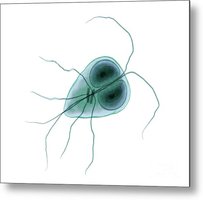
Examples: Plasmodium falciparum (malaria), Giardia duodenalis (giardiasis).
Algae (unicellular only)
Photosynthetic eukaryotes; cell wall of cellulose.
Produce oxygen and organic compounds via photosynthesis.
Photosynthesis equation:
Viruses
Non-living infectious particles; obligate intracellular parasites.
Composed of a protein coat and nucleic acid (DNA or RNA).
May have a membranous envelope.
Diseases: common cold, influenza, COVID-19, herpes.
Antibiotics are ineffective; vaccines provide protection.
Helminths (Worms)
Multicellular animals; adults are macroscopic, but some life stages are microscopic.
Include flatworms and roundworms; can be free-living or parasitic.
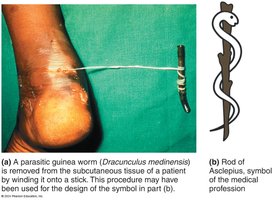
Examples: tapeworms, pinworms, guinea worm (Dracunculus medinensis).
IV. A Brief History of Microbiology
The field of microbiology has evolved through key discoveries and experiments that shaped our understanding of microorganisms.
Cell Theory
All living things are composed of cells.
Robert Hooke (1665): Observed cork cells under a microscope.
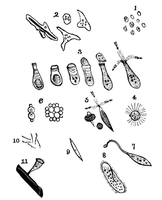
Anton van Leeuwenhoek (~1680): Observed "animalcules" (microbes) with improved microscopes.
Spontaneous Generation vs. Biogenesis
Spontaneous generation: The belief that life arises from nonliving matter (e.g., maggots from decaying meat).
Francesco Redi (1668): Disproved spontaneous generation with experiments using jars of rotting meat.
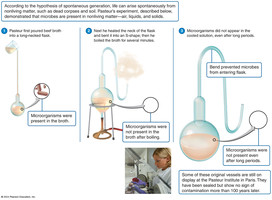
Louis Pasteur (1822–1895): Definitively disproved spontaneous generation using swan-neck flask experiments, explained fermentation, developed pasteurization, and introduced aseptic techniques.
The Germ Theory of Disease
States that microbes cause disease.
Robert Koch: Developed Koch's postulates to prove that specific microbes cause specific diseases (e.g., Bacillus anthracis causes anthrax).
Vaccination and Immunity
Vaccination: Protects against disease by inducing immunity.
Edward Jenner (1796): Used cowpox to protect against smallpox.
Louis Pasteur: Developed attenuated (weakened) strains for vaccination (e.g., cholera).
Immunity can also result from surviving an infection.
Antibiotics and Antibiotic Resistance
Antibiotics: Chemicals produced by microbes (e.g., fungi, bacteria) to inhibit or kill other microbes.
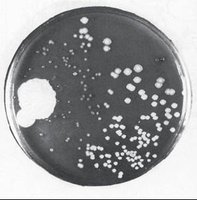
Alexander Fleming (1928): Discovered penicillin from the mold Penicillium chrysogenum.
Antibiotic resistance: Evolution of bacteria that survive antibiotic treatment (e.g., MRSA, multidrug-resistant TB).
Emerging Infectious Diseases
New diseases arise from mutations, zoonotic transmission, and environmental changes.
Examples: HIV, COVID-19, Ebola, Lassa fever, MPOX.
Factors: Global travel, deforestation, and contact with novel animal reservoirs.
