 Back
BackChapter 1: The Microbial World and You – Study Notes
Study Guide - Smart Notes
 Tailored notes based on your materials, expanded with key definitions, examples, and context.
Introduction to Microbiology
The Microbial World and Its Importance
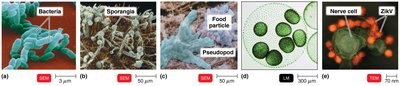
Microbiology is the study of microorganisms, which are organisms too small to be seen with the unaided eye. These include bacteria, fungi, protozoa, microscopic algae, and viruses. Microbes play essential roles in ecosystems, industry, and health.
Microorganisms decompose organic waste, generate oxygen via photosynthesis, and produce chemicals such as ethanol, acetone, and vitamins.
They are used in the production of fermented foods (e.g., vinegar, cheese, bread) and in manufacturing (e.g., cellulose, insulin).
While most microbes are beneficial, a few are pathogenic (disease-causing).
Naming and Classifying Microorganisms
Scientific Nomenclature
The system of scientific nomenclature was established by Carolus Linnaeus in 1735. Each organism is given a two-part name: the genus (capitalized) and the specific epithet (lowercase), both italicized or underlined (e.g., Escherichia coli).
Genus: Always capitalized.
Specific epithet: Always lowercase.
Classification of Microorganisms
Microorganisms are classified into three domains based on cellular organization, as developed by Carl Woese in 1978:
Bacteria
Archaea
Eukarya (includes protists, fungi, plants, and animals)
Types of Microorganisms
Bacteria
Bacteria are single-celled prokaryotes with peptidoglycan cell walls. They reproduce by binary fission and may move using flagella. Nutrition can be derived from organic or inorganic chemicals, or by photosynthesis.
Archaea
Archaea are prokaryotes that lack peptidoglycan in their cell walls and often inhabit extreme environments. Major groups include methanogens, extreme halophiles, and extreme thermophiles. They are generally not pathogenic to humans.
Fungi
Fungi are eukaryotes with chitin cell walls. They absorb organic chemicals for energy. Yeasts are unicellular, while molds and mushrooms are multicellular. Molds consist of mycelia made up of hyphae.
Protozoa
Protozoa are eukaryotic organisms that absorb or ingest organic chemicals. They may be motile via pseudopods, cilia, or flagella, and can be free-living or parasitic. Some are photosynthetic and can reproduce sexually or asexually.
Algae
Algae are eukaryotes with cellulose cell walls, found in aquatic and terrestrial environments. They use photosynthesis for energy, producing oxygen and carbohydrates. Both sexual and asexual reproduction are possible.
Viruses
Viruses are acellular entities consisting of DNA or RNA surrounded by a protein coat, sometimes enclosed in a lipid envelope. They can only replicate within a living host cell and are inert outside hosts.
Multicellular Animal Parasites
These are eukaryotic, multicellular animals such as helminths (parasitic flatworms and roundworms). Some stages of their life cycles are microscopic.
Historical Foundations of Microbiology
The First Observations
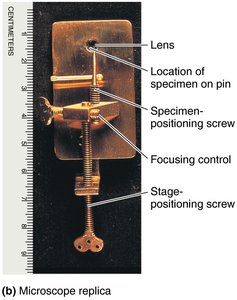
Robert Hooke (1665) reported that living things are composed of cells, marking the beginning of cell theory. Anton van Leeuwenhoek (1623–1673) was the first to observe microorganisms, which he called "animalcules," using simple microscopes.
The Debate over Spontaneous Generation
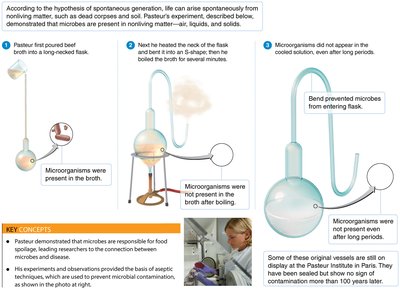
Spontaneous generation was the hypothesis that life could arise from nonliving matter. This was challenged by experiments supporting biogenesis—the idea that living cells arise only from preexisting cells.
Francesco Redi (1668): Showed that maggots do not arise from decaying meat unless flies lay eggs on it.
John Needham (1745): Claimed that microbes developed spontaneously in boiled broth.
Lazzaro Spallanzani (1765): Demonstrated that sealed and boiled broth did not develop microbial growth.
The Theory of Biogenesis
Rudolf Virchow (1858) proposed that cells arise from preexisting cells. Louis Pasteur (1861) provided evidence that microorganisms are present in the air and do not arise spontaneously.
Applications and Impact of Microbiology
The Birth of Modern Chemotherapy
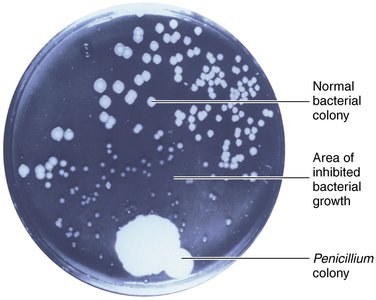
Chemotherapy is the treatment of disease with chemicals. Chemotherapeutic agents include synthetic drugs and antibiotics (produced by bacteria and fungi). Paul Ehrlich envisioned a "magic bullet" to destroy pathogens without harming the host. Alexander Fleming discovered penicillin in 1928, which was later mass-produced.
Molecular Genetics and Biotechnology
Microbial genetics studies how microbes inherit traits, while molecular biology examines how DNA directs protein synthesis. Genomics provides tools for classifying microorganisms. Recombinant DNA technology allows genes from different sources to be combined, enabling the production of proteins, vaccines, and enzymes, and facilitating gene therapy and genetically modified organisms.
Bioremediation and Insect Pest Control
Microbes are used to degrade organic matter in sewage and detoxify pollutants such as oil and mercury. Some bacteria, like Bacillus thuringiensis, are used as biological insecticides, producing toxins harmful to insects but safe for other organisms.
Microbes and Human Health
Normal Microbiota
Normal microbiota are microbes that reside in and on the human body, preventing the growth of pathogens and producing essential growth factors (e.g., vitamins B and K). The body's resistance to disease involves barriers such as skin, stomach acid, and antimicrobial chemicals.
Biofilms
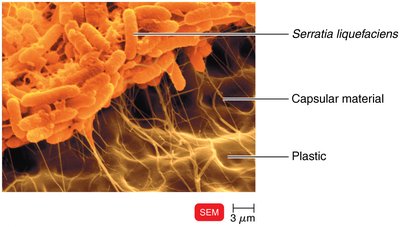
Biofilms are communities of microbes that attach to surfaces and grow into masses. They can form on rocks, pipes, teeth, and medical implants, often causing infections and exhibiting resistance to antibiotics.
Emerging Infectious Diseases (EIDs)
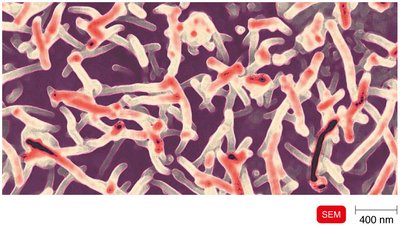
Emerging infectious diseases are new or increasing in incidence. Examples include COVID-19, Middle East respiratory syndrome (MERS), methicillin-resistant Staphylococcus aureus (MRSA), and Ebola hemorrhagic fever (EHF).
Summary Table: Types of Microorganisms
Type | Cell Type | Cell Wall | Reproduction | Nutrition | Examples |
|---|---|---|---|---|---|
Bacteria | Prokaryotic | Peptidoglycan | Binary fission | Organic/inorganic/photosynthesis | Escherichia coli |
Archaea | Prokaryotic | No peptidoglycan | Binary fission | Various | Methanogens |
Fungi | Eukaryotic | Chitin | Spores/budding | Absorption | Yeasts, molds |
Protozoa | Eukaryotic | None | Sexual/asexual | Absorption/ingestion | Amoeba |
Algae | Eukaryotic | Cellulose | Sexual/asexual | Photosynthesis | Green algae |
Viruses | Acellular | None | Host-dependent | Host-dependent | Influenza virus |
Helminths | Eukaryotic | None | Complex life cycles | Parasitic | Flatworms, roundworms |
