Back
BackChapter 1: The Microbial World and You – Study Notes
Study Guide - Smart Notes
 Tailored notes based on your materials, expanded with key definitions, examples, and context.
The Microbial World and You
Microbes in Our Lives
Microorganisms, or microbes, are organisms too small to be seen with the unaided eye. They play essential roles in the environment, industry, and human health. Microbes include bacteria, fungi, protozoa, microscopic algae, viruses, and prions.
Pathogenic microbes: A minority cause diseases in humans, animals, and plants.
Food spoilage: Some microbes are responsible for the spoilage of food products.
Ecological roles: Microbes form the base of aquatic food chains, decompose organic waste, and recycle vital elements such as nitrogen and oxygen.
Industrial roles: Microbes are used to produce chemicals (e.g., ethanol, acetone), fermented foods (e.g., cheese, yogurt, bread), and pharmaceuticals (e.g., insulin).
The Microbiome
The microbiome (or microbiota) refers to the community of microbes that live stably on and in the human body. An adult human harbors about 40 trillion bacterial cells, in addition to 30 trillion body cells.
Normal microbiota: Microbes acquired before birth and throughout life, which may colonize the body permanently or transiently.
Functions: Maintain health, prevent pathogen growth, and help train the immune system.
Colonization: Occurs only at body sites providing suitable nutrients and environments.
Naming and Classifying Microorganisms
Scientific nomenclature, established by Carolus Linnaeus, assigns each organism a two-part name: genus and specific epithet (species name). Names are italicized or underlined, with the genus capitalized and the species lowercase.
Example: Escherichia coli (named for Theodor Escherich; found in the colon)
Example: Staphylococcus aureus (describes clustered, spherical cells with gold-colored colonies)
After first use, names may be abbreviated (e.g., E. coli, S. aureus).
Types of Microorganisms
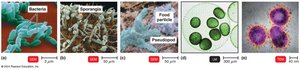
Microorganisms are classified into several major groups based on cellular structure and function.
Bacteria: Prokaryotic, unicellular, peptidoglycan cell walls, reproduce by binary fission, may have flagella.
Archaea: Prokaryotic, lack peptidoglycan, often live in extreme environments, not known to cause human disease.
Fungi: Eukaryotic, chitin cell walls, absorb organic chemicals, include unicellular yeasts and multicellular molds/mushrooms.
Protozoa: Eukaryotic, absorb/ingest organic chemicals, motile via pseudopods, cilia, or flagella, may be free-living or parasitic.
Algae: Eukaryotic, cellulose cell walls, photosynthetic, produce oxygen and carbohydrates.
Viruses: Acellular, DNA or RNA core, protein coat (sometimes lipid envelope), replicate only in living hosts.
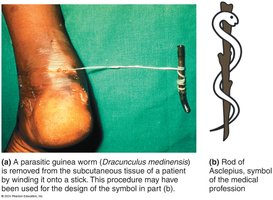
Multicellular Animal Parasites: Eukaryotic, include helminths (parasitic worms) with microscopic life stages.
Bacteria
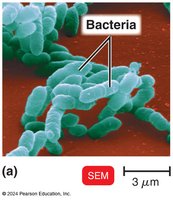
Bacteria are unicellular prokaryotes with peptidoglycan cell walls. They reproduce by binary fission and may move using flagella. Nutrition can be derived from organic/inorganic chemicals or photosynthesis.
Archaea
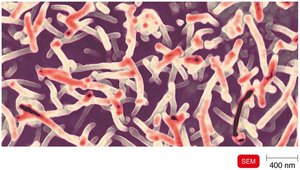
Archaea are prokaryotes that lack peptidoglycan in their cell walls and may lack cell walls entirely. They often inhabit extreme environments, such as high-salt (halophiles), high-temperature (thermophiles), or methane-rich (methanogens) areas. Archaea are not known to cause human disease.
Fungi
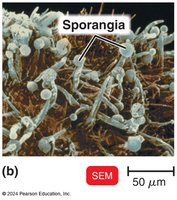
Fungi are eukaryotic organisms with chitin cell walls. They absorb organic chemicals for energy. Yeasts are unicellular, while molds and mushrooms are multicellular. Molds consist of mycelia made of hyphae.
Protozoa
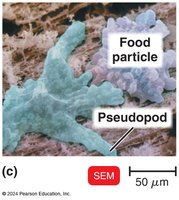
Protozoa are unicellular eukaryotes that absorb or ingest organic chemicals. They may be motile via pseudopods, cilia, or flagella, and can be free-living or parasitic. Some are photosynthetic and reproduce sexually or asexually.
Algae
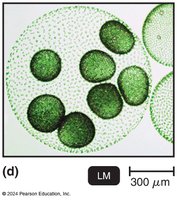
Algae are eukaryotic organisms with cellulose cell walls. They are found in aquatic and terrestrial environments, use photosynthesis for energy, and produce oxygen and carbohydrates. Both sexual and asexual reproduction occur in algae.
Viruses
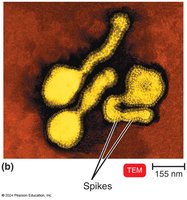
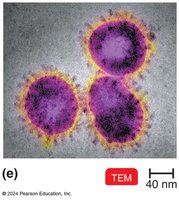
Viruses are acellular entities consisting of a DNA or RNA core surrounded by a protein coat, sometimes with a lipid envelope. They can only replicate within living host cells and are inert outside hosts.
Multicellular Animal Parasites
These eukaryotic organisms include helminths (parasitic flatworms and roundworms). While not strictly microorganisms, some life stages are microscopic and relevant to microbiology.
Classification of Microorganisms
Carl Woese developed a three-domain system based on cellular organization:
Bacteria
Archaea
Eukarya: Includes protists, fungi, plants, and animals
The First Observations
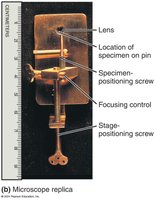
Robert Hooke (1665) observed cells in cork, marking the beginning of cell theory. Anton van Leeuwenhoek (1673–1723) was the first to observe and document microbes, which he called "animalcules." His work laid the foundation for microbiology.
The Debate over Spontaneous Generation
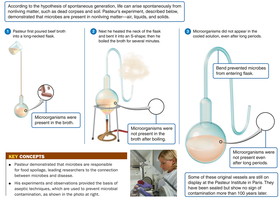
Spontaneous generation was the hypothesis that life could arise from nonliving matter. Biogenesis, in contrast, proposed that living cells arise only from preexisting cells. Key experiments by Redi, Needham, Spallanzani, and Pasteur tested these ideas.
Redi (1668): Showed that maggots do not arise from decaying meat unless flies can lay eggs on it.
Needham (1745): Claimed that boiled broth produced microbes spontaneously.
Spallanzani (1765): Showed that sealed, boiled broth did not produce microbes.
Pasteur (1861): Used S-shaped flasks to show that microbes come from the air, not spontaneous generation.
The First Golden Age of Microbiology (1857–1914)
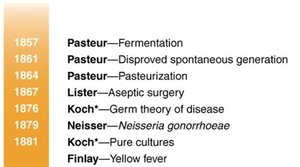
This era saw major discoveries linking microbes to fermentation, disease, and immunity, as well as advances in microscopy, culturing, vaccines, and aseptic techniques.
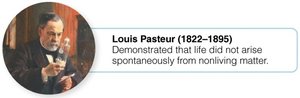
Fermentation: Pasteur showed that microbes convert sugars to alcohol in the absence of air; spoilage is caused by microbial growth.
Pasteurization: Pasteur developed a method to kill spoilage bacteria in beverages by heating without evaporating alcohol.
The Germ Theory of Disease
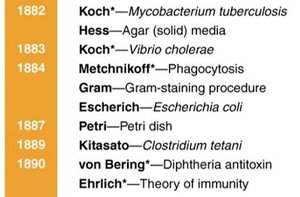
The germ theory states that microorganisms cause disease. Key contributors include:
Bassi (1835): Fungus caused silkworm disease.
Pasteur (1865): Protozoan caused another silkworm disease.
Semmelweis (1840s): Advocated handwashing to prevent puerperal fever.
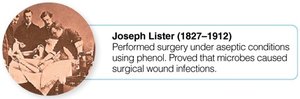
Lister (1860s): Used phenol to prevent surgical infections.
Koch (1876): Demonstrated that a specific bacterium causes anthrax; developed Koch’s postulates.
Vaccination and Chemotherapy
Vaccination involves exposing individuals to harmless forms of pathogens to induce immunity. Chemotherapy refers to the treatment of disease with chemicals, including synthetic drugs and antibiotics.
Jenner (1796): Developed smallpox vaccine using cowpox virus.
Ehrlich (1910): Developed salvarsan for syphilis.
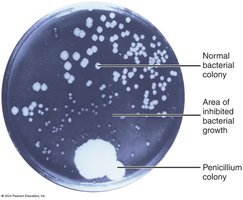
Fleming (1928): Discovered penicillin, the first antibiotic.
Problems with Antimicrobial Chemicals
Some antimicrobial drugs are toxic to humans, and microbes can develop resistance. Research continues to address these challenges, marking the Third Golden Age of Microbiology.
Branches of Microbiology
Bacteriology: Study of bacteria
Mycology: Study of fungi
Parasitology: Study of protozoa and parasitic worms
Immunology: Study of immunity
Virology: Study of viruses
Molecular genetics: Study of microbial inheritance and DNA function
The Third Golden Age of Microbiology
Modern microbiology includes genomics, recombinant DNA technology, and the study of microbiomes. These advances have revolutionized our understanding of microbes and their applications in medicine, agriculture, and industry.
Recycling Vital Elements and Environmental Microbiology
Microbial ecology studies the interactions between microbes and their environments. Microbes recycle elements such as carbon, nitrogen, sulfur, and phosphorus, and are used in sewage treatment and bioremediation to clean up pollutants.

Insect Pest Control by Microorganisms
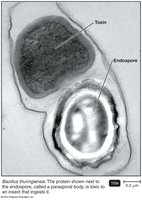
Microbes such as Bacillus thuringiensis are used as biological insecticides. They produce protein toxins that are fatal to insects but harmless to animals and plants. Genetic engineering has enabled the transfer of toxin genes to crops for pest resistance.
Biotechnology and Recombinant DNA Technology
Biotechnology uses microbes for practical applications, such as producing foods, chemicals, and pharmaceuticals. Recombinant DNA technology allows for the production of proteins, vaccines, and enzymes, and enables gene therapy and genetically modified organisms.
Normal Microbiota and Resistance
Normal microbiota are microbes that reside in and on the human body, preventing pathogen growth and producing essential growth factors. Resistance is the body's ability to ward off disease, aided by physical barriers and immune chemicals.
Biofilms
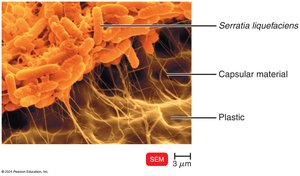
Biofilms are complex microbial communities attached to surfaces. They can be beneficial (protecting mucous membranes, providing food in aquatic systems) or harmful (clogging pipes, causing infections, and resisting antibiotics).
Emerging Infectious Diseases (EIDs)
EIDs are new or increasing diseases caused by pathogens overcoming host resistance. Factors include microbial evolution, antibiotic resistance, global travel, and environmental changes.
COVID-19: Caused by SARS-CoV-2, declared a pandemic in 2020.
Mpox (Monkeypox): Orthopoxvirus, outbreaks in nonendemic countries since 2022.
Zika virus: Spread by mosquitoes and sexual contact; can cause birth defects.
H1N1 influenza (swine flu): Pandemic in 2009.
Avian influenza (H5N1): Bird flu, primarily in poultry.
Antibiotic-resistant infections: MRSA, VRE, MDR-TB, and others.
Ebola virus disease: Severe hemorrhagic fever, outbreaks in Africa.