 Back
BackChapter 12: Eukaryotic Cells and Microorganisms – Fungi, Algae, Protozoa, and Parasitic Helminths
Study Guide - Smart Notes
 Tailored notes based on your materials, expanded with key definitions, examples, and context.
Survey of Eukaryotic Microbes
Introduction to Eukaryotic Microorganisms
Eukaryotic microorganisms include fungi, algae, protozoa, and parasitic worms (helminths). These organisms are distinguished from prokaryotes by the presence of a true nucleus and membrane-bound organelles. They play diverse roles in ecosystems, human health, and industry.
Fungi: Decomposers, pathogens, and industrial organisms.
Algae: Photosynthetic organisms, important in aquatic food webs.
Protozoa: Unicellular, heterotrophic, often motile.
Parasitic worms (Helminths): Multicellular parasites affecting humans and animals.
Comparison of Prokaryotic and Eukaryotic Cells
Cellular Structure and Organization
Eukaryotic cells are structurally more complex than prokaryotic cells, possessing a nucleus and various organelles. Viruses, by contrast, are acellular and require host cells for replication.
Prokaryotes: Lack a nucleus, have a single circular chromosome, and no membrane-bound organelles.
Eukaryotes: Have a nucleus, multiple linear chromosomes, and membrane-bound organelles such as mitochondria and chloroplasts.
Viruses: Consist of genetic material (DNA or RNA) enclosed in a protein coat, sometimes with a lipid envelope.
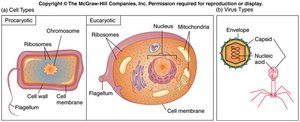
Key Differences Table
Function/Structure | Prokaryotic Cells | Eukaryotic Cells | Viruses |
|---|---|---|---|
Genetic Material | DNA, circular | DNA, linear | DNA or RNA |
Nucleus | No | Yes | No |
Organelles | No | Yes | No |
Cell Wall | Peptidoglycan (bacteria) | Chitin (fungi), cellulose (algae), absent in animals | Absent (some have protein coats) |
Reproduction | Binary fission | Mitosis/meiosis | Host-dependent |
Origin and Evolution of Eukaryotes
Endosymbiotic Theory
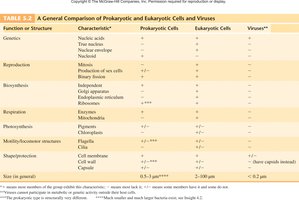
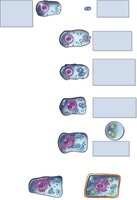
The endosymbiotic theory explains the origin of eukaryotic organelles such as mitochondria and chloroplasts. According to this theory, these organelles originated from free-living prokaryotes that were engulfed by ancestral eukaryotic cells.
Mitochondria: Derived from aerobic bacteria.
Chloroplasts: Derived from photosynthetic bacteria (cyanobacteria-like).
Both organelles contain their own DNA and ribosomes, supporting their prokaryotic ancestry.
Fungi
General Characteristics
Fungi are eukaryotic, chemoheterotrophic organisms that decompose organic matter. They can be unicellular (yeasts) or multicellular (molds, mushrooms). Their cell walls are composed of chitin.
Mycology: The study of fungi.
Nutrition: Absorptive heterotrophs, often saprobes or parasites.
Reproduction: Both sexual and asexual via spores.
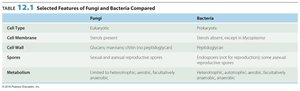
Comparison of Fungi and Bacteria
Feature | Fungi | Bacteria |
|---|---|---|
Cell Type | Eukaryotic | Prokaryotic |
Cell Wall | Chitin | Peptidoglycan |
Reproduction | Sexual and asexual spores | Binary fission, some spores |
Metabolism | Aerobic/facultative anaerobic | Aerobic/anaerobic/facultative |
Fungal Structure and Organization
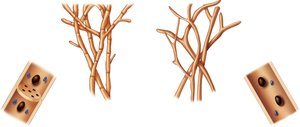
Fungi exhibit a variety of structural forms, including unicellular yeasts and multicellular molds. The basic structural unit of molds is the hypha, which may be septate (with cross-walls) or coenocytic (without cross-walls). A mass of hyphae forms a mycelium.
Vegetative hyphae: Involved in nutrient absorption.
Reproductive hyphae: Produce spores for reproduction.
Fungal Reproduction
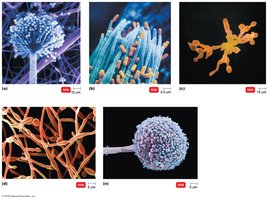
Fungi reproduce by forming spores, which may be produced sexually or asexually. Asexual spores include conidia and sporangiospores, while sexual spores include zygospores, ascospores, and basidiospores.
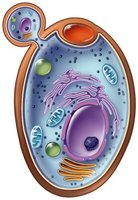
Asexual reproduction: Budding (yeasts), mitosis, conidia, sporangiospores.
Sexual reproduction: Fusion of nuclei from different strains, followed by meiosis.
Fungal Morphologies: Yeasts and Molds
Yeasts are unicellular fungi that reproduce by budding. Molds are multicellular and form hyphae. Some fungi are dimorphic, existing as yeasts at one temperature and as molds at another.
Dimorphic fungi: Important in pathogenicity.
Fungal Classification
Fungi are classified based on their sexual reproductive structures:
Zygomycota: Zygospores, sporangiospores.
Ascomycota: Ascospores, conidia.
Basidiomycota: Basidiospores, conidia.
Chytridomycota: Flagellated spores.
Fungal Nutrition and Ecology
Fungi are heterotrophic and absorb nutrients from their environment. Most are saprobes, but some are parasitic. Fungi can grow in diverse and extreme environments, including low pH, high osmotic pressure, and low moisture.
Roles of Fungi
Adverse impacts: Mycoses (fungal infections), allergies, toxin production, crop destruction.
Beneficial impacts: Decomposition, antibiotic production, food and beverage production, biotechnology.
Mutualistic Relationships
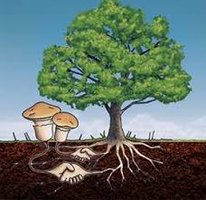
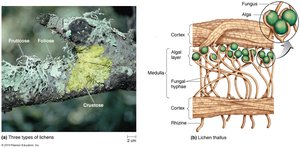
Fungi form mutualistic associations such as mycorrhizae (with plant roots) and lichens (with algae or cyanobacteria).
Algae
General Characteristics
Algae are photosynthetic eukaryotes found in aquatic environments. They may be unicellular, colonial, or multicellular. Algae contain chloroplasts with chlorophyll and other pigments, and their cell walls are often composed of cellulose.
Ecological roles: Primary producers, oxygen generation, base of aquatic food webs.
Economic uses: Agar, alginates, food additives, biofuels.
Algal Blooms and Harmful Effects
Some algae, such as dinoflagellates, can cause harmful algal blooms (red tides) that produce toxins affecting marine life and humans.
Protozoa
General Characteristics
Protozoa are unicellular, heterotrophic eukaryotes that lack cell walls. They are highly diverse in form and function, and many are motile via flagella, cilia, or pseudopods.
Trophozoite: Active, feeding stage.
Cyst: Dormant, resistant stage for survival in harsh conditions.
Reproduction: Asexual (binary fission, multiple fission), sexual (conjugation in ciliates).
Classification of Protozoa
Mastigophora: Flagellates (e.g., Trypanosoma).
Sarcodina: Amoebas (e.g., Entamoeba).
Ciliophora: Ciliates (e.g., Paramecium).
Apicomplexa: Non-motile, parasitic (e.g., Plasmodium).
Parasitic Helminths
General Characteristics
Parasitic helminths are multicellular animals with complex life cycles. They include flatworms (cestodes and trematodes) and roundworms (nematodes). These organisms have specialized structures for attachment and reproduction, and many cause significant human diseases.
Flatworms: No body cavity, simple digestive system.
Roundworms: Complete digestive tract, protective cuticle.
Life Cycles and Transmission
Helminths may require multiple hosts to complete their life cycles. Transmission can occur via ingestion of eggs or larvae, or through insect vectors.
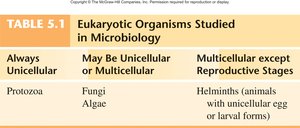
Summary Table: Eukaryotic Microorganisms Studied in Microbiology
Always Unicellular | May Be Unicellular or Multicellular | Multicellular except Reproductive Stages |
|---|---|---|
Protozoa | Fungi, Algae | Helminths |
Additional info: This guide covers the major groups of eukaryotic microorganisms relevant to microbiology, including their structure, classification, reproduction, and roles in nature and human affairs. For further study, refer to textbook chapters on microbial metabolism, genetics, and disease mechanisms.
