 Back
BackChapter 17: Adaptive (Specific) Immunity – The Immune Response
Study Guide - Smart Notes
 Tailored notes based on your materials, expanded with key definitions, examples, and context.
Specific Defenses of the Host: The Immune Response
Overview of Adaptive Immunity
Adaptive immunity is the body's third line of defense, characterized by specificity and memory. It is divided into two main branches: cell-mediated immunity (mediated by T lymphocytes) and humoral immunity (mediated by B lymphocytes and antibodies). Each lymphocyte possesses unique receptors for recognizing specific antigens, allowing the immune system to target a vast array of pathogens.
Cell-mediated immunity: T cells recognize and directly kill infected or abnormal cells.
Humoral immunity: B cells mature into plasma cells that secrete antibodies, which neutralize pathogens.
Development and Differentiation of Lymphocytes
Lymphocytes originate from stem cells in the bone marrow or fetal liver. They differentiate into B cells in the bone marrow and T cells in the thymus. After maturation, these cells migrate to lymphoid tissues such as the spleen and lymph nodes, where they encounter antigens.
Each lymphocyte has a unique antigen receptor generated by somatic recombination of gene segments, allowing for immense receptor diversity.
This process is random, and many receptors are non-functional or self-reactive, which are eliminated during development.
Antigens and Antigen Recognition
Definition and Types of Antigens
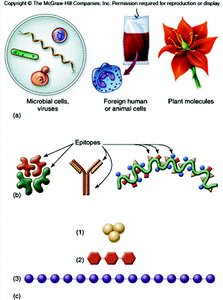
An antigen (Ag) is any substance that provokes an immune response by causing the production of specific antibodies or sensitized T cells. Most antigens are proteins or large polysaccharides from microbes or non-microbial sources (e.g., pollen, egg white, transplanted tissue).
Hapten: A small molecule that becomes antigenic only when attached to a larger carrier molecule.
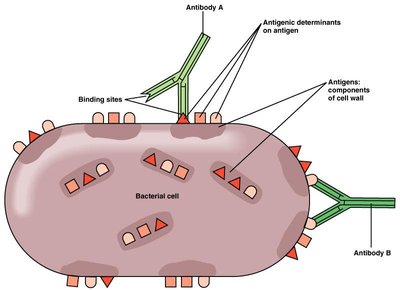
Antigenic determinants (epitopes): Specific regions on an antigen recognized by antibodies.
Antigen Recognition by Antibodies
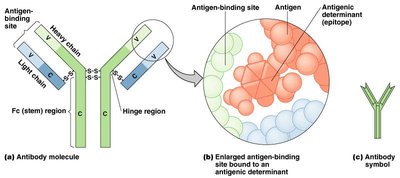
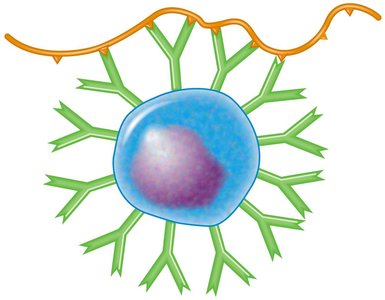
Antibodies recognize antigens by binding to their epitopes. Each antigen may have multiple epitopes, each recognized by a different antibody. This specificity is crucial for effective immune responses.
Activation of B Cells and Antibody Production
Mechanisms of B Cell Activation
B cells can be activated by two main mechanisms:
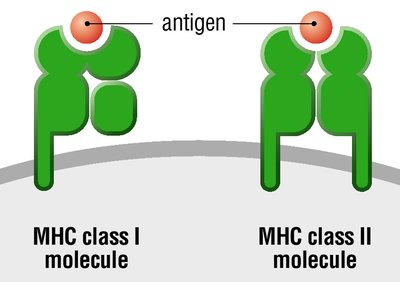
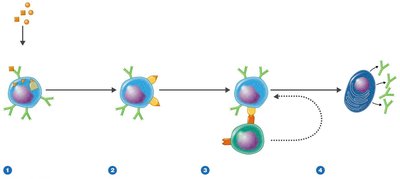
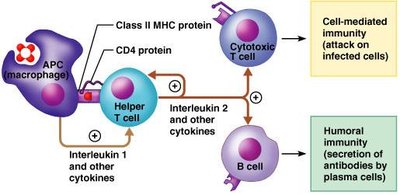
T-dependent antigens: Require antigen presentation with MHC class II to helper T cells (TH), which then secrete cytokines to activate the B cell.
T-independent antigens: Directly stimulate B cells without T cell help, typically polysaccharides with repetitive epitopes.
Clonal Selection and Differentiation
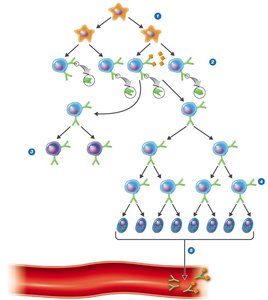
Upon activation, B cells undergo clonal selection and expansion. Some differentiate into plasma cells that secrete antibodies, while others become long-lived memory cells, providing rapid response upon re-exposure to the same antigen.
Primary and Secondary Immune Responses
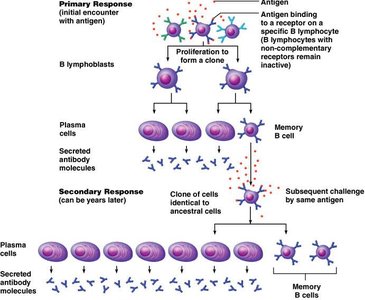
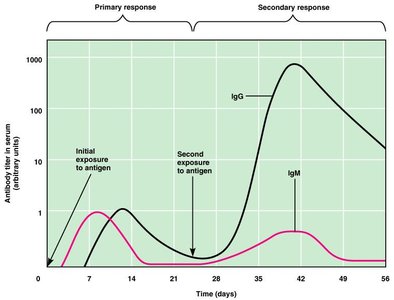
The primary response occurs upon first exposure to an antigen, taking about a week or two to develop. The secondary response is faster and more robust due to memory cells generated during the primary response.
Acquisition of Antibody-Mediated Immunity
Active immunity: Host produces antibodies after exposure to antigen (natural infection or vaccination).
Passive immunity: Host receives preformed antibodies (maternal antibodies or antibody therapy).
Consequences of Antigen-Antibody Binding
Protective Mechanisms
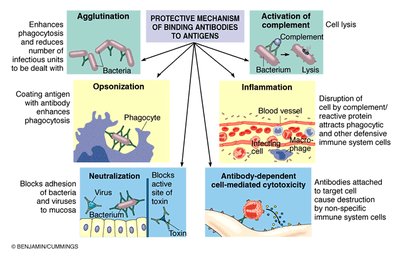
Antigen-antibody complexes can lead to several protective outcomes:
Agglutination: Clumping of antigens, enhancing phagocytosis.
Opsonization: Coating of antigens with antibodies to enhance phagocytosis.
Neutralization: Blocking of pathogen attachment or toxin activity.
Antibody-dependent cell-mediated cytotoxicity (ADCC): Destruction of large pathogens by immune cells.
Complement activation: Triggering the complement cascade, leading to cell lysis and inflammation.
T Cells and Cellular Immunity
T Cell Activation and Function
T cells recognize antigens presented by antigen-presenting cells (APCs) via T cell receptors (TCRs). They are essential for cell-mediated immunity, targeting infected, abnormal, or foreign cells.
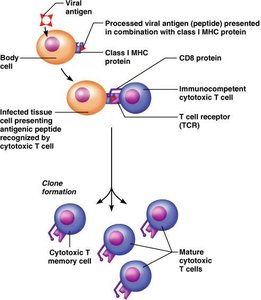
CD8+ T cells (Cytotoxic T lymphocytes, CTLs): Destroy cells displaying foreign antigens with MHC I.
CD4+ T cells (Helper T cells, TH): Secrete cytokines to activate other immune cells.
Suppressor (Regulatory) T cells (TS): Limit immune responses to prevent autoimmunity.
Major Histocompatibility Complex (MHC)
MHC molecules present antigen fragments to T cells:
MHC class I: Found on all nucleated cells; present endogenous antigens to CD8+ T cells.
MHC class II: Found on professional APCs; present exogenous antigens to CD4+ T cells.
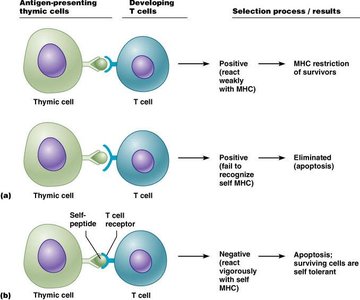
T Cell Selection in the Thymus
Selection processes in the thymus ensure that T cells are self-tolerant and functional. Cells that react strongly to self-antigens are eliminated, preventing autoimmunity.
Helper and Cytotoxic T Cell Functions
Helper T cells (TH): Activate B cells, other T cells, and macrophages via cytokine secretion.
Cytotoxic T cells (CTLs): Kill infected or abnormal cells by releasing perforins and granzymes, inducing apoptosis.
Professional Antigen-Presenting Cells (APCs)
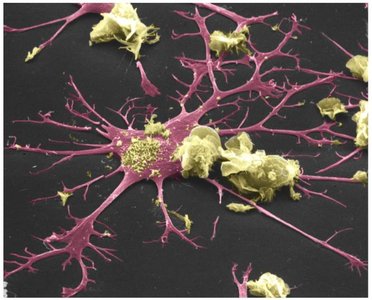
Professional APCs include dendritic cells, macrophages, and activated B cells. They engulf pathogens, process antigens, and present them to T cells, initiating adaptive immunity.
Lymphoid Organs and Immune Surveillance
Lymph Nodes
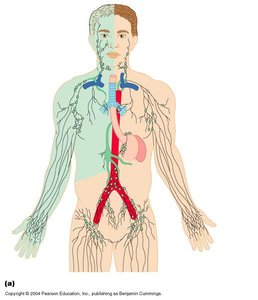
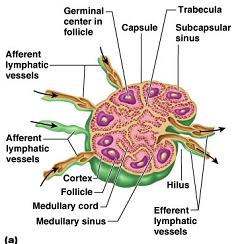
Lymph nodes are principal lymphoid organs that filter lymph and provide sites for immune cell activation. They are clustered in the inguinal, axillary, and cervical regions.
Spleen
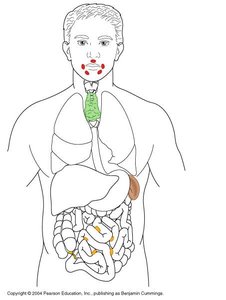
The spleen is the largest lymphoid organ, located in the upper left abdomen. It filters blood, removes old red blood cells, and provides immune surveillance and lymphocyte proliferation.
Summary Table: Key Features of Adaptive Immunity
Component | Cell Type | Main Function | Antigen Presentation |
|---|---|---|---|
Humoral Immunity | B cells | Produce antibodies | MHC II (to TH cells) |
Cell-mediated Immunity | T cells (CD4+, CD8+) | Kill infected cells, activate other immune cells | MHC I (to CD8+), MHC II (to CD4+) |
APCs | Dendritic cells, macrophages, B cells | Present antigens, activate T cells | MHC II |
