 Back
BackChapter 2: Chemical Principles and Macromolecules in Microbiology
Study Guide - Smart Notes
 Tailored notes based on your materials, expanded with key definitions, examples, and context.
Chemistry & Macromolecules
Introduction to Atoms and Molecules
Chemistry forms the foundation of microbiology, as all living organisms are composed of atoms and molecules. Understanding the structure and interactions of these basic units is essential for grasping biological processes.
Atom: The smallest unit of matter that retains the properties of an element. Atoms cannot be subdivided into smaller substances by ordinary chemical means.
Molecule: Two or more atoms bonded together.
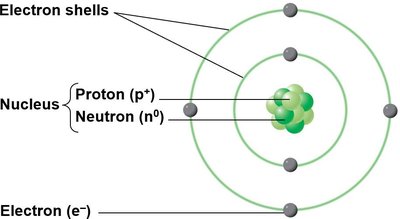
Structure of Atoms
Atoms are composed of three types of subatomic particles:
Protons (p+): Positively charged particles found in the nucleus.
Neutrons (n0): Neutral particles also located in the nucleus.
Electrons (e-): Negatively charged particles that orbit the nucleus in electron shells.
The Elements of Life
Living organisms are primarily composed of a few key elements, often remembered by the acronym CHONPS:
Carbon
Hydrogen
Oxygen
Nitrogen
Phosphorus
Sulfur
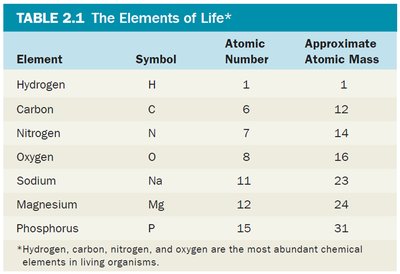
Element | Symbol | Atomic Number | Approximate Atomic Mass |
|---|---|---|---|
Hydrogen | H | 1 | 1 |
Carbon | C | 6 | 12 |
Nitrogen | N | 7 | 14 |
Oxygen | O | 8 | 16 |
Sodium | Na | 11 | 23 |
Magnesium | Mg | 12 | 24 |
Phosphorus | P | 15 | 31 |
Chemical Bonds
Types of Chemical Bonds
Chemical bonds join atoms by interactions between their valence electrons. Atoms tend to gain, lose, or share electrons to fill their outermost shell. The main types of chemical bonds are:
Ionic Bonds: Formed by the attraction between oppositely charged ions.
Covalent Bonds: Formed when two atoms share one or more pairs of electrons.
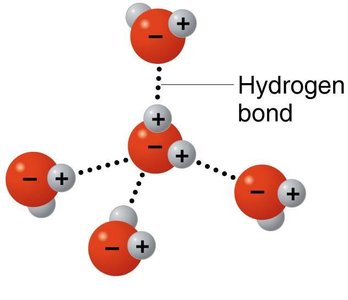
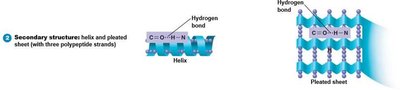
Hydrogen Bonds: Weak attractions between a slightly positive hydrogen atom and a slightly negative atom (often oxygen or nitrogen).
Ionic Bonds
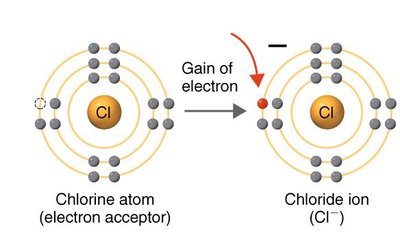
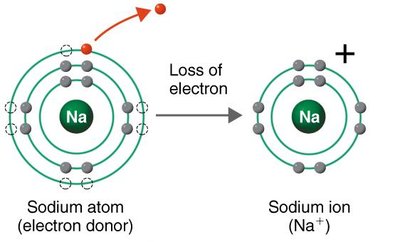
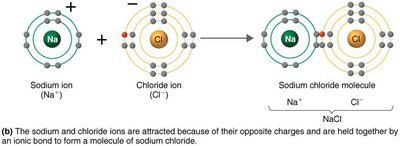
Ionic bonds occur when one atom donates an electron to another, resulting in the formation of charged ions that attract each other.
Example: Sodium (Na) loses an electron to become Na+, and chlorine (Cl) gains an electron to become Cl-. These ions attract to form sodium chloride (NaCl).
Covalent Bonds
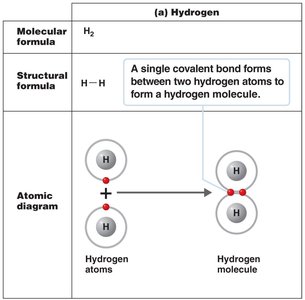
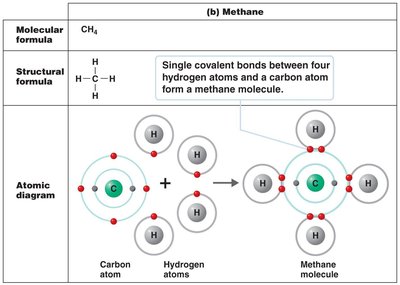
Covalent bonds involve the sharing of electron pairs between atoms. These bonds are strong and form the backbone of organic molecules.
Example: Two hydrogen atoms share electrons to form H2, and carbon shares electrons with hydrogen in methane (CH4).
Hydrogen Bonds
Hydrogen bonds are weak attractions that occur when a hydrogen atom covalently bonded to one electronegative atom is attracted to another electronegative atom.
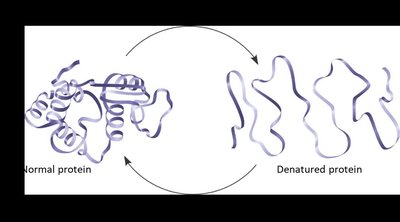
Importance: Hydrogen bonds are crucial in stabilizing the structures of proteins and nucleic acids, and in the properties of water.
Chemical Reactions
Types of Chemical Reactions
Chemical reactions involve the making or breaking of bonds between atoms. In biological systems, these reactions are classified as:
Synthesis Reactions (Anabolism): Atoms, ions, or molecules combine to form new, larger molecules. Example: Formation of proteins from amino acids.
Decomposition Reactions (Catabolism): A molecule is split into smaller molecules, ions, or atoms. Example: Breakdown of glucose during cellular respiration.
Water and Its Properties
Importance of Water
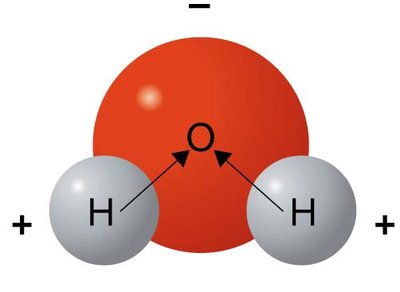
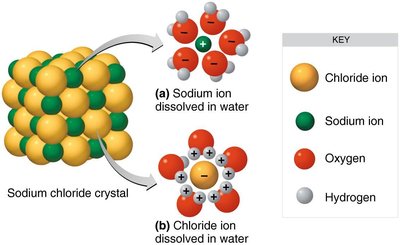
Water is an inorganic, polar molecule that acts as a universal solvent in biological systems. Its polarity allows it to dissolve many substances, facilitating chemical reactions in cells.
Polarity: Water molecules have a partial positive charge on hydrogen and a partial negative charge on oxygen.
Solvent Properties: Polar substances undergo dissociation in water, forming solutes.
Acids, Bases, and pH
Acids and Bases
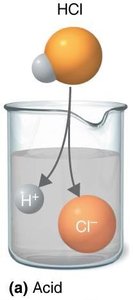
Acids: Substances that release H+ ions in solution.
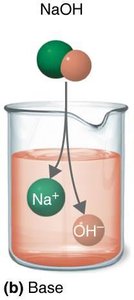
Bases: Substances that release OH- ions in solution.
The Concept of pH
The concentration of H+ ions in a solution is expressed as pH, calculated as:
Increasing [H+] increases acidity (lower pH).
Increasing [OH-] increases alkalinity (higher pH).
Most organisms grow best between pH 6.5 and 8.5.
Organic Compounds and Functional Groups
Organic vs. Inorganic Compounds
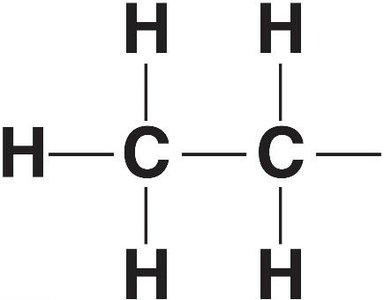
Organic Compounds: Always contain carbon and hydrogen; often large and complex.
Inorganic Compounds: Typically lack carbon; usually simpler molecules.
Functional Groups
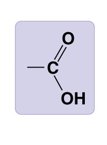
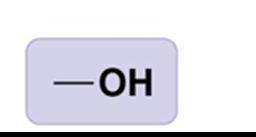
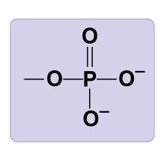
Functional groups are specific groups of atoms within molecules that are responsible for the characteristic chemical reactions of those molecules.
Examples: Hydroxyl (-OH), Carboxyl (-COOH), Phosphate (-PO42-), etc.
Macromolecules
Formation and Breakdown of Macromolecules
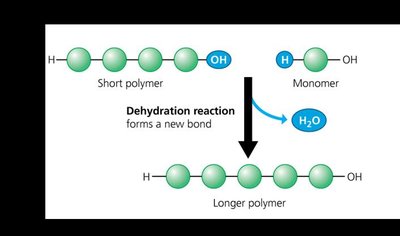
Macromolecules are large, complex molecules essential for life. They are polymers made from smaller units called monomers. The main types are carbohydrates, lipids, proteins, and nucleic acids.
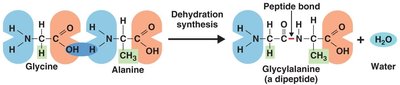
Dehydration Synthesis: Monomers are joined together by removing a molecule of water.
Hydrolysis: Polymers are broken down into monomers by adding water.
Carbohydrates
Structure and Function
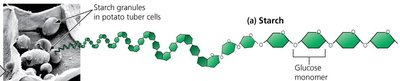
Carbohydrates serve as cell structures and energy sources. They are composed of carbon, hydrogen, and oxygen in the ratio (CH2O)n.
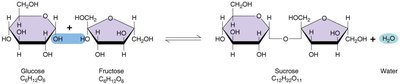
Monosaccharides: Simple sugars (e.g., glucose).
Disaccharides: Two monosaccharides joined together (e.g., sucrose).
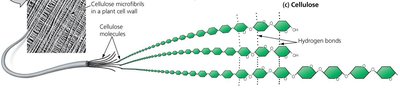
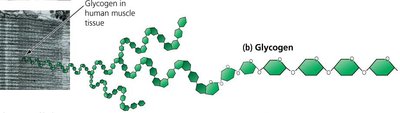
Polysaccharides: Many monosaccharides linked together (e.g., starch, glycogen, cellulose).
Lipids
Simple and Complex Lipids
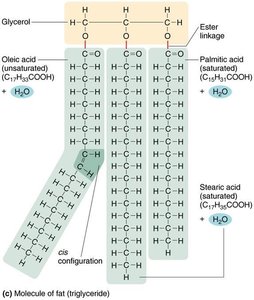
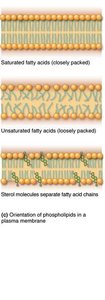
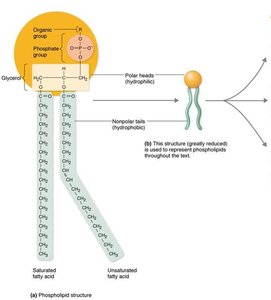
Lipids are hydrophobic molecules that include fats, phospholipids, and steroids. They are important for energy storage, membrane structure, and signaling.
Simple Lipids (Fats/Triglycerides): Composed of glycerol and fatty acids.
Complex Lipids: Contain additional elements such as phosphorus (e.g., phospholipids).
Steroids: Such as cholesterol, are components of eukaryotic cell membranes.
Proteins
Structure and Function
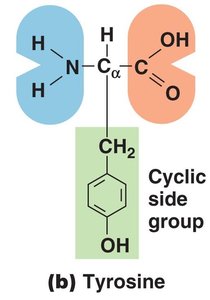
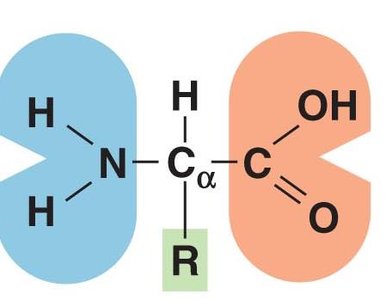
Proteins are polymers of amino acids and perform a vast array of functions, including catalysis (enzymes), transport, structural support, and immune defense.
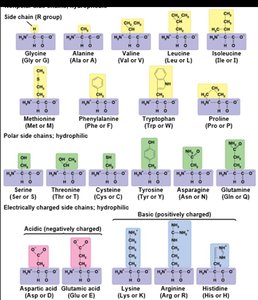
Amino Acids: The monomer units of proteins; 20 different types exist, each with a unique R-group.
Peptide Bonds: Link amino acids together via dehydration synthesis.
Levels of Protein Structure:
Primary: Sequence of amino acids.
Secondary: Local folding (alpha-helix, beta-sheet).
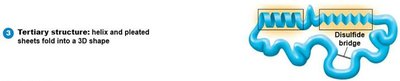
Tertiary: 3D folding of a single polypeptide chain.
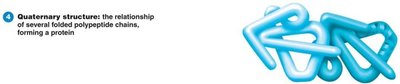
Quaternary: Association of multiple polypeptide chains.

Nucleic Acids
DNA and RNA
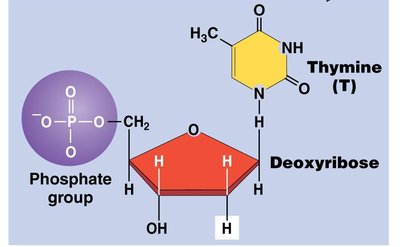
Nucleic acids store and transmit genetic information. They are polymers of nucleotides, each consisting of a sugar, a phosphate group, and a nitrogenous base.
DNA (Deoxyribonucleic Acid): Double-stranded, contains deoxyribose sugar, and bases adenine (A), thymine (T), guanine (G), and cytosine (C).
RNA (Ribonucleic Acid): Single-stranded, contains ribose sugar, and bases adenine (A), uracil (U), guanine (G), and cytosine (C).
ATP (Adenosine Triphosphate)
ATP is the primary energy carrier in cells. It consists of adenine, ribose, and three phosphate groups. Hydrolysis of ATP releases energy for cellular processes.
Additional info: This guide covers the chemical principles essential for understanding microbial structure and function, focusing on the macromolecules that form the basis of life.
