 Back
BackChapter 2: Chemical Principles in Microbiology
Study Guide - Smart Notes
 Tailored notes based on your materials, expanded with key definitions, examples, and context.
Chapter 2: Chemical Principles
Introduction
Chemical principles are foundational to understanding microbiology, as all living organisms are composed of atoms and molecules that interact through chemical reactions. This chapter explores the structure of atoms, types of chemical bonds, properties of water, acids and bases, and the major classes of biological molecules essential for microbial life.
The Structure of Atoms
Atomic Structure and Properties
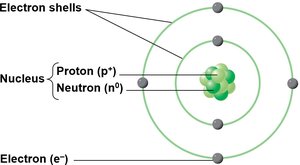
Atoms are the smallest units of matter that retain the properties of an element. They consist of a nucleus containing protons and neutrons, with electrons orbiting in shells around the nucleus.
Protons: Positively charged particles in the nucleus.
Neutrons: Uncharged particles in the nucleus.
Electrons: Negatively charged particles that move around the nucleus in electron shells.
Atomic number: Number of protons in the nucleus, unique to each element.
Atomic weight: Total number of protons and neutrons.
Isotopes: Atoms of the same element with different numbers of neutrons.
Chemical Bonds and Molecules
Types of Chemical Bonds
Atoms combine to form molecules by filling their outermost electron shells, resulting in chemical bonds. The main types of bonds are ionic, covalent, and hydrogen bonds.
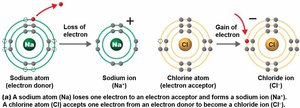
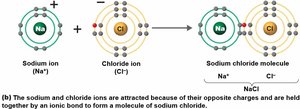
Ionic Bonds: Formed when one atom loses electrons (becoming a cation) and another gains electrons (becoming an anion). The resulting opposite charges attract each other.
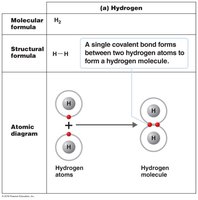
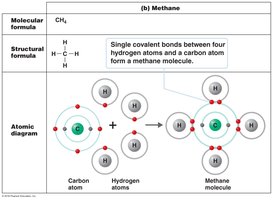
Covalent Bonds: Formed when two atoms share one or more pairs of electrons. Covalent bonds are stronger and more common in living organisms than ionic bonds.
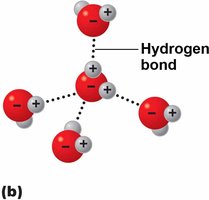
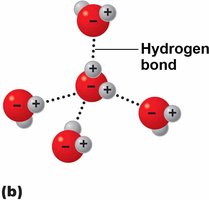
Hydrogen Bonds: Weak bonds formed when a hydrogen atom covalently bonded to an O or N atom is attracted to another O or N atom in a different molecule. These are important in stabilizing the structures of proteins and nucleic acids.
Chemical Reactions
Types of Chemical Reactions
Chemical reactions involve the making or breaking of bonds between atoms, resulting in changes in chemical energy.
Synthesis Reactions (Anabolism): Atoms, ions, or molecules combine to form new, larger molecules. Example: Formation of proteins from amino acids.
Decomposition Reactions (Catabolism): A molecule is split into smaller molecules, ions, or atoms. Example: Breakdown of starch into glucose.
Exchange Reactions: Involve both synthesis and decomposition; parts of molecules are exchanged.
Reversible Reactions: Can proceed in either direction depending on conditions.
Water and Its Importance
Properties of Water
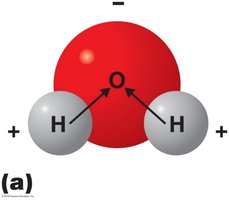
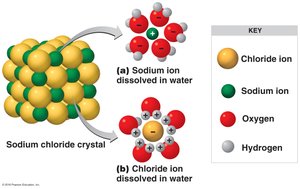
Water is an inorganic, polar molecule essential for life. Its polarity allows it to dissolve many substances, making it an excellent solvent. Hydrogen bonds between water molecules absorb heat, providing a temperature buffer for living systems.
Polarity: Unequal distribution of charges makes water an effective solvent for ionic and polar substances.
Hydrogen Bonding: Contributes to water's high boiling point and ability to moderate temperature changes.
Acids, Bases, and pH
Definitions and Biological Relevance
Acids, bases, and salts are important in maintaining the chemical balance in cells.
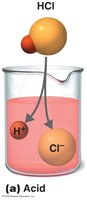
Acids: Substances that dissociate into one or more hydrogen ions (H+) and one or more negative ions.
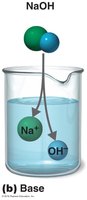
Bases: Substances that dissociate into one or more hydroxide ions (OH-).
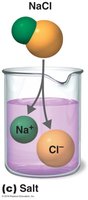
Salts: Substances that dissociate into cations and anions, neither of which is H+ or OH-.
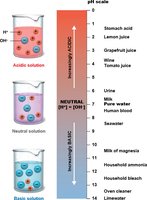
pH: The concentration of H+ in a solution, expressed as pH. Most organisms grow best between pH 6.5 and 8.5.
Organic Compounds and Functional Groups
Structure and Chemistry of Organic Molecules
Organic compounds always contain carbon and hydrogen, and often oxygen and nitrogen. The carbon skeleton forms the backbone, while functional groups determine the chemical properties and reactivity.
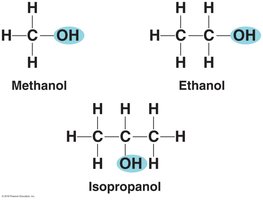
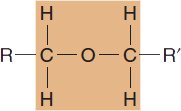
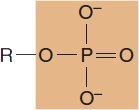
Functional Groups: Specific groups of atoms responsible for characteristic reactions of organic molecules (e.g., hydroxyl, carboxyl, amino, phosphate).
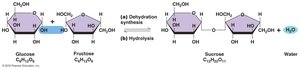
Macromolecules: Large molecules formed by joining monomers through dehydration synthesis (e.g., proteins, nucleic acids, polysaccharides).
Carbohydrates
Structure and Function
Carbohydrates serve as energy sources and structural components in cells. They are composed of carbon, hydrogen, and oxygen, typically in a 1:2:1 ratio.
Monosaccharides: Simple sugars (e.g., glucose, deoxyribose).
Disaccharides: Formed by joining two monosaccharides via dehydration synthesis (e.g., sucrose).
Polysaccharides: Long chains of monosaccharides (e.g., starch, glycogen, cellulose).
Lipids
Types and Biological Roles
Lipids are nonpolar molecules that are insoluble in water. They are essential components of cell membranes and serve as energy storage molecules.
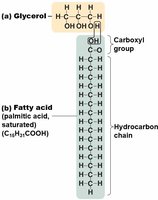
Simple Lipids (Fats/Triglycerides): Composed of glycerol and fatty acids. Saturated fats have no double bonds; unsaturated fats have one or more double bonds.
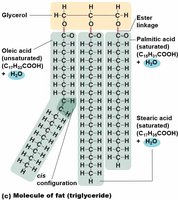
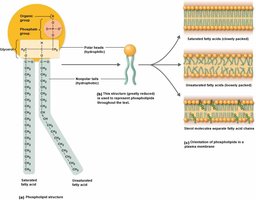
Complex Lipids: Contain additional elements such as phosphorus, nitrogen, or sulfur. Phospholipids are major components of cell membranes, with both polar and nonpolar regions.
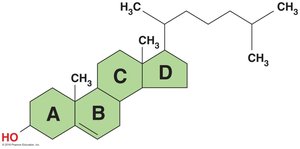
Steroids: Characterized by four carbon rings; cholesterol is a key steroid in membranes, maintaining fluidity.
Proteins
Structure and Function
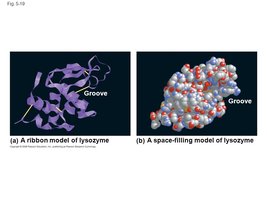
Proteins are polymers of amino acids and are essential for cell structure and function, including enzymes, transporters, and structural components.
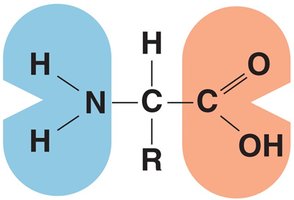
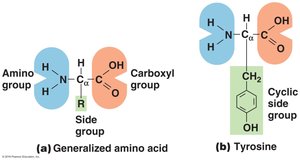
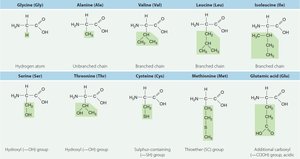
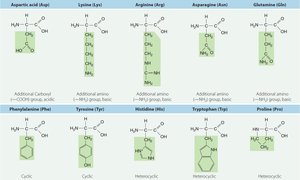
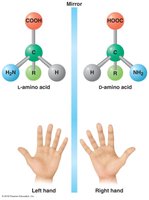
Amino Acids: Contain a central alpha-carbon, an amino group, a carboxyl group, and a variable side chain (R group).
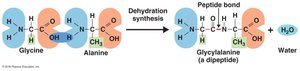
Peptide Bonds: Link amino acids via dehydration synthesis.
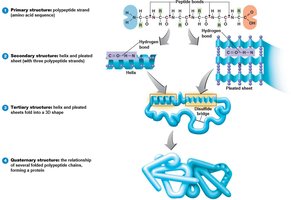
Levels of Protein Structure:
Primary: Sequence of amino acids.
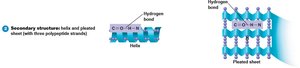
Secondary: Folding into alpha-helices or beta-pleated sheets via hydrogen bonds.
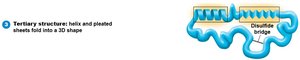
Tertiary: Irregular folding due to interactions among R groups (disulfide bridges, hydrogen bonds, ionic bonds).
Quaternary: Association of multiple polypeptide chains.
Denaturation: Loss of protein structure and function due to hostile conditions (e.g., temperature, pH).
Conjugated Proteins: Contain amino acids plus other organic molecules (e.g., glycoproteins, lipoproteins).


Nucleic Acids
DNA and RNA
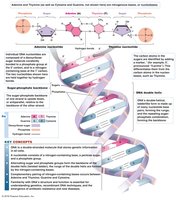
Nucleic acids store and transmit genetic information. They are polymers of nucleotides, each consisting of a pentose sugar, a phosphate group, and a nitrogenous base.
DNA (Deoxyribonucleic Acid): Double helix structure; bases are adenine (A), thymine (T), cytosine (C), and guanine (G). A pairs with T, C pairs with G.
RNA (Ribonucleic Acid): Single-stranded; bases are adenine (A), uracil (U), cytosine (C), and guanine (G). Several types of RNA are involved in protein synthesis.
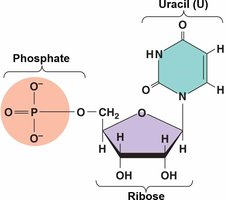
Adenosine Triphosphate (ATP)
Role in Cellular Activities
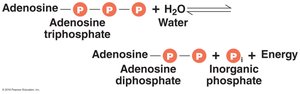
ATP is the primary energy currency of the cell. It consists of adenine, ribose, and three phosphate groups. Hydrolysis of ATP releases energy used for cellular processes.
ATP Hydrolysis:
ATP provides more energy than ADP because it has an additional high-energy phosphate bond.
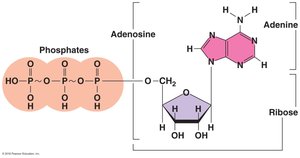
Application Example: Bacillus anthracis
Microbial Relevance
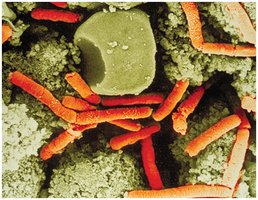
Bacillus anthracis is a bacterium of microbiological importance, demonstrating the relevance of chemical principles in understanding microbial structure and function.
Summary Table: Representative Functional Groups
Functional groups are key to the chemical behavior of organic molecules. Below is a summary table of common functional groups and their properties:
Functional Group | Structure | Properties/Example |
|---|---|---|
Hydroxyl | –OH | Alcohols (e.g., ethanol) |
Carboxyl | –COOH | Organic acids (e.g., acetic acid) |
Amino | –NH2 | Amino acids |
Phosphate | –PO4 | ATP, nucleic acids |
Sulfhydryl | –SH | Proteins (disulfide bonds) |
Methyl | –CH3 | Methylated compounds |
Additional info: This study guide expands on the provided notes with definitions, examples, and context to ensure a comprehensive understanding of chemical principles relevant to microbiology.
