 Back
BackChapter 7: The Control of Microbial Growth – Study Notes
Study Guide - Smart Notes
 Tailored notes based on your materials, expanded with key definitions, examples, and context.
Chapter 7: The Control of Microbial Growth
Introduction
The control of microbial growth is essential in preventing infections, food spoilage, and contamination in medical and industrial settings. This chapter explores the principles, methods, and agents used to control the presence and proliferation of microorganisms.
Key Terminology in Microbial Control
Definitions and Applications
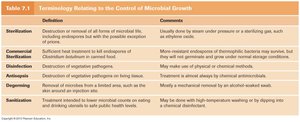
Sterilization: The removal or destruction of all microbial life, including endospores. Methods include heat and filtration.
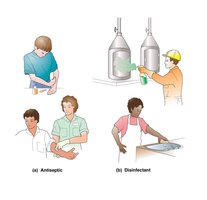
Disinfection: The destruction of vegetative pathogens on inanimate objects, not necessarily endospores.
Antisepsis: Destruction of vegetative pathogens on living tissue.
Sanitization: Reduction of microbial numbers to safe levels, such as on eating utensils.
Biocide/Germicide: Agents that kill microbes.
Bacteriostasis: Inhibition of bacterial growth without killing.
Asepsis: Absence of significant contamination.
Nosocomial: Healthcare-associated infections.
Term | Definition | Comments |
|---|---|---|
Sterilization | Destruction/removal of all forms of microbial life | Usually done by steam under pressure or sterilizing gas |
Commercial Sterilization | Sufficient heat to kill endospores of Clostridium botulinum | May not kill all endospores of thermophilic bacteria |
Disinfection | Destruction of vegetative pathogens | May use physical or chemical methods |
Antisepsis | Destruction of vegetative pathogens on living tissue | Treatment almost always by chemical antimicrobials |
Degerming | Removal of microbes from a limited area | Mostly a mechanical removal by alcohol-soaked swab |
Sanitization | Treatment to lower microbial counts to safe public health levels | May be done with high-temperature washing or by dipping into a chemical disinfectant |
Principles of Microbial Death
Microbial Death Curve
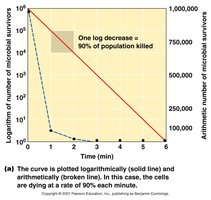
Microbial populations die at a constant rate when exposed to antimicrobial agents. The death curve is plotted logarithmically, showing a straight line that represents a 90% reduction per minute.
Key Point: The greater the number of microbes, the longer it takes to eliminate the entire population.
Environmental factors: Temperature, pH, and presence of organic matter can affect the rate of microbial death.
Factors Affecting the Effectiveness of Antimicrobial Treatments
Number of Microbes: Larger populations require more time to be killed.
Time of Exposure: Longer exposure is needed for resistant microbes.
Environmental Influences: Warm temperatures and low pH enhance effectiveness; organic matter and biofilms inhibit it.
Microbial Characteristics: Different species and structures (e.g., endospores, mycobacteria) have varying susceptibilities.
Actions of Microbial Control Agents
Mechanisms of Action
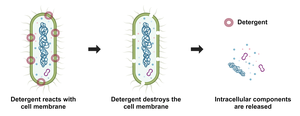
Alteration of Membrane Permeability: Disrupts the plasma membrane, causing leakage of cellular contents and cell death.
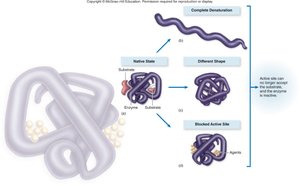
Damage to Proteins: Denaturation or alteration of proteins, including enzymes, blocks metabolic functions.
Damage to Nucleic Acids: Prevents replication and normal cellular function.
Physical Methods of Microbial Control
Moist Heat Sterilization
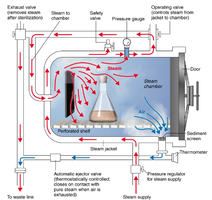
Autoclaving: Uses steam under pressure (121°C, 15 psi, 15 min) to denature proteins and sterilize materials. Steam must contact all surfaces.
Limitations: Not suitable for heat-sensitive materials; prion destruction requires higher temperature and longer time.
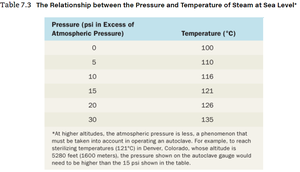
Pressure (psi above atmospheric) | Temperature (°C) |
|---|---|
0 | 100 |
5 | 110 |
10 | 116 |
15 | 121 |
20 | 126 |
30 | 135 |
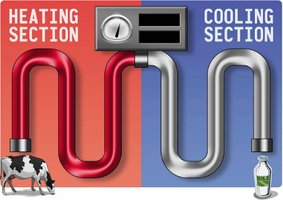
Pasteurization
Purpose: Reduces spoilage organisms and pathogens in food and beverages without damaging flavor or quality.
HTST (High-Temperature Short-Time): 72°C for 15 seconds (milk).
UHT (Ultra-High Temperature): 140°C for 4 seconds; sterilizes and allows storage without refrigeration.
Historical significance: Prevented diseases such as tuberculosis, typhoid fever, and diphtheria from contaminated milk.

Dry Heat Sterilization
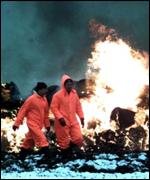
Mechanism: Kills by oxidation (e.g., flaming, incineration, hot-air ovens).
Applications: Sterilizing glassware, instruments, and carcasses.
Filtration
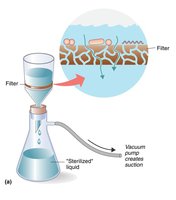
HEPA Filters: Remove microbes >0.3 μm from air.
Membrane Filters: Remove bacteria (0.2–0.4 μm) and viruses (0.01 μm) from liquids.
Other Physical Methods
Low Temperature: Refrigeration slows growth (bacteriostatic); deep freezing and lyophilization preserve microbes.
Desiccation: Removes water, preventing metabolism but not necessarily killing microbes.
Osmotic Pressure: High salt or sugar concentrations cause plasmolysis, inhibiting growth.
Radiation
Ionizing Radiation (X-rays, gamma rays): Produces free radicals that damage DNA; used for sterilizing heat-sensitive materials and food.
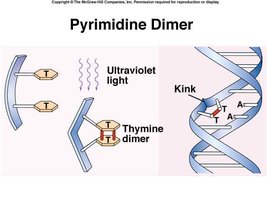
Nonionizing Radiation (UV): Causes thymine dimers in DNA, inhibiting replication; used for surface and air disinfection.
Chemical Methods of Microbial Control
Evaluating Disinfectants
Use-Dilution Test: Determines effectiveness of disinfectants against selected microbes.
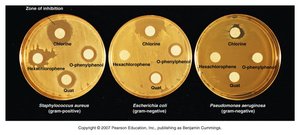
Disk-Diffusion Method: Chemical-soaked disks placed on inoculated agar; zone of inhibition indicates effectiveness.
Types of Chemical Disinfectants
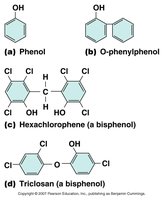
Phenols and Derivatives: Disrupt plasma membranes and denature proteins. Examples: phenol, phenolics (Lysol), bisphenols (hexachlorophene, triclosan).
Halogens: Chlorine (forms hypochlorous acid in water, broad spectrum), iodine (tinctures and iodophors, e.g., Betadine).
Alcohols: Denature proteins and dissolve lipids; effective against bacteria and enveloped viruses, not endospores or nonenveloped viruses.
Heavy Metals: Oligodynamic action; silver nitrate (antiseptic), copper (algicide), zinc (mouthwashes, antifungal paints).
Soaps and Detergents: Mechanical removal of microbes; not true disinfectants or antiseptics.
Quaternary Ammonium Compounds (Quats): Cationic detergents, strongly bactericidal against Gram-positive bacteria; disrupt plasma membranes.
Organic Acids: Inhibit metabolism; used as food preservatives (sorbic acid, benzoic acid).
Aldehydes: Inactivate proteins by cross-linking; glutaraldehyde (liquid sterilant), formaldehyde (formalin for embalming, vaccine preparation).
Gaseous Sterilants: Ethylene oxide; highly penetrating, used for medical equipment sterilization.
Oxidizing Agents: Hydrogen peroxide; effective against anaerobes, used for inanimate objects and packaging.
Microbial Characteristics and Resistance to Control Agents
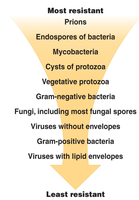
Most Resistant: Prions, endospores, mycobacteria, cysts of protozoa.
Moderately Resistant: Gram-negative bacteria, fungi, viruses without envelopes.
Least Resistant: Gram-positive bacteria, viruses with lipid envelopes.
Enveloped vs. Nonenveloped Viruses
Enveloped viruses: More susceptible to lipid-soluble agents (e.g., alcohols, quats) because disruption of the envelope inactivates the virus.
Naked viruses: More resistant to drying, acids, and detergents; can survive longer on surfaces and are more likely to be transmitted via contaminated materials.
Summary Table: Methods of Microbial Control
Method | Mechanism | Application |
|---|---|---|
Autoclaving | Moist heat denatures proteins | Media, labware, surgical instruments |
Pasteurization | Reduces pathogens, not sterilization | Milk, juices, eggs |
Filtration | Physical removal | Heat-sensitive liquids, air |
Radiation | Damages DNA | Medical supplies, food |
Alcohols | Denature proteins, dissolve lipids | Skin, surfaces |
Halogens | Oxidize cellular components | Water, skin, surfaces |
Quats | Disrupt membranes | Surfaces, equipment |
Conclusion
Effective microbial control requires understanding the mechanisms, applications, and limitations of physical and chemical agents. Selection of appropriate methods depends on the type of microbe, the environment, and the intended use of the treated material.
