 Back
BackCharacterizing and Classifying Eukaryotes: Microbiology Study Notes
Study Guide - Smart Notes
 Tailored notes based on your materials, expanded with key definitions, examples, and context.
General Characteristics of Eukaryotic Organisms
Overview of Eukaryotic Microorganisms
Eukaryotic microorganisms include a diverse array of life forms such as protozoa, fungi, algae, slime molds, and water molds. These organisms are significant both as human pathogens and as vital contributors to ecological and biological processes.
Reproduction in Eukaryotes
Eukaryotic reproduction is more complex than that of prokaryotes, involving both asexual and sexual mechanisms. Most eukaryotic DNA is organized into chromosomes within a nucleus, and reproduction may involve mitosis or meiosis.
Asexual reproduction: Methods include binary fission, budding, and spore formation.
Sexual reproduction: Involves gamete formation and fusion to produce zygotes.
Haploid vs. Diploid: Haploid cells contain a single genome copy; diploid cells contain two.
Nuclear Division: Mitosis and Meiosis
Nuclear division in eukaryotes can be classified as mitosis (producing genetically identical cells) or meiosis (producing genetically diverse gametes).
Cytoplasmic Division and Schizogony
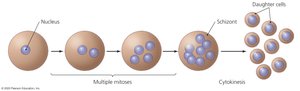
Cytoplasmic division (cytokinesis) follows nuclear division. Some protozoa undergo schizogony, a process involving multiple rounds of nuclear division before cytoplasmic division, resulting in many daughter cells.
Classification of Eukaryotes
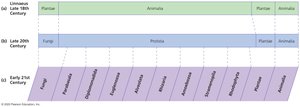
Early classification schemes relied on structural similarities, but modern taxonomy emphasizes nucleotide sequence similarities. Classification has evolved significantly over time.
Protozoa
General Characteristics
Protozoa are a diverse group of unicellular, eukaryotic organisms lacking a cell wall. Most are motile via cilia, flagella, or pseudopods, except for apicomplexans.
Distribution and Ecology
Protozoa require moist environments and are commonly found in aquatic habitats and soil. They are critical members of plankton and play roles in nutrient cycling.
Morphology
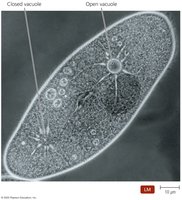
Protozoa exhibit great morphological diversity. Some possess two nuclei (macronucleus and micronucleus), various mitochondria, and contractile vacuoles for osmoregulation. Their life cycle includes a motile feeding stage (trophozoite) and a resting stage (cyst).
Nutrition
Most protozoa are chemoheterotrophic, ingesting bacteria, organic matter, or host tissues.
Some, like dinoflagellates and euglenoids, are photoautotrophic.
Reproduction
Most reproduce asexually (binary fission, schizogony).
Some reproduce sexually via gametocyte fusion or conjugation.
Classification of Protozoa
Protozoa are classified into several groups based on genetic and morphological traits:
Parabasala: Lack mitochondria, have a parabasal body. Example: Trichomonas vaginalis.
Diplomonadida: Lack mitochondria, have mitosomes, two nuclei, multiple flagella. Example: Giardia.
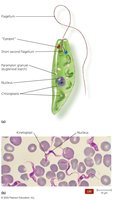
Euglenozoa: Plant- and animal-like traits, flagella with crystalline rods, disk-shaped mitochondrial cristae. Includes euglenids (photoautotrophic) and kinetoplastids (Trypanosoma, Leishmania).
Alveolates: Membrane-bound alveoli, includes ciliates, apicomplexans (Plasmodium, Cryptosporidium), and dinoflagellates.
Rhizaria: Amoebae with threadlike pseudopods, includes foraminifera and radiolaria.
Amoebozoa: Amoebae with lobe-shaped pseudopods, includes slime molds and pathogens (Naegleria, Acanthamoeba, Entamoeba).
Fungi
General Characteristics
Fungi are chemoheterotrophic eukaryotes with cell walls composed of chitin. They lack chlorophyll and do not perform photosynthesis. Fungi are closely related to animals.
Significance of Fungi
Decompose dead organisms and recycle nutrients.
Assist plants in water and mineral absorption.
Used in food production, religious ceremonies, and pharmaceuticals.
Produce antibiotics and other drugs.
30% cause diseases in plants, animals, and humans.
Can spoil food products.
Morphology of Fungi
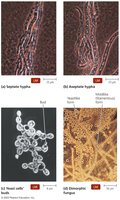
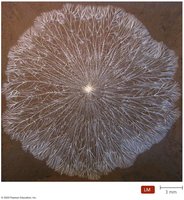
Molds: Composed of long filaments called hyphae.
Yeasts: Small, globular, single-celled.
Dimorphic fungi: Exhibit both yeastlike and moldlike forms depending on environmental conditions.
Nutrition of Fungi
Acquire nutrients by absorption; most are saprobes.
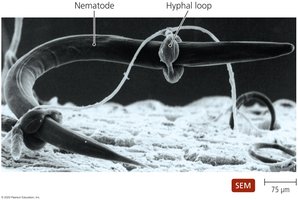
Some trap and kill nematodes; haustoria allow nutrient extraction from living hosts.
Most fungi are aerobic; many yeasts are facultative anaerobes.
Reproduction in Fungi
All fungi reproduce asexually via mitosis and cytokinesis.
Most also reproduce sexually.
Budding and asexual spore formation are common in yeasts and molds.
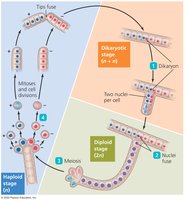
Sexual reproduction involves mating types designated as "plus" and "minus" and follows four basic steps.
Classification of Fungi
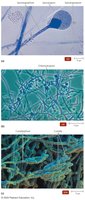
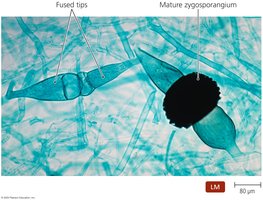
Division Zygomycota: Saprobes or obligate parasites, reproduce via sporangiospores. Includes microsporidia (obligate intracellular parasites).
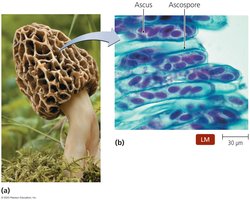
Division Ascomycota: Form ascospores in asci, reproduce asexually by conidiospores. Includes Penicillium, Saccharomyces.
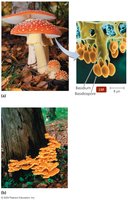
Division Basidiomycota: Mushrooms and basidiocarps, decomposers, some produce toxins or cause crop damage.
Deuteromycetes: Fungi with unknown sexual stages.
Algae
General Characteristics
Algae are simple, eukaryotic photoautotrophs with sexual reproductive structures. They differ widely in distribution, morphology, reproduction, and biochemical traits.
Distribution
Most algae are aquatic, living in the photic zone of water bodies. Accessory pigments allow them to inhabit deeper regions.
Morphology
Unicellular, colonial, or simple multicellular forms.
Marine algae may have holdfasts for anchoring.
Reproduction
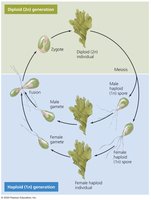
Unicellular algae reproduce asexually via mitosis and cytokinesis; sexually via gamete fusion and meiosis.
Multicellular algae reproduce asexually by fragmentation and sexually with alternation of generations.
Classification of Algae
Algae classification is unsettled, with schemes based on pigments, storage products, and cell wall composition. Major groups include:
Division Chlorophyta (Green Algae)
Kingdom Rhodophyta (Red Algae)
Phaeophyta (Brown Algae)
Chrysophyta (Golden Algae, Yellow-Green Algae, Diatoms)
Water Molds
General Characteristics
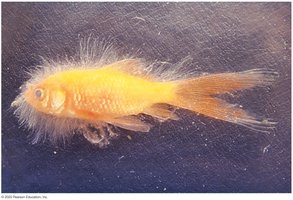
Water molds differ from fungi in several ways: they have tubular cristae in mitochondria, cell walls of cellulose, spores with two flagella, and true diploid bodies. They decompose dead animals and recycle nutrients; some are crop pathogens.
Other Eukaryotes of Microbiological Interest: Parasitic Helminths and Arthropod Vectors
Parasitic Helminths
Parasitic worms (helminths) have microscopic infective and diagnostic stages. They are important in human and animal disease.
Arthropod Vectors
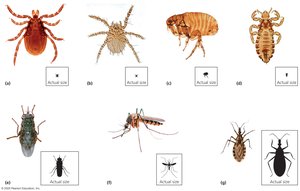
Arthropod vectors are animals that carry pathogens. They are classified as mechanical or biological vectors and belong to two classes: Arachnida and Insecta.
Arachnids: Four pairs of legs; ticks are prominent vectors, some mites transmit diseases.
Insects: Three pairs of legs, three body regions; includes fleas, lice, flies, mosquitoes, and kissing bugs.
 ----------------------------------------
