 Back
Backchapter 12
Study Guide - Smart Notes
 Tailored notes based on your materials, expanded with key definitions, examples, and context.
General Characteristics of Eukaryotic Organisms
Reproduction of Eukaryotes
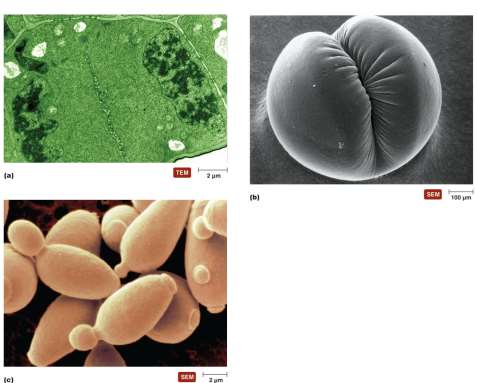
Eukaryotic organisms reproduce through complex processes involving nuclear division and cytoplasmic division. The two main types of nuclear division are mitosis and meiosis. Cytokinesis, the division of the cytoplasm, typically occurs simultaneously with telophase of mitosis, but in some algae and fungi, it may be delayed or absent, resulting in coenocytic (multinucleate) cells.
Schizogony
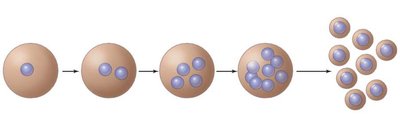
Some protozoa reproduce by schizogony, a process involving multiple rounds of nuclear division before cytokinesis. This results in a multinucleate cell called a schizont, which then divides to produce several uninucleate daughter cells known as merozoites.
Protozoa
General Features
Protozoa are a diverse group of unicellular, eukaryotic organisms that lack cell walls. They are typically motile, using cilia, flagella, or pseudopods for movement, except for the apicomplexans, which are non-motile and parasitic. Protozoa inhabit a variety of environments, including aquatic and terrestrial habitats, but only a few are pathogenic to humans.
Morphology of Protozoa
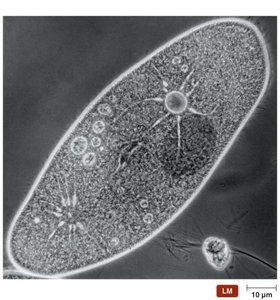
Protozoa exhibit great morphological diversity. Some species possess two types of nuclei: a macronucleus (involved in metabolism and sexual reproduction) and a micronucleus (involved in sexual reproduction). The number of mitochondria varies, and some protozoa lack them entirely. Many protozoa have contractile vacuoles to expel excess water. Their life cycles often include a motile feeding stage called a trophozoite and a dormant, resistant stage called a cyst.
Nutrition of Protozoa
Most protozoa are chemoheterotrophic, obtaining nutrients by ingesting bacteria, organic matter, other protozoa, or host tissues. Some absorb nutrients directly from their environment. Notably, dinoflagellates and euglenoids are photoautotrophic, containing chloroplasts for photosynthesis.
Reproduction of Protozoa
Protozoa primarily reproduce asexually by binary fission or schizogony. Some species also undergo sexual reproduction, forming gametocytes that fuse to create diploid zygotes.
Classification of Protozoa
Protozoa are classified into several groups based on molecular and morphological characteristics:
Parabasala: Lack mitochondria, possess a parabasal body. Examples: Trichonympha (symbiont in termites), Trichomonas (causes sexually transmitted disease).
Diplomonadida: Lack mitochondria, have two nuclei and multiple flagella. Example: Giardia.
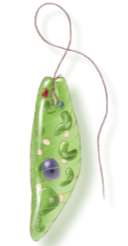
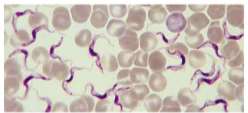
Euglenozoa: Exhibit features of both plants and animals, possess flagella and mitochondria. Includes euglenids (photoautotrophic, e.g., Euglena) and kinetoplastids (some pathogenic, e.g., Trypanosoma, Leishmania).
Alveolates: Characterized by the presence of alveoli beneath the cell membrane. Subgroups include:
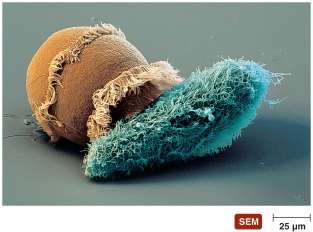
Ciliates: Move using cilia, have two nuclei. Example: Balantidium (pathogenic to humans).
Apicomplexans: Non-motile, obligate intracellular parasites. Examples: Plasmodium, Cryptosporidium, Toxoplasma.
Dinoflagellates: Unicellular, photosynthetic, possess flagella. Some cause red tides and produce neurotoxins (e.g., Gymnodinium, Gonyaulax).
Rhizaria and Amoebozoa: Move using pseudopodia. Some are pathogenic, such as Naegleria, Acanthamoeba, and Entamoeba.
Fungi
General Characteristics
Fungi are chemoheterotrophic eukaryotes with cell walls composed primarily of chitin. Unlike plants, fungi do not perform photosynthesis. They are more closely related to animals but are distinguished by their cell wall composition.
Significance of Fungi
Fungi play essential ecological roles as decomposers, recycling nutrients from dead organisms. They are used in food production, beverage fermentation, and the manufacture of antibiotics and other drugs. However, about 30% of fungi are pathogenic, causing diseases (mycoses) in plants, animals, and humans.
Morphology of Fungi
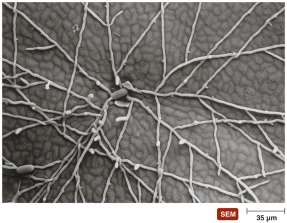
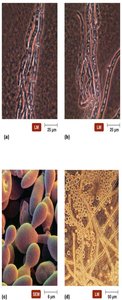
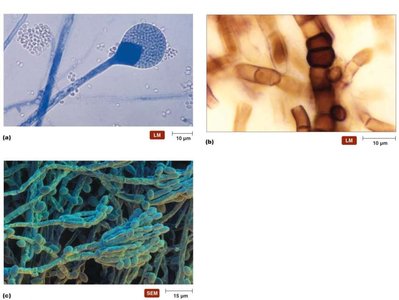
Fungi exhibit two main morphological forms: moldlike (filamentous) and yeastlike (unicellular). Some fungi are dimorphic, existing as molds at room temperature and as yeasts at body temperature. Fungal filaments are called hyphae, which may be septate (divided by cross-walls) or aseptate (coenocytic, lacking cross-walls). Yeasts may form pseudohyphae by incomplete budding.
Nutrition of Fungi
Fungi absorb nutrients from their environment by secreting exoenzymes. Most are saprobes (decomposers), and while most fungi are aerobic, many yeasts are facultative anaerobes.
Reproduction of Fungi
Fungi reproduce by both asexual and sexual means. Yeasts reproduce by budding, while filamentous fungi produce asexual spores. Sexual reproduction involves the fusion of different mating types, designated as "+" and "–". Common asexual spores include sporangiospores, chlamydospores, and conidiospores.
Classification of Fungi
Fungi are classified into several divisions based on their reproductive structures:
Zygomycota: Most are saprobes; some are obligate parasites. Reproduce asexually via sporangiospores. Example: Rhizopus.
Ascomycota: Form sexual spores called ascospores in sacs called asci; also reproduce by conidiospores. Includes many food spoilage fungi and beneficial genera such as Penicillium and Saccharomyces.
Basidiomycota: Produce fruiting bodies called basidiocarps (e.g., mushrooms). Basidia produce basidiospores. Example: Cryptococcus neoformans.
Deuteromycetes: Fungi with unknown sexual stages; most are now classified as ascomycetes based on rRNA analysis.
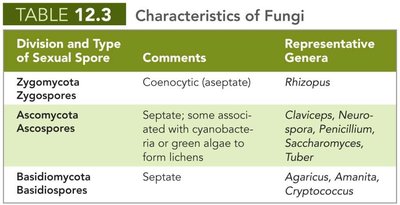
Division and Type of Sexual Spore | Comments | Representative Genera |
|---|---|---|
Zygomycota Zygospores | Coenocytic (aseptate) | Rhizopus |
Ascomycota Ascospores | Septate; some associated with cyanobacteria or green algae to form lichens | Claviceps, Neurospora, Penicillium, Saccharomyces, Tuber |
Basidiomycota Basidiospores | Septate | Agaricus, Amanita, Cryptococcus |
Other Eukaryotes of Microbiological Interest: Parasitic Helminths and Vectors
Parasitic Helminths
Parasitic worms (helminths) have microscopic infective and diagnostic stages, making them relevant to microbiology. They include nematodes (roundworms), trematodes (flukes), and cestodes (tapeworms).
Arthropod Vectors
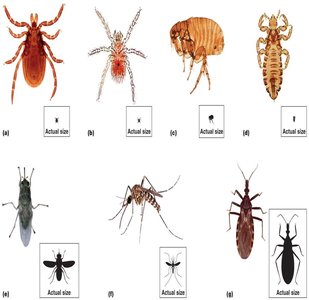
Arthropods can act as vectors, transmitting pathogens to humans and animals. Vectors are classified as mechanical (carry pathogens on their bodies) or biological (pathogens complete part of their life cycle within the vector). Disease vectors belong to two main classes: Arachnida (e.g., ticks, mites) and Insecta (e.g., mosquitoes, fleas, lice).
Additional info: The above notes integrate and expand upon the provided lecture content, ensuring a comprehensive overview suitable for microbiology students studying eukaryotic microorganisms.
