 Back
BackCharacterizing and Classifying Prokaryotes: Structure, Diversity, and Taxonomy
Study Guide - Smart Notes
 Tailored notes based on your materials, expanded with key definitions, examples, and context.
Characterizing and Classifying Prokaryotes
General Characteristics of Prokaryotic Organisms
Prokaryotes are the most numerous and diverse group of cellular microbes, thriving in a wide range of habitats. Only a small fraction are capable of colonizing humans and causing disease. Their diversity is reflected in their morphology, reproductive strategies, and metabolic capabilities.
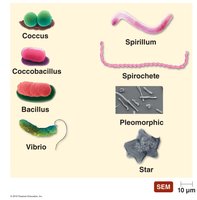
Basic Shapes: Prokaryotes exhibit several fundamental shapes, including coccus (spherical), bacillus (rod-shaped), vibrio (curved rods), spirillum (thick, rigid spiral), spirochete (thin, flexible spiral), and less common forms such as coccobacillus, star-shaped, triangular, rectangular, and pleomorphic (variable shapes).
Pleomorphism: Some prokaryotes can vary in shape and size depending on environmental conditions.
Endospores
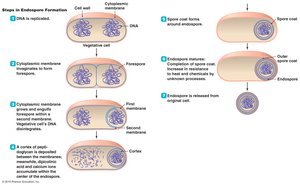
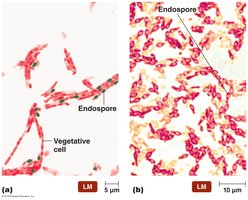
Endospores are highly resistant, dormant structures produced mainly by Gram-positive genera such as Bacillus and Clostridium. They serve as a defensive strategy against unfavorable conditions and are of significant concern in food safety and healthcare due to their resistance to heat, chemicals, and radiation.
Sporulation: The process of endospore formation, typically taking 8–10 hours, involves the replication of DNA, formation of a forespore, and development of a tough spore coat.
Endospore Location: Endospores may form centrally, subterminally, or terminally within the cell.
Reproduction in Prokaryotes
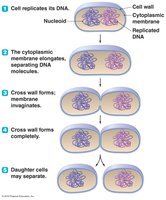
Prokaryotic cells reproduce asexually through several mechanisms, contributing to their rapid population growth and adaptability.
Binary Fission: The most common method, involving DNA replication, elongation, and division into two daughter cells.
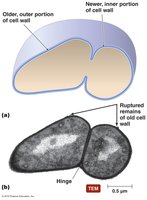
Snapping Division: A variation of binary fission seen in some Gram-positive bacilli, where tension in the cell wall causes it to snap, leaving daughter cells attached by a hinge.
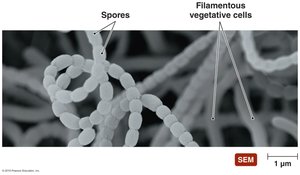
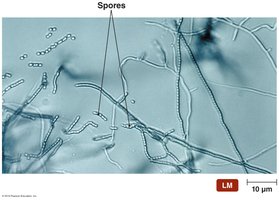
Reproductive Spores: Some prokaryotes form spores as a means of reproduction, especially in filamentous bacteria.
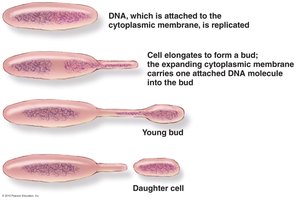
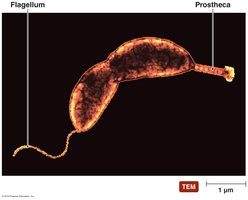
Budding: An outgrowth of the parent cell receives a copy of DNA and eventually separates as a new cell.
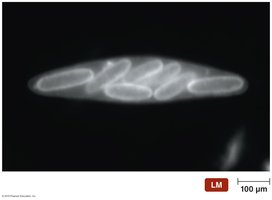
Viviparity: Rare in prokaryotes, this involves live offspring emerging from the parent cell, as seen in Epulopiscium.
Cellular Arrangements
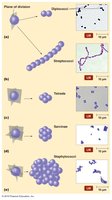
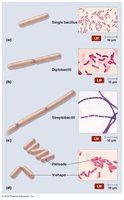
The arrangement of prokaryotic cells is determined by the planes of division and whether daughter cells remain attached after division. This is especially notable in cocci and bacilli.
Cocci Arrangements: Diplococci (pairs), streptococci (chains), tetrads (squares of four), sarcinae (cubes of eight), staphylococci (grape-like clusters).
Bacilli Arrangements: Single bacilli, diplobacilli (pairs), streptobacilli (chains), V-shaped, and coccobacilli (oval-shaped).
Modern Prokaryotic Classification
Taxonomic Principles
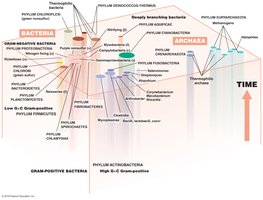
Modern classification of prokaryotes is based primarily on genetic relatedness, especially rRNA sequence similarities. All organisms are classified into three domains: Archaea, Bacteria, and Eukarya. Most prokaryotes have not been cultured and are known only by their genetic fingerprints.
Bergey's Manual of Systematic Bacteriology: The primary reference for prokaryotic classification, organizing them into 26 phyla (2 Archaea, 24 Bacteria) based on evolutionary relationships.
Survey of Archaea
General Features
Archaea are prokaryotes distinct from bacteria, characterized by unique cell wall and membrane chemistry. They lack true peptidoglycan, have branched hydrocarbon chains in their membranes, and use methionine as the initiator amino acid in protein synthesis. Archaea are not known to cause disease.
Reproduction: Binary fission, budding, or fragmentation.
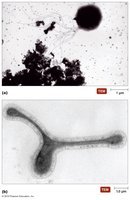
Cell Shapes: Cocci, bacilli, spirals, or pleomorphic forms.
Extremophiles
Many archaea are extremophiles, thriving in environments with extreme temperature, pH, or salinity.
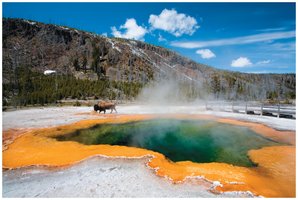
Thermophiles: Require temperatures above 45°C. Genera such as Geogemma and Pyrodictium live in hot springs and hydrothermal vents. Their enzymes are valuable in biotechnology and industry.
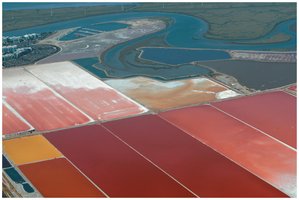
Halophiles: Inhabit highly saline environments (e.g., Dead Sea, Great Salt Lake). Halobacterium salinarium is a well-studied example, using bacteriorhodopsins for ATP production.
Methanogens: Obligate anaerobes that produce methane from CO2, H2, and organic acids. They play a key role in carbon cycling and sewage treatment.
Survey of Bacteria
Deeply Branching Bacteria
These bacteria are considered to be among the earliest forms of life, with growth characteristics and rRNA sequences similar to ancient bacteria. They are autotrophic and inhabit environments resembling early Earth.
Aquifex: Gram-negative, earliest branch of bacteria.
Deinococcus: Gram-positive, highly resistant to radiation.
Phototrophic Bacteria
Phototrophic bacteria use light as an energy source and are divided into groups based on pigments and electron donors.
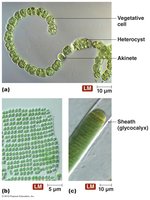
Cyanobacteria (Blue-green bacteria): Gram-negative, contain chlorophyll a, produce O2, and can fix nitrogen in specialized cells called heterocysts.
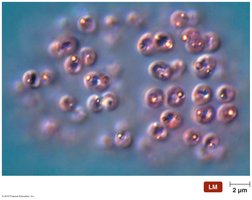
Green and Purple Bacteria: Use bacteriochlorophylls, are anoxygenic (do not produce O2), and are found in H2S-rich environments. Green sulfur bacteria deposit sulfur outside cells; purple sulfur bacteria deposit it inside.
Class | Common Name(s) | Major Photosynthetic Pigments | Type of Photosynthesis | Electron Donor | Nitrogen Fixation | Motility |
|---|---|---|---|---|---|---|
Cyanobacteria | Blue-green bacteria | Chlorophyll a | Oxygenic | H2O | Some species | Gliding |
Chlorobi | Green sulfur bacteria | Bacteriochlorophylls | Anoxygenic | H2S, S, H2 | None | Nonmotile |
Chloroflexi | Green nonsulfur bacteria | Bacteriochlorophylls | Anoxygenic | Organic compounds | None | Gliding |
Proteobacteria (purple sulfur) | Purple sulfur bacteria | Bacteriochlorophylls | Anoxygenic | H2S, S | None | Motile with polar flagella |
Proteobacteria (purple nonsulfur) | Purple nonsulfur bacteria | Bacteriochlorophylls | Anoxygenic | Organic compounds | None | Motile with polar flagella |
Low G+C Gram-Positive Bacteria (Phylum Firmicutes)
These bacteria have a genomic G+C content below 50% and include several medically and industrially important genera.
Clostridia: Obligate anaerobes, many form endospores, produce toxins causing diseases such as tetanus, gangrene, and botulism.
Mycoplasmas: Lack cell walls, smallest free-living cells, cause respiratory and urogenital infections.
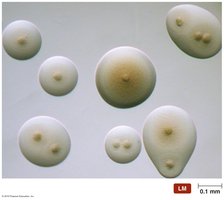
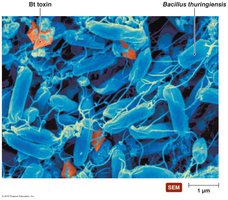
Bacillus: Endospore-forming aerobes/facultative anaerobes, includes B. anthracis (anthrax) and B. thuringiensis (insecticide toxin producer).
Listeria: Survives refrigeration, can cause meningitis and fetal death in pregnant women.
Lactobacillus: Non-spore-forming, beneficial in human microbiota and food production.
Streptococcus, Enterococcus, Staphylococcus: Cocci causing a variety of human diseases.
Phylum/Class | G+C % | Representative Genera | Special Characteristics | Diseases |
|---|---|---|---|---|
Clostridia | Low (<50%) | Clostridium | Obligate anaerobes, endospore formers | Tetanus, botulism, gangrene, diarrhea |
Mycoplasmas | Low (<50%) | Mycoplasma | Lack cell walls, smallest free-living cells | Pneumonia, pelvic inflammatory disease |
Bacilli | Low (<50%) | Bacillus, Listeria, Lactobacillus, Streptococcus, Enterococcus, Staphylococcus | Endospore formers, food spoilage, pathogens | Anthrax, meningitis, food poisoning, toxic shock |
High G+C Gram-Positive Bacteria (Phylum Actinobacteria)
These bacteria have a G+C content above 50% and include important pathogens and antibiotic producers.
Corynebacterium: Pleomorphic rods, cause diphtheria.
Mycobacterium: Acid-fast rods, slow-growing, cause tuberculosis and leprosy.
Actinomycetes: Filamentous, resemble fungi, produce antibiotics (e.g., Streptomyces).
Phylum/Class | G+C % | Representative Genera | Special Characteristics | Diseases |
|---|---|---|---|---|
Actinobacteria | High (>50%) | Corynebacterium, Mycobacterium, Actinomyces, Nocardia, Streptomyces | Filamentous, produce antibiotics, acid-fast | Diphtheria, tuberculosis, leprosy, actinomycosis |
Gram-Negative Proteobacteria
Proteobacteria is the largest and most diverse group of Gram-negative bacteria, divided into five classes: Alpha-, Beta-, Gamma-, Delta-, and Epsilonproteobacteria.
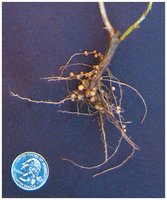
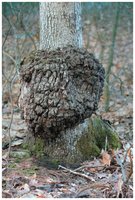
Alphaproteobacteria: Includes nitrogen-fixers (Azospirillum, Rhizobium), nitrifying bacteria (Nitrobacter), purple nonsulfur phototrophs, and pathogens (Rickettsia, Brucella).
Betaproteobacteria: Includes Neisseria (gonorrhea, meningitis), Bordetella (whooping cough), and Burkholderia (respiratory infections).
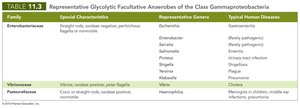
Gammaproteobacteria: Includes purple sulfur bacteria, intracellular pathogens (Legionella, Coxiella), methane oxidizers, glycolytic facultative anaerobes (e.g., Escherichia, Salmonella), and pseudomonads (Pseudomonas).
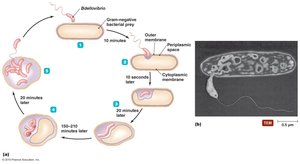
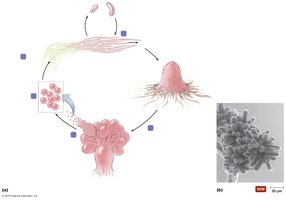
Deltaproteobacteria: Includes Desulfovibrio (sulfur recycling), Bdellovibrio (predator of other bacteria), and myxobacteria (fruiting body formation).
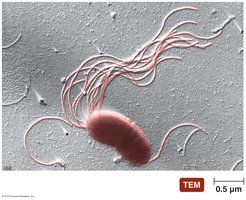
Epsilonproteobacteria: Includes Campylobacter (gastroenteritis) and Helicobacter (ulcers).
Other Gram-Negative Bacteria
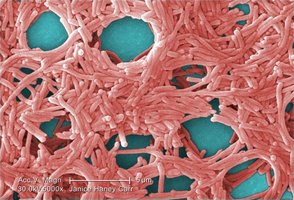
Chlamydias: Intracellular pathogens, lack peptidoglycan, cause sexually transmitted infections.
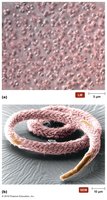
Spirochetes: Helical, motile bacteria, cause syphilis (Treponema) and Lyme disease (Borrelia burgdorferi).
Bacteroids: Inhabit digestive tracts, some species cause infections; Cytophaga degrades sewage.
Summary Table: Selected Gram-Negative Bacteria
Phylum/Class | Representative Members | Special Characteristics | Diseases |
|---|---|---|---|
Alphaproteobacteria | Azospirillum, Rhizobium, Nitrobacter, Rickettsia, Brucella, Agrobacterium | Nitrogen fixation, plant pathogens, intracellular pathogens | Typhus, Rocky Mountain spotted fever, brucellosis |
Betaproteobacteria | Neisseria, Bordetella, Burkholderia | Pathogenic, respiratory and urogenital infections | Gonorrhea, meningitis, whooping cough |
Gammaproteobacteria | Legionella, Coxiella, Escherichia, Salmonella, Pseudomonas | Intracellular pathogens, glycolytic metabolism, environmental versatility | Legionnaires' disease, Q fever, gastroenteritis, pneumonia |
Deltaproteobacteria | Desulfovibrio, Bdellovibrio, Myxobacteria | Sulfur reduction, predation, fruiting body formation | — |
Epsilonproteobacteria | Campylobacter, Helicobacter | Curved rods, spiral | Gastroenteritis, ulcers |
Chlamydiae | Chlamydia | Intracellular, lacks peptidoglycan | Chlamydia infections |
Spirochetes | Treponema, Borrelia | Motile by axial filaments | Syphilis, Lyme disease |
Bacteroidetes | Bacteroides, Cytophaga | Digestive tract inhabitants, sewage degradation | Abdominal infections |
