 Back
BackCharacterizing and Classifying Prokaryotes: Structure, Function, and Diversity
Study Guide - Smart Notes
 Tailored notes based on your materials, expanded with key definitions, examples, and context.
General Characteristics of Prokaryotes
Introduction to Prokaryotes
Prokaryotes are the most diverse group of organisms on Earth, inhabiting environments ranging from Antarctic glaciers to thermal hot springs, and from animal colons to disinfectant solutions. Despite their ubiquity, relatively few prokaryotes colonize humans and animals or cause disease. Only a subset possesses virulence factors such as enzymes, toxins, or specialized cellular structures that enable colonization and pathogenesis.
Reproduction of Prokaryotic Cells
Binary Fission
Binary fission is the most common method of asexual reproduction in prokaryotes. The process involves:
DNA Replication: The cell replicates its DNA by semiconservative replication, resulting in two DNA molecules, each with one original and one new strand.
Cell Growth: The cell elongates, and the cytoplasmic membrane moves the DNA molecules apart.
Cross Wall Formation: A cross wall forms, invaginating the membrane and dividing the cell.
Separation: The cross wall completely divides the daughter cells, which may separate or remain attached.
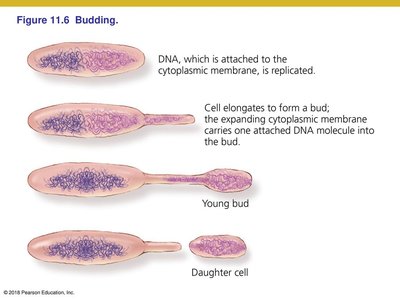
Budding
Budding is another form of asexual reproduction, less common than binary fission. In this process, an outgrowth (bud) forms on the parent cell, receives a copy of DNA, enlarges, and eventually separates as a smaller daughter cell.
Morphology and Arrangement of Prokaryotic Cells
Common Morphologies
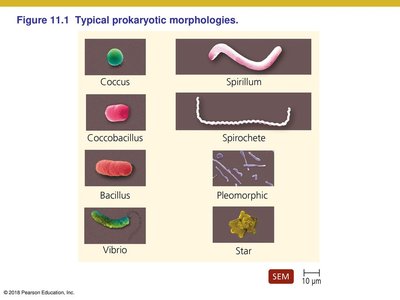
Prokaryotes exhibit a variety of shapes (morphologies), including:
Coccus: Spherical
Bacillus: Rod-shaped
Coccobacillus: Short rods, intermediate between cocci and bacilli
Vibrio: Curved rods
Spirillum: Rigid spiral-shaped
Spirochete: Flexible, helical shape
Pleomorphic: Variable shapes
Star-shaped: Rare, star-like morphology
Cell Arrangements
Arrangements arise from the pattern of cell division and whether cells remain attached:
Diplo-: Pairs
Strepto-: Chains
Staphylo-: Clusters
These arrangements are important for identification and classification in microbiology.
Endospores
Formation and Function
Some Gram-positive genera, notably Bacillus and Clostridium, produce endospores as a defensive strategy against unfavorable conditions. Endospores are dormant, highly resistant structures that can survive extreme heat, desiccation, chemicals, and radiation. They are not reproductive structures; each vegetative cell forms one endospore, which can later germinate into a new vegetative cell.
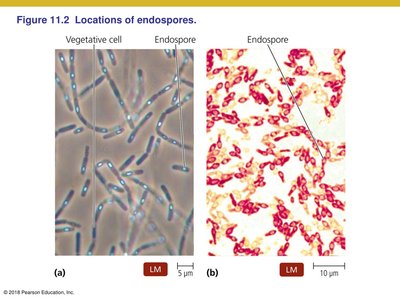
Endospore formation is a major concern in food safety, healthcare, and bioterrorism due to their durability and association with deadly toxins (e.g., anthrax, tetanus, botulism).
Modern Prokaryotic Classification
Three Domains of Life
Organisms are classified into three domains based on genetic relatedness, especially rRNA sequences:
Bacteria
Archaea
Eukarya
Classification also considers morphological, cultural, and physiological characteristics. Bergey’s Manual of Systematic Bacteriology is the standard reference for bacterial taxonomy, organizing prokaryotes into 29 phyla (5 in Archaea, 24 in Bacteria).
Carl Woese was instrumental in developing rRNA sequencing for classification.
Survey of Domain Bacteria
Gram-Positive Bacteria
Gram-positive bacteria are divided based on their G+C content:
Low G+C Gram-positives: Clostridium, Bacillus, Listeria, Lactobacillus, Streptococcus, Enterococcus, Staphylococcus
High G+C Gram-positives: Corynebacterium, Mycobacterium, Actinomyces, Streptomyces
Clostridium
Obligate anaerobes, endospore-forming rods
Produce potent toxins causing diseases such as botulism (C. botulinum), tetanus (C. tetani), gas gangrene (C. perfringens), and antibiotic-associated diarrhea (C. difficile).

Bacillus
Endospore-forming aerobes/facultative anaerobes, common in soil
B. anthracis causes anthrax; B. thuringiensis produces an insecticidal toxin; B. polymyxa produces the antibiotic polymyxin B.
Listeria
L. monocytogenes causes listeriosis, contaminates dairy and meat, can grow at refrigeration temperatures, and is dangerous to fetuses.
Lactobacillus
Normal flora in the human mouth, gut, and vagina; important in dairy fermentation (cheese, yogurt).
Protects against pathogens via microbial antagonism.
Streptococcus and Enterococcus
Normal flora; can cause pharyngitis, pneumonia, wound infections, and UTIs.
Some strains are multi-drug resistant.
Staphylococcus
Normal skin/nasal flora; S. aureus can cause a wide range of diseases including pneumonia, wound infections, and toxic shock syndrome.
High G+C Gram-positives
Corynebacterium: C. diphtheriae causes diphtheria; DTaP/TDaP vaccines are used for prevention.
Mycobacterium: Aerobic bacilli with mycolic acids in cell walls; slow-growing; require acid-fast staining. Includes M. tuberculosis (tuberculosis) and M. leprae (leprosy).
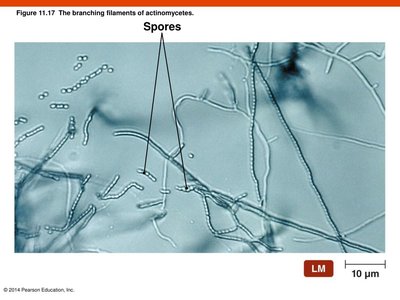
Actinomycetes: Filamentous bacteria resembling fungi; Actinomyces can cause abscesses; Streptomyces produce antibiotics (tetracycline, erythromycin, chloramphenicol).
Gram-Negative Proteobacteria
Classes and Key Genera
Alphaproteobacteria: Nitrogen fixers (Azospirillum, Rhizobium); pathogens include Rickettsia (Rocky Mountain spotted fever), Brucella (brucellosis), Ehrlichia (ehrlichiosis).
Betaproteobacteria: Pathogens include Neisseria (gonorrhea, meningitis) and Bordetella (whooping cough).
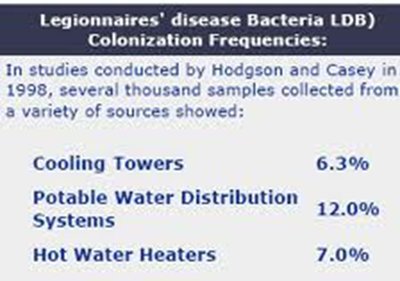
Gammaproteobacteria: Includes Legionella (Legionnaire’s disease), Pseudomonas (opportunistic infections, spoilage of refrigerated foods), and the Enterobacteriaceae family (e.g., E. coli).
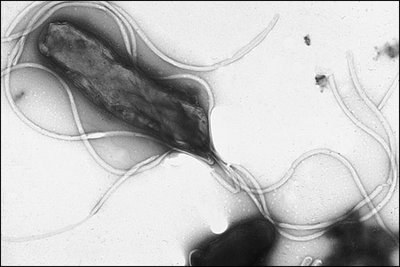
Epsilonproteobacteria: Helicobacter pylori causes gastric ulcers; Campylobacter jejuni causes food poisoning.
Other Gram-Negative Bacteria
Bacteroides
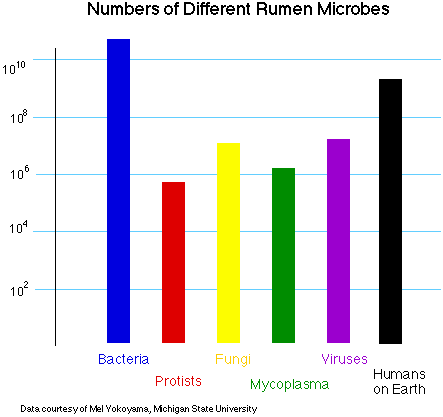
Obligate anaerobes, most numerous in the human colon.
Assist in digestion by breaking down complex carbohydrates; can cause infections if displaced from the gut.
Spirochetes
Helical bacteria with axial filaments for motility.
Treponema pallidum causes syphilis; Borrelia burgdorferi causes Lyme disease.
Medical and Economic Importance
Streptomyces: Soil-dwelling bacteria that produce many clinically important antibiotics.
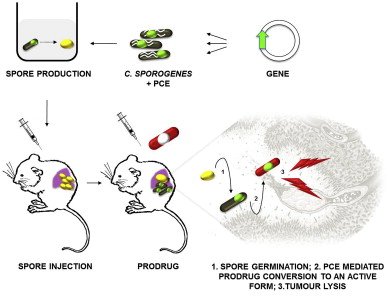
Clostridium: Used experimentally for cancer treatment by targeting anaerobic tumor environments.
Famous Contributors
Carl Woese: Developed rRNA sequencing for classification of life.
Barry Marshall & Robin Warren: Demonstrated that Helicobacter pylori causes gastric ulcers.
Willy Burgdorfer: Discovered Borrelia burgdorferi as the cause of Lyme disease.
Joseph E. McDade: Identified Legionella pneumophila as the cause of Legionnaire’s disease.
Gerhard Hansen: Discovered Mycobacterium leprae, the causative agent of leprosy.
Key Terms and Definitions
Binary fission: Asexual reproduction by division into two equal parts.
Budding: Asexual reproduction by formation of a new organism from a bud on the parent.
Morphology: The shape and structure of organisms.
Arrangement: The pattern of cell grouping after division.
Endospores: Dormant, resistant structures formed by some bacteria for survival.
Nitrogen fixation: Conversion of atmospheric nitrogen (N2) to ammonia (NH3).
Psychrophile: Organisms that grow optimally at low temperatures.
Spirochete: Flexible, spiral-shaped bacteria with axial filaments.
Summary Table: Key Genera and Their Importance
Genus | Key Feature | Medical/Economic Importance |
|---|---|---|
Clostridium | Endospore-forming, obligate anaerobe | Botulism, tetanus, gas gangrene, C. difficile infection |
Bacillus | Endospore-forming, aerobic/facultative | Anthrax, insecticide (B. thuringiensis), antibiotics |
Listeria | Psychrophilic, non-spore-forming | Listeriosis, foodborne illness |
Lactobacillus | Fermentative, normal flora | Dairy fermentation, microbial antagonism |
Streptococcus | Chains, normal flora | Pharyngitis, pneumonia, wound infections |
Staphylococcus | Clusters, normal flora | Pneumonia, wound infections, toxic shock |
Corynebacterium | Pleomorphic | Diphtheria |
Mycobacterium | Acid-fast, slow-growing | Tuberculosis, leprosy |
Streptomyces | Filamentous, soil-dweller | Antibiotic production |
Rickettsia | Obligate intracellular | Rocky Mountain spotted fever |
Brucella | Coccobacillus | Brucellosis |
Neisseria | Diplococci | Gonorrhea, meningitis |
Bordetella | Coccobacillus | Whooping cough |
Legionella | Intracellular pathogen | Legionnaire’s disease |
Pseudomonas | Flagellated rods | Opportunistic infections, food spoilage |
Helicobacter | Spiral, acidophile | Gastric ulcers |
Bacteroides | Obligate anaerobe | Digestion, gut infections |
Treponema | Spirochete | Syphilis |
Borrelia | Spirochete | Lyme disease |
