 Back
BackCharacterizing and Classifying Viruses & Prions: Study Guide
Study Guide - Smart Notes
 Tailored notes based on your materials, expanded with key definitions, examples, and context.
Chapter 13: Characterizing and Classifying Viruses & Prions
Vocabulary and Key Terms
Understanding the terminology is essential for mastering virology. Below are definitions and explanations of important terms:
Acellular: Not composed of cells; viruses and prions are acellular infectious agents.
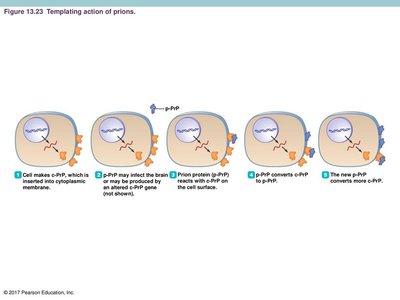
Prion: Proteinaceous infectious particle lacking nucleic acids, replicates by converting normal proteins into prions.
Capsid: Protein coat surrounding the nucleic acid core of a virion.
Envelope: Membrane surrounding the viral capsid, present in some animal viruses.
Tissue specificity: Viruses infect specific tissues due to receptor compatibility.
Bacteriophage: Virus that infects and usually destroys bacterial cells.
Prophage: Inactive bacteriophage inserted into a host’s chromosome.
Lysogenic phage: Bacteriophage that does not immediately kill its host.
Induction: Excision of a prophage from the host chromosome, reentering the lytic phase.
Retrovirus: +ssRNA virus using reverse transcriptase to transcribe DNA from RNA.
Transduction: Horizontal gene transfer via a replicating virus.
Lytic cycle: Viral replication process ending with lysis and release of new virions.
Are Viruses Alive?
Viruses are not considered living organisms for several reasons:
They are acellular and lack cellular structures.
They do not carry out metabolic pathways.
They cannot grow or respond to the environment.
They cannot reproduce independently; require a host cell.
Viruses are often described as complex pathogenic chemicals or the simplest living entities.
General Characteristics of Viruses
Viruses infect all types of living organisms but are obligate intracellular parasites. Their genomes can be DNA or RNA, and they are much smaller than prokaryotic or animal cells.
Genome types: dsDNA, ssDNA, dsRNA, ssRNA; linear or circular.
No cytoplasmic membrane, cytosol, or organelles.
Require host cell machinery for replication.
Structure of Viruses
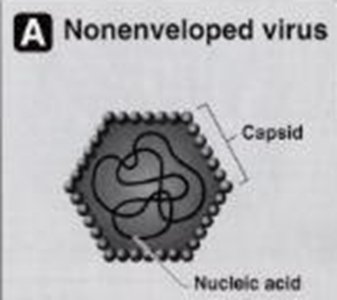
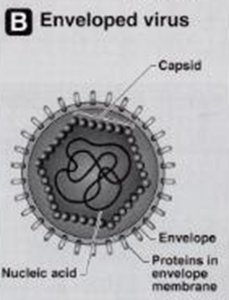
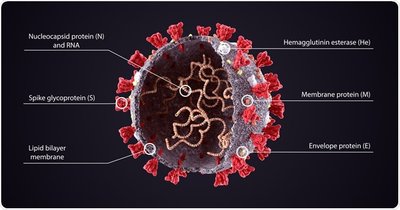
The basic structure includes a protein coat (capsid) and, in some animal viruses, a lipid envelope. The outermost layer provides protection and recognition sites for host cell binding.
Naked capsid viruses: More stable outside the host, but more exposed to immune attack.
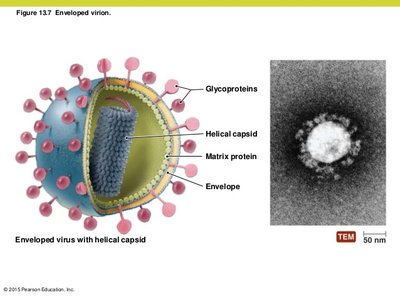
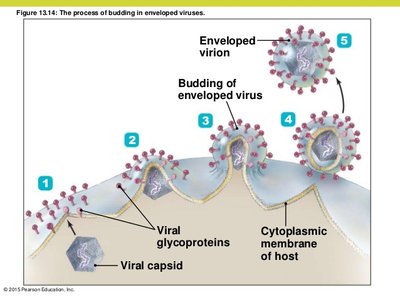
Enveloped viruses: Acquired from host cell membrane, provide some immune protection.
Shapes and Sizes of Virions
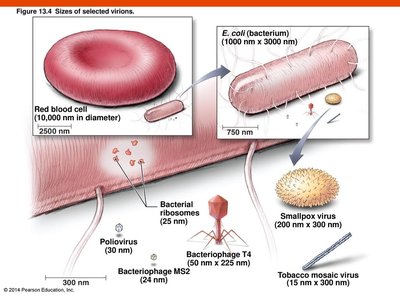
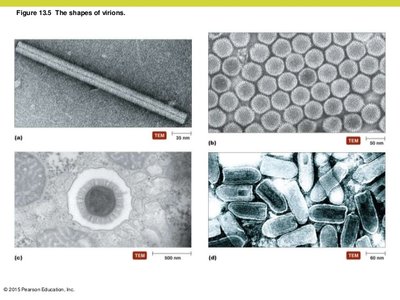
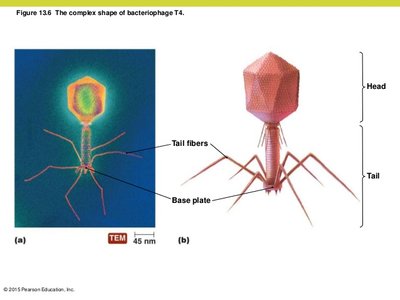
Virions exhibit diverse shapes and sizes, which are important for classification.
Helical, polyhedral, complex shapes (e.g., bacteriophage T4).
Size ranges from 15 nm (tobacco mosaic virus) to 300 nm (smallpox virus).
Viral Envelope
Only animal viruses possess envelopes, which are acquired during replication or release. The envelope consists of a phospholipid bilayer with proteins important for host cell recognition.
Enveloped viruses are more chemically similar to the host.
Naked viruses are more stable outside the host.
Genetic Material of Viruses
The type of genetic material is a primary classification criterion. Viruses may have DNA or RNA, which can be single or double-stranded, linear or circular.
Much smaller genomes than cells.
Host and Tissue Specificity
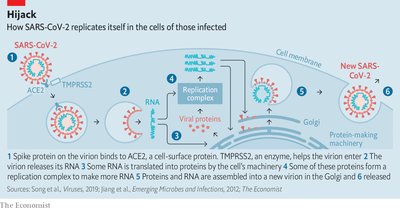
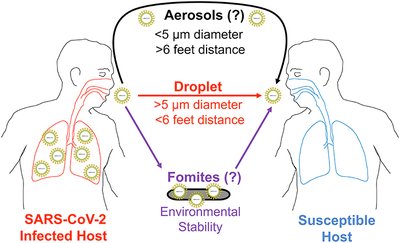
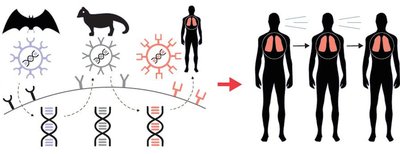
Most viruses infect only specific hosts and tissues due to the presence of compatible receptor proteins.
Animal viruses infect only animals; plant viruses cannot have envelopes.
Example: SARS-CoV-2 binds to ACE2 protein on respiratory epithelial cells.
Viral Replication
Viruses require host cell organelles and enzymes for replication. There are two main types of replication: lytic and lysogenic.
Lytic replication: Results in death and lysis of host cell.
Lysogenic replication: Viral genome remains inactive (prophage) and is passed to daughter cells.
Lysogenic Replication
Lysogeny is a modified lytic cycle where the virus remains inactive for many generations. The viral genome (prophage) is passed to daughter cells and can be induced to enter the lytic cycle.
Induction can be triggered by environmental factors (UV light, heat shock).
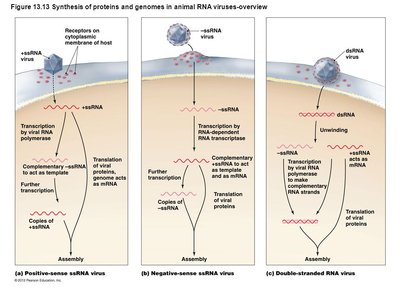
Replication of Animal Viruses
Animal viruses follow similar steps as bacteriophages but differ due to the presence of envelopes and the eukaryotic nature of host cells.
DNA viruses replicate in the nucleus; RNA viruses in the cytoplasm.
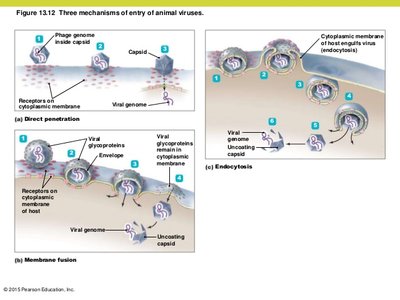
Entry mechanisms: direct penetration, membrane fusion, endocytosis.
Uncoating is required for genome release.
Retroviruses
Retroviruses are +ssRNA viruses that use reverse transcriptase to make a DNA copy of their RNA genome. The DNA is inserted into the host genome for transcription and replication.
Example: HIV uses reverse transcriptase.
Reverse transcriptase is used in recombinant DNA technology.
Latent Infections
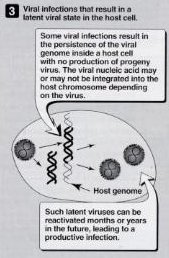
Some animal viruses can remain dormant for years, either incorporated into chromosomes or not. Reactivation can cause disease later.
Example: Varicella Zoster Virus (chicken pox, shingles).
Viral Effects on Host Cells
Viruses can cause various effects on host cells:
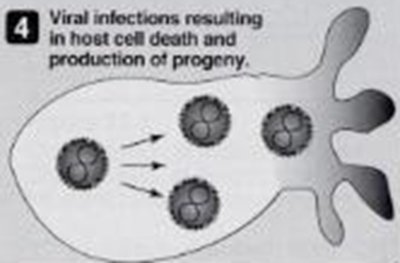
Cell death and lysis (lytic cycle).
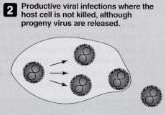
Release of virions without cell death.
Latent infection: viral genome remains inactive.
Cytopathic Effects and Viral Plaques
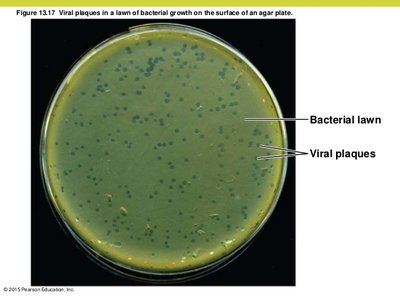
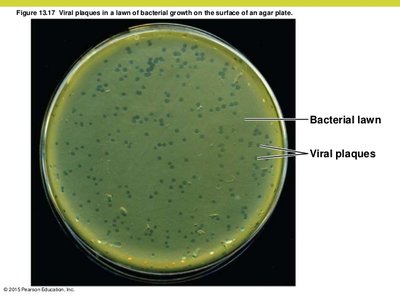
Infected cells may show cytopathic effects, such as inclusions. Viral plaques are clear zones on bacterial lawns where phages have lysed bacteria.
Role of Viruses in Cancer
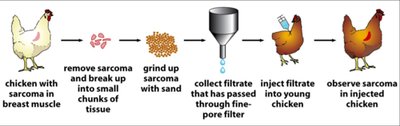
Some viruses carry genes that regulate cell division (oncogenes) or interfere with host cell division control, contributing to cancer.
Examples: Epstein-Barr virus (Burkitt’s lymphoma, Hodgkin’s lymphoma), HIV (Kaposi’s sarcoma), HPV (cervical cancer).
Culturing Viruses in the Laboratory
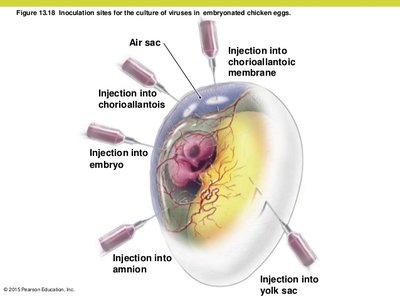
Viruses require host cells for replication and can be cultured in mature organisms, embryonated eggs, or cell cultures.
Bacteriophages grown in bacteria; viral plaques indicate lysis.
Embryonated eggs provide ideal inoculation sites for virus growth.
Cell cultures are practical and avoid ethical issues.
Prions: Other Infectious Particles
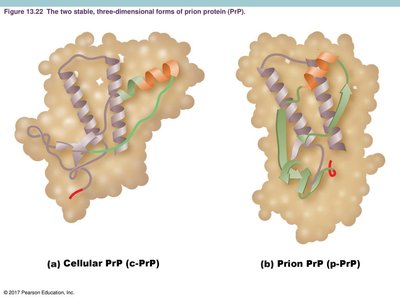
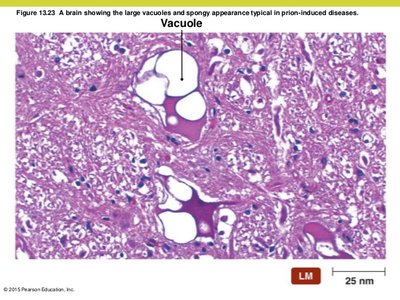
Prions are proteinaceous infectious agents lacking nucleic acids. They cause disease by converting normal cellular PrP into prion PrP, which accumulates and damages the nervous system.
Prion diseases: BSE (mad cow disease), vCJD, kuru, scrapie.
Transmitted by ingestion, transplantation, or contact with infected tissues.
Prions are resistant to normal sterilization; destroyed by incineration or autoclaving in sodium hydroxide.
Famous People in Virology
Walter Reed: Proved yellow fever transmitted by mosquitoes.
Felix d’Herelle: Discovered bacteriophages.
F. Peyton Rous: Discovered viral oncogenesis in chickens.
Stanley Prusiner: Discovered prions.
Kent Brantly: First American to survive Ebola outbreak.
D.A. Henderson: Led smallpox eradication program.
D. Carleton Gajdusek: Demonstrated kuru caused by cannibalism.
Summary Table: Comparison of Viruses and Prions
Feature | Viruses | Prions |
|---|---|---|
Genetic Material | DNA or RNA | None |
Structure | Capsid, sometimes envelope | Protein only |
Replication | Requires host cell machinery | Converts normal proteins |
Diseases | Wide range (e.g., influenza, HIV) | Spongiform encephalopathies |
Body System Affected | Various | Nervous system |
