 Back
BackCharacterizing and Classifying Viruses: Structure, Nomenclature, and Baltimore Classification
Study Guide - Smart Notes
 Tailored notes based on your materials, expanded with key definitions, examples, and context.
Characterizing and Classifying Viruses, Viroids, and Prions
Introduction to Virology
Virology is the scientific study of viruses, their structure, classification, and impact on health and ecology. Recent viral epidemics, such as SARS-CoV-2 and Monkeypox, highlight the importance of understanding viruses in microbiology.
Viruses are obligate intracellular parasites, meaning they require a host cell to replicate and carry out metabolic processes.
They are acellular, lacking the cellular structure found in other life forms.
Viruses are ultramicroscopic, typically ranging from 20 to 400 nm in size.
They infect diverse hosts, including animals, plants, fungi, bacteria, and archaea.
Viruses evolve and mutate rapidly, leading to new strains and drug resistance.
Virus Structure
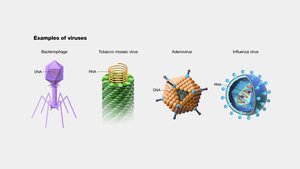
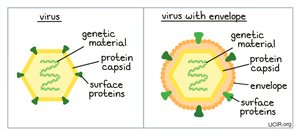
The structure of viruses is fundamental to their function and classification. Each virus consists of a genome, capsid, and sometimes an envelope with glycoprotein spikes.
Genome: Either DNA or RNA, single- or double-stranded, linear or circular.
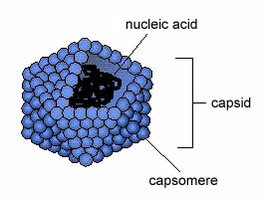
Capsid: Protein shell made of capsomeres, protects the genome and determines shape.
Envelope (optional): Lipid membrane derived from host cell, contains viral glycoproteins.
Glycoprotein spikes (optional): Facilitate attachment to host cell receptors.
Virus Architecture and Nomenclature
Virus architecture refers to the arrangement of proteins and nucleic acids in a virion, the infectious form of a virus outside a host cell. Nomenclature is governed by the International Committee on Taxonomy of Viruses (ICTV), ensuring global consistency.
Virion: Fully assembled, infectious virus particle.
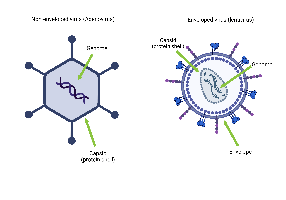
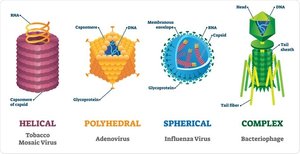
Capsid: Made of capsomeres, forms symmetrical shapes (icosahedral, helical, complex).
Envelope: Derived from host cell membrane, contains viral proteins.
Nomenclature: Hierarchical system (Order, Family, Genus, Species), binomial species naming.
Functions of Virus Components
Each component of a virus serves specific functions essential for infection, replication, and stability.
Capsid: Protects genetic material, delivers genome into host cell, provides stability.
Envelope: Facilitates entry into host cells, contains glycoproteins for receptor binding.
Genome: Encodes instructions for viral replication.
Early Virus Studies and Discovery
Viruses were originally defined as agents that could pass through filters trapping bacteria. The first virus discovered was Tobacco Mosaic Virus (TMV), visualized by electron microscopy.
Chamberland porcelain ultrafilters: Used to separate viruses from bacteria.
Bacteriophages: Viruses that infect bacteria, first isolated from sources like sewage.

Viruses Challenging Definitions
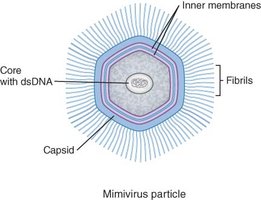
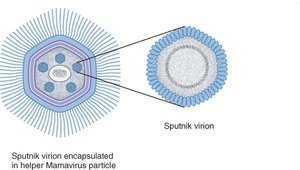
Some viruses, such as giruses (giant viruses) and virophages (subviral agents), challenge traditional definitions due to their size and complexity.
Mimivirus, Mamavirus: Examples of giant DNA viruses.
Sputnik: Virophage encapsulated within Mamavirus particle.
Human and Aquatic Viromes
The virome refers to the collection of viruses present in a particular environment, such as human skin or aquatic ecosystems. Viral communities can influence health, disease, and ecological diversity.
Microbiome: Total of all microbiota, including viruses, living on or inside the human body.
Metagenomics: Technique for studying viromes by sequencing genetic material from environmental samples.
Applications of Viruses in Medicine
Viruses have important applications in health and medicine, including bacteriophage therapy and gene therapy.
Bacteriophage therapy: Used to treat bacterial infections and biofilms.
Gene therapy: Delivery of functional genes using viral vectors.
Virus Architecture: Virion vs. Virus
The term virion refers to the complete, infectious viral particle, while virus can refer to the virion, the virus inside a host cell, or viral genetic material integrated into host DNA.
Infection: Virion infects host cell.
Replication: Virion disassembles, releasing genome for replication.

Structure and Components of a Virion
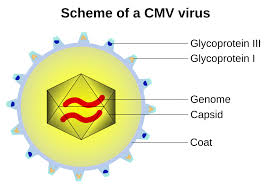
Virions are composed of nucleic acid, capsid, and sometimes an envelope. The capsid is made of capsomeres and determines the virus's shape and symmetry.
Nucleic acid: DNA or RNA, single- or double-stranded, linear or circular.
Capsid: Protective protein shell, made of capsomeres.
Envelope: Lipid membrane with glycoproteins.
Virus Nomenclature and Taxonomy
Virus nomenclature is a formal system for naming and classifying viruses. The ICTV governs the rules, using genetic, structural, and biological characteristics.
Taxonomic hierarchy: Order (-virales), Family (-viridae), Genus (-virus), Species.
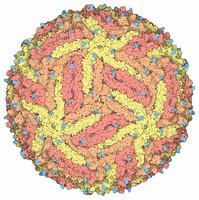
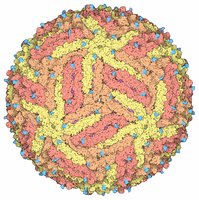
Binomial species naming: Genus name followed by species epithet (e.g., Orthoflavivirus zikaense).
Importance: Prevents confusion, aids epidemiological tracking, supports vaccine approval, and facilitates research.
Baltimore Classification of Viruses
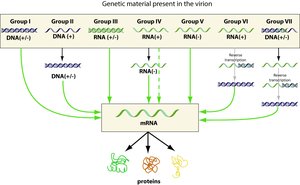
The Baltimore classification system categorizes viruses based on their genetic material and mechanism of mRNA synthesis. All viruses must produce mRNA to synthesize proteins and replicate.
Seven classes: dsDNA, ssDNA, dsRNA, +ssRNA, –ssRNA, RNA reverse-transcribing, DNA reverse-transcribing.
Classification is based on: Type of nucleic acid (DNA or RNA), strandedness (single or double), and method of mRNA production.
Summary Table: Baltimore Classification
Group | Genetic Material | Example | mRNA Production |
|---|---|---|---|
I | dsDNA | Adenovirus | Transcription from DNA |
II | ssDNA | Parvovirus | DNA synthesis, then transcription |
III | dsRNA | Rotavirus | Direct transcription from RNA |
IV | +ssRNA | Poliovirus | Direct translation |
V | –ssRNA | Influenza virus | RNA synthesis, then translation |
VI | ssRNA-RT | HIV | Reverse transcription, then transcription |
VII | dsDNA-RT | Hepatitis B virus | Reverse transcription, then transcription |
Key Terms and Definitions
Virion: Complete, infectious virus particle outside a host cell.
Capsid: Protein shell protecting viral genome.
Capsomere: Protein subunit forming the capsid.
Envelope: Lipid membrane surrounding some viruses.
Virome: Collection of viruses in a specific environment.
Baltimore classification: System categorizing viruses by genome type and mRNA synthesis.
Example: SARS-CoV-2 Structure and Replication
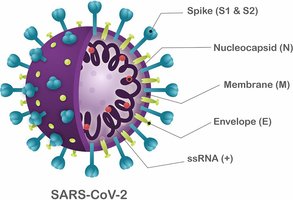
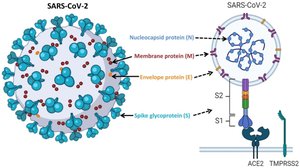
SARS-CoV-2 is an enveloped virus with a positive-sense single-stranded RNA genome. Its structure includes spike proteins, nucleocapsid, membrane, and envelope proteins. The virus enters host cells via receptor-mediated endocytosis, releases its RNA, and directs the host cell to produce new virions.
Short Academic Context
Viruses are central to microbiology due to their unique biology, impact on health, and role in biotechnology. Understanding their structure, classification, and replication mechanisms is essential for developing antiviral therapies, vaccines, and diagnostic tools.
----------------------------------------
