 Back
BackCharacterizing and Classifying Viruses, Viroids, and Prions: Study Notes
Study Guide - Smart Notes
 Tailored notes based on your materials, expanded with key definitions, examples, and context.
Characterizing and Classifying Viruses, Viroids, and Prions
Characteristics of Viruses
Viruses are unique infectious agents that differ fundamentally from cellular life forms. They are responsible for numerous diseases across all domains of life and possess distinctive structural and functional properties.
Definition: Viruses are minuscule, acellular entities containing either DNA or RNA as their genetic material, but never both.
Infectious Nature: They infect humans, animals, plants, fungi, protists, and bacteria.
Metabolic Inactivity: Viruses cannot carry out metabolic pathways, grow, or respond to their environment independently.
Replication: They rely on host cell machinery for reproduction, recruiting the cell's metabolic pathways to increase their numbers.
Structure: Viruses lack cytoplasmic membrane, cytosol, and organelles.
States: Exist in extracellular (virion) and intracellular (nucleic acid) states.
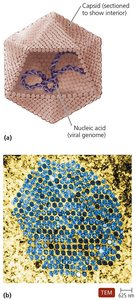
Extracellular and Intracellular States
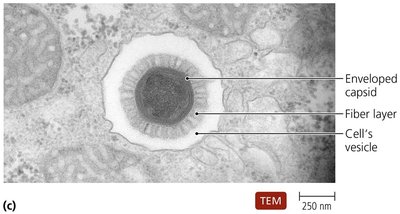
Virion: The extracellular form of a virus, consisting of a protein coat (capsid) surrounding the nucleic acid. The combination is called a nucleocapsid.
Envelope: Some virions possess a phospholipid envelope derived from the host cell.
Intracellular State: The capsid is removed, and the virus exists as nucleic acid within the host cell.
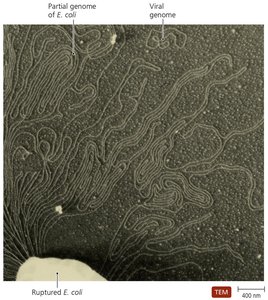
Genetic Material of Viruses
Viral genomes exhibit remarkable diversity, which is a primary basis for their classification.
Genome Types: May be DNA or RNA, but never both. Can be double-stranded (dsDNA, dsRNA) or single-stranded (ssDNA, ssRNA).
Structure: Genomes may be linear and segmented or single and circular.
Size: Viral genomes are much smaller than those of cells.
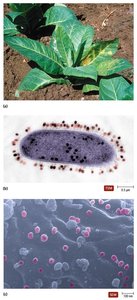
Hosts of Viruses
Viruses display specificity for their hosts, determined by the affinity of viral surface proteins for complementary host cell proteins.
Host Range: Most viruses infect only specific cells within a particular host species.
Generalists: Some viruses can infect multiple cell types or hosts.
Universal Susceptibility: All types of organisms are susceptible to some virus.
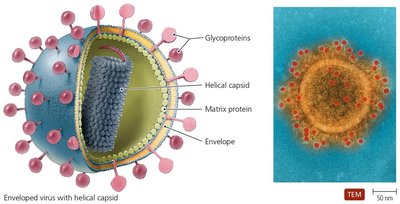
Capsid Morphology and Viral Shapes
The capsid is a protective protein shell that also facilitates attachment to host cells.
Capsomeres: Protein subunits forming the capsid, which may consist of one or several types of proteins.
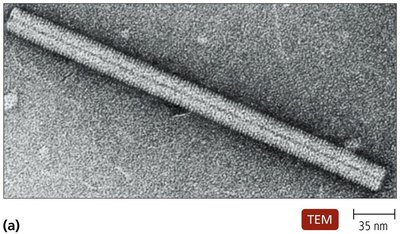
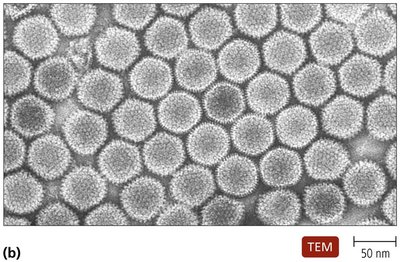
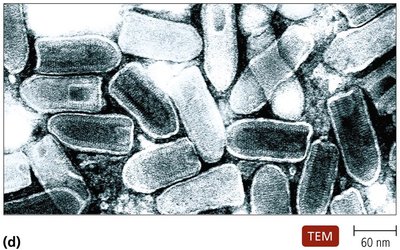
Viral Shapes: Viruses are classified by their virion shape:
Helical: Rod-shaped, with nucleic acid wound in a spiral.
Polyhedral: Many-sided, often icosahedral.
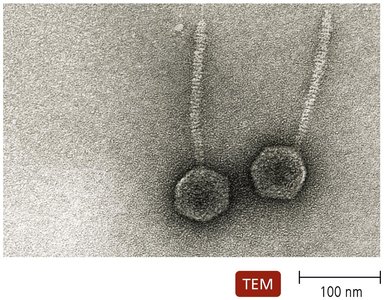
Complex: More elaborate structures, such as bacteriophages.
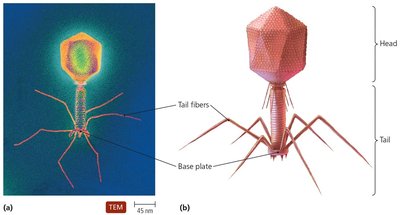
The Viral Envelope
Some viruses possess an envelope acquired from the host cell during replication or release.
Composition: Phospholipid bilayer and proteins, including virally coded glycoproteins (spikes).
Function: Envelope proteins and glycoproteins are crucial for host recognition.
Fragility: Enveloped viruses are more fragile than naked viruses.
Classification of Viruses
Virus classification is based on several criteria:
Type of Nucleic Acid: DNA or RNA, single- or double-stranded.
Envelope Presence: Enveloped or naked.
Shape: Helical, polyhedral, or complex.
Size: Relative size compared to other viruses and cells.
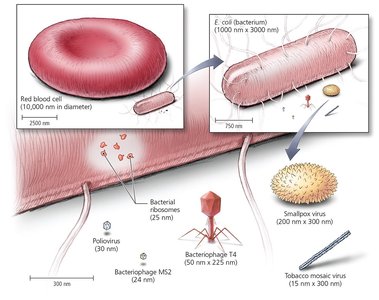
Viral Replication: Lytic Cycle
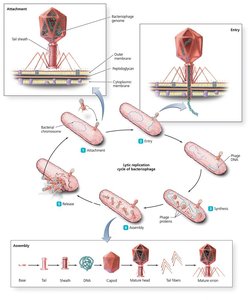
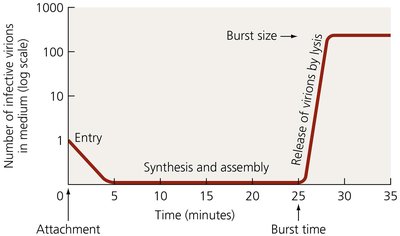
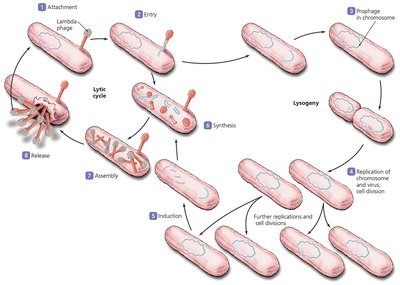
Viral replication depends on host cell organelles and enzymes. The lytic cycle results in host cell death and lysis.
Stages:
Attachment
Entry
Synthesis
Assembly
Release
Viral Replication: Lysogenic Cycle
Lysogenic replication is a modified cycle where infected host cells grow and reproduce normally for generations before lysis.
Temperate Phages: Can enter lysogenic cycle, forming inactive prophages.
Lysogenic Conversion: Phages may carry genes that alter the phenotype of the bacterium.
Replication of Animal Viruses
Animal viruses follow similar replication pathways as bacteriophages, with differences due to the presence of envelopes and the eukaryotic nature of host cells.
Attachment: Mediated by glycoprotein spikes or other molecules.
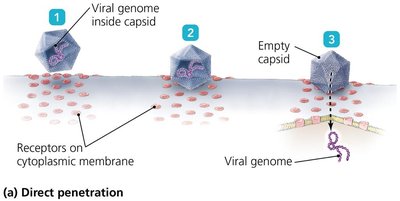
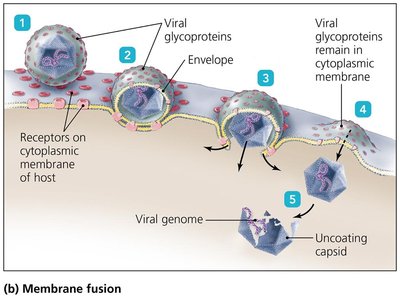
Entry and Uncoating: Occurs via direct penetration, membrane fusion, or endocytosis.
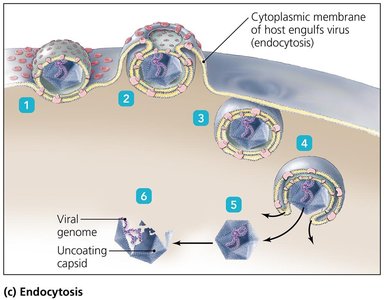
Synthesis: DNA viruses often replicate in the nucleus; RNA viruses in the cytoplasm.
Retroviruses: Use a DNA intermediary transcribed by viral reverse transcriptase.
Assembly and Release: DNA viruses assemble in the nucleus; RNA viruses in the cytoplasm. Enveloped viruses bud from the cell, taking some membrane; naked viruses are released by exocytosis or lysis.
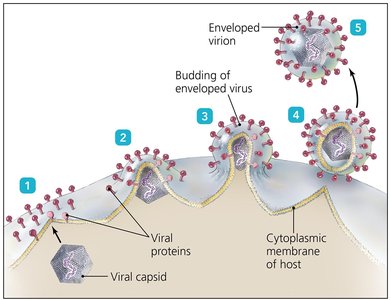
Latency of Animal Viruses
Some animal viruses remain dormant in host cells as latent viruses or proviruses.
Duration: Latency may last for years with no viral activity.
Integration: Incorporation of provirus into host DNA is permanent.
Comparison of Bacteriophage and Animal Virus Replication
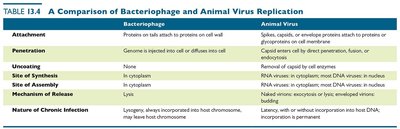
Feature | Bacteriophage | Animal Virus |
|---|---|---|
Attachment | Proteins on tail attach to proteins on cell wall | Spikes, capsid, or envelope proteins attach to proteins or glycoproteins on cell membrane |
Penetration | Genome is injected into cell or diffuses into cell | Capsid enters cell by direct penetration, fusion, or endocytosis |
Uncoating | None | Removed by cell enzymes |
Site of Synthesis | In cytoplasm | RNA viruses in cytoplasm; most DNA viruses in nucleus |
Site of Assembly | In cytoplasm | RNA viruses in cytoplasm; most DNA viruses in nucleus |
Mechanism of Release | Lysis | Budding (enveloped viruses) or exocytosis/lysis (naked viruses) |
Nature of Chronic Infection | Lysogeny; always incorporated into host chromosome, may leave host chromosome | Latency, with or without incorporation into host DNA; incorporation is permanent |
The Role of Viruses in Cancer
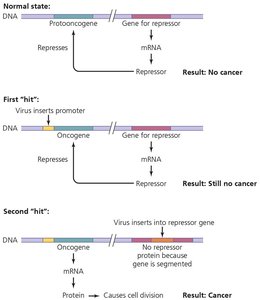
Viruses can contribute to cancer development by affecting cellular genes that regulate growth and division.
Protooncogenes: Promote cell growth and division; uncontrolled activation leads to cancer.
Oncogenes: Genes that can cause cancer when activated.
Environmental Factors: Ultraviolet light, radiation, carcinogens, and viruses can activate oncogenes.
Mechanisms: Viruses may carry oncogenes, promote host oncogenes, or interfere with tumor repression.
Examples: Burkitt’s lymphoma, Hodgkin’s disease, Kaposi’s sarcoma, cervical cancer.
Summary Table: Virus Replication Comparison
Feature | Bacteriophage | Animal Virus |
|---|---|---|
Attachment | Proteins on tail attach to proteins on cell wall | Spikes, capsid, or envelope proteins attach to proteins or glycoproteins on cell membrane |
Penetration | Genome is injected into cell or diffuses into cell | Capsid enters cell by direct penetration, fusion, or endocytosis |
Uncoating | None | Removed by cell enzymes |
Site of Synthesis | In cytoplasm | RNA viruses in cytoplasm; most DNA viruses in nucleus |
Site of Assembly | In cytoplasm | RNA viruses in cytoplasm; most DNA viruses in nucleus |
Mechanism of Release | Lysis | Budding (enveloped viruses) or exocytosis/lysis (naked viruses) |
Nature of Chronic Infection | Lysogeny; always incorporated into host chromosome, may leave host chromosome | Latency, with or without incorporation into host DNA; incorporation is permanent |
Key Terms
Virion: Complete virus particle in its extracellular state.
Capsid: Protein shell surrounding viral nucleic acid.
Envelope: Lipid membrane acquired from host cell.
Capsomere: Protein subunit of the capsid.
Prophage: Inactive phage DNA integrated into bacterial chromosome.
Oncogene: Gene that can cause cancer when activated.
Latency: Dormant state of a virus within a host cell.
----------------------------------------
