 Back
Chemical Methods of Microbial Control: Study Notes for Microbiology Students
Study Guide - Smart Notes
 Tailored notes based on your materials, expanded with key definitions, examples, and context.
Chapter 7: The Control of Microbial Growth
Chemical Methods of Microbial Control
This section explores various chemical agents used to control microbial growth, focusing on their mechanisms of action, preferred uses, and effectiveness. Understanding these methods is essential for microbiology students, as chemical control is widely applied in healthcare, industry, and laboratory settings.
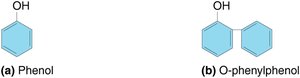
Phenol and Phenolics
Definition: Phenol was first used by Joseph Lister to control surgical infections. Phenolics are derivatives of phenol with reduced irritation and increased effectiveness.
Mechanism: Injure lipids of plasma membranes, causing leakage and cell death.
Properties: Remain active in the presence of organic matter.
Examples: O-phenylphenol (ingredient in Lysol®).
Bisphenols
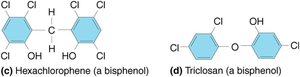
Definition: Compounds containing two phenol groups connected by a bridge.
Mechanism: Disrupt plasma membranes.
Examples: Hexachlorophene (used for skin infections), Triclosan (formerly used in soaps and plastics).
Biguanides
Definition: Effective against gram-positive bacteria, many gram-negative bacteria, and enveloped viruses.
Mechanism: Disrupt plasma membranes.
Examples: Chlorhexidine (used in surgical scrubs), Alexidine (works faster than chlorhexidine).
Essential Oils (EOs)
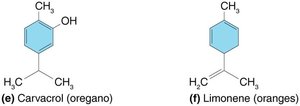
Definition: Mixtures of hydrocarbons extracted from plants, such as peppermint, pine, and orange oils.
Mechanism: Microbial action primarily due to phenolics and terpenes.
Properties: Stronger activity against gram-positive bacteria; effectiveness against viruses not well studied.
Examples: Tea tree oil, pine oil, carvacrol (oregano), limonene (oranges).
Halogens
Iodine: Impairs protein synthesis and alters membranes. Used as tincture (aqueous alcohol solution) or iodophor (combined with organic molecules, e.g., povidone iodine).
Chlorine: Oxidizing agent; shuts down cellular enzyme systems. Used as bleach (hypochlorous acid) and chloramine (chlorine + ammonia) for water disinfection.
Alcohols
Mechanism: Denature proteins and dissolve lipids.
Properties: No effect on endospores and nonenveloped viruses. Require water for effectiveness.
Examples: Ethanol and isopropanol (used in hand sanitizers).
Limitations: Not effective against Clostridium difficile or Norovirus.
Heavy Metals and Their Compounds
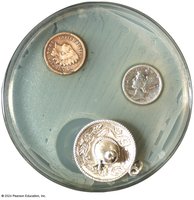
Oligodynamic Action: Very small amounts exert antimicrobial activity by denaturing proteins.
Examples: Silver nitrate (prevents ophthalmia neonatorum), silver-impregnated wound dressings, mercuric chloride (limited use), copper sulfate (algicide), zinc chloride (mouthwash).
Surface-Active Agents
Definition: Compounds that lower surface tension, aiding in the removal of microbes.
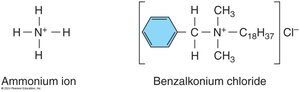
Examples: Quaternary ammonium compounds (e.g., benzalkonium chloride, Zephiran®).
Uses: Widely used in the dairy industry for cleaning and sanitizing equipment.
Chemical Food Preservatives
Sulfur dioxide: Prevents wine spoilage.
Organic acids: Inhibit metabolism (e.g., sorbic acid, benzoic acid, calcium propionate).
Nitrites and nitrates: Prevent endospore germination (especially Clostridium botulinum), preserve red color of meat.
Antibiotics Used for Food Preservation
Bacteriocins: Proteins produced by one bacterium that inhibit another.
Examples: Nisin and natamycin (prevent spoilage of cheese).
Aldehydes
Mechanism: Inactivate proteins by cross-linking with functional groups.
Examples: Formalin (preserves specimens), glutaraldehyde (liquid chemical sterilant, sporicidal in 3–10 hours), ortho-phthalaldehyde (OPA).
Uses: Used for sterilizing medical and dental equipment that cannot be autoclaved.
Gaseous Chemosterilants
Mechanism: Cause alkylation, cross-linking nucleic acids and proteins.
Examples: Ethylene oxide (used in sealed chambers for large equipment), chlorine dioxide (used in enclosed areas or water treatment).
Plasma
Definition: Fourth state of matter, consisting of electrically excited gas.
Mechanism: Free radicals destroy microbes; used for sterilizing tubular surgical instruments.
Supercritical Fluids
Definition: Substance compressed into a supercritical state with both gaseous and liquid properties.
Uses: Sterilization in the food industry and for medical implants.
Peroxygens
Definition: Oxidizing agents used for disinfection and sterilization.
Examples: Hydrogen peroxide (disinfectant, not good for open wounds), peracetic acid (effective liquid sterilant).
Uses: Aseptic food packaging, sterilizing hospital rooms and medical equipment.
Effectiveness of Antiseptics and Disinfectants
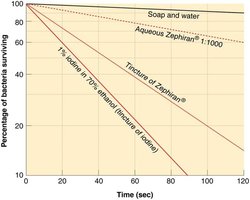
Different chemical agents vary in their effectiveness against microbes. The effectiveness depends on concentration, exposure time, and microbial characteristics.
Microbial Characteristics and Microbial Control
The type of microbe affects the control of microbial growth. Some microbes are more resistant to chemical biocides due to structural and physiological features.
Gram-negative bacteria: More resistant due to lipopolysaccharide in their outer membrane.
Pseudomonas and Burkholderia: Unusually resistant.
Mycobacteria: Considerable resistance; tuberculocides require special testing.
Bacterial endospores: Very resistant to many biocides.
Nonenveloped viruses: More resistant than enveloped viruses.
Prions: Require immersion in NaOH and autoclaving for 1 hour for disinfection.
Summary Table: Chemical Methods of Microbial Control
Agent | Mechanism | Preferred Uses | Limitations |
|---|---|---|---|
Phenolics | Disrupt plasma membranes | Surface disinfectants | Some irritation |
Bisphenols | Disrupt plasma membranes | Skin disinfectants | Regulatory restrictions |
Halogens | Oxidize cellular components | Water, skin, surfaces | Corrosive, toxic at high concentrations |
Alcohols | Denature proteins, dissolve lipids | Hand sanitizers, surfaces | Not effective against endospores/nonenveloped viruses |
Heavy Metals | Denature proteins | Wound dressings, water | Toxicity |
Surface-Active Agents | Lower surface tension | Cleaning, dairy industry | Limited antimicrobial activity |
Aldehydes | Cross-link proteins | Medical equipment | Toxicity, cancer risk |
Gaseous Chemosterilants | Alkylation | Large equipment, enclosed spaces | Requires sealed chamber |
Peroxygens | Oxidize cellular components | Surfaces, food packaging | Not suitable for open wounds |
Key Equations
Many chemical disinfectants act by denaturing proteins or oxidizing cellular components. For example, the effectiveness of ethanol as a disinfectant can be described by its concentration:
For oxidizing agents:
Check Your Understanding
Why is alcohol effective against some viruses and not others?
Is Betadine® an antiseptic or a disinfectant when used on skin?
What characteristics make surface-active agents attractive to the dairy industry?
What chemical disinfectants can be considered sporicides?
What gaseous chemicals are used to sterilize?
Why are gram-negative bacteria more resistant to chemical biocides than gram-positive bacteria?
Additional info: Academic context was added to clarify mechanisms, uses, and limitations of each chemical agent, and to provide a summary table for exam preparation.
