 Back
BackChemical Principles in Microbiology: Atoms, Bonds, and Biological Macromolecules
Study Guide - Smart Notes
 Tailored notes based on your materials, expanded with key definitions, examples, and context.
Chapter 2: Chemical Principles
The Atom
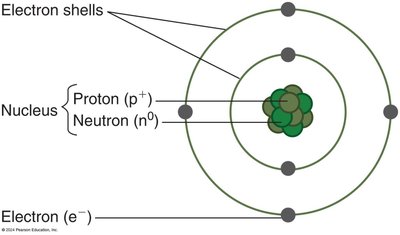
An atom is the smallest unit of matter that can participate in a chemical reaction. Atoms are composed of a dense nucleus containing protons (positively charged) and neutrons (neutral), surrounded by electrons (negatively charged) in electron shells. The types of atoms are called elements, and there are about 90 naturally occurring elements. Atoms are electrically neutral because the number of protons equals the number of electrons.
Nuclear Symbol: where Z is the atomic number (number of protons), and A is the mass number (protons + neutrons).
Isotopes: Atoms of the same element with different numbers of neutrons (e.g., 12C and 14C).
Ions: Atoms that have gained or lost electrons, resulting in a net charge.
Elements Essential for Life (CHNOPS)
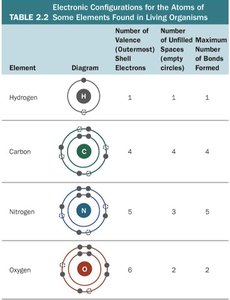
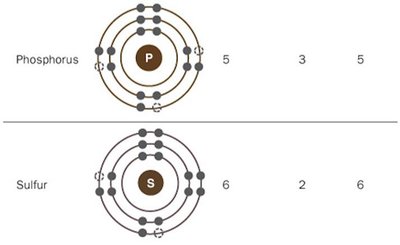
The most important elements for life are Carbon (C), Hydrogen (H), Nitrogen (N), Oxygen (O), Phosphorus (P), and Sulfur (S) (CHNOPS). These elements are distinguished by their number of valence electrons, which determines their bonding behavior.
Element | Valence Electrons | Unfilled Spaces | Max Bonds |
|---|---|---|---|
Hydrogen | 1 | 1 | 1 |
Carbon | 4 | 4 | 4 |
Nitrogen | 5 | 3 | 3 |
Oxygen | 6 | 2 | 2 |
Phosphorus | 5 | 3 | 5 |
Sulfur | 6 | 2 | 6 |
Chemical Bonds
Atoms combine to form compounds through chemical bonds, primarily ionic, covalent, and hydrogen bonds.
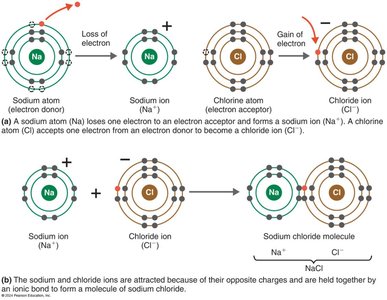
Ionic Bonds: Formed when electrons are transferred from one atom (usually a metal) to another (usually a nonmetal), resulting in oppositely charged ions that attract each other. Example: NaCl (sodium chloride).
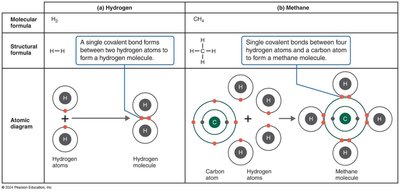
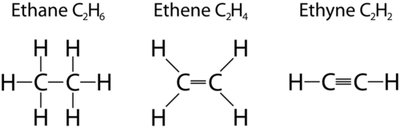
Covalent Bonds: Formed when two atoms (usually nonmetals) share electrons. Covalent bonds can be single, double, or triple, depending on the number of shared electron pairs. Molecules are formed by covalent bonds.
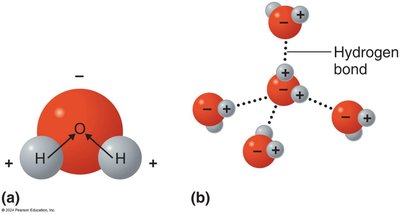
Hydrogen Bonds: Weak attractions between polar molecules, especially those containing hydrogen bonded to oxygen or nitrogen. Critical for the structure of water, DNA, and proteins.
Acids, Bases, and Salts
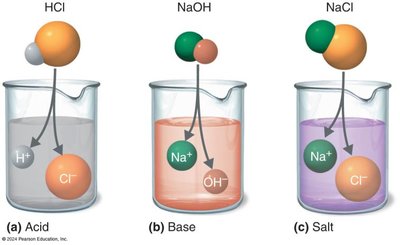
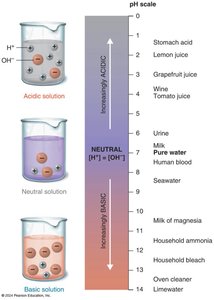
When dissolved in water, acids, bases, and salts dissociate into ions. The pH scale measures the concentration of hydrogen ions (H+) in solution:
Acids: Release H+ ions; pH < 7.
Bases: Release OH- ions; pH > 7.
Salts: Dissociate into ions other than H+ or OH-.
Neutral: Equal concentrations of H+ and OH-; pH = 7.
Organic Chemistry and Macromolecules
Organic chemistry is the study of carbon-containing compounds. Carbon atoms can form four covalent bonds, allowing for the creation of complex chains and rings that serve as the backbone for biological macromolecules.
Macromolecules: Large molecules essential for life, including carbohydrates, lipids, proteins, and nucleic acids.
Carbohydrates
Carbohydrates are composed of carbon, hydrogen, and oxygen (C:H:O in a 1:2:1 ratio). They serve as energy sources and structural materials.
Monosaccharides: Simple sugars (e.g., glucose, fructose, ribose). Soluble in water and hydrophilic.
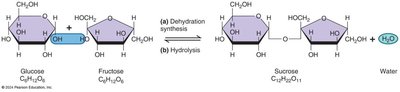
Disaccharides: Two monosaccharides joined by a covalent bond (e.g., sucrose = glucose + fructose).
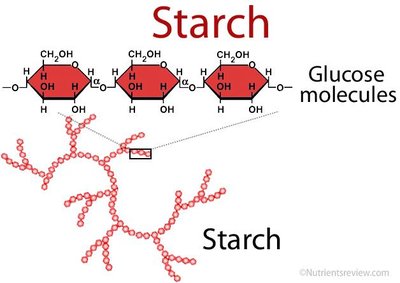
Polysaccharides: Long chains of monosaccharides (e.g., starch, glycogen, cellulose, peptidoglycan, chitin).
Lipids
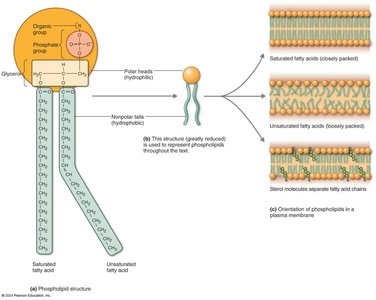
Lipids are hydrophobic molecules composed mainly of carbon and hydrogen. They include fats, oils, waxes, phospholipids, and steroids.
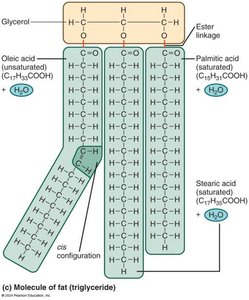
Triglycerides: One glycerol molecule bonded to three fatty acids. Fatty acids can be saturated (no double bonds) or unsaturated (one or more double bonds).
Phospholipids: Major component of cell membranes; consist of a glycerol, two fatty acids, and a phosphate group. Amphipathic (hydrophilic head, hydrophobic tails).
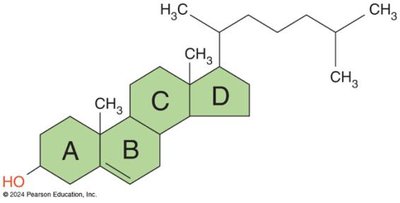
Steroids: Four fused carbon rings; include cholesterol and hormones.
Proteins
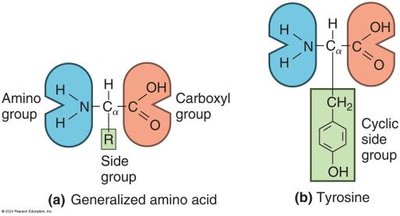
Proteins are polymers of amino acids, containing carbon, hydrogen, oxygen, nitrogen, and sometimes sulfur. The sequence and interactions of amino acids determine the protein's structure and function.
Amino Acids: 20 different types, each with a unique R group.
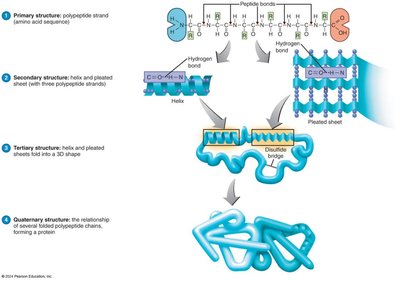
Levels of Structure: Primary (sequence), secondary (alpha-helix, beta-sheet), tertiary (3D folding), quaternary (multiple polypeptides).
Functions: Enzymes, structural support, transport, movement, immunity, signaling, and more.
Nucleic Acids
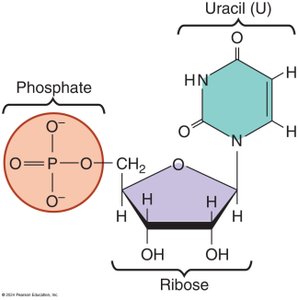
Nucleic acids (DNA and RNA) store and transmit genetic information. They are polymers of nucleotides, each consisting of a sugar, a phosphate group, and a nitrogenous base.
DNA: Double helix, bases are adenine (A), thymine (T), cytosine (C), guanine (G); sugar is deoxyribose.
RNA: Single-stranded, bases are adenine (A), uracil (U), cytosine (C), guanine (G); sugar is ribose.
ATP: The Energy Currency
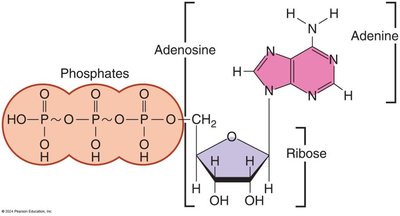
Adenosine triphosphate (ATP) is the primary energy carrier in all cells. It is produced from glucose metabolism and used to power cellular processes. ATP consists of adenosine (adenine + ribose) and three phosphate groups. The hydrolysis of ATP releases energy for cellular work.
Microbial Relevance of Chemical Principles
Microbes rely on these chemical principles for survival, growth, and reproduction. For example, the pH tolerance of microbes affects their habitat, and the structure of macromolecules determines microbial physiology and pathogenicity.
Cutibacterium acnes: Thrives on acidic skin (pH 4).
Helicobacter pylori: Survives in the acidic stomach (pH 1.5–2).
Escherichia coli: Lives in the slightly basic colon (pH 7.9–8.5).
