 Back
BackChapter 2 - Chemical Principles in Microbiology: Structure and Function of Atoms, Molecules, and Macromolecules
Study Guide - Smart Notes
 Tailored notes based on your materials, expanded with key definitions, examples, and context.
Chemical Principles in Microbiology
Introduction
Chemical principles are foundational to understanding microbiology, as all microbial processes are governed by the interactions of atoms and molecules. This chapter explores the structure of atoms, types of chemical bonds, and the properties of important biological molecules essential for microbial life.
The Structure of Atoms
Atomic Structure and Subatomic Particles
Atom: The smallest unit of matter that retains the properties of an element.
Subatomic particles: Atoms are composed of protons (positively charged), neutrons (neutral), and electrons (negatively charged).
Protons and neutrons form the nucleus, while electrons move around the nucleus in electron shells.
Chemical Elements
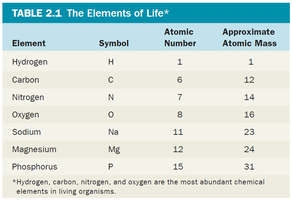
Elements are defined by the number of protons in their nucleus (atomic number).
Atomic mass is the sum of protons and neutrons.
Isotopes are atoms of the same element with different numbers of neutrons.
Element | Symbol | Atomic Number | Approximate Atomic Mass |
|---|---|---|---|
Hydrogen | H | 1 | 1 |
Carbon | C | 6 | 12 |
Nitrogen | N | 7 | 14 |
Oxygen | O | 8 | 16 |
Sodium | Na | 11 | 23 |
Magnesium | Mg | 12 | 24 |
Phosphorus | P | 15 | 31 |
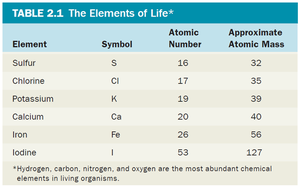
Sulfur | S | 16 | 32 |
Chlorine | Cl | 17 | 35 |
Potassium | K | 19 | 39 |
Calcium | Ca | 20 | 40 |
Iron | Fe | 26 | 56 |
Iodine | I | 53 | 127 |
Electronic Configurations
Electrons are arranged in shells around the nucleus, each corresponding to a different energy level.
The chemical properties of an atom are largely determined by the number of electrons in its outermost shell (valence electrons).
Chemical Bonds and Molecules
How Atoms Form Molecules
Atoms combine to fill their outermost electron shells, forming chemical bonds.
The number of missing or extra electrons in the outer shell is called the valence.
A compound is a molecule that contains two or more different kinds of atoms (e.g., H2O).
Ionic Bonds
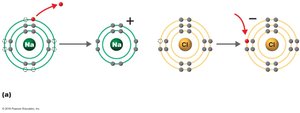
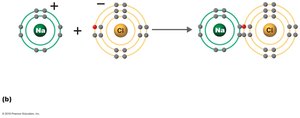
Ions are atoms that have gained or lost electrons, acquiring a charge.
Cations are positively charged ions (lost electrons); anions are negatively charged ions (gained electrons).
Ionic bonds are attractions between oppositely charged ions.
Covalent Bonds
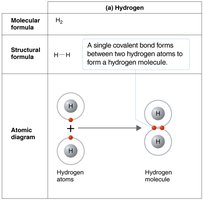
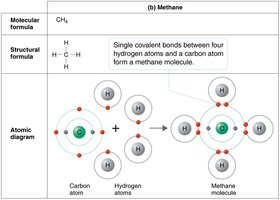
Covalent bonds form when two atoms share one or more pairs of electrons.
Covalent bonds are stronger and more common in living organisms than ionic bonds.
Hydrogen Bonds
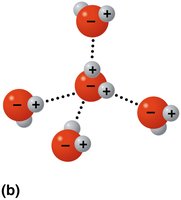
Hydrogen bonds form when a hydrogen atom covalently bonded to an O or N atom is attracted to another O or N atom in a different molecule.
Hydrogen bonds are weaker than covalent and ionic bonds but are important in stabilizing biological molecules (e.g., DNA, proteins).
Molecular Mass and Moles
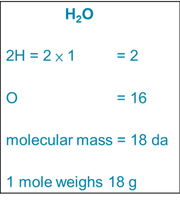
The molecular mass is the sum of the atomic masses of all atoms in a molecule (unit: dalton, da).
One mole of a substance is its molecular mass in grams.
Chemical Reactions
Types of Chemical Reactions
Synthesis reactions: Atoms, ions, or molecules combine to form new, larger molecules. Anabolism refers to synthesis reactions in cells.
Decomposition reactions: A molecule is split into smaller molecules, ions, or atoms. Catabolism refers to decomposition reactions in cells.
Exchange reactions: Involve both synthesis and decomposition.
Reversible reactions: Can proceed in either direction under suitable conditions.
Water and Its Importance
Water is an inorganic, polar molecule with an unequal distribution of charges.
It is an excellent solvent, temperature buffer, and is involved in many chemical reactions.
Polar substances dissociate in water, forming solutes.
Acids, Bases, and Salts
Definitions
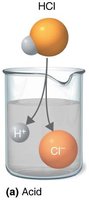
Acids: Substances that dissociate into one or more hydrogen ions (H+) and one or more negative ions.
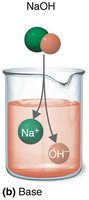
Bases: Substances that dissociate into one or more hydroxide ions (OH–) and one or more positive ions.
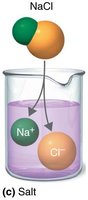
Salts: Substances that dissociate into cations and anions, neither of which is H+ or OH–.
Acid-Base Balance: The Concept of pH
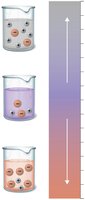
The pH scale expresses the concentration of H+ in a solution.
Increasing H+ increases acidity; increasing OH– increases alkalinity.
Most organisms grow best between pH 6.5 and 8.5.
Organic Compounds and Functional Groups
Structure and Chemistry of Organic Molecules
Organic compounds contain carbon and hydrogen, often with oxygen and nitrogen.
The carbon skeleton forms the backbone of organic molecules.
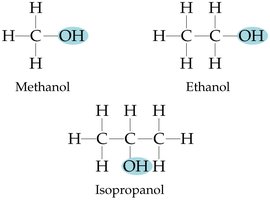
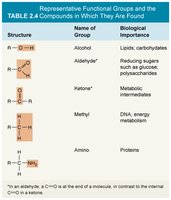
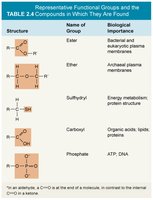
Functional groups attach to the carbon skeleton and determine the chemical properties of the molecule.
Structure | Name of Group | Biological Importance |
|---|---|---|
–OH | Alcohol | Lipids, carbohydrates |
–CHO | Aldehyde | Reducing sugars, polysaccharides |
–CO– | Ketone | Metabolic intermediates |
–CH3 | Methyl | DNA, energy metabolism |
–NH2 | Amino | Proteins |
–COO– | Ester | Bacterial and eukaryotic plasma membranes |
–O– | Ether | Archaeal plasma membranes |
–SH | Sulfhydryl | Energy metabolism, protein structure |
–COOH | Carboxyl | Organic acids, lipids, proteins |
–PO4 | Phosphate | ATP, DNA |
Amino Acids and Functional Groups
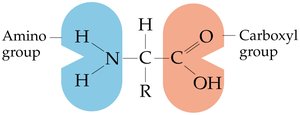
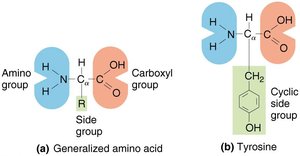
Amino acids contain both an amino group (–NH2) and a carboxyl group (–COOH).
Macromolecules: Carbohydrates, Lipids, Proteins, and Nucleic Acids
Carbohydrates
Serve as cell structures and energy sources.
General formula: (CH2O)n.
Monosaccharides: Simple sugars (e.g., glucose, deoxyribose).
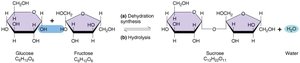
Disaccharides: Formed by joining two monosaccharides via dehydration synthesis; can be broken down by hydrolysis.
Polysaccharides: Large molecules composed of many monosaccharides (e.g., starch, glycogen, cellulose).
Lipids
Primary components of cell membranes; nonpolar and insoluble in water.
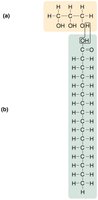
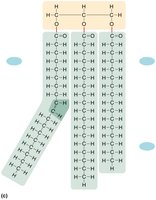
Simple lipids (fats/triglycerides): Composed of glycerol and fatty acids, formed by dehydration synthesis.
Saturated fats: No double bonds; unsaturated fats: One or more double bonds (cis or trans configuration).
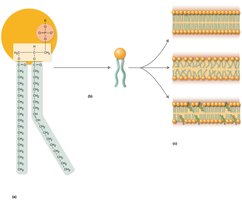
Complex lipids: Contain additional elements (P, N, S); phospholipids are essential for membrane structure.
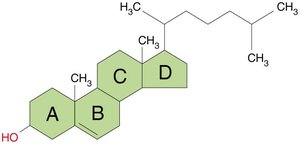
Steroids: Four carbon rings with functional groups; maintain membrane fluidity.
Proteins
Composed of C, H, O, N, and sometimes S; essential for cell structure and function.
Functions include enzymes, transport, movement (flagella), and toxins.
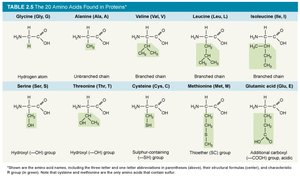
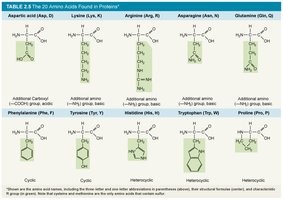
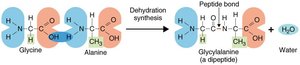
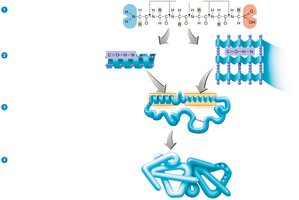
Amino acids are the building blocks of proteins, joined by peptide bonds (dehydration synthesis).
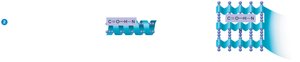
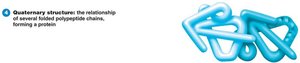
Protein structure has four levels: primary, secondary, tertiary, and quaternary.
Denaturation: Loss of protein structure and function due to environmental changes.
Conjugated proteins: Contain amino acids plus other organic molecules (e.g., glycoproteins, lipoproteins).


Nucleic Acids
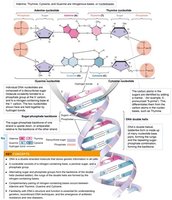
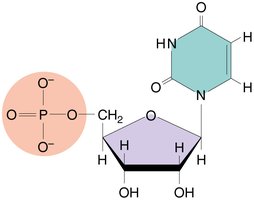
Composed of nucleotides (pentose sugar, phosphate group, nitrogenous base).
DNA (deoxyribonucleic acid): Double helix, contains deoxyribose, bases A-T and C-G; stores genetic information.
RNA (ribonucleic acid): Single-stranded, contains ribose, bases A-U and C-G; involved in protein synthesis.
Adenosine Triphosphate (ATP)
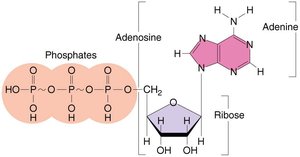
ATP is the primary energy carrier in cells, composed of ribose, adenine, and three phosphate groups.
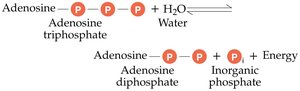
ATP stores energy released from chemical reactions and releases it by hydrolysis of phosphate bonds.
Additional info: Understanding chemical principles is essential for studying microbial metabolism, genetics, and physiology, as all cellular processes depend on the structure and function of atoms, molecules, and macromolecules.
