 Back
Chemical Principles in Microbiology: Structure and Function of Atoms, Molecules, and Macromolecules
Study Guide - Smart Notes
 Tailored notes based on your materials, expanded with key definitions, examples, and context.
Chemical Principles in Microbiology
Atomic Structure and Elements
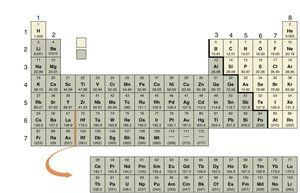
Understanding the chemical principles underlying microbiology begins with the structure of atoms and the organization of elements. Atoms are the fundamental units of matter, and elements are substances composed of only one type of atom. The periodic table organizes elements based on their atomic number and properties.
Atom: Consists of a nucleus (protons and neutrons) and electrons in orbitals.
Element: A pure substance that cannot be broken down into simpler substances by chemical means.
Atomic Number: Number of protons in the nucleus; defines the element.
Atomic Mass: Sum of protons and neutrons in the nucleus.
Isotopes: Atoms of the same element with different numbers of neutrons.
Electrons: Negatively charged particles that determine chemical reactivity.
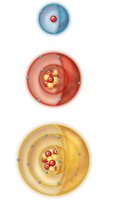
Example: Hydrogen (1 proton, 0 neutrons, 1 electron), Oxygen (8 protons, 8 neutrons, 8 electrons), Sodium (11 protons, 11 neutrons, 11 electrons).
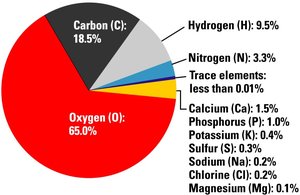
Essential Elements for Life: Carbon, hydrogen, oxygen, and nitrogen make up about 96.5% of the human body and most organisms. Trace elements are required in small amounts for biological processes.
Compounds and Chemical Bonds
Atoms combine to form compounds through chemical bonds. Compounds have properties distinct from their constituent elements.
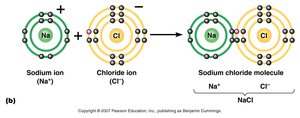
Ionic Bonds: Formed when electrons are transferred from one atom (usually a metal) to another (usually a nonmetal), resulting in charged ions (cations and anions).
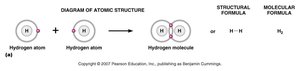
Covalent Bonds: Formed when two or more nonmetals share electrons. Can be nonpolar (equal sharing) or polar (unequal sharing, creating dipoles).
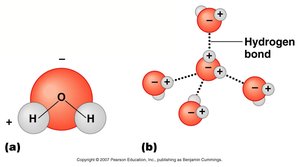
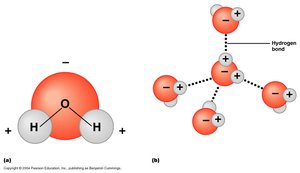
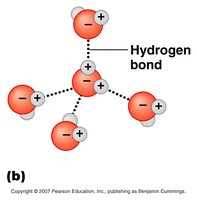
Hydrogen Bonds: Weak attractions between a hydrogen atom in one molecule and an electronegative atom (like oxygen or nitrogen) in another.
Inorganic Compounds: Water and Salts
Inorganic compounds, such as water and salts, are essential for life but typically lack carbon. Water is the most abundant and biologically important inorganic compound.
Water (H2O): Polar molecule, universal solvent, high specific heat, high heat of vaporization, cohesive and adhesive properties, less dense as a solid (ice).
Physical States: Solid (ice), liquid (water), gas (steam).
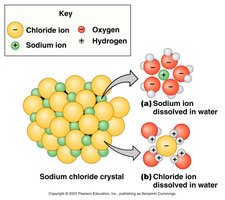
Salts: Ionic compounds that dissociate into cations and anions in water, neither of which is H+ or OH-.
Acids, Bases, and pH
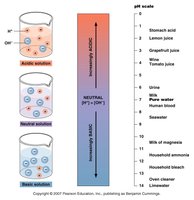
Acids, bases, and salts are important for maintaining cellular pH and ionic balance.
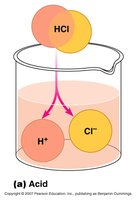
Acids: Substances that dissociate in water to release H+ ions (proton donors). Example:
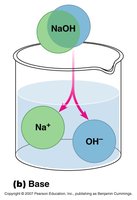
Bases: Substances that dissociate to release OH- ions (proton acceptors). Example:
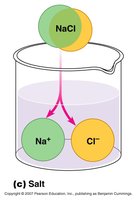
Salts: Substances that dissociate into cations and anions, neither of which is H+ or OH-. Example:
pH Scale: Measures the concentration of H+ ions.
Organic Compounds and Functional Groups
Organic compounds always contain carbon and hydrogen, often arranged in chains or rings. Functional groups attached to the carbon skeleton determine the chemical properties and reactivity of organic molecules.
Hydrocarbons: Chains of carbon and hydrogen.
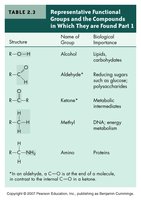
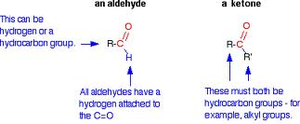
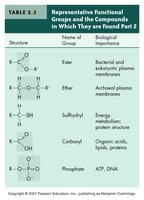
Functional Groups: Specific groups of atoms that confer characteristic chemical properties (e.g., hydroxyl, carbonyl, carboxyl, amino, phosphate, sulfhydryl).
Macromolecules: Structure and Function
Macromolecules are large, complex molecules essential for life. They are formed by the polymerization of smaller subunits (monomers).
Carbohydrates: Monomers are monosaccharides (simple sugars); polymers include starch, glycogen, cellulose, and chitin. Used for energy storage and structural support.
Lipids: Monomers are fatty acids and glycerol; polymers include triglycerides, phospholipids, and steroids. Used for energy storage, membrane structure, and signaling.
Proteins: Monomers are amino acids; polymers are polypeptides and proteins. Functions include catalysis (enzymes), structure, transport, and signaling.
Nucleic Acids: Monomers are nucleotides; polymers are DNA, RNA, and ATP. Store and transfer genetic information and energy.


Carbohydrates
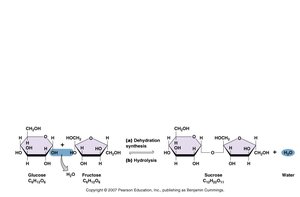
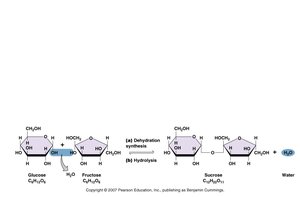
Monosaccharides: Simple sugars with 3-7 carbon atoms, often forming rings. Examples: glucose, fructose.
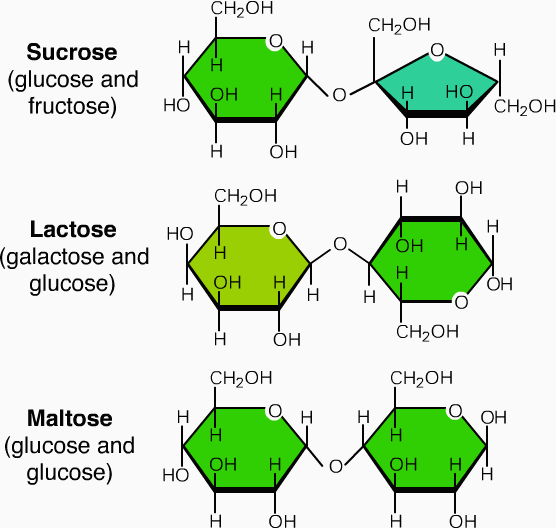
Disaccharides: Two monosaccharides joined by glycosidic bonds. Examples: sucrose, lactose, maltose.
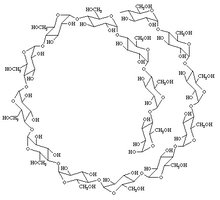
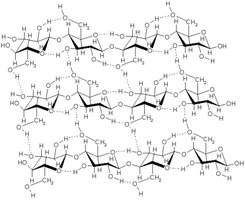
Polysaccharides: Long chains of monosaccharides. Examples: starch (energy storage in plants), glycogen (energy storage in animals), cellulose (plant cell walls).
Lipids
Triglycerides: Composed of glycerol and three fatty acids. Used for long-term energy storage.
Phospholipids: Composed of glycerol, two fatty acids, and a phosphate group. Major component of cell membranes; amphiphilic (hydrophilic head, hydrophobic tails).
Steroids: Four fused carbon rings. Examples: cholesterol (animal cell membranes), ergosterol (fungal membranes).
Example: Saturated fatty acids have no double bonds; unsaturated fatty acids have one or more double bonds.
Proteins
Amino Acids: Contain an amino group (-NH2), carboxyl group (-COOH), and variable R group.
Peptide Bonds: Link amino acids to form polypeptides.
Levels of Structure: Primary (amino acid sequence), secondary (alpha helices, beta sheets), tertiary (3D folding), quaternary (multiple polypeptides).
Denaturation: Loss of protein structure and function due to heat, pH, or chemicals.
Nucleic Acids
DNA: Double helix of deoxyribonucleotides; stores genetic information.
RNA: Single-stranded; involved in protein synthesis and gene regulation.
ATP: Adenosine triphosphate; primary energy carrier in cells.
Example: DNA contains the bases adenine (A), thymine (T), cytosine (C), and guanine (G); RNA contains uracil (U) instead of thymine.
Additional info: This summary expands on the provided notes with definitions, examples, and explanations relevant to microbiology students, ensuring a self-contained and academically rigorous study guide.
