 Back
Chemistry of Life: Foundations for Microbiology
Study Guide - Smart Notes
 Tailored notes based on your materials, expanded with key definitions, examples, and context.
Chemical Principles in Microbiology
Atoms, Elements, and Subatomic Particles
The study of microbiology requires an understanding of the chemical principles that govern the structure and function of biological molecules. Atoms are the smallest units of elements, retaining all chemical properties. Elements are pure substances composed of only one type of atom and cannot be broken down by chemical means.
Protons: Positively charged particles found in the nucleus; mass = 1 atomic mass unit (AMU).
Neutrons: Neutral particles in the nucleus; mass = 1 AMU.
Electrons: Negatively charged particles orbiting the nucleus; mass ≈ 0 AMU.
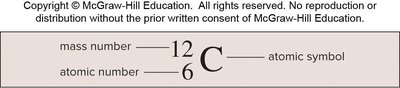
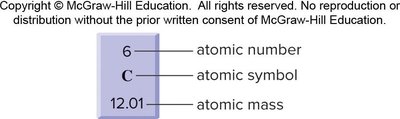
Atomic Number: Number of protons in an atom, determines the element.
Atomic Mass: Sum of protons and neutrons.
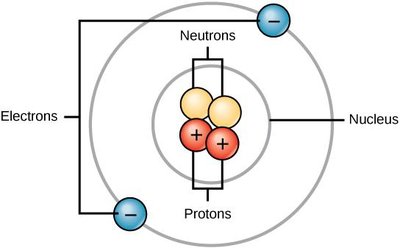
Example: Carbon has 6 protons (atomic number 6) and typically 6 neutrons (mass number 12).
The Periodic Table of Elements
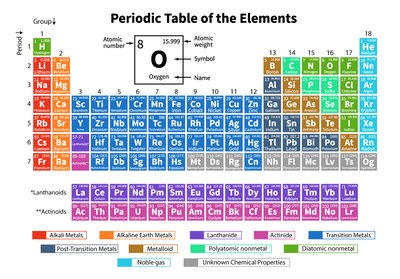
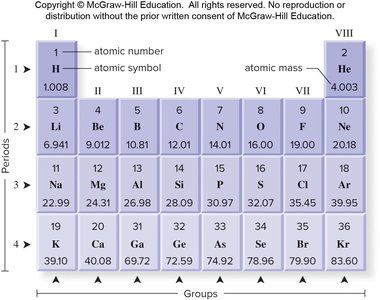
The periodic table organizes elements based on their atomic number and properties. Elements in the same group (column) have similar chemical behaviors due to the same number of valence electrons, while elements in the same period (row) have the same number of electron shells.
Valence Electrons: Electrons in the outermost shell, crucial for chemical bonding.
Groups: Vertical columns; elements share chemical properties.
Periods: Horizontal rows; elements have the same number of electron shells.
Isotopes and Radioisotopes
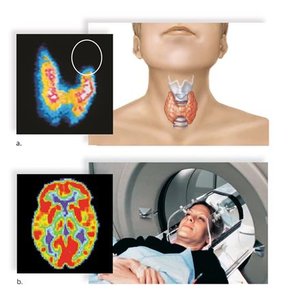
Isotopes are atoms of the same element with different numbers of neutrons, resulting in different atomic masses. Radioisotopes are unstable isotopes that emit radiation, which can be used in medical imaging, sterilization, and cancer treatment.
Stable Isotopes: Do not emit radiation.
Radioisotopes: Emit energy; useful in PET scans and other diagnostic tools.
Chemical Bonds and Interactions
Electron Shells and Energy Levels
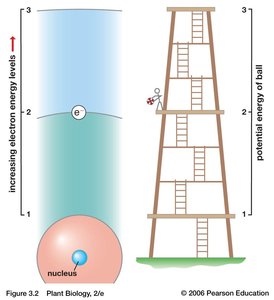
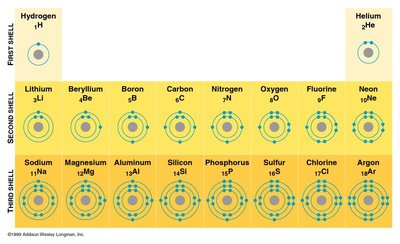
Electrons occupy shells around the nucleus, each with a specific energy level. The further the shell is from the nucleus, the higher the potential energy of the electrons. The arrangement of electrons determines the chemical properties of the atom.
First shell: Holds up to 2 electrons.
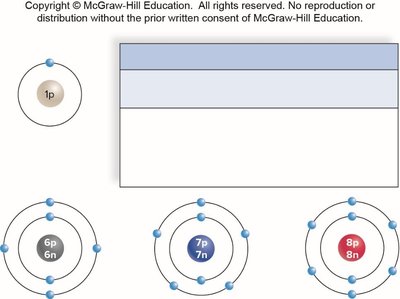
Octet Rule: Atoms are most stable with 8 electrons in their outer shell.
Valence Electrons: Participate in chemical bonding.
Ions and Ionic Bonds
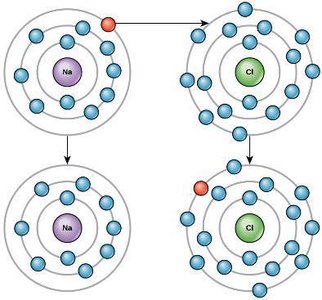
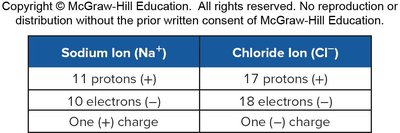
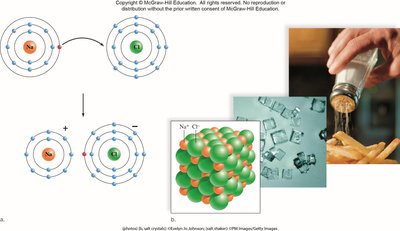
Ions are atoms that have gained or lost electrons, resulting in a net charge. Ionic bonds form when atoms transfer electrons, creating oppositely charged ions that attract each other.
Cations: Positive ions formed by losing electrons.
Anions: Negative ions formed by gaining electrons.
Example: Sodium (Na) donates an electron to chlorine (Cl), forming Na+ and Cl–, which combine to make NaCl (table salt).
Covalent Bonds
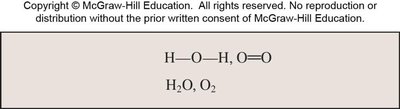
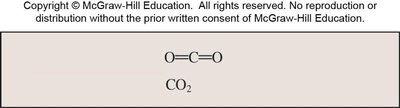
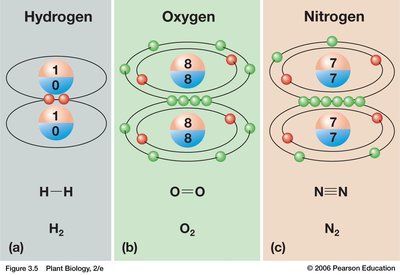
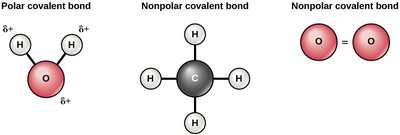
Covalent bonds involve the sharing of electron pairs between atoms. These are the strongest and most common bonds in biological molecules. Covalent bonds can be single, double, or triple, depending on the number of shared electron pairs.
Nonpolar Covalent Bonds: Electrons are shared equally (e.g., O2, H2).
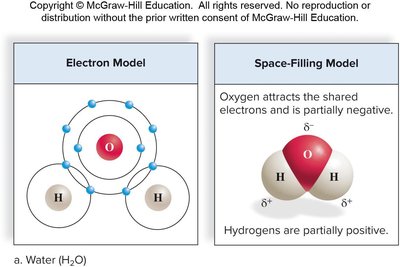
Polar Covalent Bonds: Electrons are shared unequally, creating partial charges (e.g., H2O).
Hydrogen Bonds and van der Waals Interactions
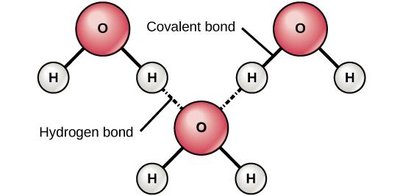
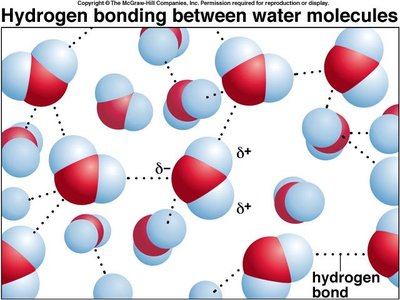
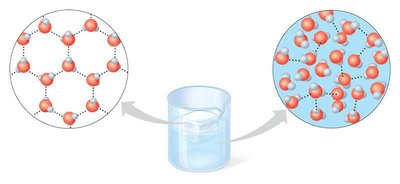
Hydrogen bonds are weak attractions between a slightly positive hydrogen atom and a slightly negative atom (usually oxygen or nitrogen) in another molecule. van der Waals interactions are even weaker, resulting from temporary partial charges.
Hydrogen Bonds: Important for the structure of DNA and proteins; stabilize water molecules.
van der Waals: Important in biological systems for molecular interactions.
Properties of Water
Polarity and Solvent Properties
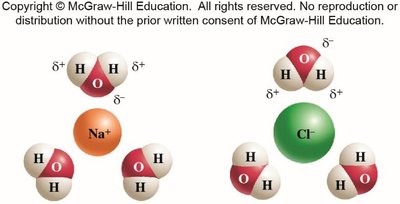
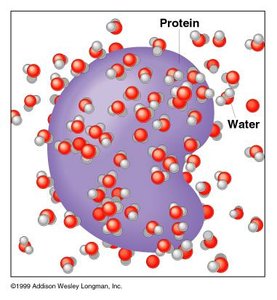
Water is a polar molecule, making it an excellent solvent for ionic and polar substances. Its polarity allows it to form hydrogen bonds, which are crucial for dissolving salts, proteins, and other biological molecules.
Hydrophilic: Substances that dissolve in water.
Hydrophobic: Substances that do not dissolve in water (e.g., oils).
Sphere of Hydration: Water molecules surround ions and proteins, keeping them dispersed.
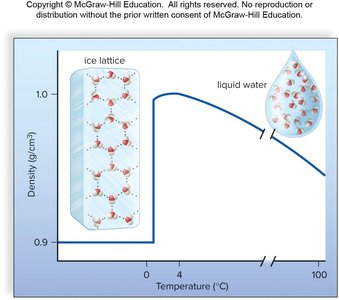
Cohesion, Adhesion, and Surface Tension
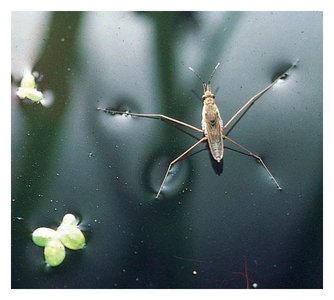
Water molecules are cohesive due to hydrogen bonding, allowing them to stick together and create surface tension. Adhesion is the attraction between water and other polar molecules, enabling capillary action.
Cohesion: Responsible for surface tension; allows insects to walk on water.
Adhesion: Enables water to climb up plant vessels and glass surfaces.
Acids, Bases, pH, and Buffers
pH and Dissociation of Water
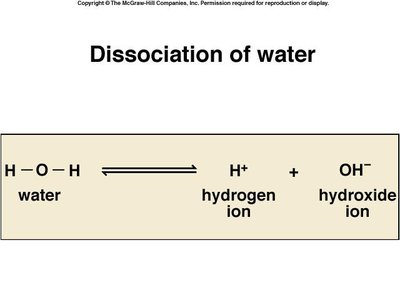
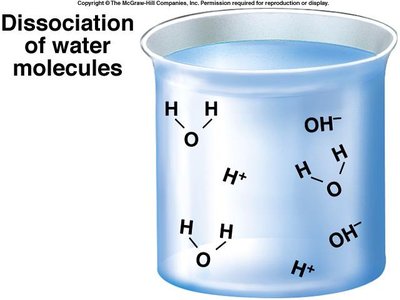
The pH scale measures the concentration of hydrogen ions (H+) in a solution. Water can dissociate into H+ and OH– ions, and the pH is inversely related to the concentration of H+.
Acids: Release H+ ions, lowering pH.
Bases: Release OH– ions, raising pH.
pH Scale: Ranges from 0 (acidic) to 14 (basic); pure water is neutral (pH 7).
Equation:
Buffers and pH Homeostasis
Buffers are molecules that resist changes in pH by absorbing excess H+ or OH–. The carbonic acid-bicarbonate buffer system is crucial for maintaining physiological pH in organisms.
Buffer Reaction:
Optimal pH: Most organisms function best between pH 6.5 and 8.5.
Macromolecules: Biological Polymers
Carbohydrates
Carbohydrates are energy sources and structural molecules, composed of carbon, hydrogen, and oxygen in a 1:2:1 ratio. They exist as monosaccharides, disaccharides, and polysaccharides.
Monosaccharides: Simple sugars (e.g., glucose, fructose, galactose).
Disaccharides: Two monosaccharides joined by dehydration synthesis (e.g., sucrose, lactose).
Polysaccharides: Long chains for energy storage (starch, glycogen) or structural support (cellulose, chitin).
Lipids
Lipids are hydrophobic molecules used for energy storage, insulation, and membrane structure. Types include fats (triglycerides), phospholipids, steroids, and waxes.
Fats: Glycerol + 3 fatty acids; saturated (solid) or unsaturated (liquid).
Phospholipids: Major component of cell membranes; amphipathic (hydrophilic head, hydrophobic tail).
Steroids: Four carbon rings; hormones and membrane components.
Proteins
Proteins are polymers of amino acids, performing diverse functions such as catalysis, structure, transport, and defense. Protein structure is hierarchical: primary, secondary, tertiary, and quaternary.
Primary Structure: Linear sequence of amino acids.
Secondary Structure: Local folding (α-helix, β-sheet).
Tertiary Structure: Three-dimensional folding due to R-group interactions.
Quaternary Structure: Multiple polypeptides forming a functional protein.
Nucleic Acids
Nucleic acids (DNA and RNA) store genetic information and direct protein synthesis. They are polymers of nucleotides, each consisting of a nitrogenous base, a five-carbon sugar, and a phosphate group.
DNA: Double-stranded, stores genetic information.
RNA: Single-stranded, involved in protein synthesis.
ATP: Adenosine triphosphate, the energy currency of the cell.
Summary Table: Organic Molecules
Organic Molecule | Monomers | Functions |
|---|---|---|
Carbohydrates | Monosaccharides | Energy, structural support |
Proteins | Amino acids | Structure, enzymes, transport, defense |
Lipids | Glycerol, fatty acids | Energy storage, membranes, hormones |
Nucleic acids | Nucleotides | Genetic information, energy transfer |
Additional info: These chemical principles are foundational for understanding microbial metabolism, genetics, cell structure, and environmental interactions in microbiology.
