 Back
(Chapter 11) Classification and Diversity of Prokaryotes: Domains Bacteria and Archaea
Study Guide - Smart Notes
 Tailored notes based on your materials, expanded with key definitions, examples, and context.
The Prokaryotes: Domains Bacteria and Archaea
Overview of Prokaryotic Diversity
Prokaryotes are classified into two domains: Bacteria and Archaea. These organisms exhibit remarkable diversity in morphology, metabolism, and ecological roles. Bacteria are further divided into several phyla, with Gram-negative and Gram-positive groups being prominent.
Gram-negative bacteria: Characterized by a thin peptidoglycan layer and an outer membrane.
Gram-positive bacteria: Possess a thick peptidoglycan layer and lack an outer membrane.
Archaea: Distinguished by unique cell wall components and adaptation to extreme environments.
Gram-Negative Bacteria: Pseudomonadota
General Characteristics
The phylum Pseudomonadota (formerly Proteobacteria) is the largest taxonomic group of bacteria. These are chemoheterotrophic organisms, meaning they obtain energy and carbon from organic compounds. The group is divided into five classes:
Alphaproteobacteria
Betaproteobacteria
Gammaproteobacteria
Deltaproteobacteria
Campylobacterota
Alphaproteobacteria
Alphaproteobacteria are notable for their ability to grow in low-nutrient environments and often possess stalks or buds called prosthecae.
Pelagibacter: Among the most abundant microorganisms in oceans; plays a key role in the carbon cycle.
Acetobacteraceae (Acetobacter and Gluconobacter): Convert ethanol into acetic acid.
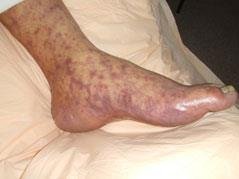
Rickettsia: Obligate intracellular parasites causing spotted fevers, such as Rocky Mountain spotted fever (R. rickettsii), transmitted by insect and tick bites.
Ehrlichia: Tick-transmitted bacteria causing ehrlichiosis.
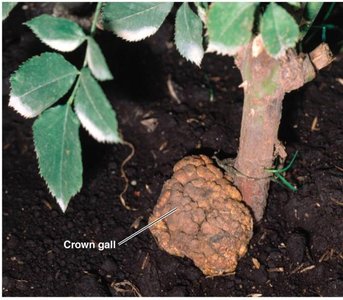
Agrobacterium: Plant pathogen causing crown gall by inserting a plasmid into plant cells, inducing tumor formation.
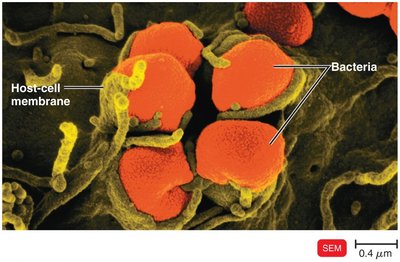
Bartonella: Human pathogen; B. henselae causes cat-scratch disease.
Brucella: Obligate parasite of mammals; survives phagocytosis and causes brucellosis.
Wolbachia: Endosymbiont of insects, affecting their reproduction and potentially used for insect control.
Betaproteobacteria
Betaproteobacteria include important human pathogens.
Bordetella: Nonmotile rods; B. pertussis causes whooping cough.
Neisseria: N. gonorrhoeae causes gonorrhea; N. meningitidis causes meningococcal meningitis.
Gammaproteobacteria
Gammaproteobacteria are metabolically diverse and include many medically significant genera.
Pseudomonadales: Pseudomonas species are common in soil and natural environments, are opportunistic pathogens, and cause nosocomial infections. P. aeruginosa is associated with wound and urinary tract infections.
Legionellales: Legionella causes legionellosis; Coxiella burnetii causes Q fever.
Vibrionales: Vibrio cholerae causes cholera, a severe diarrheal disease.
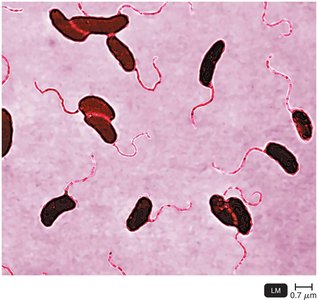
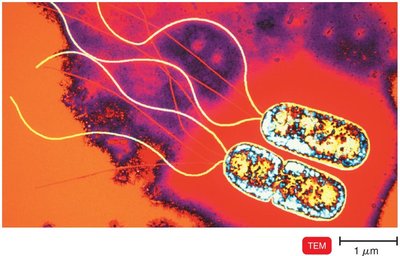
Enterobacteriales: Known as enterics, these bacteria inhabit the intestinal tract, ferment carbohydrates, and are facultative anaerobes with peritrichous flagella. Key genera include:
Escherichia: E. coli is an indicator of fecal contamination; some strains cause foodborne disease and urinary tract infections.
Salmonella: Common cause of foodborne illness; S. typhi causes typhoid fever.
Shigella: Causes bacillary dysentery (shigellosis).
Klebsiella: K. pneumoniae causes pneumonia.
Serratia: Produces red pigment; causes nosocomial infections.
Yersinia: Y. pestis causes plague, transmitted by fleas.
Enterobacter: E. aerogenes causes urinary tract and nosocomial infections.
Haemophilus: H. influenzae causes meningitis, ear infections, and epiglottitis (not influenza).
Campylobacterota
Campylobacterota are slender, helical or curved, gram-negative rods that are microaerophilic.
Campylobacter: Microaerophilic vibrios with a single polar flagellum; C. jejuni causes foodborne intestinal disease.
Helicobacter: Microaerophilic curved rods with multiple flagella; cause peptic ulcers and stomach cancer.
Cyanobacteria (Oxygenic Photosynthetic Bacteria)
General Characteristics
Cyanobacteria perform oxygenic photosynthesis and are important contributors to atmospheric oxygen.
Contain heterocysts for nitrogen fixation.
Possess gas vesicles for buoyancy.
Exist in unicellular, colonial, and filamentous forms.
Photosynthesis equation:
Chlamydiae
General Characteristics
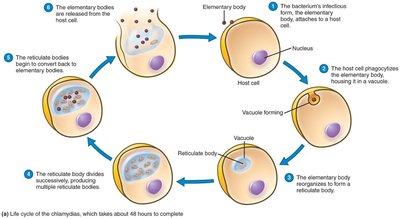
Chlamydiae lack peptidoglycan in their cell wall and grow intracellularly.
Chlamydia: Forms an elementary body that is infective. Chlamydia trachomatis causes trachoma and urethritis.
Spirochaetes
General Characteristics
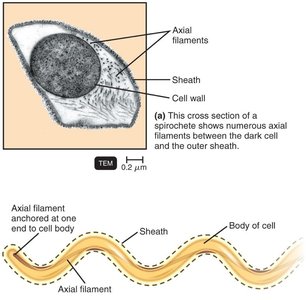
Spirochaetes are coiled bacteria that move via axial filaments, resulting in a corkscrew type of motility.
Treponema: T. pallidum causes syphilis.
Borrelia: Causes Lyme disease.
Bacillota (Low G + C Gram-Positive Bacteria)
Clostridiales
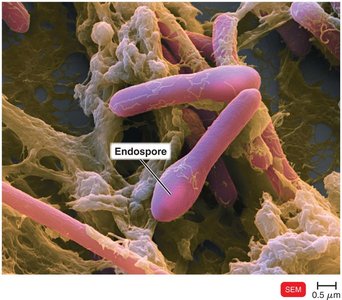
Clostridium: Endospore-producing, obligate anaerobes. Includes C. tetani (tetanus), C. botulinum (botulism), and C. difficile (intestinal infections).
Bacillales
Bacillus: Endospore-producing rods, common in soil. B. anthracis causes anthrax; B. thuringiensis is an insect pathogen; B. cereus causes food poisoning.
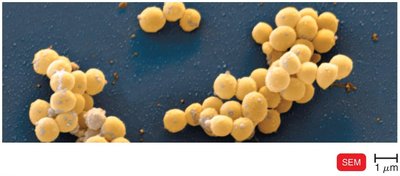
Staphylococcus: Grapelike clusters of cocci. S. aureus causes wound infections, is often antibiotic resistant, and produces an enterotoxin.
Lactobacillales
Aerotolerant anaerobes that produce lactic acid from carbohydrates.
Lactobacillus: Colonizes the body and is used in food production.
Streptococcus: Spherical cells in chains; produce enzymes that damage tissue.
Beta-hemolytic streptococci (e.g., S. pyogenes) hemolyze blood agar.
Alpha-hemolytic streptococci include S. pneumoniae (pneumonia) and S. mutans (dental caries).
Enterococcus: Found in intestinal tract; hospital contaminants. E. faecalis infects surgical wounds and urinary tract.
Listeria: L. monocytogenes contaminates food.
Mycoplasmatota (Low G + C Gram-Positive Bacteria)
General Characteristics
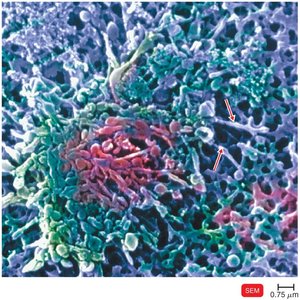
Mycoplasma: Lack a cell wall; pleomorphic. May be the smallest self-replicating organisms capable of free-living existence. M. pneumoniae causes mild pneumonia.
Actinomycetota (High G + C Gram-Positive Bacteria)
General Characteristics
Actinomycetota are high G + C, gram-positive bacteria, often pleomorphic with branching filaments.
Common soil inhabitants.
Mycobacterium: Cell wall contains mycolic acids, making it waxy and water-resistant. Often slow-growing. M. tuberculosis causes tuberculosis; M. leprae causes leprosy.
Corynebacterium: C. diphtheriae causes diphtheria.
Streptomyces: Soil bacteria producing many antibiotics.
Actinomyces: Form filaments called hyphae; found in mouth and throat.
Diversity within the Archaea
General Characteristics
Archaea are a distinct taxonomic group lacking peptidoglycan in their cell walls. They are known for thriving in extreme environments.
Halophiles: Require salt concentrations >25%.
Thermophiles: Require growth temperatures >80°C.
Acidophiles: Can grow at pH values approaching 0.
Methanogens: Anaerobic; produce methane.
Summary Table: Major Bacterial Groups and Their Characteristics
Group | Key Features | Representative Genera | Diseases/Applications |
|---|---|---|---|
Alphaproteobacteria | Low-nutrient growth, prosthecae | Rickettsia, Agrobacterium, Bartonella | Spotted fevers, crown gall, cat-scratch disease |
Betaproteobacteria | Human pathogens | Bordetella, Neisseria | Whooping cough, gonorrhea, meningitis |
Gammaproteobacteria | Metabolic diversity, enterics | Pseudomonas, Escherichia, Salmonella | Nosocomial infections, foodborne illness |
Campylobacterota | Helical, microaerophilic | Campylobacter, Helicobacter | Intestinal disease, peptic ulcers |
Cyanobacteria | Oxygenic photosynthesis | Cyanobacteria | Atmospheric O2 production |
Chlamydiae | Intracellular, no peptidoglycan | Chlamydia | Trachoma, urethritis |
Spirochaetes | Axial filaments, corkscrew motility | Treponema, Borrelia | Syphilis, Lyme disease |
Bacillota | Gram-positive, endospore-forming | Clostridium, Bacillus, Staphylococcus | Tetanus, anthrax, wound infections |
Actinomycetota | High G + C, branching filaments | Mycobacterium, Streptomyces | Tuberculosis, antibiotic production |
Archaea | Extremophiles, no peptidoglycan | Halophiles, Thermophiles, Methanogens | Extreme environment adaptation, methane production |
