 Back
BackClassification and Diversity of Prokaryotes: Domains Bacteria and Archaea
Study Guide - Smart Notes
 Tailored notes based on your materials, expanded with key definitions, examples, and context.
Chapter 11: The Prokaryotes – Domains Bacteria and Archaea
Overview of Prokaryotic Diversity
The prokaryotes, comprising the domains Bacteria and Archaea, represent an extraordinary range of metabolic, structural, and ecological diversity. Their classification is based on genetic, biochemical, and morphological characteristics, and they play essential roles in ecosystems, industry, and human health.
Bacteria: Includes a vast array of species with diverse metabolic capabilities.
Archaea: Often extremophiles, thriving in environments with extreme salinity, temperature, or pH.
Pseudomonadota (Proteobacteria)
Pseudomonadota is the largest taxonomic group of bacteria, characterized by Gram-negative cell walls and chemoheterotrophic metabolism. It is divided into five classes: Alphaproteobacteria, Betaproteobacteria, Gammaproteobacteria, Deltaproteobacteria, and Campylobacterota.
Alphaproteobacteria
This class includes bacteria adapted to low-nutrient environments, many of which possess stalks or buds called prosthecae. They are notable for their ecological roles and pathogenic species.
Pelagibacter: Abundant in oceans, extremely small, and crucial in the carbon cycle.
Azospirillum: Associates with plant roots and fixes nitrogen.
Acetobacteraceae (Acetobacter, Gluconobacter): Convert ethanol to acetic acid.
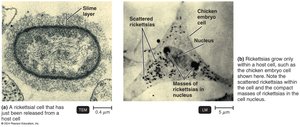
Rickettsia: Obligate intracellular parasites causing spotted fevers; transmitted by insects and ticks.
Ehrlichia: Tick-borne pathogens causing ehrlichiosis.
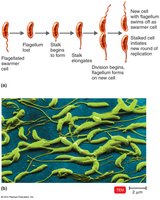
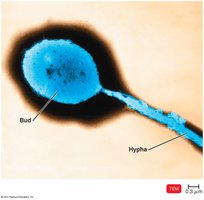
Caulobacter and Hyphomicrobium: Aquatic bacteria with stalks/prosthecae; reproduce by budding.
Rhizobium and Bradyrhizobium: Nitrogen-fixing symbionts in legume roots.
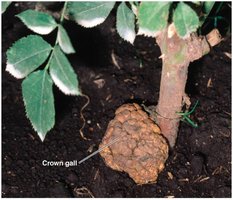
Agrobacterium: Plant pathogen causing crown gall disease by plasmid insertion.
Bartonella: Human pathogen (cat-scratch disease).
Brucella: Mammalian parasite causing brucellosis.
Nitrobacter and Nitrosomonas: Chemoautotrophs involved in nitrogen cycling.
Wolbachia: Endosymbiont affecting insect reproduction.
Betaproteobacteria
Betaproteobacteria are found in aquatic environments and include important pathogens and environmental bacteria.
Spirillum: Freshwater bacteria with polar flagella.
Sphaerotilus: Forms protective sheaths in freshwater and sewage.
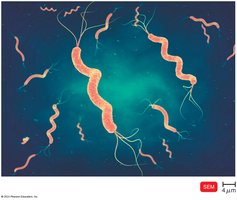
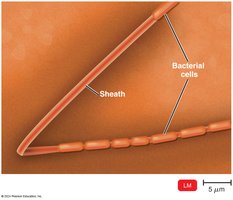
Burkholderia: Degrades organic molecules; includes pathogens.
Bordetella: Nonmotile rods; B. pertussis causes whooping cough.
Neisseria: Gram-negative cocci; causes gonorrhea and meningitis.
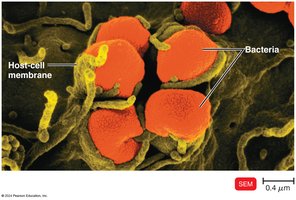
Zoogloea: Important in wastewater treatment (activated sludge).
Gammaproteobacteria
This class includes many medically and ecologically significant bacteria.
Acidithiobacillus: Oxidizes sulfur compounds.
Thiotrichales (Beggiatoa): Grows in aquatic sediments, oxidizes sulfur.
Francisella: F. tularensis causes tularemia.
Pseudomonas: Soil bacteria, opportunistic pathogens, metabolically diverse.
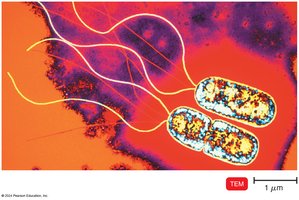
Azotobacter and Azomonas: Nitrogen-fixing bacteria.
Moraxella: M. lacunata causes conjunctivitis.
Acinetobacter: Respiratory pathogen, antibiotic resistant.
Legionella: Causes legionellosis; found in water systems.
Coxiella: C. burnetii causes Q fever.
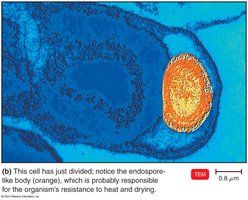
Vibrio: Aquatic bacteria; V. cholerae causes cholera.
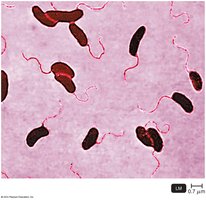
Enterobacteriales (Enterics): Intestinal bacteria, ferment carbohydrates, facultative anaerobes.
Escherichia: E. coli is an indicator of fecal contamination; pathogenic strains cause disease.
Salmonella: Foodborne pathogen; S. Typhi causes typhoid fever.
Shigella: Causes dysentery.
Klebsiella: K. pneumoniae causes pneumonia.
Serratia: Red pigment producer; nosocomial infections.
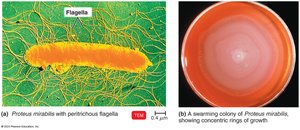
Proteus: Swarming motility; concentric ring colonies.
Yersinia: Y. pestis causes plague; transmitted by fleas.
Erwinia: Plant pathogens.
Enterobacter: Causes urinary tract and nosocomial infections.
Cronobacter: Causes sepsis and meningitis in infants; associated with contaminated formula.
Pasteurella: Animal pathogen; P. multocida transmitted via bites.
Haemophilus: Requires X and V factors; causes meningitis and other diseases.
Deltaproteobacteria
Deltaproteobacteria include bacteria with unique predatory and metabolic properties.
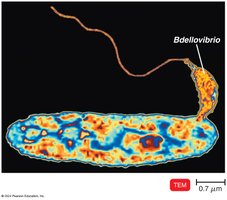
Bdellovibrio: Attacks other Gram-negative bacteria.
Desulfovibrio: Uses sulfate as electron acceptor; found in anaerobic environments.
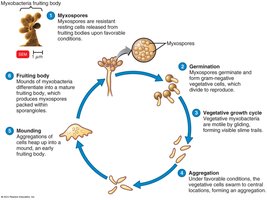
Myxococcales: Gliding bacteria forming fruiting bodies and myxospores.
Campylobacterota
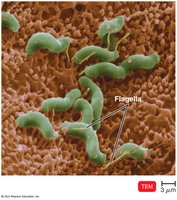
Slender, helical or curved Gram-negative rods, often microaerophilic.
Campylobacter: Causes foodborne intestinal disease.
Helicobacter: Causes peptic ulcers and stomach cancer.
Cyanobacteria (Oxygenic Photosynthetic Bacteria)
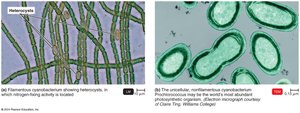
Cyanobacteria perform oxygenic photosynthesis and are crucial in nitrogen fixation and atmospheric oxygen production. They exist in unicellular, colonial, and filamentous forms.
Heterocysts: Specialized cells for nitrogen fixation.
Gas vesicles: Provide buoyancy.
Chlorobi and Chloroflexi (Anoxygenic Photosynthetic Bacteria)
These bacteria carry out photosynthesis without producing oxygen. Green sulfur bacteria belong to Chlorobi, and green nonsulfur bacteria to Chloroflexi. Purple sulfur and nonsulfur bacteria are proteobacteria.
Chlamydiae
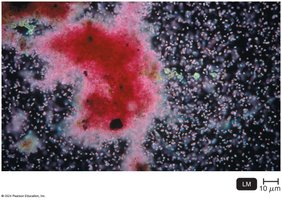
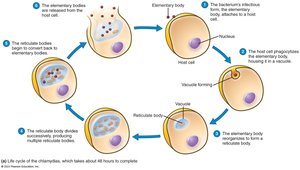
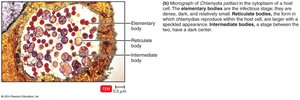
Chlamydiae lack peptidoglycan and grow intracellularly. They form infective elementary bodies and cause diseases such as trachoma, urethritis, and respiratory infections.
Planctomycetes
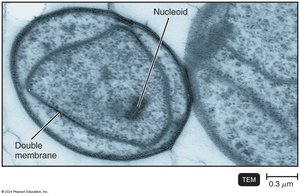
Gram-negative, budding bacteria with cell walls resembling those of archaea. Some possess a membrane-bound DNA region similar to a eukaryotic nucleus.
Bacteroidota and Fusobacteria
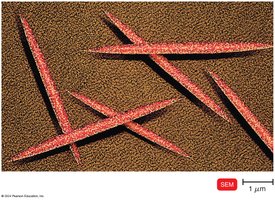
Bacteroidota are anaerobic bacteria found in the mouth and intestine, important in digestion. Fusobacteria are also anaerobic and cause dental abscesses.
Spirochaetes
Spirochaetes are coiled bacteria that move via axial filaments, enabling corkscrew motility. They include pathogens causing syphilis, Lyme disease, and leptospirosis.
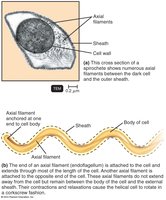
Gram-Positive Bacteria: Bacillota and Actinomycetota
Gram-positive bacteria are classified by their G+C content. Bacillota have low G+C ratios, while Actinomycetota have high G+C ratios.
Bacillota (Low G+C)
Clostridium: Endospore-producing, obligate anaerobes; includes C. tetani, C. botulinum, C. perfringens.
Clostridioides: C. difficile causes intestinal infections.
Epulopiscium: Giant bacterium; daughter cells form within parent cell.
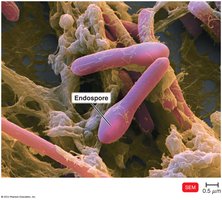
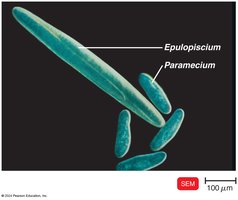
Bacillus: Endospore-producing rods; B. anthracis (anthrax), B. thuringiensis (insect pathogen), B. cereus (food poisoning).
Staphylococcus: Grapelike clusters; S. aureus causes wound infections and produces enterotoxin.
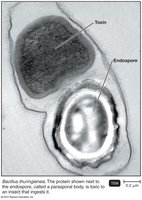
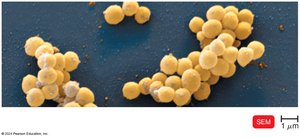
Lactobacillus: Aerotolerant anaerobes; used in food production.
Streptococcus: Spherical cells in chains; includes beta-hemolytic (S. pyogenes, S. agalactiae) and alpha-hemolytic (S. pneumoniae, S. mutans) species.
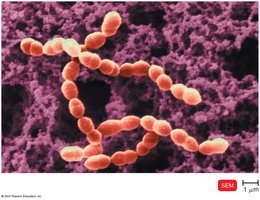
Enterococcus: Intestinal tract bacteria; hospital contaminants.
Listeria: L. monocytogenes contaminates food.
Mycoplasmatota (Low G+C)
Mycoplasma: Lack cell wall; pleomorphic; M. pneumoniae causes mild pneumonia.

Actinomycetota (High G+C)
Mycobacterium: Thick, waxy cell wall; slow-growing; M. tuberculosis (tuberculosis), M. leprae (leprosy).
Nocardia: Acid-fast, fragmenting filaments; N. asteroides causes pulmonary infections.
Corynebacterium: C. diphtheriae causes diphtheria.
Propionibacterium: Forms propionic acid; C. acnes may contribute to acne.
Gardnerella: G. vaginalis causes vaginitis.
Frankia: Nitrogen-fixing.
Streptomyces: Soil bacteria; produce antibiotics.
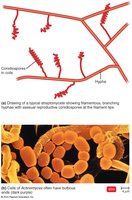
Actinomyces: Form filaments called hyphae; found in mouth and throat.
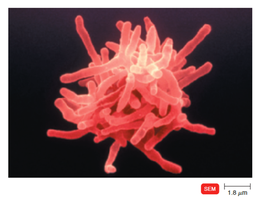
Deinococcota (High G+C)
Deinococcus radiodurans: Highly resistant to radiation; rapid DNA repair.
Thermus aquaticus: Source of Taq polymerase for PCR.
Archaea: Diversity and Extremophiles
Archaea are distinct from bacteria, lacking peptidoglycan and often thriving in extreme environments.
Halophiles: Require high salt concentrations.
Thermophiles: Grow at high temperatures.
Acidophiles: Grow at very low pH.
Methanogens: Anaerobic, produce methane; some are part of human microbiota.
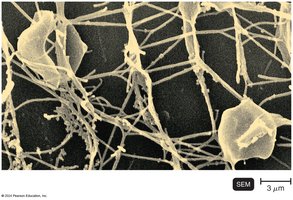
Microbial Diversity: Discoveries and Limitations
Microbial diversity is vast, with millions of species yet to be discovered. Limitations in culturing and identification hinder the full understanding of prokaryotic diversity.
Bacteria size range: From nanobacteria to giant species like Thiomargarita magnifica.
Genome size: Some bacteria have extremely small genomes.
Complex food webs: Many bacteria require other microbes for growth.
Table: Selected Characteristics of Photosynthesizing Bacteria
Group | Photosynthesis Type | Key Features |
|---|---|---|
Cyanobacteria | Oxygenic | Heterocysts, gas vesicles, nitrogen fixation |
Chlorobi | Anoxygenic | Green sulfur bacteria |
Chloroflexi | Anoxygenic | Green nonsulfur bacteria |
Purple sulfur bacteria | Anoxygenic | Sulfur metabolism |
Purple nonsulfur bacteria | Anoxygenic | Metabolically versatile |
Table: G+C Content of Selected Gram-Positive Bacteria
Genus | G+C Content (%) |
|---|---|
Streptomyces | 69–73 |
Mycobacterium | 62–70 |
Streptococcus | 33–44 |
Clostridium | 21–54 |
Additional info: Academic context and expanded explanations were added to ensure completeness and clarity for microbiology students.
