 Back
BackClassification and Identification of Bacteria: Taxonomy, Methods, and Major Groups
Study Guide - Smart Notes
 Tailored notes based on your materials, expanded with key definitions, examples, and context.
Bacterial Classification and Taxonomy
Introduction to Bacterial Classification
Bacterial classification is a systematic approach to organizing and identifying bacteria based on shared characteristics and evolutionary relationships. Accurate classification is essential for understanding microbial diversity, ecology, and pathogenicity.
Taxonomy is the science of classifying organisms, which includes identification, nomenclature, and classification.
Bacteria are classified into hierarchical ranks: Domain, Kingdom, Phylum, Class, Order, Family, Genus, and Species.
Recent updates (2023–2024) have formalized kingdom ranks for prokaryotes, with new suffix conventions (e.g., phyla end in "-ota").
Scientific Nomenclature
Scientific names provide a universal language for identifying organisms. The binomial system, established by Carolus Linnaeus, assigns each organism a two-part name: genus and species.
Genus name is capitalized; species name is lowercase (e.g., Escherichia coli).
Names are italicized or underlined.
Genus can be abbreviated after first use (e.g., E. coli).
Prokaryotic species: population of cells with similar characteristics; strain: genetically distinct variant within a species.
Genus Name | Specific Epithet | Meaning/Origin |
|---|---|---|
Klebsiella | pneumoniae | Honors Edwin Klebs; the disease |
Salmonella | typhimurium | Honors Daniel Salmon; typhus in mice |
Streptococcus | pyogenes | Chains of cells; forms pus |
Escherichia | coli | Honors Theodor Escherich; colon |
Staphylococcus | aureus | Bunch of grapes; gold color |
Methods of Bacterial Identification and Classification
Phenotypic and Biochemical Methods
Traditional identification relies on observable characteristics and metabolic capabilities.
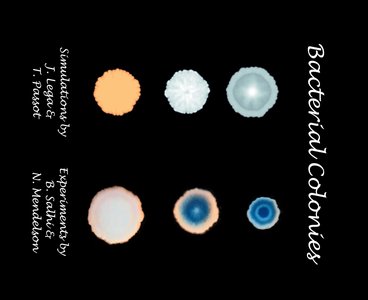
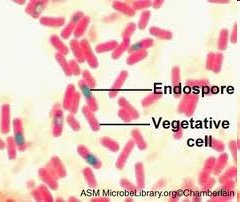
Morphological characteristics: cell shape, arrangement, presence of endospores, colony morphology.
Differential staining: Gram stain, capsule stain, endospore stain.
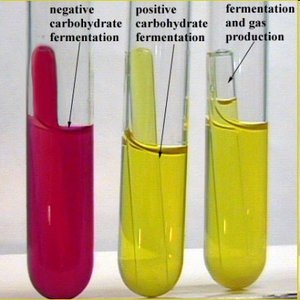
Biochemical tests: detection of specific enzymes, fermentation of carbohydrates, production of gases or acids.
Serological Methods
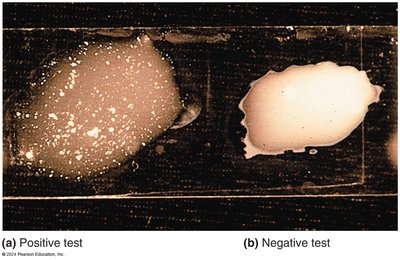
Serological tests use antibodies to detect specific bacterial antigens, aiding in rapid identification.
Examples: Slide agglutination, ELISA.
Widely used in clinical diagnostics (e.g., COVID-19 tests).
Molecular and Genomic Methods
Modern classification increasingly relies on genetic analysis, which provides high specificity and evolutionary insights.
DNA base composition: Percentage of guanine + cytosine (G+C) content; closely related organisms have similar G+C ratios.
Whole genome sequencing: Comprehensive comparison of genetic material; databases like NCBI Genome Database are used.
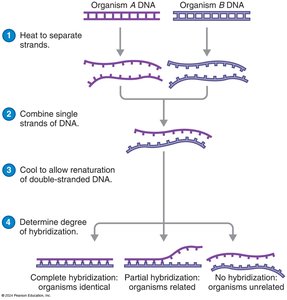
Nucleic acid hybridization: Measures the ability of DNA from different organisms to hybridize, indicating relatedness.
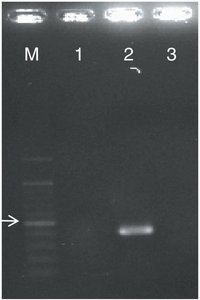
PCR and nucleic acid amplification: Amplifies DNA for identification, even from unculturable organisms.
DNA chips (microarrays): Detect pathogens by hybridization with DNA probes.
Ribotyping: rRNA sequencing for phylogenetic analysis.
FISH (Fluorescent in situ hybridization): Uses fluorescent probes to detect specific DNA/RNA sequences in cells.
Phylogenetic Analysis and Evolutionary Relationships
Phylogenetic Trees and Cladograms
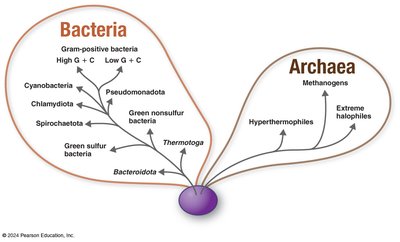
Phylogenetic trees and cladograms visually represent evolutionary relationships among organisms, often based on genetic data such as rRNA sequences.
Organisms are grouped by shared characteristics and common ancestry.
Cladograms are constructed using sequence similarity data.

Dichotomous Keys
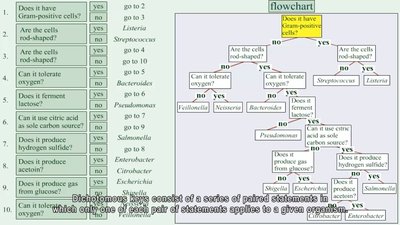
Dichotomous keys are tools for identifying organisms through a series of paired, yes/no questions based on observable or testable traits.
Each step narrows down the possibilities until the organism is identified.
Widely used in clinical and laboratory settings for bacterial identification.

Taxonomic Hierarchy and Recent Updates
Current Prokaryotic Classification
The taxonomic hierarchy for prokaryotes has been updated to include kingdom ranks and standardized suffixes for higher taxa.
Domain: Bacteria, Archaea
Kingdom: Suffix "-ati" (e.g., Pseudomonadati)
Phylum: Suffix "-ota" (e.g., Pseudomonadota)
Class: Suffix "-ia" (e.g., Gammaproteobacteria)
Order: Suffix "-ales" (e.g., Enterobacteriales)
Family: Suffix "-aceae" (e.g., Enterobacteriaceae)
Genus: Collection of similar species (e.g., Escherichia)
Species: Group of related strains (e.g., E. coli)

Major Groups of Bacteria
Gram Stain Distinction
Bacteria are broadly divided into Gram-positive and Gram-negative groups based on cell wall structure and Gram staining results.
Gram-positive: Thick peptidoglycan layer, retain crystal violet stain (purple).
Gram-negative: Thin peptidoglycan layer, outer membrane, lose crystal violet, stain pink with safranin.

Gram-Negative Bacteria: Major Phyla and Classes
Phylum | Class | Representative Genera/Notes |
|---|---|---|
Pseudomonadota (Proteobacteria) | Alphaproteobacteria | Ehrlichia, Rickettsia, Rhizobium, Agrobacterium, Wolbachia |
Betaproteobacteria | Bordetella, Burkholderia, Neisseria | |
Gammaproteobacteria | Vibrio, Salmonella, Escherichia, Pseudomonas | |
Deltaproteobacteria | Bdellovibrio | |
Campylobacterota | Campylobacterales | Campylobacter, Helicobacter |
Cyanobacteria | Cyanobacteria | Oxygenic photosynthetic bacteria |
Chlorobiota | Chlorobia | Green sulfur bacteria |
Chloroflexota | Chloroflexi | Green non-sulfur bacteria |
Chlamydiota | Chlamydiae | Obligate intracellular pathogens |
Planctomycetota | Planctomycetia | Aquatic, stalked bacteria |
Bacteroidota | Bacteroidetes | Opportunistic pathogens |
Fusobacteriota | Fusobacteria | Various |
Spirochaetota | Spirochaetia | Borrelia (Lyme disease), Treponema (syphilis) |
Gram-Positive Bacteria: Major Phyla and Classes
Phylum | Class | Representative Genera/Notes |
|---|---|---|
Bacillota (Firmicutes) | Bacilli | Bacillus, Staphylococcus, Lactobacillus, Listeria, Streptococcus, Enterococcus |
Clostridia | Clostridium, Clostridioides | |
Mycoplasmatota | Mollicutes | Mycoplasma (wall-less, pleomorphic) |
Actinomycetota | Actinobacterium | Streptomyces, Corynebacterium, Mycobacterium, Cutibacterium, Gardnerella |
Deinococcota | Deinococcus | Radiation- and heat-resistant genera |
Examples of Pathogenic Bacteria
Gram-negative pathogens: Neisseria gonorrhoeae (gonorrhea), Bordetella pertussis (whooping cough), Vibrio cholerae (cholera), Salmonella (typhoid), Shigella (dysentery), Helicobacter pylori (ulcers), Chlamydia trachomatis (trachoma, urethritis), Borrelia burgdorferi (Lyme disease), Treponema pallidum (syphilis).
Gram-positive pathogens: Bacillus cereus (food poisoning), Staphylococcus aureus (boils, food poisoning), Listeria monocytogenes (food poisoning), Streptococcus pyogenes (strep throat), Clostridium botulinum (botulism), Clostridioides difficile (colitis), Mycoplasma pneumoniae (atypical pneumonia), Corynebacterium diphtheriae (diphtheria), Mycobacterium tuberculosis (tuberculosis).
Summary Table: Bacterial Classification by Gram Stain and G+C Content
Gram Stain | G+C Content | Major Groups |
|---|---|---|
Negative | Varied | Pseudomonadota, Campylobacterota, Chlamydiota, Bacteroidota, Spirochaetota, etc. |
Positive | Low (<55%) | Bacilli, Clostridia, Mollicutes |
Positive | High (>55%) | Actinobacterium, Deinococcus |
Key Takeaways
Bacterial classification integrates phenotypic, biochemical, serological, and molecular methods.
Modern taxonomy reflects evolutionary relationships, with genetic sequencing playing a central role.
Understanding classification is essential for identifying pathogens and studying microbial diversity.
