Back
ch 10 Classification and Phylogeny of Microorganisms: Taxonomy, Domains, and Methods
Study Guide - Smart Notes
 Tailored notes based on your materials, expanded with key definitions, examples, and context.
The Study of Phylogenetic Relationships
Taxonomy and Systematics
Taxonomy is the science of classifying organisms, which helps reveal the degree of similarity among organisms and their evolutionary relationships. Systematics, or phylogeny, is the study of the evolutionary history of organisms, providing a framework for understanding how different groups are related.
Taxa (taxon): Subdivisions used to classify organisms, such as species, genus, family, etc.
Importance: Classification aids in identification, communication, and understanding evolutionary relationships.
The Three Domains of Life
Domain Classification
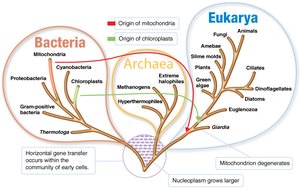
The three-domain system, developed by Woese in 1978, is based on nucleotide sequences in ribosomal RNA (rRNA). It divides life into Bacteria, Archaea, and Eukarya, reflecting fundamental differences in cellular structure and genetics.
Bacteria: Prokaryotic, includes most known bacteria.
Archaea: Prokaryotic, often found in extreme environments, genetically distinct from bacteria.
Eukarya: Eukaryotic, includes animals, plants, fungi, and protists.
Origin of Eukaryotes
Endosymbiotic Theory
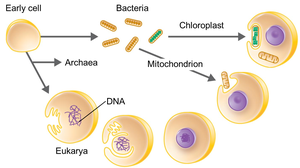
The origin of eukaryotes is explained by the endosymbiotic theory, which proposes that eukaryotic cells arose from infoldings of prokaryotic plasma membranes and the incorporation of endosymbiotic bacteria that became organelles such as mitochondria and chloroplasts.
Infoldings: Internal membranes formed from prokaryotic plasma membrane.
Endosymbiosis: Bacteria living inside another cell evolved into mitochondria and chloroplasts.
Evidence for Endosymbiotic Model
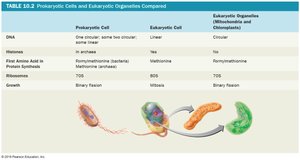
Evidence supporting the endosymbiotic model includes similarities between mitochondria/chloroplasts and bacteria, such as DNA structure, ribosome type, and reproduction by binary fission.
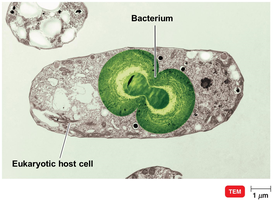
Modern Example: Cyanophora paradoxa is a modern-day example of a bacterium within a eukaryotic host cell.
Scientific Nomenclature
Binomial Nomenclature
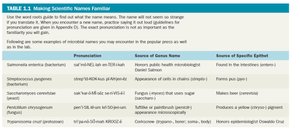
Binomial nomenclature is the standardized system for naming organisms, consisting of a genus and a specific epithet (species). This system ensures consistency and accuracy in scientific communication.
Genus: The first part of the name, always capitalized.
Specific epithet: The second part, not capitalized.
Example: Escherichia coli
Taxonomic Hierarchy
Levels of Classification
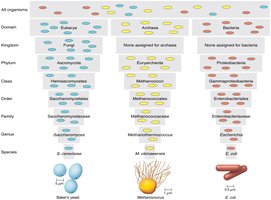
The taxonomic hierarchy organizes living organisms into increasingly specific categories: Domain, Kingdom, Phylum, Class, Order, Family, Genus, and Species. This structure helps scientists systematically identify and classify organisms.
Domain: Highest level, includes Bacteria, Archaea, Eukarya.
Species: Most specific level, represents a single type of organism.
Classification of Prokaryotes
Prokaryotic Species and Strains
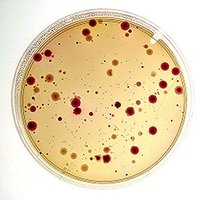
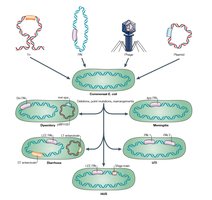
Prokaryotic species are populations of cells with similar characteristics. Within a species, a clone is a population derived from a single parent cell, while a strain refers to genetically different cells within a clone.
Culture: Bacteria grown in laboratory media.
Strain: Important for identifying pathogenic variants, such as different strains of Escherichia coli.
Classification of Eukaryotes
Major Eukaryotic Groups
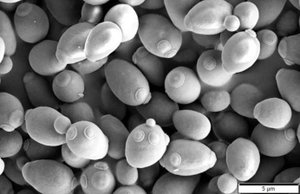
Eukaryotes are classified into several kingdoms based on their cellular structure and mode of nutrition.
Protista: Diverse group, includes autotrophic and heterotrophic organisms.
Fungi: Chemoheterotrophic, unicellular or multicellular, cell walls of chitin.
Plantae: Multicellular, cellulose cell walls, photosynthetic.
Animalia: Multicellular, no cell walls, chemoheterotrophic.


Classification of Viruses
Viral Classification
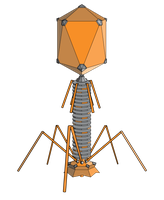
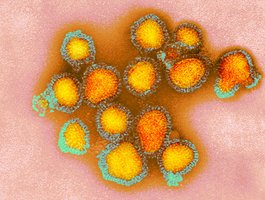
Viruses are not part of any domain and are not composed of cells. They require a host cell to replicate and are classified based on their genetic material and ecological niche.
Viral species: Population of viruses with similar characteristics occupying a particular ecological niche.
Methods of Classifying and Identifying Microorganisms
Key Methods
Microorganisms are classified and identified using several methods, each with its own advantages and limitations.
Morphological Characteristics: Observing cell shape, arrangement, and structure. Limitation: May not distinguish closely related species.
Differential Staining: Techniques such as Gram staining differentiate bacteria based on cell wall properties.
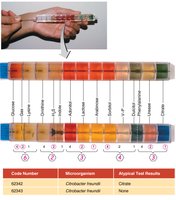
Biochemical Tests: Assess metabolic capabilities, such as enzyme production. Limitation: Some tests may not be definitive for all species.
Rapid Identification Methods: Automated systems for quick identification based on biochemical profiles.
Reference Resources
Bergey's Manual of Systematic Bacteriology
Bergey's Manual is a comprehensive reference for the classification and identification of bacteria, widely used in microbiology laboratories and research.