 Back
BackClassification and Taxonomy of Microorganisms: Prokaryotes, Eukaryotes, and Their Properties
Study Guide - Smart Notes
 Tailored notes based on your materials, expanded with key definitions, examples, and context.
Classification and Taxonomy in Microbiology
Introduction to Taxonomy
Taxonomy is the science of classification, identification, and nomenclature of organisms based on hierarchical relationships. It provides a structured framework for organizing the diversity of life, especially microorganisms, by grouping them according to shared characteristics and evolutionary history.
Classification: The orderly arrangement of organisms into groups based on established criteria.
Identification: The practical use of classification criteria to distinguish organisms.
Nomenclature: The system of naming organisms, allowing scientists to communicate about species with precision.
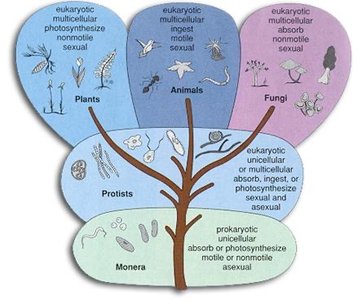
Systematics and Modern Classification
Systematics involves comparing observable traits (morphology, physiology, ecology) and genetic relationships (especially rRNA sequences) to determine evolutionary lineages. Modern taxonomy increasingly relies on molecular data, such as ribosomal RNA, to resolve relationships among microorganisms.
Observable Properties: Morphology, metabolism, habitat, and pathogenicity.
Genetic Relationships: rRNA sequencing is a primary tool for determining evolutionary relationships.
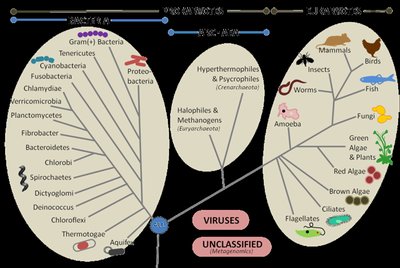
Hierarchical Structure of Taxonomy
Organisms are classified into hierarchical categories called taxa (singular: taxon). The main ranks are:
Domain
Kingdom
Phylum
Class
Order
Family
Genus
Species
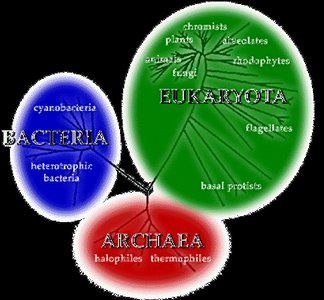
Three Domains of Life
Bacteria
Prokaryotic, unicellular organisms.
Cell walls contain peptidoglycan.
Reproduce asexually (mainly by binary fission).
Extremely diverse in metabolism and habitat.
Archaea
Prokaryotic, unicellular organisms.
Cell walls lack true peptidoglycan; unique membrane lipids.
Often extremophiles (thermophiles, halophiles, methanogens).
Reproduce by binary fission or budding.
Eukarya
Cells with a true nucleus and membrane-bound organelles.
Includes kingdoms: Protista, Fungi, Plantae, Animalia.

Criteria for Microbial Classification
Properties Used in Classification
Cell structure (membrane, wall, nucleus, organelles)
Reproduction (asexual, sexual, binary fission, budding)
Energy and carbon source (autotroph, heterotroph, phototroph, chemotroph)
Morphology (shape, arrangement, colony characteristics)
Environmental preferences (temperature, pH, salinity)
Prokaryotic Morphology and Colony Characteristics
Bacterial Shapes
Coccus: Spherical (e.g., diplococci, streptococci, staphylococci)
Bacillus: Rod-shaped (e.g., diplobacilli, streptobacilli, palisades)
Other Forms: Vibrio, spirillum, spirochete, filamentous
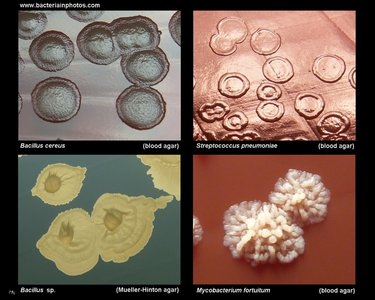
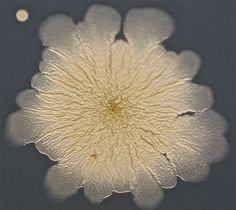
Colony Morphology
Bacterial colonies can be classified by their form, elevation, and margin. These features are important for identification in the laboratory.
Form: Punctiform, circular, filamentous, rhizoid, irregular, spindle
Elevation: Flat, raised, convex, pulvinate, umbonate, crateriform
Margin: Entire, undulate, filamentous, lobate, erose, curled, scalloped


Prokaryotic Cell Wall Structure
Peptidoglycan and Gram Staining
The cell wall is a critical feature for bacterial classification. Most bacteria have a cell wall composed of peptidoglycan (PG), a polymer of sugars (NAG and NAM) and amino acids. The amount and structure of peptidoglycan determine the Gram reaction:
Gram-Positive: Thick peptidoglycan layer, teichoic acids, stains purple.
Gram-Negative: Thin peptidoglycan, outer membrane with lipopolysaccharide (LPS), stains pink.
Gram-negative bacteria have an additional outer membrane containing LPS, which includes Lipid A (endotoxin) and O-antigen.
Major Prokaryotic Groups
Archaea
Lack true peptidoglycan; unique membrane lipids.
Common groups: Crenarchaeota, Euryarchaeota, Korarchaeota, Nanoarchaeota.
Extremophiles (thermophiles, halophiles) and methanogens are notable representatives.
Bacteria
Classified by G+C content, morphology, metabolism, and genetic data.
Major phyla include: Proteobacteria, Firmicutes, Actinobacteria, Cyanobacteria, Spirochaetes, Chlamydiae, Bacteroidetes, and others.
Survey of Eukaryotic Microorganisms
Protozoa
Unicellular, eukaryotic, lack cell walls.
Motile by cilia, flagella, or pseudopodia (except apicomplexans).
Reproduction: Asexual (binary fission, schizogony), sexual (gametes, zygotes).
Major groups: Parabasala, Alveolata (ciliates, apicomplexans, dinoflagellates), Cercozoa, Radiolaria, Amoebozoa, Euglenozoa, Diplomonadida.
Fungi
Eukaryotic, mostly multicellular (except yeasts).
Cell walls contain chitin.
Absorptive heterotrophs; saprophytic or parasitic.
Reproduce by spores (asexual and sexual cycles).
Major groups: Ascomycota, Basidiomycota, Zygomycota (Glomeromycota), Deuteromycota (imperfect fungi).
Parasitic Eukaryotes
Helminths
Multicellular, eukaryotic worms.
Major groups: Platyhelminthes (flatworms: cestodes, trematodes), Nematoda (roundworms), Annelida (segmented worms).
Life cycles often involve multiple hosts and complex developmental stages.
Arthropods
Segmented bodies, jointed appendages, exoskeletons.
Important as vectors for microbial diseases (e.g., ticks, lice, fleas, mosquitoes).
Summary Table: Major Microbial Groups and Their Features
Domain/Kingdom | Cell Type | Cell Wall | Reproduction | Representative Groups |
|---|---|---|---|---|
Bacteria | Prokaryotic | Peptidoglycan | Asexual (binary fission) | Proteobacteria, Firmicutes, Actinobacteria, Cyanobacteria |
Archaea | Prokaryotic | No true peptidoglycan | Asexual (binary fission, budding) | Crenarchaeota, Euryarchaeota, Korarchaeota, Nanoarchaeota |
Protista | Eukaryotic | Variable | Asexual/Sexual | Protozoa, Algae |
Fungi | Eukaryotic | Chitin | Asexual/Sexual (spores) | Ascomycota, Basidiomycota, Zygomycota |
Helminths | Eukaryotic | None | Sexual (complex life cycles) | Platyhelminthes, Nematoda, Annelida |
Arthropods | Eukaryotic | Chitin (exoskeleton) | Sexual | Insecta, Arachnida |
Additional info: This summary integrates foundational concepts from the chapters on classification, taxonomy, and the diversity of microbial life, including both prokaryotic and eukaryotic microorganisms, as well as medically important parasites and vectors. The images included are directly relevant to the explanation of taxonomic relationships, domain structure, and colony morphology.
