 Back
BackClassification of Microorganisms: Taxonomy, Phylogeny, and Microbial Diversity
Study Guide - Smart Notes
 Tailored notes based on your materials, expanded with key definitions, examples, and context.
Classification of Microorganisms
Introduction to Taxonomy and Systematics
Taxonomy is the science of classifying living organisms to establish relationships and differentiate between groups. Systematics, or phylogeny, is the study of the evolutionary history of organisms, and the hierarchy of taxa reflects their evolutionary relationships. Modern taxonomy uses molecular biology, especially DNA sequencing, to classify and identify microorganisms.
Taxon: A category used in classification (e.g., species, genus, family).
Phylogeny: The evolutionary history and relationships among organisms.
Importance: Provides a universal language for scientists and is essential for identifying pathogens in clinical settings.

Historical Perspectives and the Three-Domain System
Early classification systems divided life into two kingdoms (plants and animals), but advances in microscopy and molecular biology led to more refined systems. The current three-domain system, proposed by Carl Woese, is based on differences in ribosomal RNA (rRNA) sequences and divides life into:
Bacteria: Prokaryotes with peptidoglycan in their cell walls.
Archaea: Prokaryotes without peptidoglycan, often living in extreme environments.
Eukarya: Eukaryotes, including fungi, plants, animals, and protists.

Characteristics of the Three Domains
The three domains differ in cell type, cell wall composition, membrane lipids, protein synthesis, and sensitivity to antibiotics.
Characteristic | Archaea | Bacteria | Eukarya |
|---|---|---|---|
Cell Type | Prokaryotic | Prokaryotic | Eukaryotic |
Cell Wall | No peptidoglycan | Peptidoglycan | Carbohydrates |
Membrane Lipids | Branched, ether-linked | Straight, ester-linked | Straight, ester-linked |
First Amino Acid | Methionine | Formylmethionine | Methionine |
Antibiotic Sensitivity | No | Yes | No |

Taxonomic Hierarchy and Nomenclature
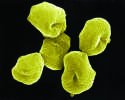
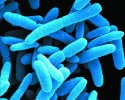
Organisms are classified into a hierarchy: Domain > Kingdom > Phylum > Class > Order > Family > Genus > Species. Scientific names use binomial nomenclature (Genus species), which is universal and avoids confusion from common names.
Example: Escherichia coli (E. coli)
Strain: A subgroup within a species with distinct characteristics.
Methods of Classifying and Identifying Microorganisms
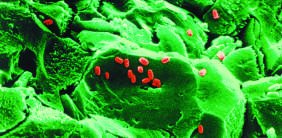
Microorganisms are classified and identified using a variety of methods:
Morphological characteristics: Cell shape, arrangement, presence of structures (e.g., flagella, endospores).
Differential staining: Gram stain, acid-fast stain.
Biochemical tests: Enzyme activities, metabolic capabilities.
Serology: Use of antibodies to detect specific antigens (e.g., slide agglutination, ELISA).
Phage typing: Determining susceptibility to specific bacteriophages.
Molecular methods: DNA sequencing, PCR, nucleic acid hybridization, DNA chips, ribotyping, FISH.


Phylogenetic Trees and Cladograms
Phylogenetic trees and cladograms are used to visualize evolutionary relationships based on genetic, biochemical, and morphological data. rRNA sequencing is a key tool for constructing these trees, especially for microorganisms that do not leave fossils.
Summary Table: Key Methods for Microbial Classification and Identification
Method | Main Purpose | Example/Application |
|---|---|---|
Morphology | Initial identification | Gram stain, shape |
Biochemical tests | Species differentiation | Fermentation, enzyme activity |
Serology | Strain/species ID | ELISA, agglutination |
Phage typing | Strain tracing | Outbreak investigation |
Molecular methods | Phylogeny, ID | PCR, DNA chips, FISH |
Applications and Importance
Accurate classification and identification are essential for diagnosis, treatment, epidemiology, and research.
Modern taxonomy integrates molecular data, improving our understanding of microbial diversity and evolution.
