 Back
BackComprehensive Study Notes: Antimicrobial Drugs, Microbial Diseases, and Host Systems
Study Guide - Smart Notes
 Tailored notes based on your materials, expanded with key definitions, examples, and context.
Antimicrobial Drugs and Their Mechanisms
Key Definitions
Selective toxicity: The ability of a drug to target and kill or inhibit harmful microorganisms without causing significant damage to the host’s cells.
Chemotherapy: The use of chemicals to treat disease, especially infections and cancer.
Antibiotic: A substance produced by a microbe that, in small amounts, inhibits another microbe.
Antimicrobial drugs: Synthetic substances that interfere with the growth of microbes.
Penicillin and Its Source
Penicillin: An antibiotic medication used to treat bacterial infections by preventing the synthesis of peptidoglycan, an essential component of bacterial cell walls.
Source: Produced by the fungus Penicillium.
Kingdom: Fungi.
Bactericidal vs. Bacteriostatic
Bactericidal: Kills bacteria directly.
Bacteriostatic: Inhibits the growth and reproduction of bacteria without killing them outright.
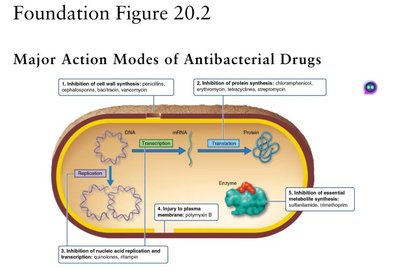
Major Action Modes of Antibacterial Drugs
Antibacterial drugs act through several major mechanisms to inhibit or kill bacteria:
Inhibition of cell wall synthesis (e.g., penicillins, cephalosporins, bacitracin, vancomycin)
Inhibition of protein synthesis (e.g., chloramphenicol, erythromycin, tetracyclines, streptomycin)
Inhibition of nucleic acid replication and transcription (e.g., quinolones, rifampin)
Injury to plasma membrane (e.g., polymyxin B)
Inhibition of essential metabolite synthesis (e.g., sulfanilamide, trimethoprim)
Penicillinase
Penicillinase: An enzyme produced by certain bacteria (e.g., Staphylococcus) that breaks open the β-lactam ring of penicillin, rendering the antibiotic ineffective.
Sulfonamides and Drug Synergism
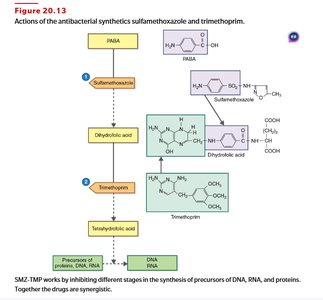
Sulfonamides: Bacteriostatic synthetic antibiotics that inhibit bacterial growth by interfering with folic acid synthesis.
Drug synergism: The combination of trimethoprim and sulfamethoxazole (TMP-SMZ) is an example, where the drugs work together to produce a stronger effect than either alone.
Folic Acid in Cellular Metabolism
Folic acid: An enzyme cofactor required for the synthesis of proteins, DNA, and RNA in all cellular organisms.
Humans: Obtain folic acid from diet (fortified foods, supplements, leafy greens).
Bacteria: Must synthesize folic acid de novo, making the pathway a target for selective toxicity.
Selective Toxicity in Antifungal and Antiviral Drugs
Antifungal drugs: Fungi are eukaryotes like humans, so there are fewer unique targets for drugs, making selective toxicity harder to achieve.
Antiviral drugs: Viruses rely on host cell machinery, so there are very few safe and effective drug targets, resulting in fewer antiviral drugs.
Acyclovir and Viral Replication
Acyclovir: An antiviral drug that mimics deoxyguanosine, is incorporated into viral DNA, and causes premature chain termination, blocking viral replication.
Kirby-Bauer Test
Kirby-Bauer test: A laboratory method using agar plates to determine the susceptibility of microbes to antibiotics by measuring zones of inhibition.
Mechanisms of Antibiotic Resistance
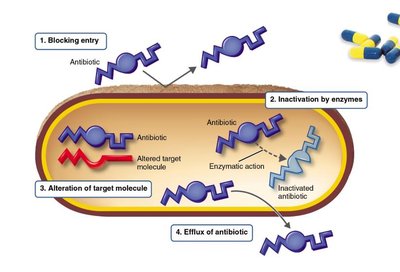
Bacteria can become resistant to antibiotics through several mechanisms:
Blocking entry: Preventing the antibiotic from entering the cell.
Inactivation by enzymes: Enzymatic destruction or modification of the drug (e.g., penicillinase).
Alteration of target molecule: Modifying the drug’s target so the antibiotic cannot bind effectively.
Efflux of antibiotic: Pumping the antibiotic out of the cell before it can act.
Development of Antibiotic Resistance
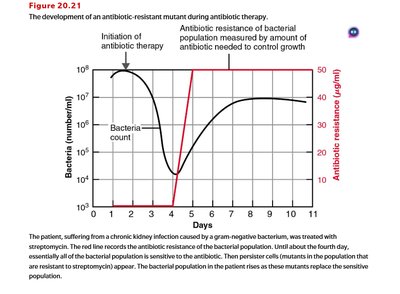
Antibiotic resistance can develop during therapy, especially if not all bacteria are killed and resistant mutants survive and proliferate.
Resistance is measured by the amount of antibiotic needed to control bacterial growth.
Misuse of Antibiotics
Misuse includes underdosing, not completing prescribed courses, or using antibiotics for viral infections, all of which promote resistance.
Drug Synergism vs. Antagonism
Synergism: Two drugs together produce a stronger effect than either alone.
Antagonism: One drug reduces or blocks the effect of another drug.
Microbial Diseases of the Skin and Eyes
Skin as a Barrier
The skin is salty, dry, and has a low pH, which limits microbial growth.
Lysozyme
Lysozyme: An enzyme that hydrolyzes peptidoglycan, breaking bacterial cell walls and providing innate defense.
Key Terms: Exanthem and Enanthem
Exanthem: External skin rash.
Enanthem: Rash on mucous membranes (internal).
Staphylococcal and Streptococcal Infections
Folliculitis: Superficial infection of hair follicle.
Sty (stye): Infected eyelash follicle.
Furuncle (boil): Deeper infection of hair follicle.
Carbuncle: Hard, deep inflammation under the skin.
MRSA: Methicillin-resistant Staphylococcus aureus.
HA-MRSA: Healthcare-associated MRSA.
CA-MRSA: Community-associated MRSA.
GAS: Group A Streptococcus, can cause necrotizing fasciitis ("flesh-eating disease").
Acne and Its Treatment
Genus: Cutibacterium (Propionibacterium) acnes.
Sebum: Oily substance produced by sebaceous glands.
Treatments: Antibiotics, benzoyl peroxide, blue light therapy.
Viral and Fungal Skin Diseases
Warts: Caused by human papillomavirus (HPV-16).
Smallpox: Caused by variola virus, transmitted via bloodstream, nearly eliminated by vaccination (Edward Jenner).
Shingles: Reactivation of varicella-zoster virus, latent in dorsal root ganglia.
MMR vaccine: Protects against measles, mumps, rubella.
Ringworm and athlete's foot: Fungal infections.
Thrush: Fungal infection caused by Candida albicans (Kingdom: Fungi).
Pediculosis: Lice infestation caused by Pediculus humanus capitis (Kingdom: Animalia).
Ophthalmia Neonatorum Prevention
Newborns receive eye drops with silver nitrate or antibiotics to prevent serious eye infection (ophthalmia neonatorum).
Microbial Diseases of the Nervous System
Central and Peripheral Nervous Systems
CNS: Brain and spinal cord.
PNS: Nerves branching from CNS.
Cerebrospinal fluid: Liquid cushioning the brain and spinal cord.
Key Terms: Meningitis, Encephalitis, Meningoencephalitis
Meningitis: Inflammation of the meninges.
Encephalitis: Inflammation of the brain.
Meningoencephalitis: Inflammation of both meninges and brain.
Spinal Tap (Lumbar Puncture)
Needle inserted into lumbar region to collect cerebrospinal fluid for testing or to deliver medications.
Bacterial and Viral Nervous System Diseases
Tetanus: Caused by Clostridium tetani, produces a neurotoxin.
Botulism: Caused by Clostridium botulinum (exotoxin), associated with improperly canned foods; botox is a medical use of the toxin.
Polio: Caused by poliovirus, enters via CNS, controlled by vaccination.
Rabies: Transmitted via animal bites, affects nervous system, mutates easily.
Cryptococcus neoformans: Fungal (yeast), enters via respiratory route.
Trypanosoma brucei: Parasitic protozoan, transmitted by arthropod vector.
Naegleria fowleri: Protozoan parasite, enters through nose (contaminated water), causes Primary Amoebic Meningoencephalitis (PAM).
Microbial Diseases of the Cardiovascular and Lymphatic Systems
Key Terms
Septicemia: Acute illness due to pathogens or their toxins in the blood.
Sepsis: Systemic inflammatory response syndrome (SIRS).
Lymphangitis: Inflamed lymph vessels.
Septic shock: Sepsis with uncontrollable decreased blood pressure.
Gram-Negative vs. Gram-Positive Sepsis
Gram-negative sepsis: Endotoxic shock due to lipopolysaccharides (LPS).
Gram-positive sepsis: Exotoxic shock, often hospital-acquired, associated with exotoxins.
Other Cardiovascular Diseases
Endocarditis: Inflammation of the endocardium.
Pericarditis: Inflammation of the sac around the heart.
Brucellosis: Caused by Brucella, transmitted via milk, causes undulant fever.
Anthrax: Caused by Bacillus anthracis, transmitted via infected animals.
Gas gangrene: Caused by Clostridium perfringens, treated with antibiotics and oxygen therapy.
Cat-scratch disease: Caused by Bartonella henselae.
Plague (Black Death): Caused by Yersinia pestis, transmitted by rat flea.
Lyme disease: Caused by Borrelia burgdorferi, transmitted by ticks, prevalent in the Northeast USA.
Typhus: Caused by Rickettsia species, transmitted by arthropod vectors.
Mononucleosis: Caused by Epstein-Barr virus, transmitted via saliva.
Ebolavirus: Damages blood vessels, causes internal/external bleeding, high mortality.
Toxoplasmosis: Caused by Toxoplasma gondii (Kingdom: Protista), cats are definitive hosts.
Malaria: Caused by Plasmodium vivax, transmitted by mosquitoes.
Microbial Diseases of the Respiratory System
Upper vs. Lower Respiratory Tract
Upper respiratory tract: Nose, pharynx, middle ear, saliva, tears.
Lower respiratory tract: Larynx, trachea, bronchial tubes, alveoli.
Key Terms
Pharyngitis: Sore throat, inflammation of throat mucous membranes.
Laryngitis: Inflammation affecting speech.
Sinusitis: Inflammation of sinus mucous membranes.
Epiglottitis: Life-threatening inflammation of the epiglottis.
Common Respiratory Diseases
Strep throat and Scarlet fever: Caused by Streptococcus pyogenes.
Common cold: Caused by viruses; antibiotics are ineffective.
Pertussis (whooping cough): Caused by Bordetella pertussis, prevented by DTaP vaccine.
Tuberculosis: Caused by Mycobacterium tuberculosis, diagnosed by skin test, blood test, x-ray, or CT.
Influenza: Caused by influenzavirus (RNA genome), symptoms include chills, fever, headache, muscle aches; hemagglutinin (HA) spikes attach to host cells, neuraminidase (NA) spikes help virus release.
Fungal respiratory infections: Histoplasma capsulatum (histoplasmosis), Coccidioides immitis (coccidioidomycosis), Pneumocystis jirovecii (pneumonia).
Microbial Diseases of the Digestive System
Digestive System Structure
GI tract: Mouth, pharynx, esophagus, stomach, small and large intestine.
Accessory structures: Teeth, tongue, salivary glands, liver, gallbladder, pancreas.
Microbial Survival in the Digestive Tract
Few microbes survive in the stomach due to high acidity.
Bacteria in the large intestine are mostly anaerobic.
There are about 100 billion bacterial cells per gram of feces.
Common Digestive Diseases
Dental caries: Caused by Streptococcus mutans, which converts sucrose to lactic acid, dissolving tooth enamel.
Shigellosis: Caused by Shigella, treated with fluoroquinolones and rehydration.
Salmonellosis: Caused by Salmonella enterica, associated with chicken eggs, causes fever, nausea, cramps.
Cholera: Caused by Vibrio cholerae, leads to dehydration and shock.
Helicobacter Peptic Ulcers: Caused by Helicobacter pylori, forms ulcers in the stomach lining.
Hepatitis: Inflammation of the liver, caused by Hepatitis A-E viruses, transmitted via various routes.
Aflatoxin poisoning: Caused by Aspergillus flavus, associated with peanuts.
Protozoan diseases: Giardiasis (Giardia intestinalis), Cryptosporidiosis (Cryptosporidium), Amebiasis (Entamoeba histolytica).
Ophthalmic cysticercosis: Caused by Taenia solium (tapeworm, Kingdom: Animalia).
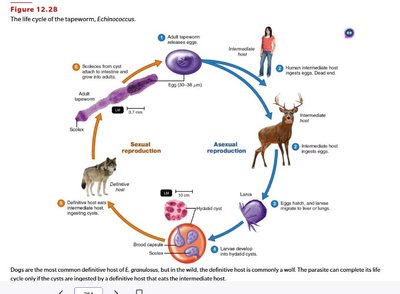
Tapeworm Life Cycle
Adult tapeworms release eggs, which are ingested by intermediate hosts (e.g., deer, sheep).
Larvae migrate to tissues and form hydatid cysts.
Definitive hosts (e.g., dogs) ingest cysts, completing the cycle.
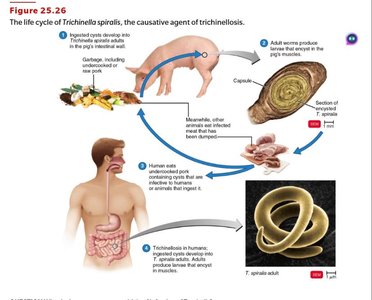
Trichinella spiralis Life Cycle
Ingested cysts develop into adults in the intestine of pigs or humans.
Larvae encyst in muscle tissue.
Humans acquire infection by eating undercooked pork containing cysts.
Microbial Diseases of the Urinary and Reproductive Systems
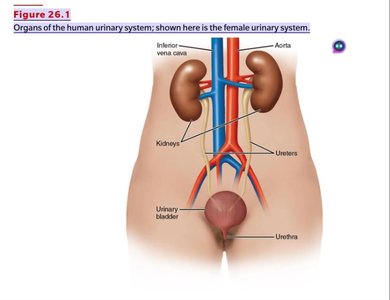
Organs of the Urinary and Reproductive Systems
Urinary system: Kidneys, ureters, urinary bladder, urethra.
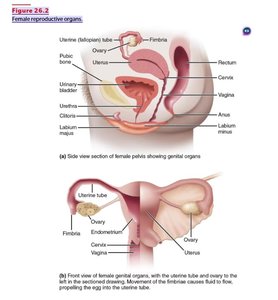
Female reproductive system: Ovaries, uterine tubes, uterus, cervix, vagina, external genitalia.
Male reproductive system: Testes, epididymis, vas deferens, seminal vesicles, prostate, penis, urethra.
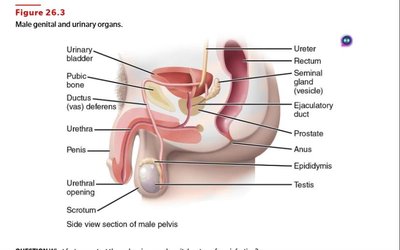
Sterile Regions and Normal Flora
Urinary bladder, upper urinary tract, and male urethra are usually sterile.
Vaginal flora includes Lactobacilli, Streptococci, and yeast (Candida albicans).
Key Terms
Urethritis: Inflammation of the urethra.
Cystitis: Inflammation of the bladder.
Ureteritis: Infection of the ureters.
Pyelonephritis: Inflammation of one or both kidneys.
Common Urinary and Reproductive Diseases
Gonorrhea: Caused by Neisseria gonorrhoeae; symptoms include painful urination and pus in men, pelvic inflammatory disease in women; untreated can lead to endocarditis, meningitis, arthritis.
Genital herpes: Caused by herpes simplex virus type 2 (HSV-2); symptoms include painful vesicles and urination.
