 Back
BackComprehensive Study Notes for College Microbiology: Cell Structure, Growth, Genetics, and Pathogenicity
Study Guide - Smart Notes
 Tailored notes based on your materials, expanded with key definitions, examples, and context.
Bacterial Cell Structure and Classification
Major Bacterial Shapes
Bacteria are classified by their morphology, which is essential for identification and understanding their ecological roles.
Bacillus: Rod-shaped bacteria.
Coccus: Spherical or circular bacteria.
Spirillum: Spiral-shaped bacteria.
Prokaryotic vs. Eukaryotic Cells
Understanding the differences between prokaryotic and eukaryotic cells is fundamental in microbiology.
Prokaryotes (Bacteria and Archaea):
Single, circular chromosome not enclosed in a membrane
No histones or organelles
Bacteria have peptidoglycan cell walls; Archaea have pseudomurein
Divide by binary fission
Eukaryotes (Fungi, Algae, Protozoa, Helminths):
Multiple, paired chromosomes in a nuclear membrane
Contain histones and organelles
Polysaccharide cell walls (if present)
Divide by mitosis (mitotic spindle forms)
Microbial Growth and Culturing
Biofilms
Biofilms are complex communities of microbes that adhere to surfaces and are embedded in a self-produced extracellular matrix.
Form on rocks, pipes, teeth, and medical implants
Protect mucous membranes but can also cause persistent infections
Often resistant to antibiotics due to the protective barrier
Isolation Techniques and Colony Formation
Isolation techniques are used to obtain pure cultures from mixed microbial populations.
Each isolated colony arises from a single bacterial cell and represents a pure culture.
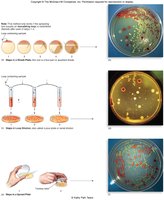
Streak Plate Method
The streak plate technique is a common method for isolating pure bacterial colonies.
Uses an inoculating loop to spread bacteria over the surface of an agar plate in a pattern that thins out the sample and separates individual cells.
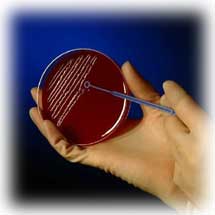
Culture Media
Microbes are grown on nutrient media, which can be liquid (broth) or solid (agar).
Nutrient broth: Contains beef extract and peptone.
Nutrient agar: Solid medium with beef extract, peptone, and agar.
Agar: A complex polysaccharide from red algae, solidifies at room temperature and is not digestible by most microbes.
Cell Wall Structure and Staining
Gram Stain
The Gram stain is a differential staining technique that distinguishes bacteria based on cell wall structure.
Gram-positive: Thick peptidoglycan layer, teichoic acids, no outer membrane.
Gram-negative: Thin peptidoglycan, outer membrane with lipopolysaccharides, periplasmic space.
Other Staining Methods
Acid-fast stain: Identifies bacteria with waxy cell walls (e.g., Mycobacterium).
Endospore stain: Differentiates endospores from vegetative cells.
Structural stains: Reveal capsules and flagella.
Genetics and Molecular Biology
Plasmids
Plasmids are small, circular DNA molecules separate from the bacterial chromosome.
Carry genes for antibiotic resistance, toxin production, and other advantages
Replicate independently and can be transferred via conjugation
DNA Structure and Replication
DNA is a double helix composed of nucleotides (deoxyribose, phosphate, nitrogenous base).
Replication involves enzymes such as helicase and DNA polymerase
Both strands are copied, ensuring genetic continuity
Gene Expression: Transcription and Translation
Genetic information flows from DNA to RNA to protein.
Transcription: DNA is transcribed to mRNA
Translation: mRNA is translated into protein at the ribosome, with tRNA bringing amino acids
Conjugation and Horizontal Gene Transfer
Conjugation is the transfer of genetic material between bacteria via direct contact (pilus).
Can spread antibiotic resistance and other traits
Microbial Metabolism
Enzymes
Enzymes are biological catalysts that speed up metabolic reactions by lowering activation energy.
Specific to substrates
Not consumed in the reaction
Catabolic Pathways
Bacteria use various metabolic strategies to obtain energy from nutrients.
Aerobic respiration: Glycolysis, Krebs cycle, electron transport chain; oxygen is the final electron acceptor
Anaerobic respiration: Similar to aerobic, but uses inorganic ions (e.g., nitrates, sulfates) as final electron acceptors
Fermentation: Incomplete oxidation of glucose; organic compounds are final electron acceptors; produces less ATP
Photosynthesis
Photosynthetic microbes convert light energy into chemical energy, producing glucose and oxygen.
Equation:
Microbial Growth and Environmental Factors
Temperature Adaptation Groups
Psychrophiles: Grow below 15°C
Mesophiles: Grow between 20–40°C (most human pathogens)
Thermophiles: Grow above 45°C
Oxygen Requirements
Aerobe: Requires oxygen
Obligate aerobe: Cannot grow without oxygen
Facultative anaerobe: Can grow with or without oxygen
Microaerophilic: Requires low oxygen
pH Preferences
Most microbes grow at pH 6–8
Acidophiles: Grow at low pH
Alkalinophiles: Grow at high pH
Population Growth Curve
Bacterial populations grow in predictable phases:
Lag phase: Adjustment, little growth
Exponential phase: Rapid growth
Stationary phase: Growth rate equals death rate
Death phase: Cells die exponentially
Control of Microbial Growth
Physical and Chemical Methods
Physical: Heat, cold, desiccation, radiation, filtration
Chemical: Disinfectants (inanimate), antiseptics (animate)
Levels of Chemical Decontaminants
Level | Effectiveness | Use |
|---|---|---|
High-level | Kills endospores | Catheters, implants |
Intermediate-level | Kills fungal spores, viruses | Respiratory equipment |
Low-level | Kills vegetative cells | Surfaces, furniture |
Microbial Genetics and Biotechnology
Biotechnology and Recombinant DNA
Biotechnology uses microbes to produce products (e.g., antibiotics, enzymes, vaccines). Recombinant DNA technology involves inserting genes into microbes to produce proteins or other products.
Vector: Self-replicating DNA (e.g., plasmid) used to carry genes
Clone: Genetically identical cells carrying the new gene
Classification of Microorganisms
Scientific Nomenclature
Binomial system: Genus species (e.g., Escherichia coli)
Genus capitalized, species lowercase, both italicized
Classification of Eukaryotes
Animalia: Multicellular, no cell walls, ingest food
Plantae: Multicellular, cellulose cell walls, photosynthetic
Fungi: Chitin cell walls, absorb food
Protista: Diverse, includes algae and protozoa
Major Groups of Bacteria
Cyanobacteria
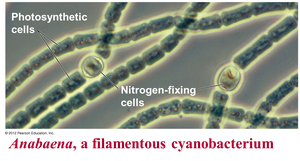
Gram-negative bacteria capable of oxygenic photosynthesis; some fix nitrogen.
Chlamydias
Gram-negative, obligate intracellular pathogens; cause trachoma and sexually transmitted infections.
Spirochetes
Gram-negative, helical bacteria with axial filaments; cause syphilis and Lyme disease.
Gram-Positive Bacteria
Includes actinomycetes (decomposers), Streptomyces (antibiotic producers), and pathogens like Staphylococcus, Streptococcus, and Bacillus anthracis.
Fungi, Protozoa, and Helminths
Fungi
Yeasts: Unicellular, reproduce by budding
Molds: Multicellular, filamentous hyphae
Dimorphic: Can switch forms
Protozoa
Unicellular, lack cell walls, mostly free-living
Some are pathogenic (e.g., Plasmodium, Trypanosoma, Entamoeba histolytica)
Helminths
Multicellular parasitic worms
Complex life cycles, often involving multiple hosts
Viruses, Viroids, and Prions
Properties of Viruses
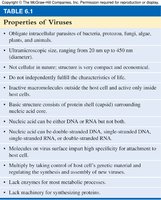
Property | Description |
|---|---|
Obligate intracellular parasites | Require host cells for replication |
Structure | Protein coat (capsid) surrounding nucleic acid (DNA or RNA) |
Size | Ultramicroscopic (20–450 nm) |
Metabolism | Lack enzymes for metabolism; use host machinery |
Viral Multiplication
Adsorption, Penetration, Uncoating, Synthesis, Assembly, Release (APUSAR)
Bacteriophages inject only nucleic acid; release by lysis
Lysogeny: Viral genome integrates into host DNA as a prophage
Principles of Disease and Epidemiology
Pathogen, Pathology, Etiology, Pathogenesis
Pathogen: Disease-causing microbe
Pathology: Study of disease
Etiology: Cause of disease
Pathogenesis: How disease develops
Normal Flora and Microbial Antagonism
Normal flora prevent overgrowth of harmful microbes (microbial antagonism)
Pathogenicity and Virulence Factors
Virulence factors: Traits that enhance a microbe's ability to cause disease (e.g., toxins, capsules)
Toxigenicity: Ability to produce toxins (endotoxins, exotoxins)
Patterns of Infection
Primary, secondary, acute, and chronic infections
Transmission and Portals of Entry/Exit
Direct and indirect contact, vehicles, airborne transmission
Portals of entry: mucous membranes, skin
Portals of exit: respiratory, gastrointestinal, urogenital tracts, skin, blood
Nosocomial Infections
Hospital-acquired infections, often involving Gram-negative bacteria
Additional info:
Some content was expanded for clarity and completeness, including definitions, examples, and context for laboratory techniques and microbial physiology.
