 Back
BackControl of Microbial Growth and Antimicrobial Drugs: Mechanisms, Resistance, and Clinical Applications
Study Guide - Smart Notes
 Tailored notes based on your materials, expanded with key definitions, examples, and context.
Control of Microbial Growth
Introduction to Microbial Growth Control
Controlling microbial growth is essential in clinical, industrial, and research settings to prevent infection, spoilage, and contamination. This topic covers the mechanisms by which microbial growth is regulated and the impact of antimicrobial agents.
Molecular Aspects of Microbial Growth
Bacterial Cell Division
Bacterial cell division is primarily achieved through binary fission, a process involving the replication of the bacterial chromosome, segregation of DNA, and division of the cytoplasm. Regulation of cell division ensures proper timing and coordination with cellular metabolism.
Binary Fission: The most common form of bacterial reproduction, resulting in two genetically identical daughter cells.
Regulation: Controlled by proteins such as FtsZ, which forms a contractile ring at the future site of division.
Regulation of Development in Model Bacteria
Model bacteria such as Bacillus subtilis and Escherichia coli are used to study the regulation of cellular development, including sporulation and differentiation. These processes are tightly regulated by genetic and environmental signals.
Sporulation: A survival mechanism in response to nutrient limitation, involving the formation of endospores.
Genetic Regulation: Controlled by sigma factors and two-component regulatory systems.
Antimicrobial Drugs
History and Definitions
The development of antimicrobial drugs revolutionized medicine by providing effective treatments for bacterial, fungal, viral, and parasitic infections.
Selective Toxicity: The ability of a drug to target pathogens without harming the host.
Chemotherapy: The use of chemicals to treat disease.
Antibiotic: A substance produced by a microbe that inhibits other microbes.
Antimicrobial Drugs: Synthetic or natural substances that interfere with microbial growth.
Key Historical Milestones:
1928: Discovery of penicillin by Alexander Fleming.
1932: Prontosil red dye used for streptococcal infections.
1940: First clinical trials of penicillin.
Today, antibiotic resistance is a significant global health concern.
Spectrum of Antimicrobial Activity
Antimicrobial drugs vary in their spectrum of activity, affecting different groups of microorganisms.
Narrow-spectrum antibiotics: Target a limited range of bacteria (e.g., only Gram-positive bacteria).
Broad-spectrum antibiotics: Affect a wide range of Gram-positive and Gram-negative bacteria.
Superinfection: Overgrowth of resistant normal microbiota due to antibiotic use. (body has normal microbiota and resistant normal microbiota)
Microorganism | Antibiotic |
|---|---|
Bacillus subtilis | Bacitracin |
Streptomyces griseus | Streptomycin |
Penicillium chrysogenum | Penicillin |
Cephalosporium spp. | Cephalothin |
Micromonospora purpurea | Gentamicin |
Paenibacillus polymyxa | Polymyxin |
Saccharopolyspora erythraea | Erythromycin |
Streptomyces fradiae | Neomycin |
Streptomyces aureofaciens | Chlortetracycline |
Major Modes of Action of Antimicrobial Drugs
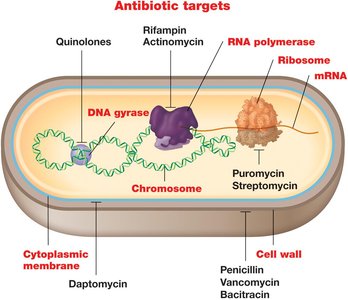
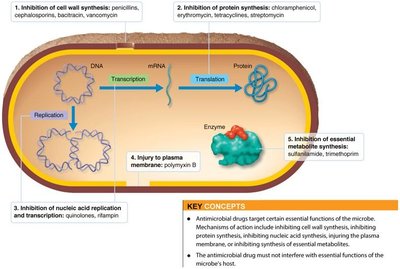
Antimicrobial drugs act by targeting essential processes in microbial cells. The five major modes of action are:
Inhibition of cell wall synthesis (e.g., penicillins, cephalosporins)
Inhibition of protein synthesis (e.g., tetracyclines, macrolides)
Inhibition of nucleic acid replication and transcription (e.g., quinolones, rifampin)
Injury to plasma membrane (e.g., polymyxins, daptomycin)
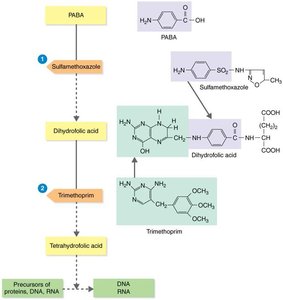
Inhibition of essential metabolite synthesis (e.g., sulfonamides, trimethoprim)
)
Inhibition of Cell Wall Synthesis
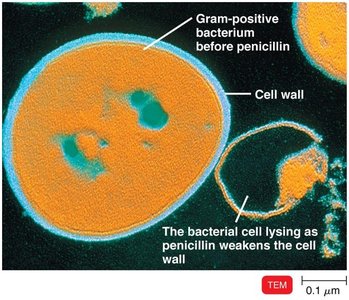
Drugs such as penicillins and cephalosporins inhibit the synthesis of peptidoglycan, a critical component of bacterial cell walls, leading to cell lysis and death, especially in Gram-positive bacteria.
β-lactam antibiotics: Prevent cross-linking of peptidoglycan chains.
Vancomycin: Binds to peptidoglycan precursors, blocking cell wall synthes is.
Bacitracin: Interferes with the transport of peptidoglycan precursors.
Inhibition of Protein Synthesis
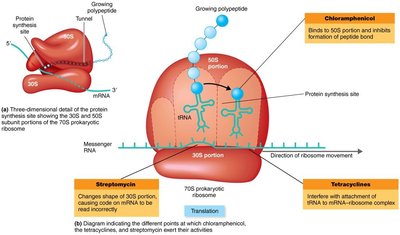
Many antibiotics target the bacterial ribosome, inhibiting protein synthesis. Bacterial ribosomes (70S) differ from eukaryotic ribosomes (80S), allowing selective toxicity.
Chloramphenicol: Binds to the 50S subunit and inhibits peptide bond formation.
Streptomycin: Changes the shape of the 30S subunit, causing errors in translation.
Tetracyclines: Interfere with tRNA attachment to the ribosome.
Inhibition of Nucleic Acid Synthesis
Some drugs interfere with DNA replication or transcription, inhibiting microbial growth.
Quinolones: Inhibit DNA gyrase, preventing DNA replication.
Rifampin: Inhibits RNA polymerase, blocking transcription.
Injury to Plasma Membrane
Drugs such as polymyxins and daptomycin disrupt the integrity of the plasma membrane, causing leakage of cellular contents and cell death.
Polymyxins: Bind to lipopolysaccharides in Gram-negative bacteria, disrupting the membrane.
Daptomycin: Binds to phosphatidylglycerol, causing pore formation and depolarization.
Inhibition of Essential Metabolite Synthesis
Antimetabolites such as sulfonamides and trimethoprim inhibit the synthesis of folic acid, an essential precursor for nucleic acid and protein synthesis.
Sulfanilamide: Competes with para-aminobenzoic acid (PABA) for the active site of the enzyme involved in folic acid synthesis.
Common Antimicrobial Drugs
Classification by Mode of Action
Mode of Action | Drug Examples | Comments |
|---|---|---|
Inhibitors of Cell Wall Synthesis | Penicillin G, Cephalothin, Bacitracin, Vancomycin | Effective mainly against Gram-positive bacteria |
Inhibitors of Protein Synthesis | Streptomycin, Tetracycline, Chloramphenicol, Erythromycin | Broad spectrum; some are toxic |
Injury to Plasma Membrane | Polymyxin B, Daptomycin | Effective against Gram-negative bacteria |
Nucleic Acid Synthesis Inhibitors | Rifampin, Ciprofloxacin | Used for tuberculosis, urinary tract infections |
Competitive Inhibitors of Metabolite Synthesis | Sulfonamides, Trimethoprim | Broad spectrum; often used in combination |
Antifungal, Antiviral, Antiprotozoan, and Antihelminthic Drugs
Antifungal Drugs
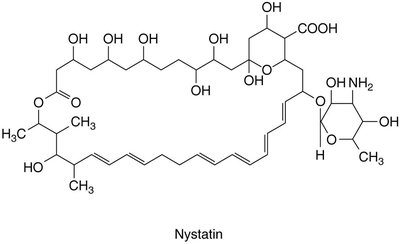
Polyenes (e.g., Nystatin, Amphotericin B): Bind to ergosterol in fungal membranes, causing leakage.
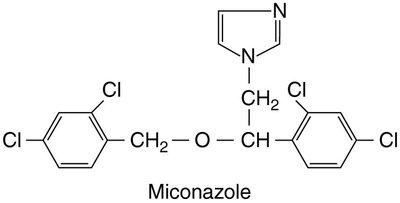
Azoles (e.g., Miconazole, Ketoconazole): Inhibit ergosterol synthesis.
Echinocandins: Inhibit β-glucan synthesis in fungal cell walls.
Griseofulvin: Inhibits microtubule formation, active against dermatophytes.
Antiviral Drugs
Entry and Fusion Inhibitors: Block viral entry into host cells.
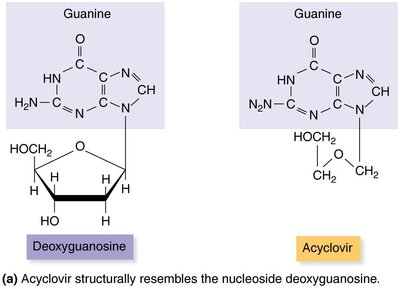
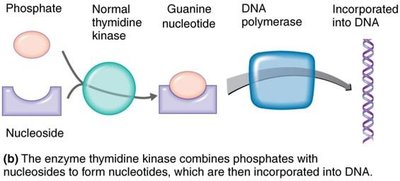
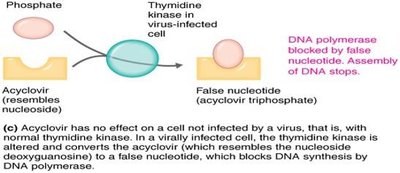
Uncoating, Genome Integration, and Nucleic Acid Synthesis Inhibitors: Prevent viral replication (e.g., acyclovir for herpesviruses).
Protease Inhibitors: Block viral protein processing.
Exit Inhibitors: Prevent release of new virions.
Interferons: Host-produced proteins that inhibit viral replication.
Antiprotozoan and Antihelminthic Drugs
Antiprotozoan: Chloroquine and artemisinin for malaria; metronidazole for amoebiasis and giardiasis.
Antihelminthic: Niclosamide and praziquantel for tapeworms; mebendazole and albendazole for intestinal helminths; ivermectin for roundworms and mites.
Tests to Guide Chemotherapy
Methods for Determining Antimicrobial Susceptibility
Disk Diffusion Method (Kirby-Bauer Test): Measures the zone of inhibition around antibiotic disks on agar plates.
E Test (Epsilometer Test): Determines the minimal inhibitory concentration (MIC) using a gradient strip.
Broth Dilution Test: Determines MIC and minimal bactericidal concentration (MBC) using serial dilutions in broth. (MIC (is last tube to have no visible microbbial growth), while MBC (is last tube taht kills bcteria completely).
Resistance to Antimicrobial Drugs
Mechanisms of Resistance
Blocking Entry: Altered porins prevent drug entry. (Gram negative)
Enzymatic Destruction or Inactivation: β-lactamases cleave β-lactam? antibiotics. (gram negative and grame postive (mostly g -ve)
Modification of Drug Target Site: Mutations alter binding sites (e.g., ribosomal mutations). (bacteria, fungi, protazoa, viruses)
Efflux Pumps: Actively expel drugs from the cell. (bacteria, fungi, protazoa)
Metabolic Bypasses: Use alternative pathways to circumvent drug action. (bacteria, fungi, protazoa)
Resistance genes can be transferred horizontally via plasmids or transposons, leading to the spread of multidrug-resistant organisms ("superbugs").
Persistence and Dormancy
Some bacterial populations produce persister cells that are dormant and tolerant to antibiotics. These cells can survive treatment and cause recurrent infections. Mechanisms include toxin-antitoxin modules and the stringent response pathway.
Toxin-Antitoxin Modules: Toxins inhibit cell growth; antitoxins neutralize toxins under normal conditions.
Stringent Response: Induced by stress, leading to dormancy and antibiotic tolerance.
Antibiotic Misuse and Safety
Misuse of Antibiotics
Using outdated or inappropriate antibiotics
Incomplete treatment courses
Use in animal feed
Sharing prescriptions
Such practices select for resistant mutants and contribute to the spread of resistance.
Antibiotic Safety
Therapeutic Index: Ratio of toxic dose to therapeutic dose; higher values indicate safer drugs.
Potential for organ damage, drug interactions, and risks to the fetus must be considered.
Effects of Drug Combinations
Synergism: Combined effect is greater than the sum of individual effects.
Antagonism: Combined effect is less than the effect of either drug alone.
Future of Chemotherapeutic Agents
Research is ongoing to develop new antimicrobial agents targeting virulence factors, iron acquisition, and using bacteriocins or phage therapy. The microbiome is also being explored as a source of novel antibiotics.
