Back
BackControl of Microbial Growth: Methods and Principles
Study Guide - Smart Notes
 Tailored notes based on your materials, expanded with key definitions, examples, and context.
Control of Microbial Growth
Rate of Microbial Death
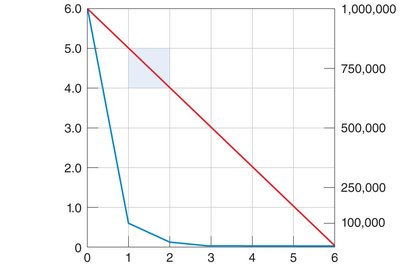
The rate at which microbial populations are killed by antimicrobial agents is a fundamental concept in microbiology. Microbial death typically occurs exponentially, meaning a constant proportion of cells die per unit time, similar to the log phase of microbial growth.
Microbial Death Rate: The number of surviving cells decreases logarithmically over time when exposed to a killing agent.
One log decrease: Represents a 90% reduction in the population.
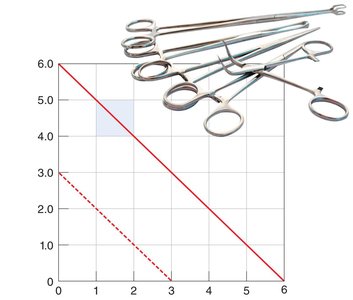
Factors affecting death rate: Number of microbes, type of microbes (e.g., endospores are highly resistant), environmental influences (organic material, pH), and time of exposure.
Time (min) | Deaths per Minute | Number of Survivors |
|---|---|---|
0 | 0 | 1,000,000 |
1 | 900,000 | 100,000 |
2 | 90,000 | 10,000 |
3 | 9,000 | 1,000 |
4 | 900 | 100 |
5 | 90 | 10 |
6 | 9 | 1 |
Effectiveness of Antimicrobial Treatment
Several factors influence how effective an antimicrobial treatment is:
Thermal Death Point (TDP): Lowest temperature at which all cells in a culture are killed in 10 minutes.
Thermal Death Time (TDT): Time required to kill all cells in a culture at a given temperature.
Decimal Reduction Time (DRT): Minutes to kill 90% of a population at a specific temperature.
Physical Methods of Microbial Control
Heat
Heat is a widely used method for killing microorganisms by denaturing their proteins and enzymes. There are two main types: moist heat and dry heat.
Moist Heat: Coagulates proteins; reliable sterilization requires temperatures above boiling water.
Boiling: Kills most vegetative forms, viruses, and fungi, but some endospores and viruses can survive extended boiling.
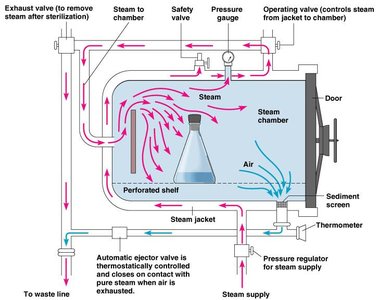
Autoclave: Uses steam at 121°C under pressure to kill all organisms and endospores within 15 minutes.
Pasteurization
Pasteurization reduces microbial numbers in food and beverages, aiming to prevent disease without achieving complete sterilization.
Classic Method: 65°C for 30 minutes.
High Temperature Short Time (HTST): 72°C for 15 seconds.
Ultra High Temperature (UHT): 140°C for less than 3 seconds, followed by rapid cooling; achieves sterilization.
Dry Heat Sterilization
Dry heat kills by oxidation and is used for sterilizing items that can withstand high temperatures.
Direct Flaming: Sterilizes inoculating loops and needles.
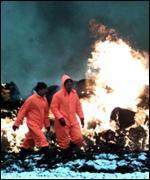
Incineration: Used for disposable items and biological waste.
Hot Air Sterilization: Requires 2 hours at 170°C.
Filtration
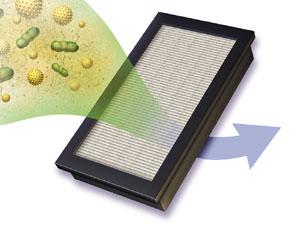
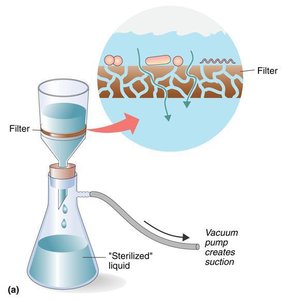
Filtration is used to sterilize heat-sensitive materials by physically removing microorganisms from air or liquids.
HEPA Filters: Remove microorganisms larger than 0.3 μm from air.
Membrane Filters: Uniform pore sizes (0.22, 0.45 μm for bacteria; 0.01 μm for viruses).
Low Temperature
Low temperatures inhibit microbial growth by reducing metabolic rates.
Refrigeration: 0–7°C; bacteriostatic effect.
Freezing: Below 0°C; some bacteria may survive for extended periods.
Osmotic Pressure
High concentrations of salts and sugars create hypertonic environments, causing water to leave microbial cells and inhibiting growth.
Yeasts and molds: More resistant to osmotic pressure.
Staphylococci: Fairly resistant due to their adaptation to skin environments.
Radiation
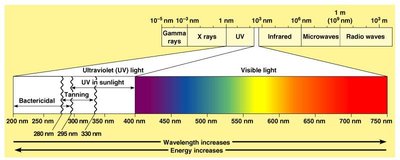
Radiation damages microbial cells depending on wavelength, intensity, and duration.
Ionizing Radiation: Includes gamma rays, X-rays, electron beams; causes formation of free radicals, damages DNA, used for sterilizing heat-sensitive materials.
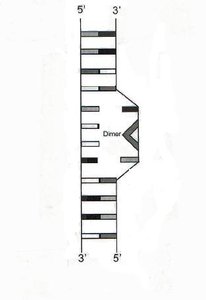
Nonionizing Radiation: Includes UV light; causes DNA damage by forming thymine dimers, used for surface disinfection.
Chemical Methods of Microbial Control
Evaluating Disinfectant Effectiveness
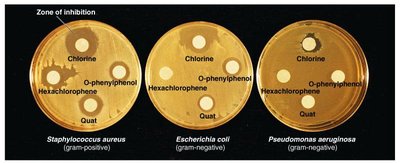
Disinfectants are evaluated using methods such as the use-dilution test and disk-diffusion method.
Use-dilution test: Measures effectiveness against microorganisms.
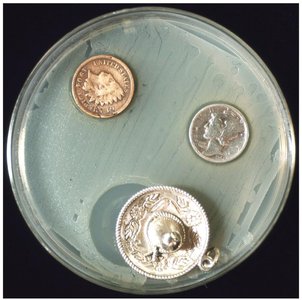
Disk-diffusion method: Assesses efficacy by measuring zones of inhibition on agar plates.
Surfactants and Quaternary Ammonium Compounds (Quats)
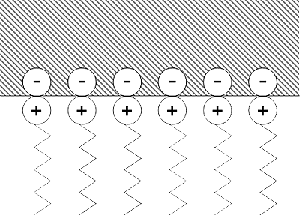
Surfactants, including soaps and detergents, are surface-active agents that help remove microbes by decreasing surface tension and dissolving lipids.
Soaps: Good degerming agents but not germicidal.
Quats: Cationic disinfectants effective against many microbes except endospores, Mycobacterium tuberculosis, and Pseudomonas species.
Essential Oils
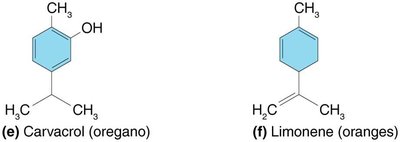
Essential oils, such as peppermint, pine, and orange oil, have antimicrobial properties due to phenolics and terpenes disrupting cell membranes.
Carvacrol: Found in oregano.
Limonene: Found in oranges.
Organic Acids and Chemical Food Preservatives
Organic acids are used as preservatives by inhibiting microbial metabolism, especially in acidic foods.
Sodium benzoate: Used in sodas as an antifungal.
Citric acid: Used in jams and fruit juices.
Sodium nitrite: Prevents growth of Clostridium botulinum in meats.
Sorbic acid: Inhibits fungal growth, used in cheese, cosmetics, and pharmaceuticals.
Heavy Metals
Heavy metal ions (arsenic, zinc, mercury, silver, copper) are antimicrobial by binding to sulfur atoms in cysteine, altering protein structure and function.
Oligodynamic action: Very small amounts are effective.
Applications: Used in low-level bacteriostatic and fungistatic agents.
Halogens
Halogens such as iodine and chlorine are effective antimicrobials by oxidizing and denaturing proteins.
Iodine: Used as tinctures and iodophors for skin antisepsis.
Chlorine: Forms hypochlorous acid in water, used for disinfecting water, pools, and sewage.
Alcohols
Alcohols disinfect by denaturing proteins and disrupting membranes; water is required for their action.
Isopropyl alcohol: More effective than ethyl alcohol.
Applications: Used for surface disinfection and skin antisepsis.
Phenols and Phenolics
Phenol and its derivatives are effective disinfectants, especially in the presence of organic material.
Phenol: Rarely used due to irritation and odor.
Phenolics: Enhanced antimicrobial action and less odor.
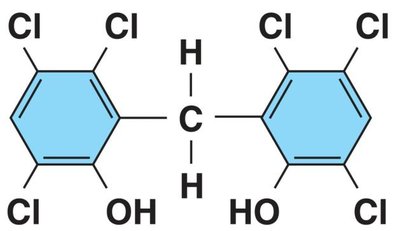
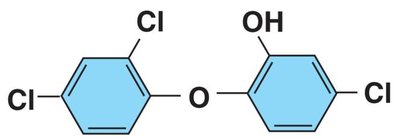
Bisphenols: Hexachlorophene and triclosan are used in antibacterial products.
Gaseous Sterilizers: Alkylating Agents
Ethylene oxide is a gaseous chemosterilizer that denatures proteins and DNA, used for sterilizing items that cannot withstand heat.
Applications: Sterilizes mattresses, heart valves, catheters, dried foods.
Hazards: Explosive, poisonous, potentially carcinogenic.
Peroxygens (Oxidizing Agents)
Peroxygens such as ozone, hydrogen peroxide, benzoyl peroxide, and peracetic acid are high-level disinfectants and antiseptics.
Ozone: Used for water disinfection.
Hydrogen peroxide: Used for surface sterilization; sporicidal at high temperatures.
Benzoyl peroxide: Used in acne medications and wound treatment.
Peracetic acid: Effective liquid sporicide for food and medical instruments.
Microbial Resistance to Chemical Agents
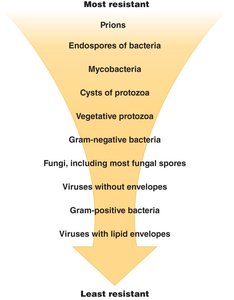
Microorganisms vary in their resistance to chemical antimicrobials. Gram-negative bacteria, endospores, cysts, oocysts, mycobacteria, and prions are relatively resistant, while gram-positive bacteria and viruses with lipid envelopes are less resistant.