 Back
BackControl of Microbial Growth: Methods and Applications
Study Guide - Smart Notes
 Tailored notes based on your materials, expanded with key definitions, examples, and context.
Control of Microbial Growth
Introduction
The control of microbial growth is essential in medical, laboratory, and industrial settings to prevent infection, contamination, and spoilage. Various physical, chemical, and mechanical methods are employed to reduce or eliminate microorganisms, each with specific applications and limitations.
Biosafety Levels
Biosafety Level Classification
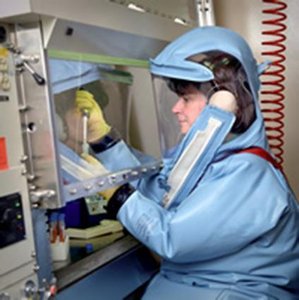
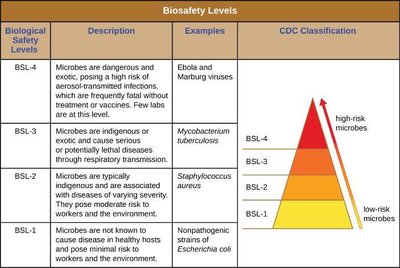
Infectious agents are classified into four biosafety levels (BSL-1 to BSL-4) based on their potential risk to laboratory personnel and the community. Each level requires progressively greater precautions to ensure safety.
BSL-1: Nonpathogenic microbes, minimal risk.
BSL-2: Moderate risk, associated with human disease (e.g., Staphylococcus aureus).
BSL-3: High risk, can cause serious or potentially lethal diseases (e.g., Mycobacterium tuberculosis).
BSL-4: Highest risk, dangerous and exotic microbes (e.g., Ebola virus).
Key Terminology in Microbial Control
Definitions
Sterilization: Destroys all viable microbes, including viruses and endospores.
Disinfection: Destroys vegetative pathogens on inanimate objects, not endospores.
Antiseptic: Disinfectants safe for use on living tissues.
Sanitization: Mechanically removes microbes to safe levels.
Degermation: Reduces microbial numbers on living tissue through mechanical means.
Microbial Death
Microbial death is defined as the permanent loss of reproductive capability, even under optimal growth conditions. Factors affecting microbial death include:
Number and nature of microbes
Environmental temperature and pH
Concentration and mode of action of the agent
Presence of organic matter or inhibitors
Aseptic Technique in Medical Practice
Importance and Application
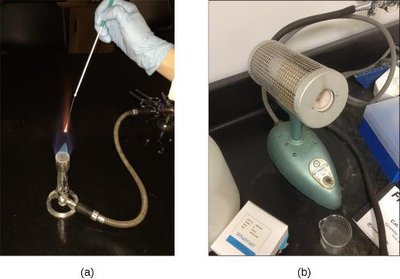
Aseptic technique is critical in preventing contamination of sterile fields and patients during clinical procedures. Failure to maintain aseptic conditions can lead to sepsis, a life-threatening systemic inflammatory response to infection.
Practical Concerns in Microbial Control
Factors in Method Selection
Requirement for sterilization
Reusability and material tolerance to heat, pressure, or chemicals
Penetration ability and cost-effectiveness
Safety for users and patients
Physical Methods of Microbial Control
Heat
Heat is one of the most effective methods for microbial control, classified as dry or moist heat.
Dry Heat: Incineration and hot air ovens (170°C for 2 hours) destroy all microorganisms.
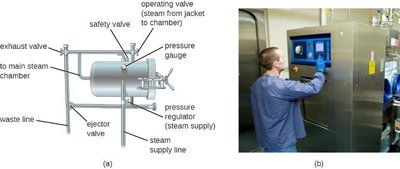
Moist Heat: More effective at penetrating cells; autoclaves use pressurized steam to achieve sterilization above 100°C.
Pasteurization
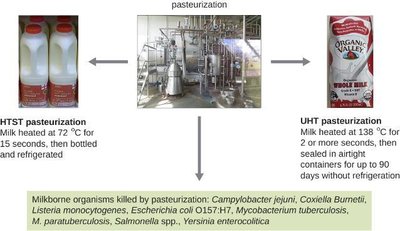
Pasteurization reduces microbial load in food and beverages without sterilization. Two main methods are:
HTST (High-Temperature Short-Time): 72°C for 15 seconds
UHT (Ultra-High Temperature): 138°C for 2 or more seconds
Pasteurization kills non-spore-forming pathogens but does not sterilize the product.
Cold Temperatures
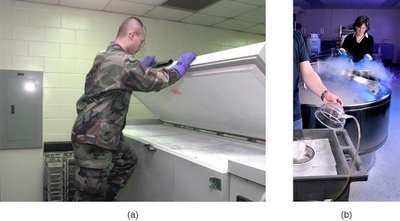
Low temperatures inhibit microbial metabolism (microbiostatic effect). Refrigeration (0–7°C) slows growth, while freezing (< -2°C) can halt or kill microbes. Ultra-low temperatures (−70°C or lower) are used for long-term storage.
Desiccation
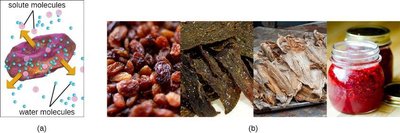
Desiccation (drying) removes water, halting metabolism but not necessarily killing all microbes or endospores. Adding solutes (salt or sugar) creates a hypertonic environment, further inhibiting microbial growth. Freeze-drying (lyophilization) combines rapid freezing and dehydration under vacuum for preservation.
Radiation
Radiation damages microbial DNA and is used for sterilization.
Ionizing Radiation: Deeply penetrating, breaks DNA (e.g., gamma rays, X-rays).
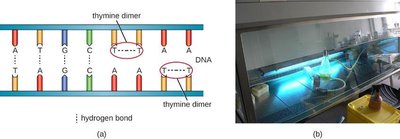
Nonionizing Radiation: UV light causes thymine dimers, leading to lethal mutations; limited penetration.
Filtration
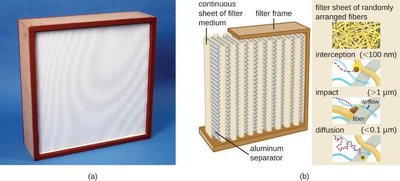
Filtration physically removes microbes from air or liquids using filters with pores too small for bacteria, viruses, or endospores to pass through. HEPA filters are commonly used in laboratories and hospitals.
Chemical Methods of Microbial Control
Phenolics
Phenolic compounds disrupt cell walls and membranes and precipitate proteins. They are effective against bacteria, fungi, and some viruses but not endospores. Examples include Lysol and triclosan.
Heavy Metals
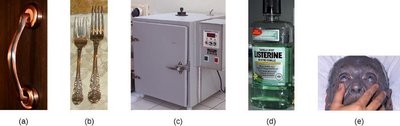
Heavy metals (e.g., silver, copper, zinc) bind to proteins, inhibiting enzymatic activity. They are oligodynamic (effective at low concentrations) but not selectively toxic to microbes.
Halogens
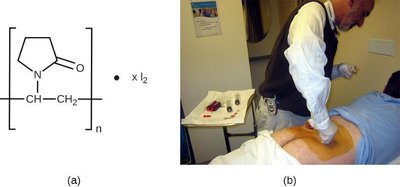
Halogens such as iodine, chlorine, and fluoride are widely used as disinfectants and antiseptics. Iodine (e.g., Betadine) is used for skin preparation before surgery; chlorine is used for water disinfection; fluoride helps prevent dental caries.
Alcohols
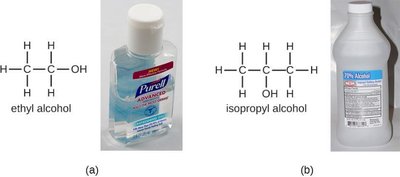
Alcohols (ethyl and isopropyl) denature proteins and disrupt membranes, leading to cell lysis. They are commonly used as disinfectants and antiseptics.
Surfactants
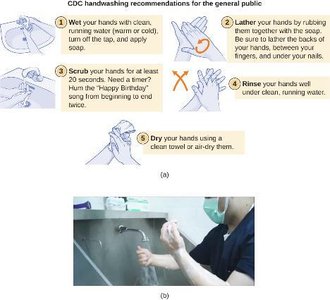
Soaps and detergents are surfactants that emulsify lipids, aiding in the mechanical removal of microbes from surfaces (degerming). Proper handwashing is a key method for infection control.
Aldehydes
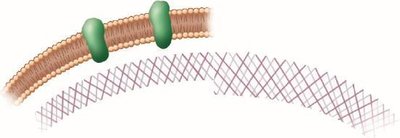
Aldehydes (e.g., glutaraldehyde, formaldehyde) kill microbes by alkylating proteins and DNA. Glutaraldehyde is used for sterilizing heat-sensitive instruments; formaldehyde is used as a disinfectant and preservative.
Hydrogen Peroxide (Peroxygens)
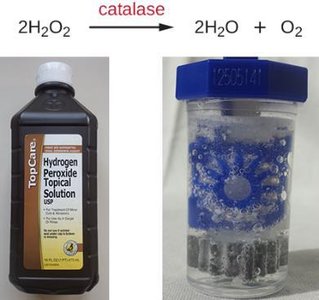
Hydrogen peroxide is a strong oxidizing agent that produces free radicals, damaging cellular components. It is used as a disinfectant and antiseptic. Catalase enzyme breaks down hydrogen peroxide into water and oxygen.
Testing Effectiveness of Chemical Agents
Disk-Diffusion Method
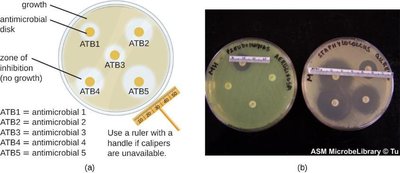
The disk-diffusion assay evaluates the efficacy of chemical agents against specific microbes. Disks impregnated with chemicals are placed on an inoculated agar plate; zones of inhibition indicate effectiveness.
Summary Table: Microbial Control Methods
Method | Mechanism | Applications | Limitations |
|---|---|---|---|
Heat (Dry/Moist) | Protein denaturation, oxidation | Sterilization of media, instruments | Not suitable for heat-sensitive items |
Cold | Inhibits metabolism | Food preservation, specimen storage | Microbiostatic, not microbicidal |
Desiccation | Removes water, halts metabolism | Food preservation | Not effective against endospores |
Radiation | DNA damage | Sterilization of medical supplies | Limited penetration (UV) |
Filtration | Physical removal | Sterilizing heat-sensitive liquids/air | Does not remove toxins |
Chemicals (e.g., phenolics, alcohols, halogens) | Protein denaturation, membrane disruption | Disinfection, antisepsis | Variable effectiveness, toxicity |
