 Back
Control of Microbial Growth: Physical and Chemical Methods
Study Guide - Smart Notes
 Tailored notes based on your materials, expanded with key definitions, examples, and context.
Control of Microbial Growth
Introduction
The control of microorganisms is essential in various settings, including healthcare, food production, water treatment, and daily life. Both physical and chemical methods are employed to reduce or eliminate microbial populations, ensuring safety and preventing the spread of infectious diseases.
Approaches to Microbial Control
Principles of Control
Sterilization: The complete removal or destruction of all microorganisms, including endospores and viruses. Achieved through filtration, heat, chemicals, or irradiation.
Disinfection: Eliminates most pathogens but not necessarily all microbes. Disinfectants are used on inanimate objects, while antiseptics are used on living tissues.
Pasteurization: Brief heat treatment to reduce spoilage organisms and pathogens in food and beverages.
Decontamination: Reduces pathogens to safe levels.
Degerming: Mechanical removal of microbes from a limited area, such as skin.
Sanitization: Substantially reduces microbial population to meet accepted health standards.
Preservation: Delays spoilage of perishable items, often by adding growth-inhibiting ingredients.
Situational Considerations
Microbial control methods vary depending on the context and required level of control:
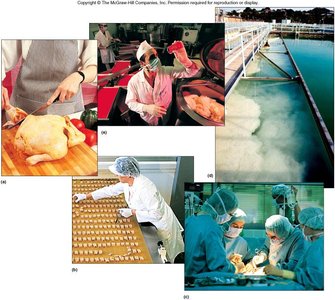
Daily Life: Routine washing and scrubbing with soaps and detergents are effective for general control. Hand washing is the most important step for reducing microbial load.
Hospitals: Strict control is necessary to prevent nosocomial infections. Instruments must be sterilized to avoid introducing pathogens into deep tissues.
Microbiology Laboratories: Rigorous aseptic techniques and sterilization are used to prevent contamination of samples and the environment.
Food and Food Production: Quality is maintained by preventing microbial growth through physical and chemical means. Heat treatment and irradiation are common methods.
Water Treatment: Disinfection (often with chlorine) ensures safe drinking water, though some organisms are resistant to chemical disinfectants.
Selection of Antimicrobial Procedures
Factors Influencing Selection
Type of Microorganism: Some microbes are more resistant (e.g., bacterial endospores, protozoan cysts, Mycobacterium species, Pseudomonas species, naked viruses).
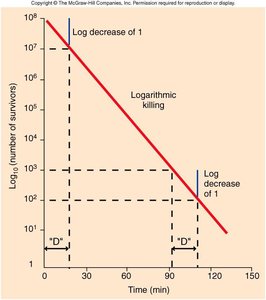
Number of Organisms: Larger populations require more time to eliminate. The decimal reduction time (D value) is the time needed to kill 90% of a population under specific conditions.
Environmental Conditions: Factors such as pH, temperature, and presence of organic matter can affect the efficacy of antimicrobial agents.
Risk of Infection: Medical items are categorized as critical, semicritical, or non-critical based on their contact with body tissues and the associated risk.
Composition of Item: Some methods are unsuitable for certain materials (e.g., heat-sensitive plastics).
Physical Methods of Microbial Control
Heat Treatment
Moist Heat: Destroys microbes by denaturing proteins. Methods include boiling, pasteurization, and pressurized steam (autoclaving).
Boiling: Kills most microbes and viruses but not endospores.
Pasteurization: Reduces microbial numbers without sterilizing. Common protocols: HTST (72°C for 15 sec), UHT (140–150°C for a few seconds).
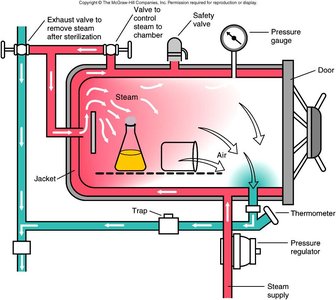
Pressurized Steam (Autoclave): Preferred sterilization method. Standard conditions: 121°C at 15 psi for 15 minutes. Flash autoclaving and prion destruction require higher temperatures or longer times.
Dry Heat: Less effective than moist heat; requires higher temperatures and longer times (e.g., 200°C for 1.5 hours). Incineration is used for medical waste and sterilizing inoculation loops.
Other Physical Methods
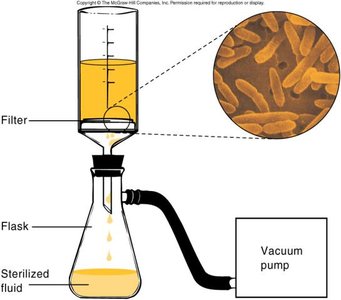
Filtration: Used for heat-sensitive fluids and air. Membrane filters trap microbes; HEPA filters remove nearly all microbes from air (0.3 µm pores).
Irradiation:
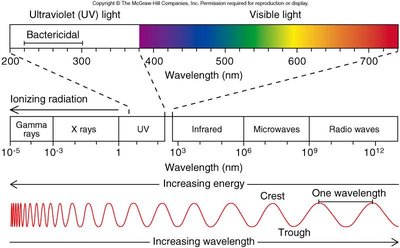
Ionizing Radiation: (Gamma rays, X-rays, electron beams) damages DNA and cell membranes; used for sterilizing medical equipment and some foods.
Ultraviolet (UV) Radiation: Non-ionizing; damages DNA by causing thymine dimers. Used for air, water, and surface disinfection. Limited by poor penetration.
High-Pressure Processing: Used in food industry; denatures proteins and alters membrane permeability without high temperatures.
Chemical Methods of Microbial Control
Germicidal Chemicals
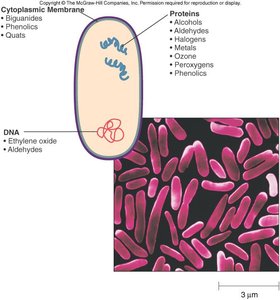
Chemicals used to disinfect or sterilize are called germicides. They act on vital cell sites such as proteins, DNA, and cell membranes.
Potency and Selection of Chemicals
Sterilants: Destroy all microorganisms, including endospores.
High-Level Disinfectants: Destroy viruses and vegetative cells, not endospores.
Intermediate-Level Disinfectants: Kill vegetative cells, fungi, most viruses, not endospores.
Low-Level Disinfectants: Remove fungi, vegetative bacteria, enveloped viruses; not effective against mycobacteria, naked viruses, or endospores.
Selection considerations include toxicity, activity in presence of organic matter, compatibility, residue, cost, storage, and environmental risk.
Classes of Germicidal Chemicals
Alcohols: (60–80% isopropyl or ethyl) Coagulate proteins and damage membranes. Used as antiseptics and disinfectants. Not effective against endospores or some naked viruses.
Aldehydes: Inactivate proteins and DNA. Glutaraldehyde and formalin are common examples.
Biguanides: (e.g., chlorhexidine) Used in antiseptics; low toxicity and broad spectrum.
Ethylene Oxide: Gaseous sterilant; reacts with proteins. Useful for heat/moisture-sensitive items. Mutagenic and potentially carcinogenic.
Halogens: (Chlorine, iodine) Oxidize proteins and cell components. Chlorine is widely used for disinfection; iodine is used on skin.
Metals: Combine with proteins and enzymes. Silver is still used in creams and bandages.
Ozone: Powerful oxidizer; used as an alternative to chlorine in water treatment.
Peroxygens: (Hydrogen peroxide, peracetic acid) Oxidizing agents; biodegradable and less toxic than some alternatives.
Phenolics: Disrupt membranes and denature proteins. Active ingredient in some disinfectants (e.g., Lysol).
Quaternary Ammonium Compounds (Quats): Cationic detergents; disrupt membranes. Used for food preparation surfaces.
Preservation of Perishable Products
Methods of Preservation
Chemical Preservatives: Weak organic acids (benzoic, ascorbic, propionic) and nitrates/nitrites inhibit microbial growth in foods.
Low Temperature Storage: Slows or stops microbial growth by inhibiting enzymatic reactions. Freezing can kill some microbes but not all.
Reducing Water Availability: Achieved by salting, drying, or lyophilization (freeze-drying). High solute concentrations cause plasmolysis, inhibiting growth.
Summary Table: Levels of Disinfection and Sterilization
Level | Effectiveness | Examples |
|---|---|---|
Sterilant | Destroys all microorganisms, including endospores | Autoclave, ethylene oxide |
High-level disinfectant | Destroys viruses, vegetative cells (not endospores) | Glutaraldehyde |
Intermediate-level disinfectant | Kills vegetative cells, fungi, most viruses | Alcohols, phenolics |
Low-level disinfectant | Removes fungi, vegetative bacteria, enveloped viruses | Quats |
Additional info: The effectiveness of any method depends on proper application, including concentration, contact time, and compatibility with the material being treated.
