 Back
BackControl of Microbial Growth: Principles and Methods
Study Guide - Smart Notes
 Tailored notes based on your materials, expanded with key definitions, examples, and context.
Control of Microbial Growth
Introduction
The control of microbial growth is essential in healthcare, food safety, and laboratory settings. This topic covers the terminology, principles, and methods used to reduce or eliminate microorganisms, including both physical and chemical approaches.
Terminology of Microbial Control
Key Definitions
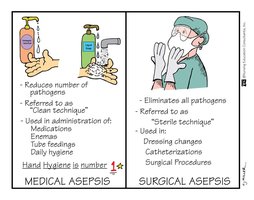
Asepsis: The reduction or elimination of disease-causing microorganisms. In healthcare, aseptic techniques prevent contamination by pathogens during medical or surgical procedures, reducing the risk of healthcare-associated infections (HAIs).
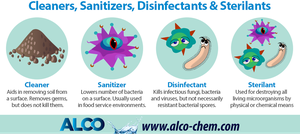
Sterilization: The complete destruction of all microbial life, including endospores.
Commercial Sterilization: The process of killing Clostridium botulinum endospores in canned goods, primarily in the food industry.
Disinfection: The reduction or destruction of harmful microorganisms on inanimate surfaces or environments.
Antisepsis: The reduction or destruction of harmful microorganisms from living tissue.
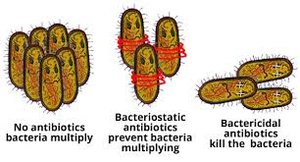
Bactericidal/Biocidal: Treatments that kill microbes.
Bacteriostasis: Inhibition of microbial growth without killing the organisms.
Principles Affecting the Effectiveness of Antimicrobial Treatments
Factors Influencing Microbial Death
Time of Exposure: Longer exposure increases effectiveness.
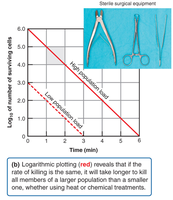
Number of Microbes: Larger populations require more time to eliminate.
Microbial Characteristics: Features such as endospore formation, cell wall structure, and presence of capsules affect resistance.
Environment: Organic matter and biofilms can protect microbes from control agents.
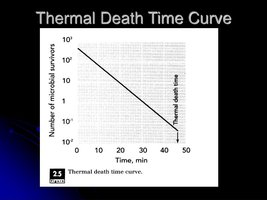
The Rate of Microbial Death
Microbial death occurs at a logarithmic rate. The effectiveness of a treatment is often measured by the time required to kill a certain percentage of the population.
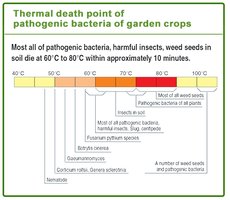
Thermal Death Point (TDP): The lowest temperature at which all cells in a liquid culture are killed in 10 minutes.
Thermal Death Time (TDT): The minimal time required to kill all bacteria in a liquid culture at a given temperature.
Physical Methods of Microbial Control
Heat Sterilization
Heat is one of the most common methods for sterilization, working primarily by denaturing proteins and enzymes.
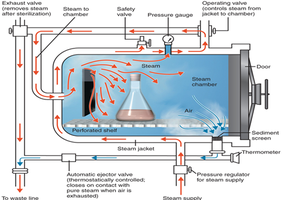
Moist Heat: Coagulates and denatures proteins. Methods include boiling, free-flowing steam, and autoclaving (steam under pressure at 121°C, 15 psi, for 15 minutes).
Autoclave: Preferred method in healthcare for sterilizing instruments and media. Steam must contact all surfaces for effective sterilization.
Dry Heat: Kills by oxidation. Methods include flaming, incineration, and hot-air sterilization (oven at 170°C for 2 hours).
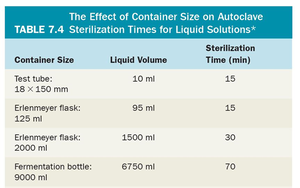
Container Size | Liquid Volume | Sterilization Time (min) |
|---|---|---|
Test tube: 18 x 150 mm | 10 ml | 15 |
Erlenmeyer flask: 125 ml | 95 ml | 15 |
Erlenmeyer flask: 2000 ml | 1500 ml | 30 |
Fermentation bottle: 9000 ml | 6750 ml | 70 |
Filtration
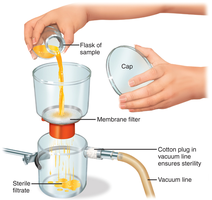
Filtration is used for sterilizing heat-sensitive materials by passing liquids or gases through a filter with pores small enough to remove microbes.
HEPA Filters: Remove at least 99% of airborne particles ≥0.3 microns.
Membrane Filters: Can filter out bacteria, viruses, and large proteins depending on pore size.
Radiation
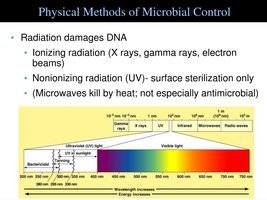
Radiation damages microbial DNA, leading to cell death.
Ionizing Radiation: (X-rays, gamma rays, electron beams) causes lethal mutations in DNA.
Nonionizing Radiation: (UV light, 260 nm) creates thymine dimers, inhibiting DNA replication. Used in germicidal lamps.
Microwaves: Kill by heat, not directly antimicrobial.
Other Physical Methods
Low Temperature: Bacteriostatic effect (refrigeration, deep freezing, lyophilization).
High Pressure: Denatures proteins.
Desiccation: Absence of water prevents metabolism.
Osmotic Pressure: High salt or sugar concentrations create a hypertonic environment, causing plasmolysis.
Chemical Methods of Microbial Control
Factors Affecting Chemical Control
Concentration of Disinfectant
Time of Exposure
pH
Presence of Organic Matter
Types of Chemical Agents
Phenols and Phenolics: Disrupt plasma membranes. Phenolics are less irritating derivatives (e.g., O-phenylphenol in Lysol®).
Bisphenols: Two phenol groups connected by a bridge; disrupt plasma membranes.
Alcohols: Denature proteins and dissolve lipids. Effective against most bacteria, but not endospores or nonenveloped viruses. Commonly used: ethanol, isopropanol.
Halogens:
Iodine: Impairs protein synthesis and alters membranes. Used as tincture or iodophor for skin antisepsis and water treatment.
Chlorine: Oxidizing agent; used in bleach (NaOCl), chloramine, and municipal water disinfection.
Essential Oils: Plant-derived, broad-spectrum activity (e.g., tea tree oil, pine oil).
Biguanides: Disrupt plasma membranes (e.g., chlorhexidine in surgical scrubs).
Heavy Metals: Oligodynamic action; denature proteins (e.g., Ag, Hg, Cu, Zn). Used in wound dressings, algicides, and mouthwash.
Surface-Active Agents: Lower surface tension, aiding in removal of microbes (e.g., soaps, detergents).
Antibiotics (for food preservation): Bacteriocins, nisin, and natamycin prevent spoilage in cheese.
Aldehydes: Inactivate proteins by cross-linking (e.g., formalin for specimen preservation).
Gaseous Sterilants: Cross-link nucleic acids and proteins (e.g., ethylene oxide for heat-sensitive materials).
Plasma: Electrically excited gas with free radicals that destroy microbes; used for tubular instruments.
Other Chemosterilants: Chlorine dioxide (building/water disinfection), hydrogen peroxide (surface disinfectant, food packaging).
Evaluation of Disinfectant Efficacy
Dilution Test
Metal cylinders are dipped in test bacteria, dried, and placed in disinfectant for 10 minutes.
Cylinders are then transferred to culture media to determine bacterial survival.
Disk-Diffusion Method
Filter paper disks soaked in chemical agents are placed on a culture plate.
Zones of inhibition around disks indicate effectiveness.
Comparison of Antiseptics
Various antiseptics differ in their spectrum of activity, effectiveness, and suitability for different applications. Selection depends on the target organism, environment, and safety considerations.
Summary Table: Physical and Chemical Methods of Microbial Control
Method | Mechanism | Application |
|---|---|---|
Moist Heat (Autoclave) | Denatures proteins | Media, instruments |
Dry Heat | Oxidation | Glassware, metal tools |
Filtration | Physical removal | Heat-sensitive liquids |
Radiation | DNA damage | Surfaces, food, medical supplies |
Alcohols | Protein denaturation, lipid dissolution | Skin, surfaces |
Halogens | Oxidation, protein disruption | Water, skin, surfaces |
Heavy Metals | Protein denaturation | Wounds, water, surfaces |
