 Back
Control of Microbial Growth: Principles, Methods, and Applications
Study Guide - Smart Notes
 Tailored notes based on your materials, expanded with key definitions, examples, and context.
Control of Microbial Growth
Introduction
The control of microbial growth is essential in healthcare, food safety, laboratory work, and daily life. Understanding the principles and methods of microbial control helps prevent infection, spoilage, and contamination. This chapter covers terminology, principles, physical and chemical methods, and practical applications of microbial control.
Terminology of Microbial Control
Key Terms and Definitions
Antisepsis: Reduction of microorganisms and viruses on living tissue. Example: Use of iodine or alcohol before injection.
Aseptic: Environment or procedure free of pathogenic contaminants. Example: Preparation of surgical field.
Disinfection: Destruction of most microorganisms and viruses on nonliving tissue. Example: Use of phenolics or alcohols on surfaces.
Degerming: Mechanical removal of microbes. Example: Hand washing.
Sanitization: Removal of pathogens to meet public health standards. Example: Washing tableware in restaurants.
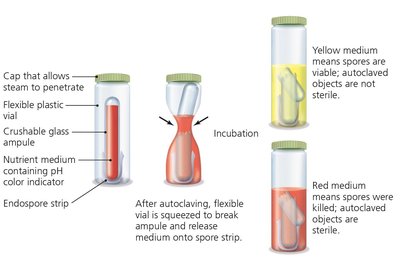
Sterilization: Destruction of all microorganisms and viruses in or on an object. Example: Autoclaving culture media.
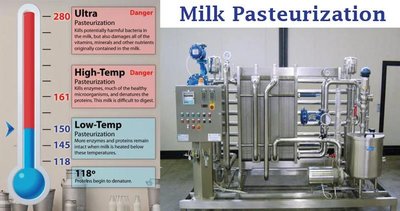
Pasteurization: Use of heat to destroy pathogens and reduce spoilage organisms in foods and beverages. Example: Pasteurized milk.
-cide/-cidal: Suffixes indicating destruction of a type of microbe. Example: Bactericide.
-stasis/-static: Suffixes indicating inhibition but not complete destruction. Example: Bacteriostatic.
Basic Principles of Microbial Control
Microbial Death Rates
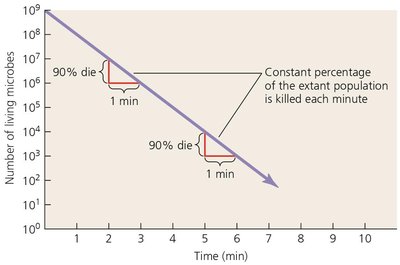
Microbial death is defined as the permanent loss of reproductive ability under ideal conditions. The death rate is often constant for a given microorganism under specific conditions, producing a straight line when plotted on a semilogarithmic graph.
Action of Antimicrobial Agents
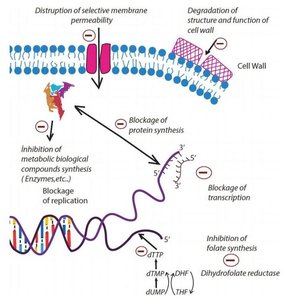
Alteration of Cell Walls and Membranes: Damage leads to cell lysis or leakage of cellular contents. Nonenveloped viruses are more resistant to harsh conditions.
Damage to Proteins and Nucleic Acids: Heat, chemicals, or radiation can denature proteins and alter/destroy nucleic acids, leading to fatal mutations or inhibition of protein synthesis.
Selection of Microbial Control Methods
Site to be Treated: The method depends on whether the site is living tissue, medical equipment, or fragile objects.
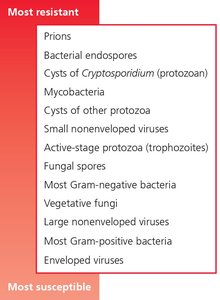
Relative Susceptibility of Microbes: Microbes vary in resistance to antimicrobial agents. Prions and bacterial endospores are most resistant; enveloped viruses are most susceptible.
Environmental Conditions: Temperature, pH, and presence of organic materials can affect the efficacy of antimicrobial methods.
Biosafety Levels
Laboratory Safety Levels
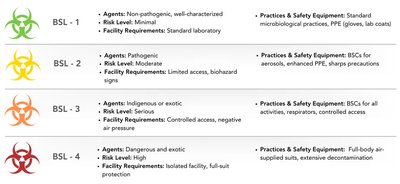
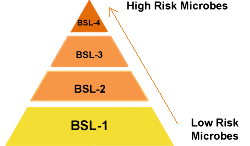
There are four biosafety levels (BSL-1 to BSL-4) for handling pathogens, each with increasing containment and safety requirements.
Physical Methods of Microbial Control
Heat-Related Methods
Effects of High Temperatures: Denature proteins, disrupt membranes, and damage nucleic acids.
Thermal Death Point (TDP): Lowest temperature that kills all cells in 10 minutes.
Thermal Death Time (TDT): Minimum time to sterilize a liquid at a set temperature.
Moist Heat Methods
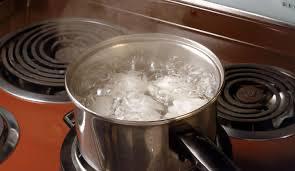
Boiling: Kills most vegetative cells and viruses; endospores and some viruses survive.
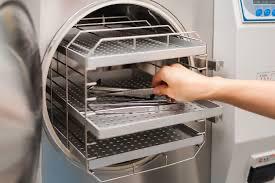
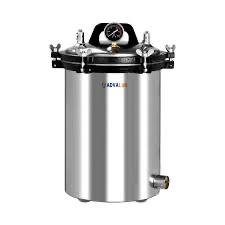
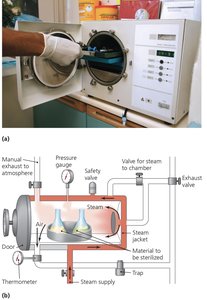
Autoclaving: Uses pressurized steam (121°C, 15 psi, 15 min) for sterilization.
Pasteurization: Reduces pathogens in foods and beverages without altering taste significantly.
Ultra-High-Temperature (UHT) Sterilization: 140°C for 1–3 seconds; allows storage at room temperature.
Dry Heat Methods
Used for materials that cannot be sterilized with moist heat. Requires higher temperatures and longer times. Incineration is the ultimate means of sterilization.
Refrigeration and Freezing
Refrigeration: Slows microbial metabolism and growth; not all microbes are inhibited.
Freezing: More effective when slow; some microbes can survive freezing.
Desiccation and Lyophilization
Desiccation: Inhibits growth by removing water.
Lyophilization: Freeze-drying for long-term preservation; prevents ice crystal formation.
Filtration
Physical removal of microbes from liquids or air using filters of defined pore size. Used for heat-sensitive solutions and air purification (e.g., HEPA filters).
Pore Size (μm) | Smallest Microbes Trapped |
|---|---|
5 | Multicellular algae, animals, fungi |
3 | Yeasts, larger unicellular algae |
1.2 | Protozoa, small unicellular algae |
0.45 | Largest bacteria |
0.22 | Most bacteria, largest viruses |
0.025 | Larger viruses, pliable bacteria |
0.01 | Smallest viruses |
Osmotic Pressure
High concentrations of salt or sugar inhibit microbial growth by creating hypertonic environments. Fungi are more tolerant than bacteria.
Radiation
Ionizing Radiation: (e.g., gamma rays, X-rays) damages DNA and is used for sterilizing medical equipment and food.
Nonionizing Radiation: (e.g., UV light) causes DNA mutations (thymine dimers); used for disinfecting surfaces and air.
Chemical Methods of Microbial Control
Major Categories of Antimicrobial Chemicals
Surfactants: Soaps and detergents reduce surface tension; quaternary ammonium compounds disrupt membranes.
Heavy Metals: Denature proteins; used as low-level bacteriostatic/fungistatic agents (e.g., silver nitrate, copper sulfate).
Phenol and Phenolics: Denature proteins and disrupt membranes; effective in presence of organic matter.
Alcohols: Intermediate-level disinfectants; denature proteins and disrupt membranes.
Halogens: Damage enzymes by denaturation; used in water treatment and antiseptics (e.g., iodine, chlorine).
Oxidizing Agents: Kill by oxidation of enzymes; include hydrogen peroxide, ozone, peracetic acid.
Aldehydes: Cross-link functional groups in proteins and nucleic acids; high-level disinfectants (e.g., glutaraldehyde, formaldehyde).
Gaseous Agents: Sterilize in closed chambers; denature proteins and DNA (e.g., ethylene oxide).
Enzymes: Antimicrobial enzymes (e.g., lysozyme) digest cell walls; used in food and medical applications.
Antimicrobial Drugs: Antibiotics and related compounds used for treatment and sometimes for disinfection.
Summary Table: Chemical Methods of Microbial Control
Method | Action(s) | Level of Activity | Some Uses |
|---|---|---|---|
Phenol | Denatures proteins, disrupts membranes | Intermediate to low | Original surgical antiseptic |
Phenolics | Denature proteins, disrupt membranes | Intermediate to low | Disinfectants, antiseptics |
Alcohols | Denature proteins, disrupt membranes | Intermediate | Disinfectants, antiseptics |
Halogens | Denature proteins | Intermediate | Disinfectants, water purification |
Oxidizing Agents | Denature proteins by oxidation | High | Disinfectants, sterilization |
Surfactants | Disrupt membranes, decrease surface tension | Low | Soaps: degerming; detergents: antiseptic |
Heavy Metals | Denature proteins | Low | Fungistats, burn creams, algicides |
Aldehydes | Denature proteins | High | Disinfectant, embalming fluid |
Gaseous Agents | Denature proteins | High | Sterilization of heat-sensitive objects |
Enzymes | Denature proteins | High (targeted) | Removal of prions, food processing |
Antimicrobials | Act on cell walls, membranes, protein/DNA synthesis | Intermediate to low | Disinfectants, disease treatment |
Case Study: Foodborne Illness and Microbial Control
Foodborne Pathogens and Raw Dairy Products
Consumption of raw (unpasteurized) milk and cheese can lead to infection by pathogens such as Campylobacter jejuni. Pasteurization is a critical process to reduce the risk of foodborne illness by destroying pathogens while preserving food quality.
Conclusion
Effective microbial control requires understanding the principles, methods, and appropriate applications of both physical and chemical agents. Selection depends on the type of microbe, the environment, and the intended use, balancing efficacy with safety for humans and materials.
