 Back
BackControl of Microbial Growth: Principles, Methods, and Applications
Study Guide - Smart Notes
 Tailored notes based on your materials, expanded with key definitions, examples, and context.
Control of Microbial Growth
Introduction to Microbial Growth Control
The control of microbial growth is essential in clinical, laboratory, and industrial settings to prevent infection, contamination, and spoilage. This topic covers the principles, terminology, and methods used to control and prevent the growth of microorganisms, including both physical and chemical approaches.
Terminology of Microbial Control
Key Definitions and Concepts
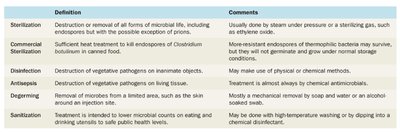
Sterilization: Destruction or removal of all forms of microbial life, including endospores. Usually achieved by steam under pressure or sterilizing gas.
Commercial Sterilization: Sufficient heat treatment to kill endospores of Clostridium botulinum in canned food.
Disinfection: Destruction of vegetative pathogens on inanimate objects, often by physical or chemical means.
Antisepsis: Destruction of vegetative pathogens on living tissue, typically by chemical antimicrobials.
Degerming: Removal of microbes from a limited area, such as skin before injection, usually by mechanical means.
Sanitization: Lowering microbial counts on eating and drinking utensils to safe public health levels.
Principles of Microbial Death and Control
Microbial Death Curve and Rate
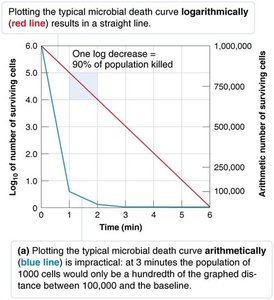
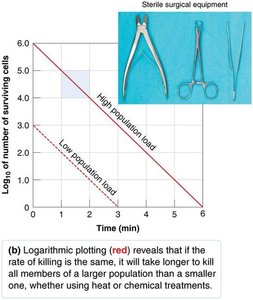
Microbial death occurs at a logarithmic rate when exposed to antimicrobial agents. The effectiveness of a treatment depends on several factors:
Number of microbes present
Environmental factors (organic matter, temperature, biofilms)
Time of exposure
Microbial characteristics (e.g., endospore formation, cell wall structure)
Actions of Microbial Control Agents
Alteration of membrane permeability
Damage to proteins (enzymes)
Damage to nucleic acids
Physical Methods of Microbial Control
Heat Sterilization
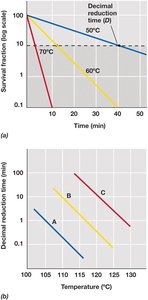
Heat is the most widely used method for sterilization. It kills microorganisms by denaturing proteins and enzymes. The effectiveness of heat sterilization is measured by:
Decimal reduction time (D): Time required at a given temperature to reduce microbial viability by 90% (one log decrease).
Thermal death time: Time to kill all cells at a given temperature, affected by population size.
Moist Heat Sterilization
Coagulates and denatures proteins/enzymes.
Methods include boiling, free-flowing steam, and autoclaving.
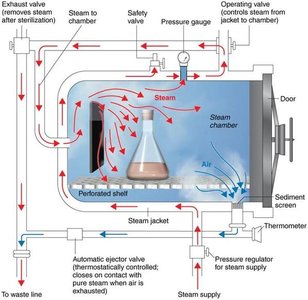
Autoclave: Uses steam under pressure (121°C at 15 psi for 15 minutes) to kill all vegetative cells and endospores. Steam must contact the item’s surface.
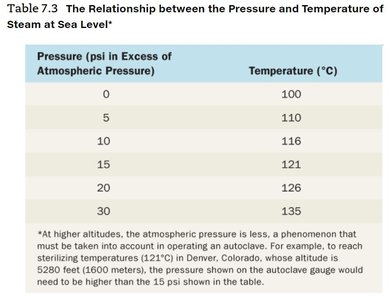
Pressure (psi in Excess of Atmospheric Pressure) | Temperature (°C) |
|---|---|
0 | 100 |
5 | 110 |
10 | 116 |
15 | 121 |
20 | 126 |
30 | 135 |
Additional info: Higher altitudes require higher pressure to achieve the same sterilization temperature due to lower atmospheric pressure.
Indicators of Sterilization
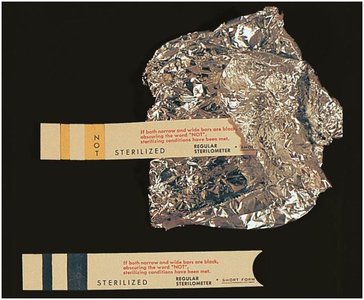
Test strips are used to confirm sterility after autoclaving.
Pasteurization
Uses heat to significantly reduce microbial load in heat-sensitive liquids (e.g., milk, juice).
High-temperature short-time (HTST): 72°C for 15 seconds.
Does not kill all organisms; thermoduric organisms may survive.
Dry Heat Sterilization
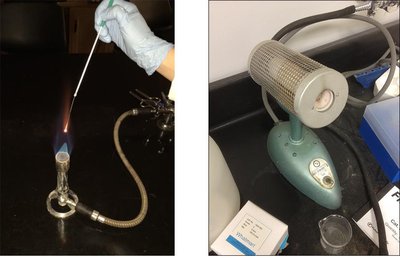
Kills by oxidation (e.g., flaming, incineration, hot-air sterilization).
Radiation
Ionizing radiation: (X-rays, gamma rays, electron beams) creates reactive hydroxyl radicals, damaging DNA and causing lethal mutations.
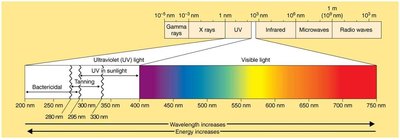
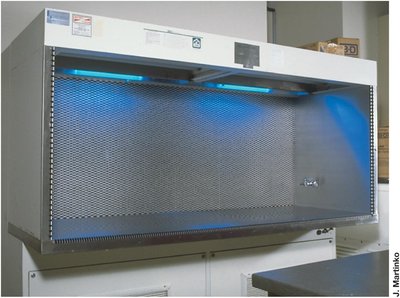
Nonionizing radiation: (UV, 260 nm) causes thymine dimers in DNA, useful for surface decontamination but has poor penetration.
 Filtration
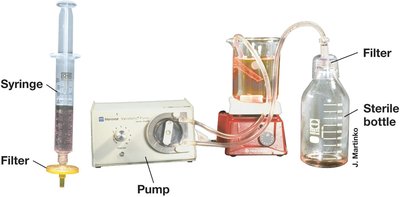
Used for heat-sensitive liquids and gases.
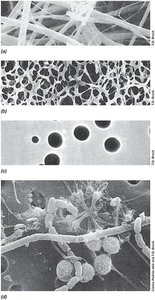
Membrane filters remove microbes >0.22 μm; pore sizes as small as 0.01 μm can filter out viruses.
Depth filters (e.g., HEPA) remove particles from air.
Other Physical Methods
Low temperature: Bacteriostatic effect (refrigeration, deep-freezing, lyophilization).
High pressure: Denatures proteins.
Desiccation: Absence of water prevents metabolism.
Osmotic pressure: High concentrations of salts and sugars create a hypertonic environment, causing plasmolysis.
Chemical Methods of Microbial Control
Types of Antimicrobial Agents
-cidal: Kills microorganisms (e.g., bactericidal, fungicidal, viricidal).
-static: Inhibits growth (e.g., bacteriostatic, fungistatic, viristatic).
Principles of Effective Disinfection
Concentration of disinfectant
Nature of material being disinfected
pH of the medium
Duration of contact with microbes
Effect of Antimicrobial Agents on Growth
Bacteriostatic agents: Inhibit growth but do not kill; effect is reversible.
Bactericidal agents: Kill cells without lysis.
Bacteriolytic agents: Kill by lysis, reducing both viable and total cell count.
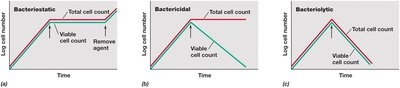 if cells burst total cell count goes down as wellh
Assaying Antimicrobial Activity
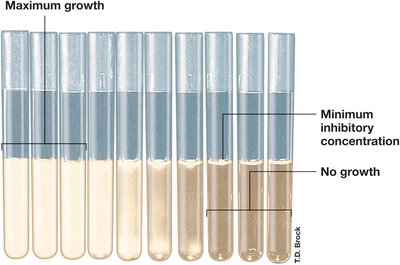
Minimum inhibitory concentration (MIC): Smallest amount of an agent needed to inhibit growth, determined by dilution methods.
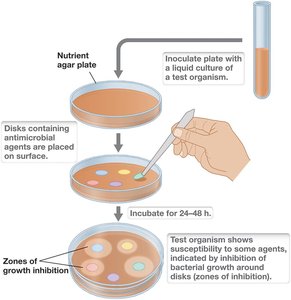
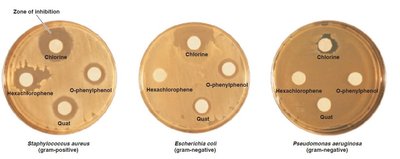
Disk diffusion assay: Filter paper disks with antimicrobial agents are placed on agar; zones of inhibition indicate effectiveness.
Major Classes of Chemical Agents
Alcohols: Denature proteins and dissolve lipids; ineffective against endospores and nonenveloped viruses.
Phenolics and Bisphenols: Disrupt plasma membranes; used in soaps, lotions, and disinfectants.
Halogens: Iodine and chlorine are strong oxidizing agents; used in antiseptics and disinfectants.
Heavy Metals: Oligodynamic action; denature proteins (e.g., silver nitrate, copper sulfate).
Surface-Active Agents: Soaps (degerming), acid-anionic sanitizers, quaternary ammonium compounds (quats).
Food Preservatives: Sulfur dioxide, organic acids, nitrites, and antibiotics (e.g., nisin, natamycin).
Aldehydes: Inactivate proteins by cross-linking; used for preserving specimens and sterilizing medical equipment.
Chemical Sterilization: Gaseous sterilants (e.g., ethylene oxide), plasma, supercritical fluids, peroxygens.
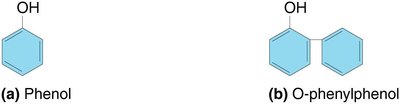
Effectiveness of Chemical Agents
The effectiveness of chemical agents varies depending on the type of microorganism. For example, endospores and mycobacteria are more resistant to many agents than vegetative bacteria.
Summary Table: Physical and Chemical Methods of Microbial Control
Method | Mechanism of Action | Comment |
|---|---|---|
Moist heat (autoclaving) | Protein denaturation | Very effective; 121°C, 15 psi, 15 min |
Dry heat (incineration) | Oxidation | Used for inoculating loops, disposal of contaminated materials |
Filtration | Physical removal | For heat-sensitive liquids/gases |
Radiation (ionizing/UV) | DNA damage | Used for surfaces, medical supplies |
Alcohols | Protein denaturation, lipid dissolution | Used as antiseptics/disinfectants |
Halogens | Oxidation | Water disinfection, antiseptics |
Phenolics | Membrane disruption | Soaps, disinfectants |
Quats | Membrane disruption | Sanitizers, disinfectants |
Conclusion
Understanding the principles and methods of microbial growth control is fundamental for microbiology students. Both physical and chemical methods are essential tools in healthcare, research, and industry to ensure safety and prevent the spread of infectious agents.
