 Back
BackControl of Microorganisms by Physical and Chemical Agents
Study Guide - Smart Notes
 Tailored notes based on your materials, expanded with key definitions, examples, and context.
Control of Microorganisms by Physical and Chemical Agents
Introduction
The control of microorganisms is essential in various settings, including healthcare, food production, and laboratory environments. Effective microbial control prevents disease transmission, food spoilage, and contamination of water and other materials. This chapter explores the principles, methods, and factors influencing the control of microbial growth using physical and chemical agents.
Key Definitions in Microbial Control
Essential Terms
Sterilization: Complete destruction or removal of all viable organisms, including living cells, spores, viruses, and viroids.
Sterilant: A chemical agent used to achieve sterilization.
Disinfection: Killing, inhibition, or removal of pathogenic organisms (not necessarily all microorganisms).
Disinfectant: Chemical agents used for disinfection, typically applied to inanimate objects.
Antisepsis: Prevention of infection of living tissue by microorganisms.
Antiseptic: Chemical agents that kill or inhibit growth of microorganisms when applied to tissue; not too toxic for living tissues.
Sanitization: Reduction of microbial population to levels deemed safe by public health standards.
Cidal agents: Suffix -cide indicates killing action (e.g., bactericide, fungicide, viricide).
Static agents: Suffix -static indicates inhibition of growth (e.g., bacteriostatic, fungistatic).
Why Control Microorganisms?
Purpose and Goals
Some microorganisms are beneficial, but others cause undesirable effects such as disease and food spoilage.
Goals of microbial control:
Destruction and prevention of microbial transmission.
Reduction or elimination of microorganisms responsible for contamination.
Pattern of Microbial Death
Exponential Death and Viable but Non-Culturable State (VBNC)
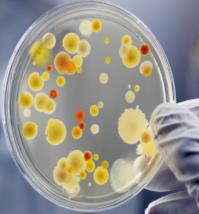
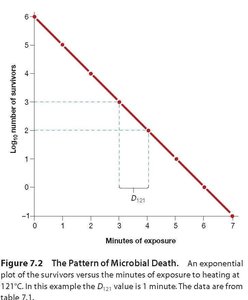
Microbial death is not instantaneous; it follows an exponential pattern.
Microorganisms are considered dead when they cannot reproduce in conditions that normally support their growth.
Some bacteria may remain alive but are temporarily unable to reproduce (VBNC state).
Factors Influencing Effectiveness of Antimicrobial Agents
Key Factors
Population size: Larger populations take longer to kill than smaller populations.
Population composition: Sensitivity varies among microorganisms; endospores and Mycobacterium tuberculosis are more resistant. Younger cells are usually more susceptible than mature cells.
Duration of exposure: Longer exposure increases the number of organisms killed.
Temperature: Higher temperatures generally increase the rate of microbial killing.
Concentration or intensity of agent: Higher concentrations or intensities usually kill more rapidly, but the relationship is not always linear.
Mode of action: The mechanism by which the agent kills or inhibits microorganisms (e.g., damage to cell wall, membrane, proteins, or nucleic acids).
Local environment: Factors such as pH, viscosity, and organic matter can impact effectiveness. Biofilms can reduce susceptibility to agents.
Mode/Mechanism of Action of Antimicrobial Agents
Cellular Targets
Antimicrobial agents affect one or more cellular targets, causing progressive damage until the cell can no longer survive.
Four general categories of targets:
Cell wall
Cell membrane
Cellular synthetic processes (DNA, RNA)
Proteins (synthesis or function)
Physical Methods in Microbial Control
Overview of Physical Methods
Heat (moist and dry)
Low temperatures
Filtration
Radiation
Heat Methods
Moist heat: Includes boiling, autoclaving, and pasteurization. Effective against most microorganisms; autoclaving kills spores.
Boiling: 100°C for 10 minutes kills vegetative cells and eukaryotic spores, but not bacterial endospores. Used for disinfection, not sterilization.
Autoclaving: Uses saturated steam under pressure (121°C, 15 psi, 15 min) to kill all organisms, including endospores. Effectiveness tested with Bacillus stearothermophilus spores or indicator tape.
Pasteurization: Controlled heating below boiling to reduce microbial load and kill pathogens in milk, juices, etc. Methods include:
Flash (HTST): 72°C for 15 seconds
Batch (LTHT): 63°C for 30 minutes
UHT: 140–150°C for 1–3 seconds
Tyndallization: Repeated heating at 90–100°C for 30 min on three successive days, with incubation in between, to allow spores to germinate and be killed as vegetative cells.
Dry heat sterilization: Incineration or oven (160–170°C for 2–3 hours) oxidizes cell constituents and denatures proteins. Used for glassware, powders, oils; not suitable for heat-labile materials.
Low Temperature Methods
Freezing: Stops microbial reproduction (bacteriostatic); some cells killed by ice crystals.
Refrigeration: Slows microbial growth and reproduction.
Psychrophile preservation: -70°C to -135°C for long-term culture storage.
Radiation Methods
Ultraviolet (UV) light: 260 nm wavelength causes thymine dimers in DNA, leading to cell death or altered growth. Poor penetration; used for surface and air decontamination.
Ionizing radiation: Gamma rays (e.g., from Cobalt-60) penetrate deeply, destroying endospores and vegetative cells. Used for sterilizing heat-sensitive materials (antibiotics, plastics, etc.). Not always effective against viruses.
Filtration Methods
Removes microorganisms from heat-sensitive solutions (e.g., pharmaceuticals, culture media) and air.
Air filtration uses HEPA filters in biological safety cabinets and hospital theaters.
Physical screening, entrapment, and adsorption are mechanisms of filtration.
Chemical Methods in Microbial Control
Overview and Factors Influencing Effectiveness
Used for disinfection, antisepsis, and chemotherapy (internal or topical use).
Effectiveness depends on:
Type of microorganism (endospores and acid-fast organisms are more resistant)
Concentration (minimum inhibitory concentration, MIC)
Nature of the agent (should not be toxic to humans)
Exposure time (longer exposure increases effectiveness)
Characteristics of an Ideal Chemical Agent
Antimicrobial activity
Solubility and stability
Selective toxicity
Homogeneity in solution
Minimal inactivation by extraneous material
Activity at ordinary temperatures
Penetration ability
Material safety, deodorizing, detergent ability
Availability and low cost
Major Groups of Chemical Agents
Phenolics: Denature proteins and disrupt membranes. Used in soaps and hand washes. Effective but can be toxic and irritating.
Alcohols: Ethanol, isopropanol (50–70%). Denature proteins and dissolve membrane lipids. Bactericidal and fungicidal, but not sporicidal. Used as antiseptics and disinfectants.
Halogens: Iodine and chlorine are important. Iodine is a skin antiseptic; chlorine is used for water disinfection. Both act by oxidizing cell constituents.
Heavy Metals: Mercury, silver, copper, etc. Inactivate proteins. Effective but toxic; used in limited applications (e.g., silver nitrate for newborns' eyes).
Quaternary Ammonium Compounds: Detergents with antimicrobial activity. Disrupt membranes. Effective against most bacteria, but not endospores or Mycobacterium tuberculosis.
Aldehydes: Formaldehyde, glutaraldehyde. Inactivate DNA and proteins. Sporicidal and used as chemical sterilants, but toxic to humans.
Sterilizing Gases: Ethylene oxide, beta-propiolactone. Inactivate proteins. Used for heat-sensitive materials (plastics, electronics, etc.).
Example Table: Germicidal Action of Ethanol
Concentration of Ethanol | 10s | 20s | 30s | 40s | 50s |
|---|---|---|---|---|---|
100% | - | - | - | - | - |
95% | + | + | + | + | + |
90% | + | + | + | + | + |
80% | + | + | + | + | + |
70% | + | + | + | + | + |
60% | + | + | + | + | + |
50% | - | - | + | + | + |
40% | - | - | - | - | - |
Summary Table: Physical and Chemical Methods
Physical Methods | Chemical Methods |
|---|---|
Moist heat (boiling, autoclaving, pasteurization, tyndallization) | Phenolics |
Dry heat (incineration, oven) | Alcohols |
Low temperature (freezing, refrigeration) | Halogens |
Filtration (HEPA, masks) | Heavy metals |
Irradiation (UV, ionizing) | Quaternary ammonium compounds |
Aldehydes | |
Sterilizing gases |
Review Questions
Define the following terms: Sterilization, Sterilant, Disinfection, Disinfectant, Sanitization, Antisepsis, Antiseptic, Chemotherapy, Germicide, Bactericide, Bacteriostatic.
Describe four factors that affect the effectiveness of antimicrobial agents.
Describe three moist heat methods to control microbial growth.
Why is ionizing radiation used as a sterilant?
Name five characteristics of an ideal chemical agent for microbial control.
Name six groups of chemical agents that are used to control microbial growth.
