 Back
BackControlling Microbial Growth in the Body: Antimicrobial Drugs (Chapter 10 Study Guide)
Study Guide - Smart Notes
 Tailored notes based on your materials, expanded with key definitions, examples, and context.
Controlling Microbial Growth in the Body: Antimicrobial Drugs
Brief History of Antimicrobial Agents
The development of antimicrobial drugs revolutionized the treatment of infectious diseases. Key contributors include:
Paul Ehrlich: Introduced the concept of selective toxicity and developed "Salvarsan" for syphilis. Known as the "father of chemotherapy."
Alexander Fleming, Ernst Chain, Howard Florey: Discovered and developed penicillin from Penicillium mold, leading to widespread clinical use.
Gerhard Domagk: Discovered sulfanilamide, the first sulfa drug.
Selman Waksman & Albert Schatz: Isolated streptomycin from soil bacteria, effective against tuberculosis.
Antimicrobial resistance is a major global health concern, affecting all age groups and industries. Strategies to combat resistance include prevention, improved drug use, and containment of resistant strains.
Definitions and Key Terms
Antibiotics: Substances produced by microorganisms that inhibit or kill other microbes.
Spectrum of Activity: Range of pathogens a drug can affect (narrow vs. broad-spectrum).
Selective Toxicity: Ability of a drug to target pathogens without harming the host.
R-plasmid: Genetic elements that confer resistance to antibiotics.
Synergism: Enhanced effect when two drugs are used together.
Kirby-Bauer Test: Method to assess antibiotic susceptibility.
MIC/MBC: Minimum inhibitory/bactericidal concentration tests.
Mechanisms of Antimicrobial Action
Five General Mechanisms (Targets) for Antibiotics
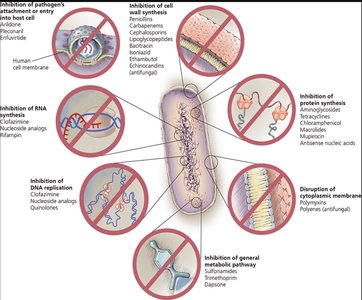
Antimicrobial drugs act by targeting specific structures or processes in microbes. The five main mechanisms are:
Inhibition of Cell Wall Synthesis: Prevents formation of peptidoglycan, leading to cell lysis. Examples: penicillin, cefotaxime, vancomycin.
Inhibition of Protein Synthesis: Targets prokaryotic ribosomes, blocking translation. Examples: tetracycline, erythromycin.
Disruption of Cytoplasmic Membranes: Damages membrane integrity, causing leakage. Example: polymyxin B.
Inhibition of Metabolic Pathways: Blocks unique microbial metabolic reactions. Example: sulfamethoxazole/trimethoprim.
Inhibition of Nucleic Acid Synthesis: Interferes with DNA/RNA replication and transcription. Example: nalidixic acid.
Examples and Applications
Penicillin: Inhibits cell wall synthesis; effective mainly against Gram-positive bacteria.
Cefotaxime: Similar to penicillin, but broader spectrum.
Erythromycin: Inhibits protein synthesis; effective against Gram-positive and some Gram-negative bacteria.
Tetracycline: Broad-spectrum inhibitor of protein synthesis.
Polymyxin B: Disrupts membranes of Gram-negative bacteria.
Nalidixic acid: Inhibits DNA replication.
Sulfamethoxazole/trimethoprim: Inhibits folic acid synthesis (metabolic pathway).
Spectrum of Activity
The spectrum of activity refers to the range of microorganisms affected by an antimicrobial agent. Drugs may be:
Narrow-spectrum: Target specific groups (e.g., only Gram-positive bacteria).
Broad-spectrum: Affect a wide range of organisms (e.g., both Gram-positive and Gram-negative bacteria).
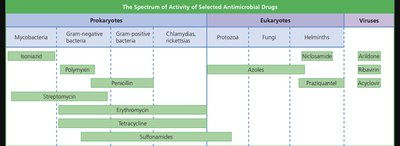
Broad-spectrum drugs can lead to secondary infections by disrupting normal flora.
Mechanism of Action: Beta-lactam Antibiotics and Vancomycin
Beta-lactam antibiotics (e.g., penicillin): Inhibit enzymes that cross-link peptidoglycan, weakening the cell wall and causing lysis.
Vancomycin: Blocks alanine-alanine linkage in peptide cross-bridges, effective against Gram-positive bacteria (narrow-spectrum).
Mechanism of Action: Sulfonamide Antibiotics
Sulfonamides: Act as competitive inhibitors of para-aminobenzoic acid synthesis, blocking nucleotide synthesis in bacteria.
Clinical Considerations in Prescribing Antimicrobial Drugs
Spectrum of Action and Efficacy
Clinical considerations include:
Spectrum of Action: Number of pathogens affected.
Efficacy: Dosage, route of administration, and safety.
Adverse Effects: Toxicity, allergic reactions, disruption of normal microbiota.
Routes of Antibiotic Administration
Topical: Applied to external infections.
Oral: Self-administered, convenient.
Intramuscular: Injected into muscle.
Intravenous: Delivered directly to bloodstream.
Each route affects drug distribution, absorption, metabolism, and excretion.
Efficacy Testing: Kirby-Bauer Diffusion Susceptibility Test
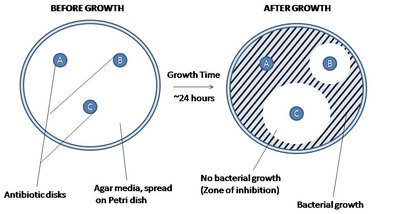
The Kirby-Bauer test assesses antibiotic effectiveness by measuring zones of inhibition on agar plates.
Zone of inhibition: Area where bacterial growth is prevented by the antibiotic.
Results are compared to standard tables for interpretation.
Minimum Inhibitory Concentration (MIC) and Minimum Bactericidal Concentration (MBC) Tests
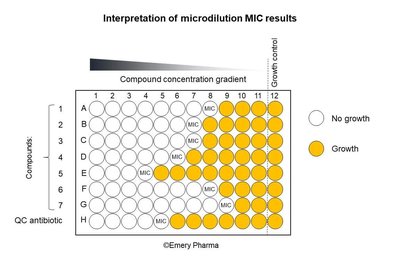
MIC: Lowest concentration of drug that inhibits visible growth.
MBC: Lowest concentration that kills the organism.
Antibiotic Resistance
Origins and Mechanisms of Resistance
Resistance can be natural or acquired through:
Mutation of chromosomal genes.
Acquisition of resistance genes via transformation, transduction, or conjugation.
Mechanisms include:
Production of enzymes that destroy drugs (e.g., β-lactamase).
Reduced drug entry into cells.
Alteration of drug targets.
Pumping drugs out of cells.
Multi-drug Resistance and R-plasmids
R-plasmids: Carry multiple resistance genes, leading to "superbugs" resistant to several drugs.
Common in hospitals and nursing homes.
Avoiding and Reducing Antibiotic Resistance
Maintain sufficient drug concentration for adequate time.
Use antimicrobials only for bacterial infections.
Combine agents for multidrug-resistant organisms.
Distinguish between bacteriostatic (inhibits growth) and bactericidal (kills bacteria) drugs.
Antibiotic Synergism
Definition and Importance
Synergism occurs when two antibiotics used together produce a greater effect than either alone. This is especially important for treating multidrug-resistant infections.
Summary Table: Mechanisms of Action and Examples
Mechanism | Example Drugs |
|---|---|
Inhibition of Cell Wall Synthesis | Penicillin, Cefotaxime, Vancomycin |
Inhibition of Protein Synthesis | Tetracycline, Erythromycin |
Disruption of Cytoplasmic Membranes | Polymyxin B |
Inhibition of Metabolic Pathways | Sulfamethoxazole/Trimethoprim |
Inhibition of Nucleic Acid Synthesis | Nalidixic Acid |
Key Equations
Therapeutic Index: Ratio of tolerated dose to effective dose.
Conclusion
Understanding the mechanisms, spectrum, and clinical considerations of antimicrobial drugs is essential for effective treatment and prevention of resistance. Proper use and stewardship of antibiotics are critical in combating the global challenge of antimicrobial resistance.
