 Back
BackControlling Microbial Growth in the Body: Antimicrobial Drugs
Study Guide - Smart Notes
 Tailored notes based on your materials, expanded with key definitions, examples, and context.
Controlling Microbial Growth in the Body: Antimicrobial Drugs
Introduction to Antimicrobial Drugs
Antimicrobial drugs are essential tools in the treatment of infectious diseases. Their development and use are based on the principle of selective toxicity, aiming to target pathogens while minimizing harm to the host.
Chemotherapeutic agents: Compounds used to treat diseases, including infections and cancer.
Antimicrobial agents: Substances that kill or inhibit the growth of microorganisms.
Antibiotics: Naturally produced antimicrobial agents, primarily by bacteria and fungi.
Semisynthetics: Chemically modified antibiotics to enhance efficacy or reduce resistance.
Synthetics: Completely synthesized antimicrobial compounds.
History of Antimicrobial Agents
The discovery and development of antimicrobial agents revolutionized medicine. Key historical figures include:
Paul Ehrlich: Introduced the concept of chemotherapy and the idea of "magic bullets"—drugs that specifically target pathogens.
Alexander Fleming: Discovered penicillin from Penicillium mold, effective against Streptococcus pyogenes.
Gerhard Domagk: Developed sulfonamides, the first practical synthetic antimicrobial agents.
Selman Waksman: Discovered antibiotic-producing organisms, leading to the identification of many antibiotics from soil bacteria.
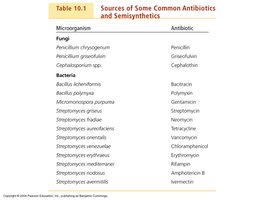
Microorganism | Antibiotic |
|---|---|
Fungi | |
Penicillium chrysogenum | Penicillin |
Penicillium griseofulvum | Griseofulvin |
Cephalosporium spp. | Cephalothin |
Bacteria | |
Bacillus licheniformis | Bacitracin |
Bacillus polymyxa | Polymyxin |
Micromonospora purpurea | Gentamicin |
Streptomyces griseus | Streptomycin |
Streptomyces orientalis | Vancomycin |
Streptomyces venezuelae | Chloramphenicol |
Streptomyces erythreus | Erythromycin |
Streptomyces aureofaciens | Tetracycline |
Streptomyces avermitilis | Avermectins & Ivermectin |
Mechanisms of Antimicrobial Action
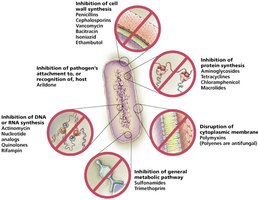
Antimicrobial drugs act by targeting specific structures or processes unique to microorganisms. The main mechanisms include:
Inhibition of cell wall synthesis
Inhibition of protein synthesis
Disruption of cytoplasmic membranes
Inhibition of metabolic pathways
Inhibition of nucleic acid synthesis
Prevention of pathogen attachment to host cells
Inhibition of Cell Wall Synthesis
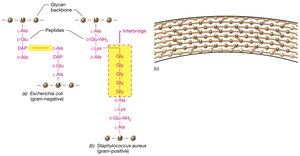
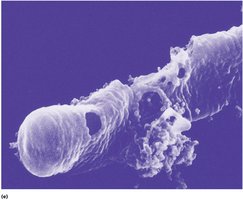
Most bacterial cell walls contain peptidoglycan, a polymer of sugars and amino acids. Drugs such as beta-lactams (penicillins, cephalosporins) prevent cross-linking of peptidoglycan, leading to cell lysis.
Peptidoglycan structure: Alternating N-acetylglucosamine (NAG) and N-acetylmuramic acid (NAM) with peptide side chains.
Beta-lactams: Bind to enzymes that cross-link NAM subunits, weakening the cell wall.
Other drugs: Vancomycin and cycloserine interfere with peptide bridges; bacitracin blocks transport of NAG and NAM.
Inhibition of Protein Synthesis
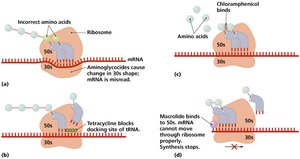
Prokaryotic ribosomes (70S) differ from eukaryotic ribosomes (80S), allowing selective targeting. Drugs can bind to the 30S or 50S subunits, disrupting translation.
Aminoglycosides and tetracyclines: Affect the 30S subunit, causing misreading or blocking tRNA binding.
Chloramphenicol, macrolides (erythromycin): Affect the 50S subunit, inhibiting peptide bond formation or translocation.
Disruption of Cytoplasmic Membranes
Some drugs disrupt membrane integrity, causing cell death. For example, polymyxins target Gram-negative bacteria, while amphotericin B binds to ergosterol in fungal membranes.
Polymyxin: Disrupts bacterial membranes, especially Gram-negative bacteria.
Amphotericin B: Binds to ergosterol in fungal membranes, forming pores.
Inhibition of Metabolic Pathways
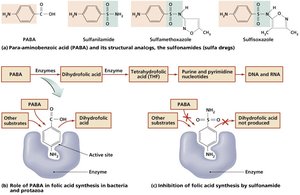
Antimetabolites interfere with microbial metabolic pathways not found in the host. Sulfonamides are structural analogs of para-aminobenzoic acid (PABA), blocking folic acid synthesis.
Sulfonamides: Compete with PABA for the active site of an enzyme, preventing folic acid synthesis.
Trimethoprim: Inhibits a later step in folic acid synthesis.
Inhibition of Nucleic Acid Synthesis
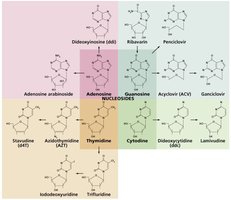
Some drugs inhibit DNA replication or RNA transcription. Nucleotide analogs can be incorporated into nucleic acids, causing chain termination or faulty replication.
Quinolones and fluoroquinolones: Inhibit DNA gyrase in bacteria.
Rifampin: Inhibits bacterial RNA polymerase.
Nucleotide analogs: Used as antiviral agents (e.g., AZT, acyclovir).
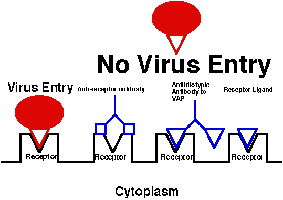
Prevention of Virus Attachment and Entry
Some drugs block viral attachment or entry into host cells by mimicking host receptors or viral attachment proteins.
Attachment antagonists: Prevent viruses from binding to host cell receptors.
Examples: Drugs that block HIV attachment or uncoating.
Clinical Considerations in Drug Prescription
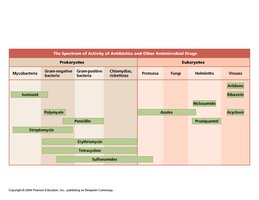
When prescribing antimicrobials, clinicians must consider efficacy, spectrum of action, side effects, and the potential for resistance.
Spectrum of action: Narrow-spectrum drugs target specific pathogens; broad-spectrum drugs affect a wide range.
Side effects: Toxicity, allergies, and disruption of normal microbiota can occur.
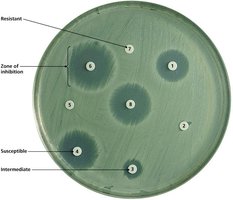
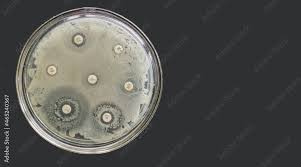
Effectiveness: Determined by laboratory tests such as the Kirby-Bauer disk diffusion, minimum inhibitory concentration (MIC), and minimum bactericidal concentration (MBC).
Testing Antimicrobial Effectiveness
Kirby-Bauer disk diffusion test: Measures zones of inhibition to classify pathogens as susceptible, intermediate, or resistant.
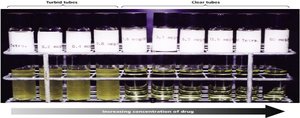
Minimum Inhibitory Concentration (MIC): The lowest concentration of a drug that inhibits visible growth of a microorganism.
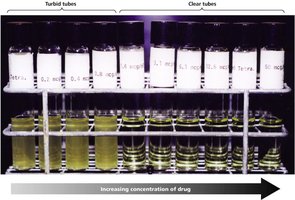
Minimum Bactericidal Concentration (MBC): The lowest concentration of a drug that kills 99.9% of the original inoculum.
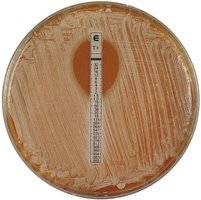
Etest: Uses a strip with a gradient of antimicrobial agent to determine MIC on an agar plate.
Routes of Administration
The route of administration affects drug distribution and efficacy:
Topical: For external infections.
Oral: Simple, but may result in lower concentrations at the infection site.
Intramuscular (IM): Requires injection; higher concentrations than oral.
Intravenous (IV): Delivers the highest concentration directly to the bloodstream.
Side Effects of Antimicrobial Drugs
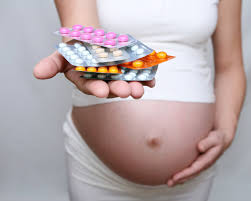
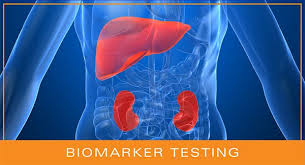
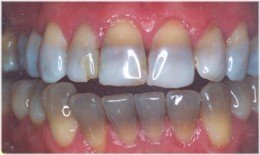
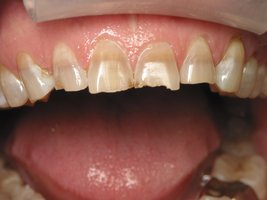
Toxicity: Some drugs are toxic to kidneys, liver, or nervous system; special caution is needed for pregnant women.
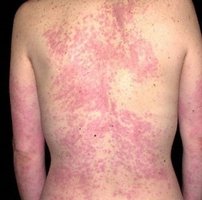
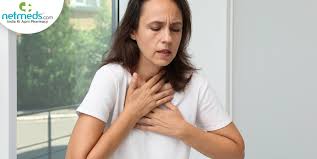
Allergies: Some individuals may experience allergic reactions, including anaphylactic shock.
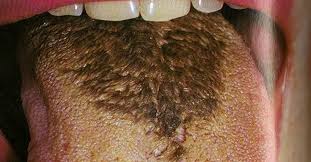
Disruption of normal microbiota: Broad-spectrum drugs can lead to superinfections or secondary infections (e.g., Candida albicans vaginitis, Clostridium difficile colitis).
Resistance to Antimicrobial Drugs
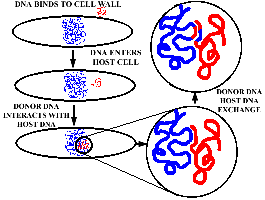
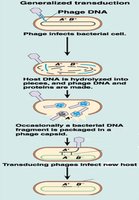
Microorganisms can develop resistance through mutations or by acquiring resistance genes (R-plasmids). Resistance mechanisms include:
Enzyme production that deactivates the drug (e.g., beta-lactamase).
Alteration of drug targets or receptors.
Changes in membrane permeability to prevent drug entry.
Efflux pumps that remove the drug from the cell.
Use of alternative metabolic pathways.

Multiple and Cross Resistance
Pathogens may acquire resistance to multiple drugs (multiple resistance) or to all drugs of a similar structure (cross resistance), often via R-plasmids.
Strategies to Retard Resistance
Use high concentrations of drugs for sufficient duration.
Use combinations of drugs (synergism).
Limit use of antimicrobials to necessary cases.
Develop new drugs or modify existing ones (second- or third-generation drugs).
