 Back
BackControlling Microbial Growth in the Body: Antimicrobial Drugs
Study Guide - Smart Notes
 Tailored notes based on your materials, expanded with key definitions, examples, and context.
Controlling Microbial Growth in the Body: Antimicrobial Drugs
Introduction to Antimicrobial Agents
Antimicrobial drugs are essential tools in the treatment of infectious diseases. Their development and use have revolutionized medicine by enabling the control and eradication of many microbial pathogens. This section explores the history, mechanisms, and clinical considerations of antimicrobial agents.
The History of Antimicrobial Agents
Drugs: Chemicals that affect physiology in any manner.
Chemotherapeutic agents: Drugs that act against diseases.
Antimicrobial agents (antimicrobials): Drugs that treat infections.
Key historical figures:
Paul Ehrlich: Developed "magic bullets"—arsenic compounds that killed microbes.
Alexander Fleming: Discovered penicillin released from Penicillium.
Gerhard Domagk: Discovered sulfanilamide, the first widely used antimicrobial.
Selman Waksman: Coined the term "antibiotics" for naturally produced antimicrobial agents.
Semisynthetics: Chemically altered antibiotics that are more effective, longer lasting, or easier to administer than naturally occurring ones.
Synthetics: Antimicrobials that are completely synthesized in a laboratory.
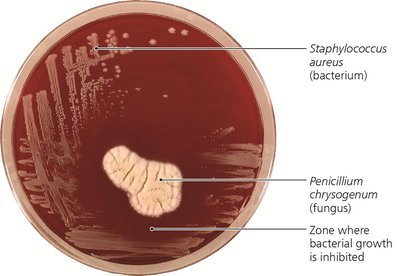
Mechanisms of Antimicrobial Action
Antimicrobial drugs target specific structures or functions in microbial cells, aiming for selective toxicity—harming the pathogen without damaging the host.
Selective toxicity: The ability of a drug to target microbial cells without affecting host cells.
Antibacterial drugs: The largest and most diverse group of antimicrobial agents.
Antifungal, antiprotozoal, and antiviral drugs: Fewer in number due to similarities between eukaryotic pathogens and host cells, or the unique biology of viruses.
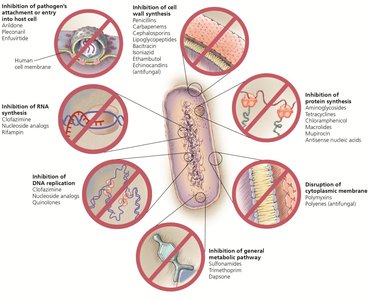
Major Mechanisms of Action
Inhibition of Cell Wall Synthesis:
Most common agents prevent cross-linkage of NAM subunits in peptidoglycan (e.g., beta-lactams such as penicillins).
Other drugs (e.g., vancomycin, cycloserine) interfere with bridges between NAM subunits in Gram-positive bacteria.
Bacitracin blocks transport of NAG and NAM from the cytoplasm.
Isoniazid and ethambutol disrupt mycolic acid formation in mycobacteria.
These drugs are effective only against growing cells and do not affect existing peptidoglycan.
Inhibition of Protein Synthesis:
Targets prokaryotic 70S ribosomes (30S and 50S subunits), which differ from eukaryotic 80S ribosomes.
Examples:
Aminoglycosides (e.g., streptomycin, tobramycin) and tetracyclines (e.g., doxycycline) inhibit the 30S subunit.
Macrolides (e.g., erythromycin, azithromycin) and chloramphenicol inhibit the 50S subunit.
Some drugs may affect mitochondrial ribosomes, causing side effects.
Disruption of Cytoplasmic Membranes:
Some drugs (e.g., nystatin, amphotericin B) bind to ergosterol in fungal membranes, forming pores.
Azoles and allylamines inhibit ergosterol synthesis.
Polymyxin disrupts Gram-negative bacterial membranes but is toxic to human kidneys.
Inhibition of Metabolic Pathways:
Drugs like sulfonamides and trimethoprim inhibit folic acid synthesis in bacteria.
Antiviral agents (e.g., amantadine, rimantadine) can prevent viral uncoating.
Protease inhibitors block enzymes required for viral replication (e.g., HIV).
Inhibition of Nucleic Acid Synthesis:
Some drugs block DNA replication or RNA transcription (e.g., quinolones, fluoroquinolones, nucleotide analogs).
Reverse transcriptase inhibitors target HIV replication.
Prevention of Virus Attachment, Entry, or Uncoating:
Attachment antagonists (e.g., pleconaril) block viral attachment to host cells.
Arildone prevents viral uncoating.
Spectrum of Action
The spectrum of action refers to the range of pathogens a drug is effective against. Drugs may be narrow-spectrum (targeting a few organisms) or broad-spectrum (targeting many organisms). Broad-spectrum drugs can lead to secondary infections by disrupting normal microbiota.
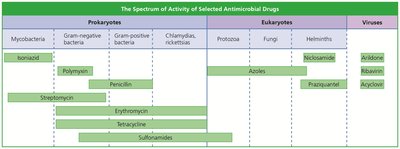
Clinical Considerations in Prescribing Antimicrobial Drugs
Evaluating Effectiveness
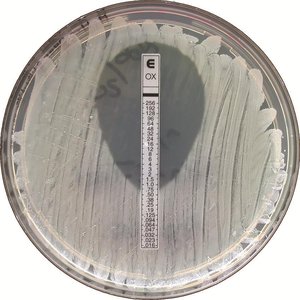
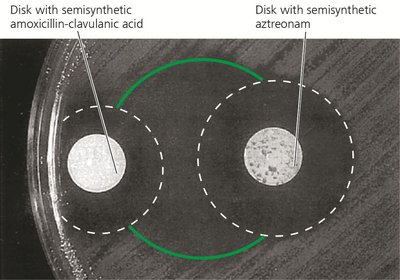
Diffusion susceptibility test (Kirby-Bauer test): Measures zones of inhibition around antibiotic disks on an agar plate.
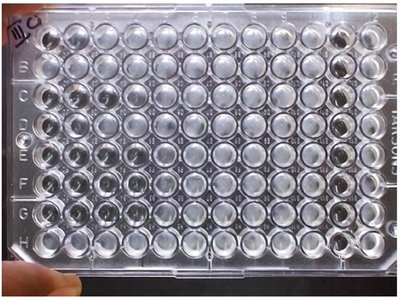
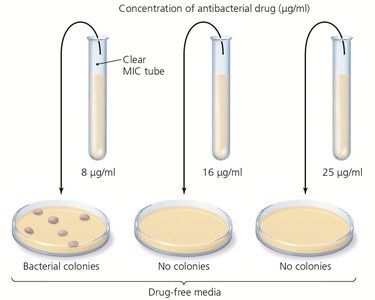
Minimum inhibitory concentration (MIC) test: Determines the lowest concentration of a drug that inhibits visible growth of a microorganism.
Minimum bactericidal concentration (MBC) test: Identifies the lowest concentration of a drug that kills the microorganism.
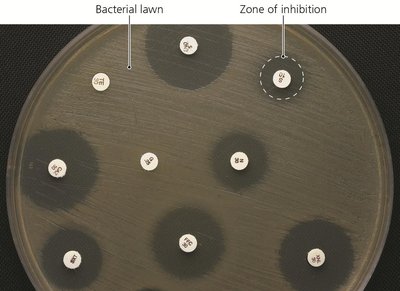
Routes of Administration
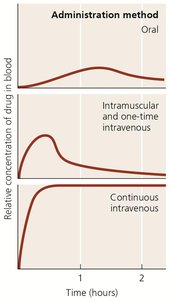
Topical: For external infections.
Oral: Self-administered, no needles required.
Intramuscular (IM): Injected into muscle.
Intravenous (IV): Delivered directly to the bloodstream.
Distribution to infected tissues depends on the route of administration.
Safety and Side Effects
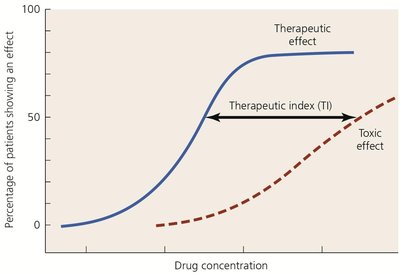
Toxicity: Some drugs may be toxic to kidneys, liver, or nerves. The therapeutic index (TI) is the ratio of the dose tolerated to the effective dose.
Allergies: Rare but potentially life-threatening reactions (e.g., anaphylactic shock).
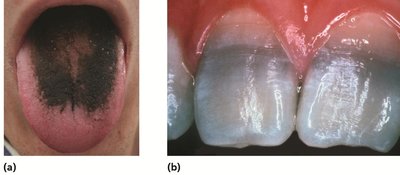
Disruption of normal microbiota: May result in secondary infections or overgrowth of normal flora, especially in hospitalized patients.
Resistance to Antimicrobial Drugs
Development of Resistance
Some pathogens are naturally resistant.
Resistance can be acquired through:
New mutations in chromosomal genes.
Acquisition of resistance (R) plasmids via transformation, transduction, or conjugation.

Mechanisms of Resistance
CDC threat levels: urgent, serious, concerning.
Mechanisms include:
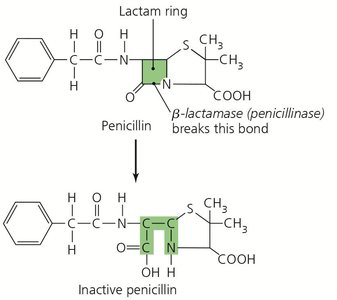
Enzyme production that destroys or deactivates the drug (e.g., beta-lactamase).
Prevention of drug entry into the cell.
Alteration of drug target so binding is less effective.
Alteration of metabolic pathways.
Pumping the drug out of the cell (efflux pumps).
Biofilm formation.
Production of proteins (e.g., MfpA in Mycobacterium tuberculosis) that protect drug targets.
Multiple Resistance and Cross Resistance
Pathogens may acquire resistance to multiple drugs, especially in healthcare settings.
Multiple-drug-resistant pathogens are resistant to at least three antimicrobial agents.
Cross resistance occurs when drugs are structurally similar.
Retarding Resistance
Maintain high drug concentrations in patients for sufficient time to inhibit pathogens and allow the immune system to act.
Use combinations of antimicrobial agents:
Synergism: One drug enhances the effect of another.
Antagonism: Drugs interfere with each other.
Use antimicrobials only when necessary.
Develop new variations of existing drugs (second- and third-generation drugs).
Search for new antibiotics, semisynthetics, and synthetics (e.g., bacteriocins, designer drugs).
Summary Table: Mechanisms of Antimicrobial Action
Mechanism | Examples of Drugs | Target Pathogens |
|---|---|---|
Inhibition of Cell Wall Synthesis | Penicillins, cephalosporins, vancomycin, bacitracin, isoniazid | Bacteria (especially Gram-positive), mycobacteria |
Inhibition of Protein Synthesis | Aminoglycosides, tetracyclines, macrolides, chloramphenicol | Bacteria |
Disruption of Cytoplasmic Membrane | Polymyxins, daptomycin, nystatin, amphotericin B | Gram-negative bacteria, fungi |
Inhibition of Metabolic Pathways | Sulfonamides, trimethoprim | Bacteria, protozoa |
Inhibition of Nucleic Acid Synthesis | Quinolones, fluoroquinolones, nucleotide analogs | Bacteria, viruses, cancer cells |
Prevention of Virus Attachment/Entry | Pleconaril, arildone | Viruses |
Additional info: The above notes provide a comprehensive overview of antimicrobial drugs, their mechanisms, clinical considerations, and resistance, suitable for college-level microbiology students preparing for exams.
