 Back
Controlling Microbial Growth in the Body: Antimicrobial Drugs (Chapter 10 Study Notes)
Study Guide - Smart Notes
 Tailored notes based on your materials, expanded with key definitions, examples, and context.
Controlling Microbial Growth in the Body: Antimicrobial Drugs
Introduction to Antimicrobial Drugs
Antimicrobial drugs are essential tools in the treatment of infectious diseases. Their development and use are based on the principle of selective toxicity, which aims to target microbial pathogens without causing significant harm to the host.
Selective toxicity: The ability of a drug to target sites that are specific to the microorganism, sparing host cells.
Broad-spectrum drugs: Effective against a wide range of microorganisms.
Narrow-spectrum drugs: Effective against a limited group of pathogens.
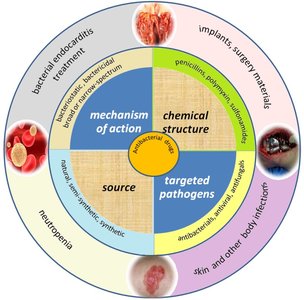
The History of Antimicrobial Agents
The discovery and development of antimicrobial agents revolutionized medicine. Key milestones include:
Paul Ehrlich: Introduced the concept of "magic bullets"—chemicals that selectively target pathogens (e.g., arsenic compounds).
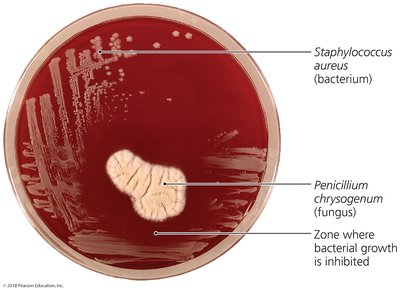
Alexander Fleming: Discovered penicillin, the first true antibiotic, produced by Penicillium chrysogenum.
Gerhard Domagk: Discovered sulfanilamide, the first widely available antimicrobial agent.
Selman Waksman: Coined the term "antibiotics" for naturally produced antimicrobial agents.
Sources of Antimicrobial Agents
Antimicrobial agents can be classified by their origin:
Natural antibiotics: Produced by microorganisms such as fungi and bacteria.
Semi-synthetics: Chemically modified natural antibiotics for improved efficacy, stability, or spectrum.
Synthetics: Completely synthesized in the laboratory.
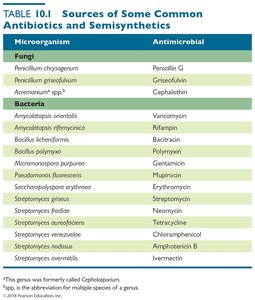
Microorganism | Antimicrobial |
|---|---|
Penicillium chrysogenum | Penicillin G |
Penicillium griseofulvum | Griseofulvin |
Acremonium spp. | Cephalothin |
Streptomyces griseus | Streptomycin |
Bacillus polymyxa | Polymyxin |
Streptomyces rimosus | Tetracycline |
Streptomyces venezuelae | Chloramphenicol |
Streptomyces nodosus | Amphotericin B |
Streptomyces avermitilis | Ivermectin |
Mechanisms of Antimicrobial Action
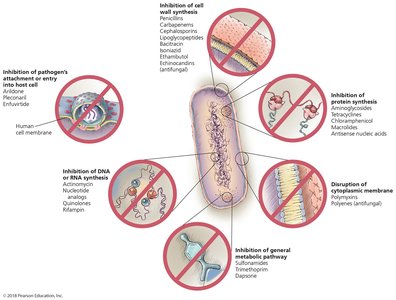
Antimicrobial drugs target specific structures or functions in microbes. The main mechanisms include:
Inhibition of cell wall synthesis
Inhibition of protein synthesis
Disruption of cytoplasmic membrane
Inhibition of metabolic pathways
Inhibition of nucleic acid synthesis
Prevention of pathogen attachment or entry
Inhibition of Bacterial Cell Wall Synthesis
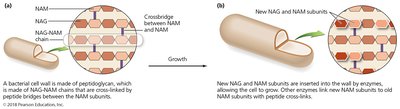
Most bacteria have cell walls containing peptidoglycan, which is targeted by several antibiotics:
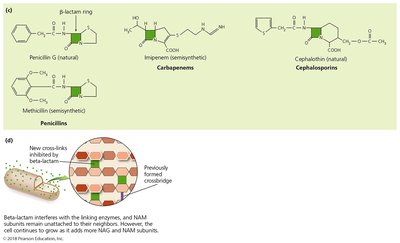
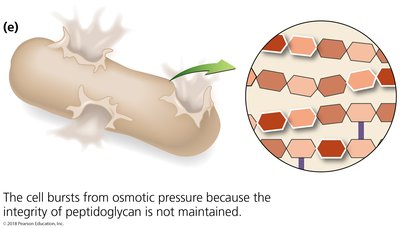
Beta-lactams (e.g., penicillins, cephalosporins): Inhibit enzymes that cross-link NAM subunits, weakening the cell wall and causing lysis.
Vancomycin and cycloserine: Interfere with bridges linking NAM subunits in Gram-positive bacteria.
Bacitracin: Blocks transport of NAG and NAM from the cytoplasm; used topically due to toxicity.
Isoniazid and ethambutol: Disrupt mycolic acid synthesis in mycobacteria (e.g., tuberculosis).
Inhibition of Fungal Cell Wall Synthesis
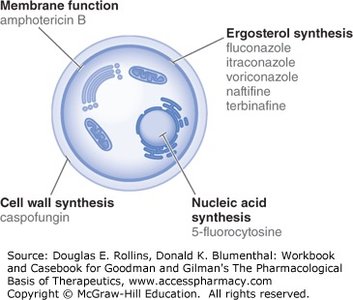
Fungal cell walls contain unique polysaccharides. Echinocandins (e.g., caspofungin) inhibit glucan synthesis, leading to cell wall rupture.
Inhibition of Protein Synthesis
Antibiotics can selectively target prokaryotic ribosomes (70S) without affecting eukaryotic ribosomes (80S), though mitochondrial ribosomes may be affected.
Aminoglycosides (e.g., gentamicin): Cause misreading of mRNA.
Tetracyclines: Block tRNA attachment.
Chloramphenicol: Inhibits peptide bond formation.
Macrolides: Block ribosomal translocation.
Oxazolidinones: Prevent formation of the initiation complex.
Disruption of Cytoplasmic Membranes
Some drugs disrupt membrane integrity, leading to cell death:
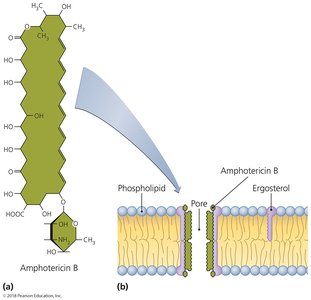
Polyenes (e.g., nystatin, amphotericin B): Bind to ergosterol in fungal membranes, forming pores.
Azoles and allylamines: Inhibit ergosterol synthesis in fungi.
Polymyxin: Disrupts Gram-negative bacterial membranes; nephrotoxic, used topically.
Inhibition of Metabolic Pathways
Antimetabolic agents exploit differences in microbial and host metabolism:
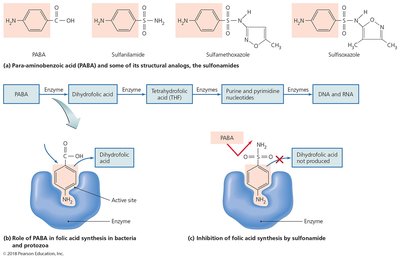
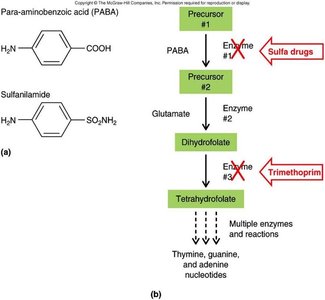
Sulfonamides: Competitive inhibitors of folic acid synthesis.
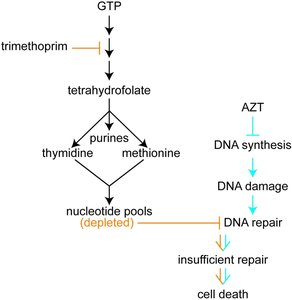
Trimethoprim: Inhibits a later step in folic acid synthesis.
Atovaquone: Inhibits electron transport in protozoa and fungi.
Antiviral agents: Block viral uncoating or protease activity (e.g., amantadine, protease inhibitors).
Inhibition of Nucleic Acid Synthesis
Some drugs block DNA replication or RNA transcription:
Quinolones and fluoroquinolones: Inhibit DNA gyrase in bacteria.
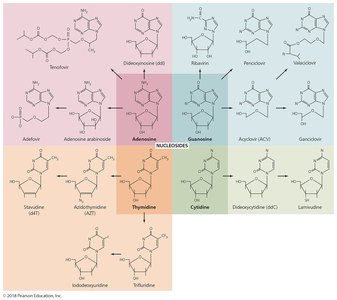
Nucleotide/nucleoside analogs (e.g., AZT, acyclovir): Distort nucleic acid structure, preventing replication.
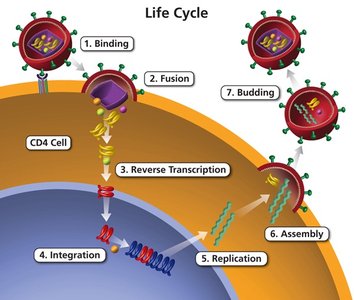
Reverse transcriptase inhibitors: Block HIV replication; humans lack this enzyme.
Prevention of Virus Attachment, Entry, or Uncoating
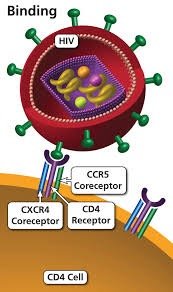
Some drugs prevent viruses from attaching to or entering host cells, or from uncoating once inside.
Attachment antagonists (e.g., pleconaril): Block viral attachment proteins.
Uncoating inhibitors (e.g., arildone): Prevent viral genome release.
Clinical Considerations in Prescribing Antimicrobial Drugs
Spectrum of Action
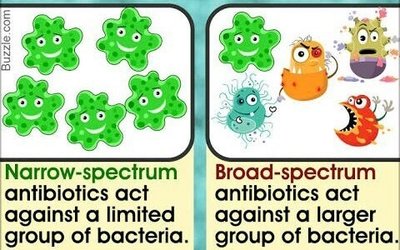
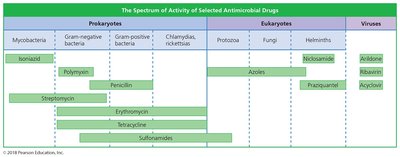
The spectrum of an antimicrobial drug refers to the range of pathogens it affects:
Narrow-spectrum: Targets specific pathogens.
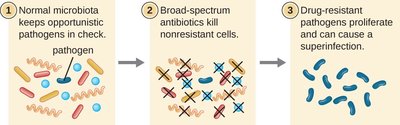
Broad-spectrum: Targets a wide variety of pathogens, but may disrupt normal microbiota and cause superinfections.
Testing for Drug Susceptibility
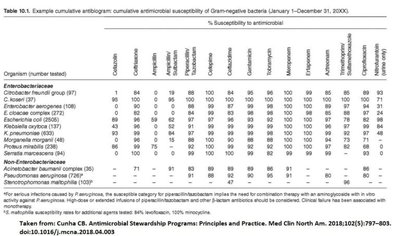
Determining the effectiveness of an antimicrobial agent is crucial for clinical use:
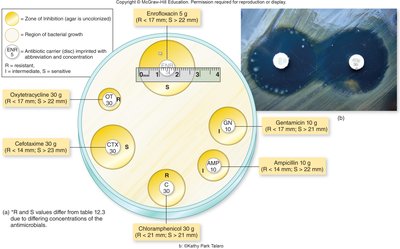
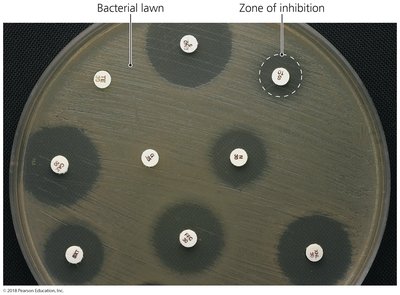
Diffusion susceptibility test (Kirby-Bauer): Measures zones of inhibition around antibiotic discs on an agar plate.
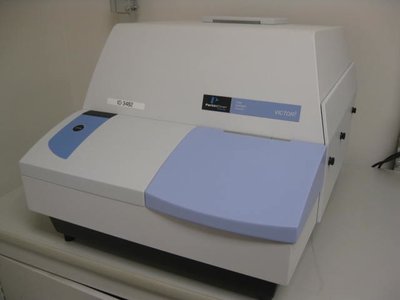
Minimum inhibitory concentration (MIC): The lowest concentration of a drug that inhibits visible growth.
Minimum bactericidal concentration (MBC): The lowest concentration that kills the organism.
Routes of Administration
Antimicrobial drugs can be administered in various ways, depending on the infection and drug properties:
Topical: Applied directly to the site of infection (e.g., skin).
Oral: Taken by mouth; convenient but may have variable absorption.
Intramuscular (IM): Injected into muscle for moderate absorption.
Intravenous (IV): Delivered directly into the bloodstream for rapid, high concentrations.
Safety and Side Effects
Considerations include toxicity, allergic reactions, and disruption of normal microbiota:
Toxicity: Some drugs are toxic to kidneys, liver, or nerves (e.g., polymyxin is nephrotoxic).
Allergies: Rare but potentially life-threatening (e.g., anaphylactic shock).
Disruption of normal microbiota: May lead to secondary infections or superinfections.
Therapeutic Index (TI)
The therapeutic index is a measure of drug safety:
TI = Toxic dose / MIC
A higher TI indicates a safer drug.
Development of Resistance in Populations
Microbial resistance to antimicrobial drugs is a growing concern:
Mechanisms of resistance:
Enzyme production that destroys or deactivates the drug (e.g., β-lactamases).
Prevention of drug entry into the cell.
Alteration of drug targets.
Efflux pumps expel the drug.
Biofilm formation.
Target protection proteins (e.g., Mycobacterium tuberculosis and DNA gyrase protection).
Horizontal gene transfer: Resistance genes can be transferred via plasmids, transformation, transduction, or conjugation.
Multiple drug resistance (MDR): Pathogens resistant to three or more drugs.
Strategies to Slow Resistance
Use antimicrobials only when necessary.
Maintain high drug concentrations for sufficient time.
Use combination therapy (synergism).
Develop new drugs and modify existing ones.
Additional info: This guide expands on the mechanisms, clinical considerations, and resistance strategies for antimicrobial drugs, providing a comprehensive overview suitable for exam preparation in a college-level microbiology course.
