 Back
BackControlling Microbial Growth in the Environment: Study Notes
Study Guide - Smart Notes
 Tailored notes based on your materials, expanded with key definitions, examples, and context.
Controlling Microbial Growth in the Environment
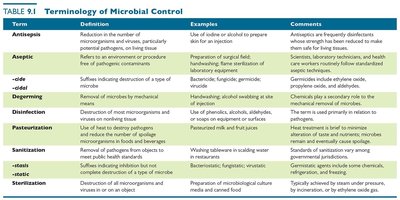
Terminology of Microbial Control
Understanding the terminology of microbial control is essential for distinguishing between different methods and their applications. These terms describe the processes used to reduce or eliminate microorganisms in various settings.
Antisepsis: Reduction of microbial numbers on living tissue. Example: Use of iodine or alcohol to prepare skin for injection.
Aseptic: Procedures that prevent contamination by pathogens. Example: Preparation of surgical field.
-cide/-cidal: Suffixes indicating destruction of a type of microbe. Example: Bactericide, fungicide, germicide.
Degerming: Removal of microbes by mechanical means. Example: Handwashing, alcohol swabbing.
Disinfection: Removal of most microorganisms on non-living surfaces. Example: Use of phenolics, alcohols, aldehydes.
Pasteurization: Use of heat to destroy pathogens and reduce spoilage microbes in food and beverages. Example: Pasteurized milk and fruit juices.
Sanitization: Reduction of microbial population to safe levels. Example: Washing dishes in scalding water.
-stasis/-static: Suffixes indicating inhibition of microbial growth. Example: Bacteriostatic, fungistatic.
Sterilization: Destruction of all microorganisms and viruses on an object. Example: Preparation of microbial culture media and canned food.
Principles of Microbial Death Rate
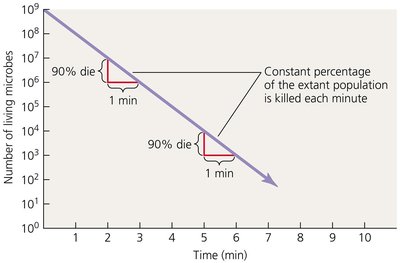
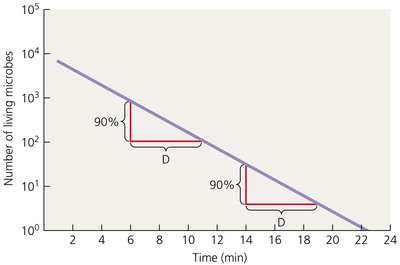
Microbial death rate describes how populations of microorganisms decline when exposed to antimicrobial agents. A constant percentage of the population is killed each minute, which is important for understanding sterilization and disinfection processes.
Microbial death rate: The rate at which microbes are killed by an agent, often follows a logarithmic decline.
Decimal reduction time (D value): The time required to kill 90% of the microbial population at a specific condition.
Basic Principles of Microbial Control
Action of Antimicrobial Agents
Antimicrobial agents act by targeting key structures and functions within microbial cells.
Alteration of cell walls and membranes: Damaging these structures can cause cells to burst or leak contents, leading to cell death.
Damage to proteins and nucleic acids: Disruption of protein bonds affects metabolism and structure; damage to nucleic acids prevents proper protein synthesis.
Nonenveloped viruses: These have greater tolerance to harsh conditions compared to enveloped viruses.
Selection of Microbial Control Methods
Ideal Properties of Control Agents
Agents used for microbial control should be effective and safe for humans, animals, and objects.
Inexpensive
Fast-acting
Stable during storage
Harmless to humans, animals, and objects
Factors Affecting Efficacy
Site to be treated: The method depends on whether the site is a living tissue, medical instrument, or fragile object.
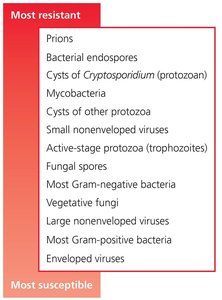
Relative susceptibility of microorganisms: Different microbes have varying resistance to antimicrobial agents.
Environmental conditions: Temperature, pH, and presence of organic materials can affect the efficacy of antimicrobial methods.
Germicide Classification
Germicides are classified based on their effectiveness against different types of microorganisms.
High-level germicides: Kill all pathogens, including endospores.
Intermediate-level germicides: Kill fungal spores, protozoan cysts, viruses, and pathogenic bacteria.
Low-level germicides: Kill vegetative bacteria, fungi, protozoa, and some viruses.
Biosafety Levels
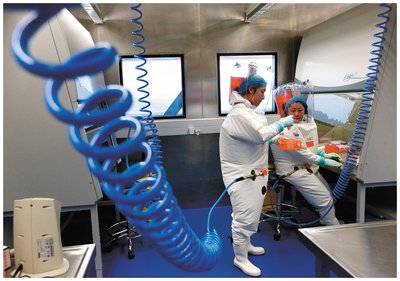
Biosafety levels (BSL) are used to classify laboratory safety procedures when handling pathogens.
BSL-1: Handling pathogens that do not cause disease in healthy humans.
BSL-2: Handling moderately hazardous agents.
BSL-3: Handling microbes in safety cabinets.
BSL-4: Handling microbes that cause severe or fatal disease; requires specialized suits and containment.
Physical Methods of Microbial Control
Heat-Related Methods
Heat is a common method for controlling microbial growth, with moist heat being more effective than dry heat.
Effects of high temperatures: Denature proteins, disrupt membranes and nucleic acids.
Thermal death point: Lowest temperature that kills all cells in broth in 10 minutes.
Thermal death time: Time to sterilize a volume of liquid at a set temperature.
Decimal reduction time (D value): Time required to reduce microbial population by 90%.
Moist Heat Methods
Boiling: Kills vegetative cells of bacteria, fungi, protozoan trophozoites, and most viruses. Endospores and some viruses can survive.
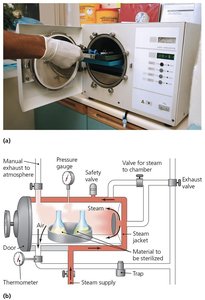
Autoclaving: Uses pressure and steam to achieve sterilization. Standard conditions: 121°C, 15 psi, 15 minutes.
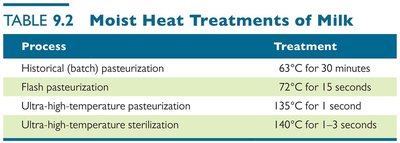
Pasteurization: Reduces microbial load in food and beverages without sterilization. Methods include batch, flash, and ultra-high-temperature pasteurization.
Ultra-high-temperature sterilization: 140°C for 1–3 seconds, allows storage at room temperature.
Dry Heat Methods
Dry heat: Used for materials that cannot be sterilized with moist heat. Requires higher temperatures and longer times.
Incineration: Ultimate means of sterilization.
Refrigeration and Freezing
Refrigeration: Halts growth of most pathogens by slowing metabolism.
Freezing: Slow freezing is more effective than quick freezing; organisms vary in susceptibility.
Desiccation and Lyophilization
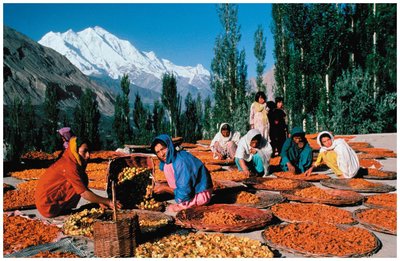
Desiccation: Inhibits growth by removing water.
Lyophilization: Freeze-drying for long-term preservation; prevents formation of damaging ice crystals.
Filtration
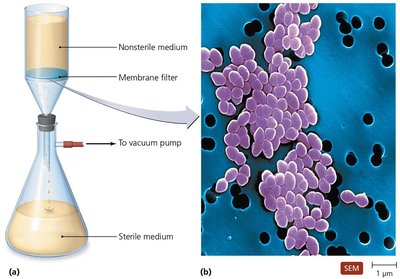
Filtration is used to remove microbes from liquids and air, especially when heat-sensitive materials are involved.
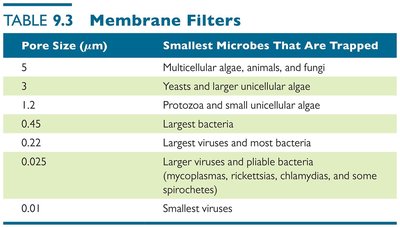
Membrane filters: Trap microbes based on pore size; used for sterilizing heat-sensitive solutions.
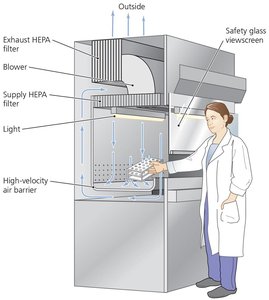
HEPA filters: Used in biological safety cabinets to remove airborne microbes.
Osmotic Pressure
High concentrations of salt or sugar create hypertonic environments that inhibit microbial growth by causing cells to lose water. Fungi are generally more resistant to these conditions than bacteria.
Application: Used in food preservation (e.g., jams, salted meats).
Summary Table: Microbial Resistance to Antimicrobial Agents
Microbes vary in their resistance to antimicrobial agents. Understanding this hierarchy is crucial for selecting appropriate control methods.
Most Resistant | Most Susceptible |
|---|---|
Prions | Enveloped viruses |
Bacterial endospores | Most Gram-positive bacteria |
Cysts of Cryptosporidium (protozoan) | Large nonenveloped viruses |
Mycobacteria | Vegetative fungi |
Cysts of other protozoa | Most Gram-negative bacteria |
Small nonenveloped viruses | Fungal spores |
Active-stage protozoa (trophozoites) |
Example Applications
Autoclaving: Used for sterilizing surgical instruments and laboratory media.
Pasteurization: Used for milk, fruit juices, and other beverages to reduce pathogens.
HEPA filtration: Used in hospital isolation rooms and biological safety cabinets.
Desiccation: Used for preserving dried fruits and other foods.
----------------------------------------
