 Back
BackControlling Microbial Growth in the Environment: Physical and Chemical Methods
Study Guide - Smart Notes
 Tailored notes based on your materials, expanded with key definitions, examples, and context.
Controlling Microbial Growth in the Environment
Introduction to Microbial Growth Control
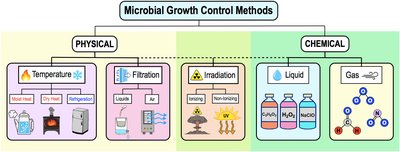
Controlling microbial growth is essential for human health, food safety, laboratory work, and industrial processes. Unchecked microbial proliferation can lead to disease, food spoilage, and contamination of experiments or products. Methods for controlling microbes are classified as physical, chemical, or both, and the choice of method depends on the context and required level of control.
Terminology of Microbial Growth Control
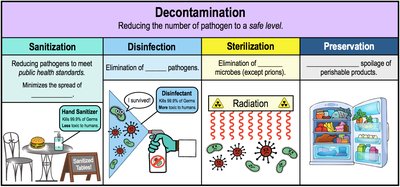
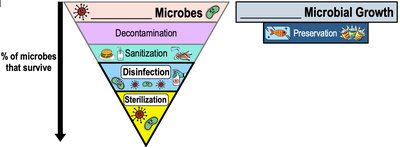
Decontamination: Reducing the number of pathogens to a safe level.
Sanitization: Cleaning and reducing pathogens to meet public health standards, minimizing disease spread.
Disinfection: Elimination of most pathogens (disease-causing agents); some viable microbes may remain.
Sterilization: Elimination of all microbes (except prions), including microorganisms, viruses, and endospores.
Preservation: Process of delaying spoilage of perishable products.
Situations Requiring Different Levels of Microbial Control
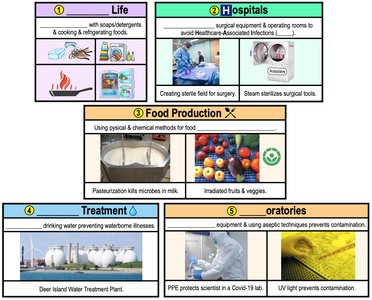
The required level of microbial control varies by situation. For example, household cleaning focuses on sanitization, while hospitals require sterilization to prevent infection. Food production uses pasteurization and irradiation, and laboratories sterilize media and tools to prevent contamination.
Selecting a Method to Control Microbial Growth
Key Factors in Method Selection
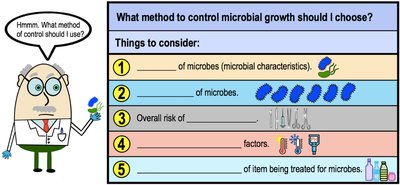
Choosing an appropriate microbial control method involves considering several factors:
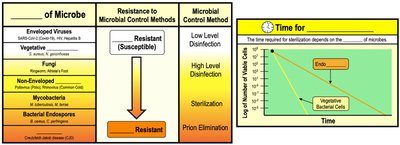
Type of Microbe: Some microbes are highly resistant (e.g., prions, endospores), while others are more susceptible.
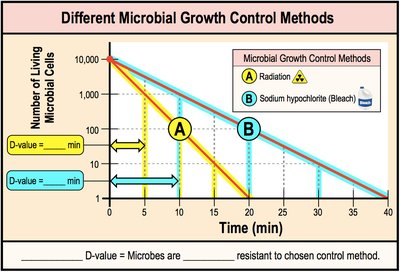
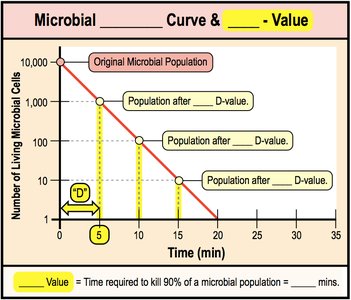
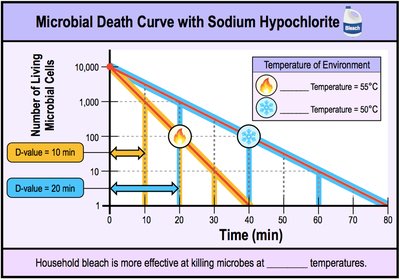
Number of Microbes: Larger populations require more time to eliminate; microbial death typically follows a logarithmic rate.
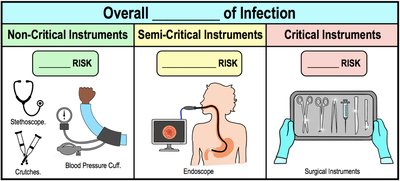
Overall Risk of Infection: Medical instruments are categorized by risk (critical, semi-critical, non-critical), dictating the required level of disinfection or sterilization.
Environmental Factors: Temperature, pH, and the presence of organic matter can affect the efficacy of control methods.
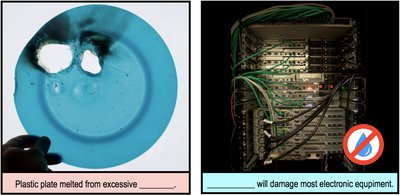
Composition of Item: Some methods (e.g., heat, harsh chemicals) may damage sensitive materials.
Physical Methods to Control Microbial Growth
Overview of Physical Methods
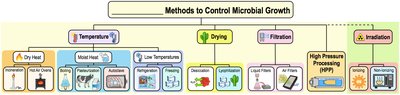
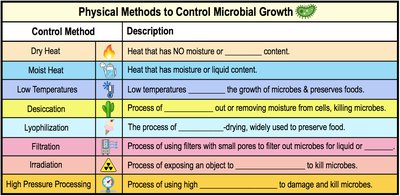
Physical methods include temperature manipulation, drying, filtration, high pressure, and irradiation. Each method has specific applications and limitations.
Temperature-Based Methods
Dry Heat
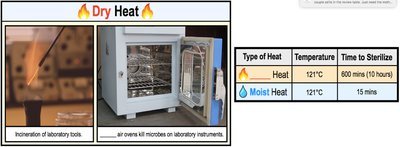
Incineration destroys microbes by burning.
Hot air ovens kill by denaturing proteins and oxidizing cell components.
Requires higher temperatures and longer times than moist heat.
Useful for moisture-sensitive items (e.g., powders, oils).
Moist Heat
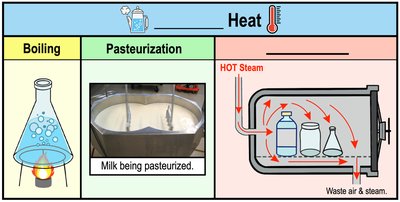
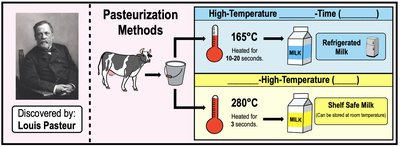
Includes boiling, pasteurization, and autoclaving (pressurized steam).
Denatures proteins and destroys cell membranes.
More effective than dry heat at lower temperatures and shorter times.
Low Temperatures
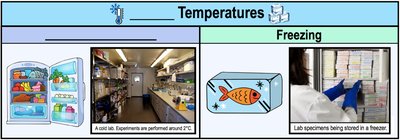
Refrigeration slows microbial growth; freezing preserves but does not always kill microbes.
Psycrophiles and psychrotrophs can grow at low temperatures.
Drying Methods
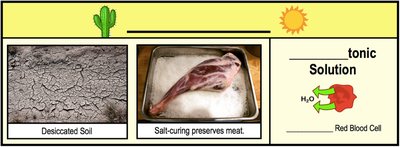
Desiccation
Removes water, inhibiting microbial growth.
Adding solutes (e.g., salt) creates a hypertonic environment, drawing water out of cells.
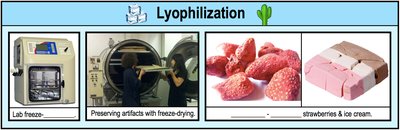
Lyophilization
Freeze-drying removes water by sublimation, preserving foods and biological samples.
Maintains product quality better than traditional drying.
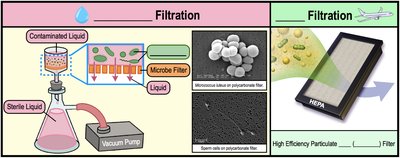
Filtration
Physically removes microbes from liquids or air using filters with small pores.
HEPA filters are used for air purification.
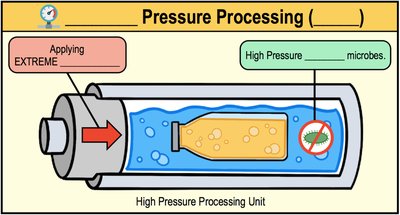
High Pressure Processing (HPP)
Applies extreme pressure to destroy microbes while preserving food quality.
Some microbes (e.g., endospores) may survive.
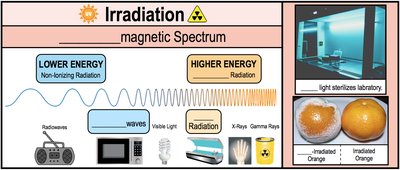
Irradiation
Exposes objects to electromagnetic radiation (ionizing or non-ionizing) to destroy microbes.
Ionizing radiation (e.g., gamma rays) penetrates deeply and damages DNA.
Non-ionizing radiation (e.g., UV light) is less penetrative and used for surface sterilization.
Summary Table: Physical Methods
Control Method | Description |
|---|---|
Dry Heat | Heat with no moisture; kills by oxidation and protein denaturation. |
Moist Heat | Heat with moisture; kills by protein denaturation and membrane disruption. |
Low Temperatures | Slows growth and preserves foods. |
Desiccation | Removes water, inhibiting growth. |
Lyophilization | Freeze-drying for preservation. |
Filtration | Removes microbes from liquids/air. |
Irradiation | Destroys microbes with radiation. |
High Pressure Processing | Damages/kills microbes with pressure. |
Chemical Methods to Control Microbial Growth
Types of Chemical Agents
Sanitizers: Used to reduce bacteria to safe levels on surfaces.
Disinfectants: Used on inanimate objects to kill most pathogens.
Antiseptics: Safe for use on living tissues to reduce microbial load.
Sterilizers: Destroy all forms of microbial life (except prions).
Chemical agents are further classified by their action (e.g., bactericidal vs. bacteriostatic) and target organisms (e.g., fungicide, virucide).
Factors Affecting Chemical Efficacy
Toxicity to humans and animals
Cost and availability
Compatibility with treated materials
Environmental impact
Effectiveness against target microbes
Major Classes of Chemical Agents
Alcohols: Denature proteins and disrupt membranes; effective at 60-80% concentration; not reliable against endospores.
Aldehydes: Cross-link proteins and nucleic acids; effective sterilants (e.g., glutaraldehyde, formaldehyde).
Biguanides: Disrupt membranes; e.g., chlorhexidine used as an antiseptic.
Halogens: Oxidizing agents (e.g., chlorine, iodine); used for disinfection and antisepsis.
Surface-Active Agents (Surfactants): Lower surface tension, aiding in mechanical removal of microbes (e.g., soaps, detergents, quats).
Heavy Metals: Inactivate proteins; used in low concentrations due to toxicity (e.g., silver, copper).
Phenolics: Disrupt membranes and denature proteins; used in household disinfectants.
Peroxygens: Strong oxidizers (e.g., hydrogen peroxide, peracetic acid); used as sterilants and disinfectants.
Gaseous Agents: Sterilize in closed chambers (e.g., ethylene oxide, ozone, formaldehyde gas).
Chemical Preservation of Perishable Products
Preservatives must be non-toxic and safe for ingestion.
Common food preservatives include organic acids (e.g., sorbic acid), nitrates, and nitrites.
Nitrates/nitrites inhibit Clostridium botulinum endospore germination in processed meats.
Summary
Controlling microbial growth is achieved through a combination of physical and chemical methods, each with specific applications, advantages, and limitations. The choice of method depends on the type of microbe, the context of use, the risk of infection, environmental factors, and the nature of the item being treated. Understanding these principles is essential for effective infection control, food safety, and laboratory practice.
