 Back
Controlling Microbial Growth in the Environment: Methods, Principles, and Applications
Study Guide - Smart Notes
 Tailored notes based on your materials, expanded with key definitions, examples, and context.
Controlling Microbial Growth in the Environment
Introduction to Microbial Growth Control
Controlling microbial growth is essential for human health, food safety, and various industrial processes. Unchecked microbial proliferation can result in disease, spoilage, and contamination. Methods to control microbes are categorized as physical, chemical, or both, and the choice of method depends on the context and desired level of control.
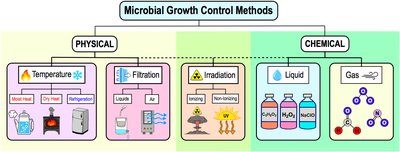
Terminology of Microbial Growth Control
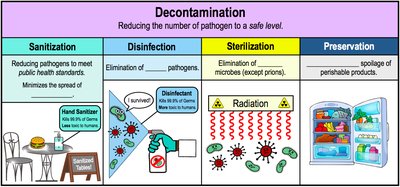
Several terms are used to describe processes for controlling microbial populations:
Decontamination: Reducing the number of pathogens to a safe level.
Sanitization: Cleaning and reducing pathogens to meet public health standards, minimizing disease spread.
Disinfection: Elimination of most pathogens; some viable microbes may remain.
Sterilization: Elimination of all microbes (except prions), including microorganisms, viruses, and endospores.
Preservation: Delaying spoilage of perishable products.
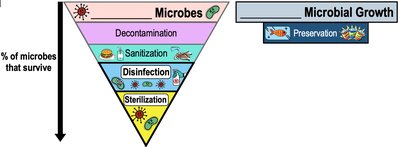
Hierarchy of Microbial Growth Control
The effectiveness of microbial control methods can be visualized as a hierarchy, with sterilization being the most stringent and preservation the least.
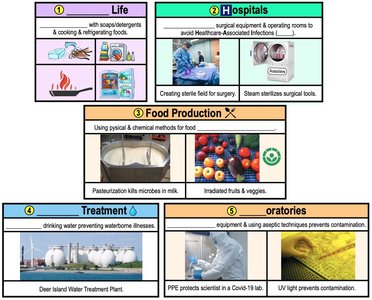
Situations Requiring Different Levels of Microbial Growth Control
Different environments require varying levels of microbial control. For example, household cleaning focuses on sanitization, while hospitals require sterilization to prevent infection. Food production, water treatment, and laboratory work each demand specific control strategies.
Selecting a Method to Control Microbial Growth
Factors Influencing Method Selection
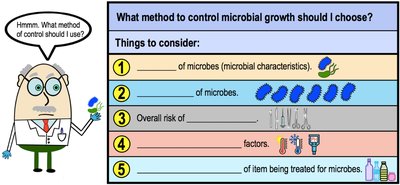
Choosing an appropriate microbial control method involves considering several factors:
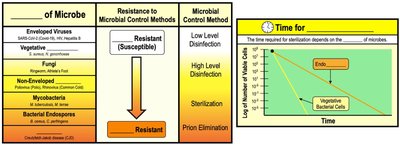
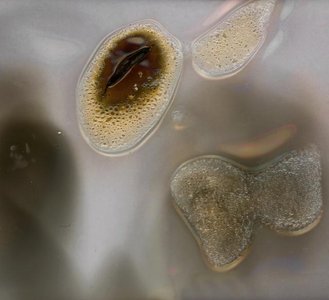
Type of Microbe: Some microbes are highly resistant (e.g., prions, bacterial endospores) while others are more susceptible (e.g., enveloped viruses).
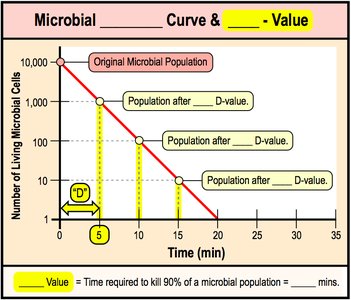
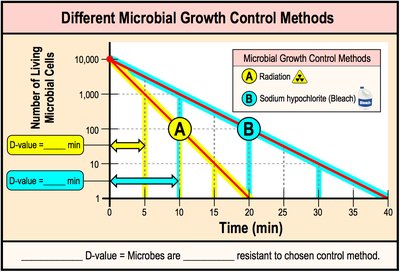
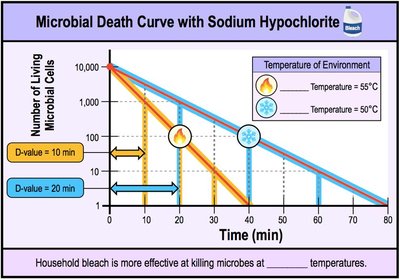
Number of Microbes: Larger populations require more time to eliminate. Microbial death curves and decimal reduction time (D-value) are used to quantify effectiveness.
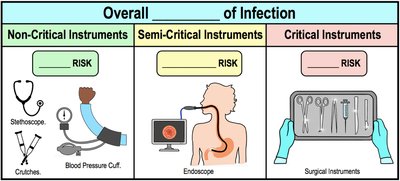
Overall Risk of Infection: Medical instruments are categorized by risk (critical, semi-critical, non-critical), dictating the required level of control.
Environmental Factors: Temperature, pH, and presence of organic matter can affect the efficacy of control methods.
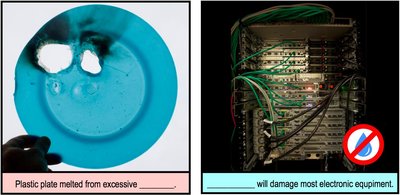
Composition of Item: Some methods may damage certain materials (e.g., heat-sensitive plastics, electronic equipment).
Physical Methods to Control Microbial Growth
Temperature-Based Methods
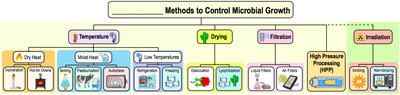
Physical methods include the use of temperature, filtration, irradiation, drying, and high pressure. Temperature-based methods are divided into dry heat and moist heat.
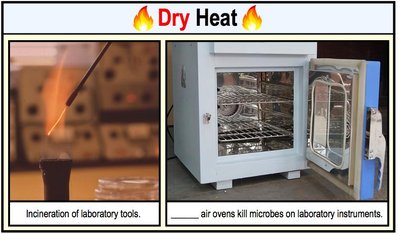
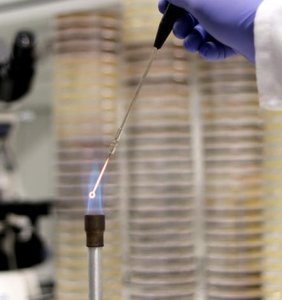
Dry Heat: Incineration and hot air ovens destroy cell components and denature proteins. Requires higher temperatures and longer times than moist heat. Suitable for moisture-sensitive items.
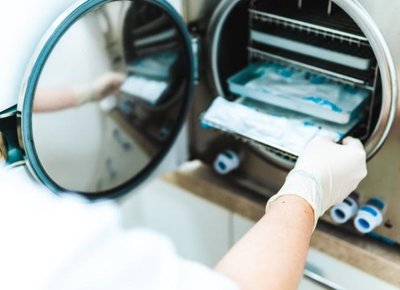
Moist Heat: Includes boiling, pasteurization, and autoclaving. Moist heat denatures proteins and is generally more effective at lower temperatures and shorter times than dry heat.
Pasteurization
Pasteurization is a brief heat treatment used to disinfect products like milk and wine. The High-Temperature Short-Time (HTST) method uses 165˚C for 15 seconds, while the Ultra-High Temperature (UHT) method uses 280˚C for 3 seconds to achieve sterilization.
Low Temperatures
Refrigeration and freezing slow or halt microbial growth, preserving foods and other products. Psychrophiles and psychrotrophs are exceptions that can grow at low temperatures.

Desiccation and Lyophilization
Desiccation removes moisture, inhibiting microbial growth. Lyophilization (freeze-drying) removes water via sublimation, preserving foods without refrigeration and maintaining product quality.
Filtration
Filtration uses filters with small pores to physically remove microbes from liquids or air. High-Efficiency Particulate Air (HEPA) filters are used to remove airborne particles and microbes.
High Pressure Processing
High Pressure Processing (HPP) uses extreme pressure (~120,000 psi) to destroy microbes, altering molecular structures while preserving product features. Some microbes, like endospores, can tolerate high pressures.
Irradiation
Irradiation exposes objects to radiation to destroy microbes. Ionizing radiation removes electrons, damaging DNA and membranes, while non-ionizing radiation (UV light) damages DNA and proteins. Microwaves generate lethal heat.
Chemical Methods to Control Microbial Growth
Types of Chemical Agents
Chemical methods include sanitizers, disinfectants, antiseptics, and sterilizers. Chemicals are classified by their ability to kill or inhibit microbes and their target organisms.
Bacteriocides: Kill bacteria.
Bacteriostatics: Inhibit bacterial growth.
Fungicides: Kill fungi.
Fungistatics: Inhibit fungal growth.
Gas Chemical Agents
Ethylene Oxide: Sterilizes all microbes but requires long treatment and special conditions. It is potentially carcinogenic.
Formaldehyde: Used as a disinfectant and sterilizer, available as formalin (37% aqueous solution). Causes DNA cross-linking.
Ozone: Strong oxidizing agent, used to disinfect water. Forms free radicals that cause cell lysis.
Liquid Chemical Agents
Alcohols: Denature proteins and damage membranes. Most effective at 60-80% concentration.
Aldehydes: Form cross-links with proteins, inactivating them. Glutaraldehyde and formaldehyde are common examples.
Biguanides: Affect cell membranes, causing leakage. Chlorhexidine is a widely used antiseptic.
Halogens: Chlorine and iodine are common disinfectants. Chlorine is used in various forms, including sodium hypochlorite and chlorine dioxide. Iodine is used as tinctures or iodophors.
Surface-Active Agents: Surfactants lower surface tension, aiding in mechanical removal of microbes. Soaps are natural surfactants; detergents are synthetic and do not form scum in hard water. Quats (quaternary ammonium compounds) are cationic detergents used in food preparation.
Heavy Metals: Silver, arsenic, zinc, and copper are used at low concentrations to disinfect. They interact with proteins but can be toxic and polluting.
Phenolic Compounds: Derived from phenol, disrupt membranes and proteins. Used in household disinfectants.
Peroxygens: Strong oxidizing agents like hydrogen peroxide and peracetic acid. Used as sterilants but can be toxic at high concentrations.
Chemical Preservation of Perishable Products
Food Preservation Chemicals
Chemicals used in food preservation must be non-toxic and safe for ingestion. Organic acids (benzoic, sorbic, propionic) and nitrates/nitrites are commonly used. Organic acids create an acidic environment, inhibiting microbial growth. Nitrates and nitrites prevent germination of Clostridium botulinum endospores and preserve meat color, but improper use can lead to carcinogenic nitrosamines.
Summary Table: Microbial Growth Control Methods
Method | Type | Mechanism | Examples |
|---|---|---|---|
Dry Heat | Physical | Incineration, hot air | Lab tools, glassware |
Moist Heat | Physical | Boiling, autoclaving | Media, surgical tools |
Filtration | Physical | Physical removal | HEPA filters, water filters |
Irradiation | Physical | DNA damage | Food, medical supplies |
Alcohols | Chemical | Protein denaturation | Skin, surfaces |
Halogens | Chemical | Oxidation | Water, surfaces |
Peroxygens | Chemical | Oxidation | Wounds, surfaces |
Organic Acids | Chemical | Acidification | Bread, juices |
Nitrates/Nitrites | Chemical | Endospore inhibition | Processed meats |
Key Equations
Decimal Reduction Time (D-value):
Microbial Death Curve:
Where is the number of living cells at time , is the initial population, and is the decimal reduction time.
Conclusion
Effective microbial growth control is achieved by selecting appropriate physical or chemical methods based on the type of microbe, population size, risk of infection, environmental factors, and material compatibility. Understanding these principles is essential for ensuring safety in healthcare, food production, and laboratory settings.
