 Back
BackControlling Microbial Growth: Methods, Agents, and Safety
Study Guide - Smart Notes
 Tailored notes based on your materials, expanded with key definitions, examples, and context.
Controlling Microbial Growth in the Environment
Terminology of Microbial Control
Understanding the terminology of microbial control is essential for distinguishing between different methods and their applications in microbiology and public health.
Sanitation: Reduction of microbial population to safe levels as determined by public health standards. Common in food service and public facilities.
Sterilization: Complete destruction or removal of all forms of microbial life, including endospores. Used for surgical instruments and culture media.
Pasteurization: Use of heat to destroy pathogens and reduce spoilage organisms in food and beverages without affecting quality. Examples: milk, ice cream, yogurt, fruit juices.
Antiseptic: Chemical agent used on living tissue to inhibit or destroy microbes (e.g., hand sanitizer).
Disinfectant: Chemical agent used on inanimate objects to destroy or inhibit microbes (e.g., bleach, Lysol).
Antibiotic: Substance produced by microorganisms that inhibits or kills other microbes; used in treating infections.
Physical and Chemical Methods of Microbial Control
Microbial control can be achieved through physical or chemical means, each with specific advantages and limitations.
Physical Methods: Heat (moist and dry), refrigeration/freezing, osmotic pressure, filtration, radiation (ionizing and nonionizing/UV).
Chemical Methods: Alcohols, halogens, oxidizing agents, surfactants, aldehydes, heavy metals.
Comparison of Sterilization, Disinfection, and Pasteurization
Sterilization: Destroys all microbes, including spores. Example: autoclaving surgical tools.
Disinfection: Destroys most microbes (not spores). Example: cleaning surfaces with bleach.
Pasteurization: Reduces pathogens in food/drink. Example: pasteurized milk.
Relative Susceptibility of Microbes to Antimicrobial Agents
Microbes vary in their resistance to antimicrobial agents. Understanding this helps in selecting appropriate control methods.
Most Resistant: Prions, bacterial endospores, mycobacteria (due to tough protein coats, spore coats, or waxy cell walls).
Most Susceptible: Enveloped viruses, Gram-positive bacteria, nonenveloped viruses.
Biosafety Levels (BSL)
Biosafety levels define laboratory practices and containment for handling pathogens of varying risk.
BSL-1: Non-pathogenic microbes; basic aseptic technique, handwashing.
BSL-2: Moderate risk; limited access, safety cabinets for aerosols (e.g., MRSA, influenza).
BSL-3: High risk; safety cabinets, double-door access, negative air pressure (e.g., SARS-CoV-2, TB).
BSL-4: Extreme risk; isolated labs, biohazard suits, decontamination (e.g., Ebola, smallpox).
Heat-Related Methods
Heat is a common and effective method for microbial control, with moist heat generally more effective than dry heat.
Moist Heat: Includes boiling, autoclaving, pasteurization. Kills by denaturing proteins and destroying membranes.
Autoclaving: Uses steam under pressure (121°C, 15 psi, 15 min) to sterilize.
Dry Heat: Requires higher temperatures and longer times; used for glassware and powders.
Refrigeration/Freezing: Slows metabolism and growth; not always microbicidal.
Osmotic Pressure: High solute concentrations cause water loss from cells, inhibiting growth.
Radiation Methods
Nonionizing Radiation (UV): Damages DNA by forming thymine dimers, inhibiting replication. Used for air, surfaces, transparent fluids. Does not penetrate well.
Ionizing Radiation: (Not detailed here) Used for sterilizing medical supplies and food.
Chemical Methods of Microbial Control
Chemicals are used to disinfect, sterilize, or sanitize surfaces and tissues. Their effectiveness depends on concentration, exposure time, and environmental conditions.
Alcohols: Intermediate-level; denature proteins, disrupt membranes (e.g., ethanol, isopropanol).
Halogens: Intermediate-level; damage enzymes (e.g., chlorine, iodine).
Oxidizing Agents: High-level; oxidize enzymes (e.g., hydrogen peroxide, ozone, peracetic acid).
Surfactants: Lower surface tension; soaps (degerming), detergents (quats) disrupt membranes.
Heavy Metals: Low-level; denature proteins (e.g., silver, mercury, copper).
Aldehydes: High-level; cross-link proteins and nucleic acids (e.g., glutaraldehyde, formaldehyde).
Examples of Chemical Disinfectants
Alcohols: Ethanol, isopropanol
Halogens: Chlorine bleach, iodine tinctures
Oxidizing Agents: Hydrogen peroxide, ozone
Surfactants: Soaps, quaternary ammonium compounds (quats)
Aldehydes: Formaldehyde, glutaraldehyde
Pros and Cons of Antimicrobial Products in the Home
Pros: Reduce microbial load, prevent infection.
Cons: May contribute to resistance, disrupt normal microbiota, some chemicals (e.g., triclosan) banned due to safety/environmental concerns.
Triclosan: Banned by FDA in 2017 from over-the-counter hygiene products due to lack of evidence for safety and effectiveness, and concerns about resistance.
Actions of Antimicrobial Agents
Affect cell walls and membranes
Damage proteins and nucleic acids
Denature proteins (heat, chemicals)
Alter/destroy nucleic acids (chemicals, radiation, heat)
Development of Resistant Microbes
Overuse of antiseptics/disinfectants can lead to the evolution of resistant microbes, including cross-resistance to antibiotics. This is a concern in both human microbiomes and pathogens such as Escherichia coli O157:H7 and Salmonella enterica.

Review Questions and Key Concepts
Why are BSL-4 suits pressurized? To prevent pathogens from entering the suit in case of a breach; thick suits alone do not provide this protection.
Rank by toxicity: Disinfectant > Antiseptic > Antibiotic (to humans/animals).
High osmolarity: Causes water to leave cells, inhibiting growth or killing bacteria.
Bacterial endospores as sterility indicators: Highly resistant; their destruction confirms sterilization.
Sterile: Free from all living microbes, including spores and viruses.
Key Chemical Structures
Glutaraldehyde: A potent aldehyde used for sterilization and disinfection. It cross-links proteins and nucleic acids, inactivating microbes.
Formaldehyde: Another aldehyde used for disinfection and preservation; acts similarly by cross-linking biomolecules.
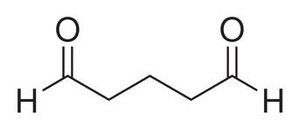
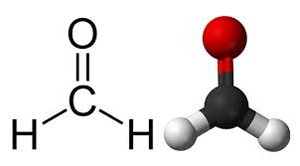
Additional info: The chemical structures above illustrate the functional groups responsible for the antimicrobial activity of aldehydes. Glutaraldehyde is especially valued for its effectiveness against a broad spectrum of microbes, including spores.
