 Back
Backunit 5 lecture 2
Study Guide - Smart Notes
 Tailored notes based on your materials, expanded with key definitions, examples, and context.
Herd Immunity and Pathogen Eradication
Herd Immunity
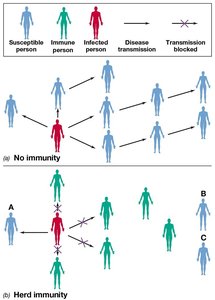
Herd immunity refers to the resistance of a population to the spread of an infectious disease when a sufficiently high proportion of individuals are immune, either through vaccination or previous infection. This concept is crucial for limiting disease transmission, especially for highly infectious diseases.
Definition: Herd immunity is achieved when enough individuals are immune to an infection, thereby indirectly protecting susceptible individuals by interrupting transmission chains.
Threshold: Typically, immunity in more than 75% of the population is required, but the exact percentage depends on the disease's infectiousness (measured by the basic reproduction number, R0).
Mechanisms: Immunity can be acquired through vaccination, natural infection, or innate resistance.
Public Health Importance: Herd immunity is a key strategy for protecting vulnerable groups who cannot be vaccinated.
Basic Reproduction Number (R0) and Herd Immunity Thresholds
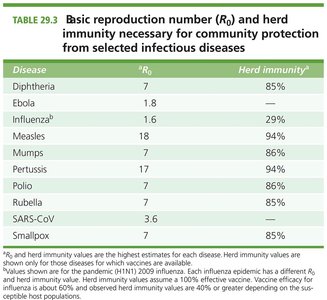
The basic reproduction number (R0) indicates the average number of secondary infections produced by one infected individual in a fully susceptible population. The higher the R0, the greater the proportion of immune individuals required to achieve herd immunity.
Disease | R0 | Herd Immunity (%) |
|---|---|---|
Diphtheria | 7 | 85% |
Ebola | 1.8 | 44% |
Influenza | 1.6 | 29% |
Measles | 18 | 94% |
Mumps | 17 | 94% |
Pertussis | 17 | 94% |
Polio | 7 | 86% |
Rubella | 7 | 85% |
SARS-CoV | 3.6 | 72% |
Smallpox | 7 | 85% |
Pathogen Eradication
Pathogen eradication is the complete elimination of a pathogen from all reservoirs, preventing new cases from occurring. This is a challenging goal, often only feasible for pathogens with human-only reservoirs.
Requirements: Elimination of all active infections and reservoirs (human, animal, environmental).
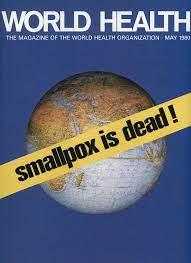
Success Story: Smallpox is the only human disease to be eradicated globally, primarily through vaccination campaigns.
Current Efforts: Ongoing eradication efforts target polio, with regional elimination of diseases like measles, rubella, and diphtheria in some countries.
Regional Elimination and Control Efforts
In the United States, several diseases have been regionally eliminated, mainly through vaccination and public health measures. However, outbreaks can still occur due to imported cases or lapses in vaccination coverage.
Examples: Yellow fever, smallpox, polio, malaria, measles, rubella, and diphtheria have been declared eliminated in the US.
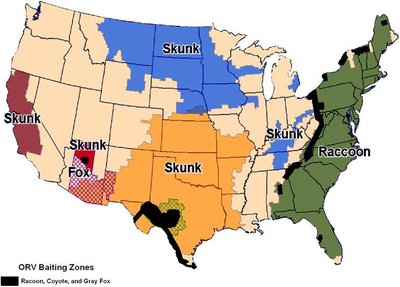
Animal Reservoirs: Control of zoonotic diseases like rabies involves vaccination of wildlife reservoirs (e.g., raccoons, skunks, foxes).
Control of Microbial Growth
Terminology of Microbial Control
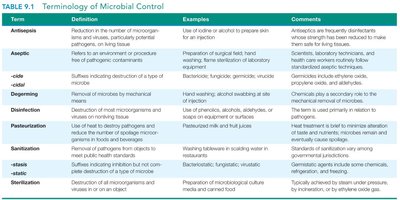
Understanding the terminology of microbial control is essential for selecting appropriate methods in clinical, laboratory, and public health settings.
Term | Definition | Examples | Comments |
|---|---|---|---|
Antisepsis | Reduction of microorganisms on living tissue | Use of iodine or alcohol on skin | Antiseptics are less toxic than disinfectants |
Aseptic | Free of pathogenic contaminants | Preparation of surgical field | Essential in surgery and laboratory |
Degerming | Removal of microbes by mechanical means | Handwashing, alcohol swabbing | Chemical plays a secondary role |
Disinfection | Destruction of most microbes on nonliving tissue | Phenolics, alcohols, aldehydes | Not effective against spores |
Pasteurization | Use of heat to destroy pathogens in food/drink | Milk, fruit juices | Does not sterilize |
Sanitization | Removal of pathogens to meet public health standards | Washing tableware | Some microbes remain |
-cide/-cidal | Destruction of a type of microbe | Bactericide, fungicide | Indicates killing action |
-stasis/-static | Inhibition of microbial metabolism/growth | Bacteriostatic, fungistatic | Indicates inhibition, not killing |
Sterilization | Destruction/removal of all microbes | Preparation of microbiological culture media | Absolute removal, including spores |
Microbial Death Rates
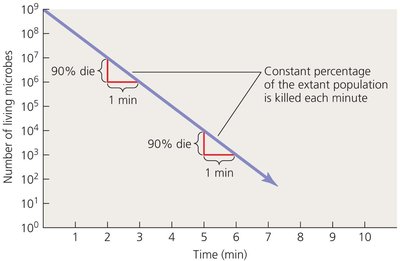
Microbial death rates describe the rate at which microorganisms are killed under specific conditions. This rate is typically constant for a given organism and method, and is used to determine the effectiveness of sterilization and disinfection procedures.
Decimal Reduction Time (D-value): The time required to kill 90% of the microbial population under specific conditions.
Application: Used to design sterilization protocols in healthcare and food industries.
Equation: Where is the number of surviving microbes at time , is the initial number, and is the decimal reduction time.
Physical Methods of Microbial Control
Heat-Based Methods
Heat is one of the most effective physical methods for controlling microbial growth. It can be applied as moist or dry heat, with moist heat being more effective due to better heat penetration and protein denaturation.
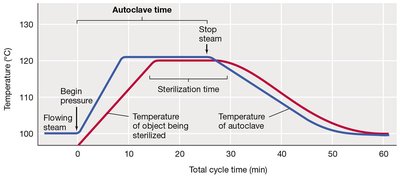
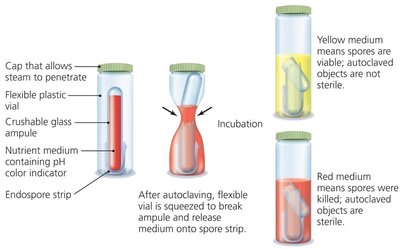
Autoclaving: Uses pressurized steam at 121°C to sterilize liquids and solids, including killing endospores.
Boiling: Effective for disinfection but not sterilization (does not kill all spores).
Dry Heat: Used for sterilizing glassware and metal instruments (e.g., hot air ovens, incineration).
Pasteurization
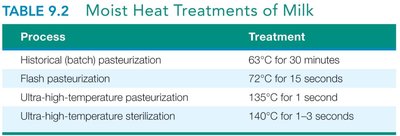
Pasteurization is a heat treatment process that reduces microbial load in perishable liquids, such as milk, without significantly affecting taste or nutritional value. It does not sterilize but makes products safer and extends shelf life.
Historical Pasteurization: 63°C for 30 minutes
Flash Pasteurization: 72°C for 15 seconds
Ultra-High Temperature (UHT): 135°C for 1 second (pasteurization) or 140°C for 1–3 seconds (sterilization)
Process | Treatment |
|---|---|
Historical (batch) pasteurization | 63°C for 30 minutes |
Flash pasteurization | 72°C for 15 seconds |
Ultra-high-temperature pasteurization | 135°C for 1 second |
Ultra-high-temperature sterilization | 140°C for 1–3 seconds |
Cold Temperatures and Desiccation
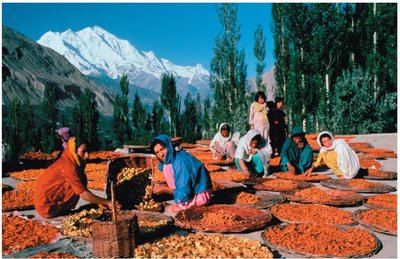
Low temperatures (refrigeration and freezing) slow or halt microbial growth by reducing metabolic rates, especially in mesophilic organisms. Desiccation (drying) removes water, inhibiting microbial metabolism and growth.
Refrigeration/Freezing: Slows growth of most pathogens; psychrophiles may still grow.
Desiccation: Used in food preservation (e.g., dried fruits, jerky); adding salt or sugar further inhibits growth by reducing water activity.
Filtration
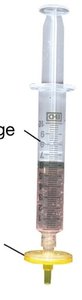
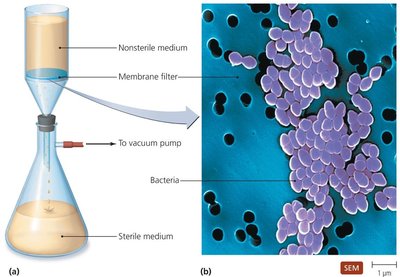
Filtration is used to physically remove microbes from heat-sensitive liquids and air. Membrane filters with defined pore sizes (e.g., 0.2 μm) trap bacteria but may allow viruses to pass through.
Applications: Sterilizing solutions containing proteins, antibiotics, or other heat-labile substances.
Mechanism: Liquid is forced through a filter by pressure or vacuum; microbes are retained on the filter surface.
Radiation
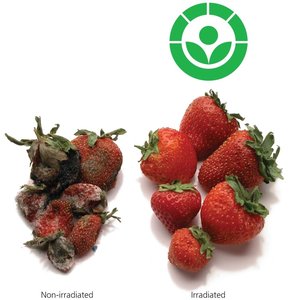
Radiation methods are used to control microbial growth on surfaces, in air, and in food products. There are two main types: ionizing and non-ionizing radiation.
Ionizing Radiation: Includes gamma rays and X-rays; causes DNA damage and is used for sterilizing medical supplies and food.
Non-Ionizing Radiation (UV): Causes DNA mutations; effective for disinfecting surfaces, air, and transparent fluids but has poor penetration.
Chemical Methods of Microbial Control
Mechanisms of Chemical Control
Chemical agents are widely used to control microbial growth on surfaces, skin, and in products. Their effectiveness depends on the agent, concentration, and target organism.
Protein Denaturation: Phenols, alcohols, halogens, heavy metals, and aldehydes disrupt protein structure and function.
Membrane Disruption: Phenols and alcohols damage cell membranes, leading to cell lysis.
Surfactants: Soaps and detergents reduce surface tension, aiding in mechanical removal of microbes.
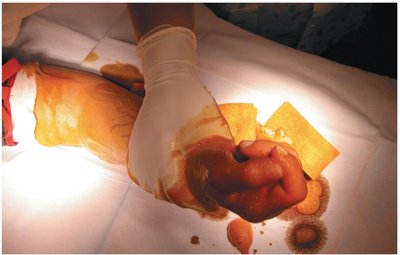
Gaseous Agents: Ethylene oxide is used to sterilize heat-sensitive equipment by penetrating materials and killing all microbes, including spores.
Food Preservation Strategies
Minimizing Microbial Growth in Food Storage
Food preservation relies on physical and chemical methods to inhibit microbial growth and extend shelf life.
Desiccation: Drying foods (e.g., fruits, meats) removes water, preventing microbial metabolism.
Use of Preservatives: Addition of salt, sugar, or chemical preservatives (e.g., sodium nitrite, potassium sorbate) inhibits microbial growth by reducing water activity or interfering with microbial metabolism.
Summary Table: Physical and Chemical Methods of Microbial Control
Method | Mechanism | Example/Application |
|---|---|---|
Heat (Autoclaving, Pasteurization) | Protein denaturation, membrane disruption | Sterilizing lab media, pasteurizing milk |
Cold (Refrigeration, Freezing) | Slows metabolism | Food storage |
Desiccation | Removes water, halts metabolism | Dried fruits, jerky |
Filtration | Physical removal | Sterilizing heat-sensitive solutions |
Radiation (Ionizing, UV) | DNA damage | Sterilizing food, surfaces |
Chemicals (Alcohols, Halogens, etc.) | Protein denaturation, membrane disruption | Disinfectants, antiseptics |
