 Back
BackControlling Microbial Growth: Physical and Chemical Methods
Study Guide - Smart Notes
 Tailored notes based on your materials, expanded with key definitions, examples, and context.
Controlling Microbial Growth
Key Terminology in Microbial Control
Understanding the terminology related to microbial control is essential for effective application in laboratory and clinical settings.
Decontamination: The removal or reduction of microbial populations to render an object safe for handling.
Sterilization: The complete elimination of all bacteria, viruses, and endospores. Required for drugs, medical instruments, and laboratory media.
Disinfection: The reduction of microbial numbers, typically used for surfaces, cosmetics, foods, and external medical equipment.
Microbiostatic: Agents or processes that inhibit microbial growth without killing the organisms.
Microbiocidal: Agents or processes that kill microbes.
Disinfectant: Chemical used to treat inanimate objects.
Antiseptic: Chemical applied to living tissue to reduce microbial load.
Physical Methods to Control Microbial Growth
Temperature-Based Controls
Temperature changes are among the most common physical methods for controlling microbial growth, utilizing both heat and cold.
Refrigeration and Freezing: Slow microbial growth, preserving food and clinical samples.
Heat Treatments: Used for sterilization or decontamination. Most microbes are sensitive to heat.
Decimal Reduction Time (D value): The time in minutes required to kill 90% of a microbial population at a specific temperature. Associated with disinfection.
Thermal Death Time: The shortest period at a given temperature needed to kill all microbes in a sample.
Thermal Death Point: The minimum temperature required to kill all microbes in a sample within 10 minutes.
Autoclaving
The autoclave is a machine that applies steam heat and pressure to sterilize microbiological media and medical/lab equipment. Standard settings (15 psi, 121°C) achieve sterility within 20 minutes.
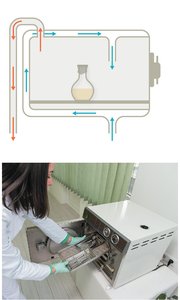
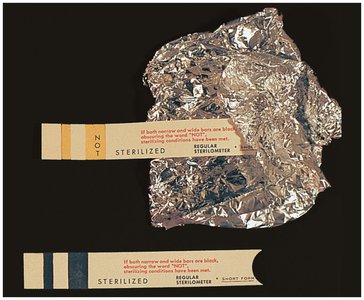
Autoclave Sterilization Indicators: Used to confirm that sterilization conditions have been met.
Boiling
Boiling water for 5 minutes eliminates most pathogenic bacteria, protozoans, and viruses, but is not effective against endospores.
Pasteurization
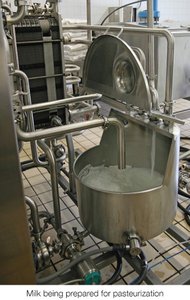
Pasteurization uses moderate heat (below boiling) to eliminate pathogens such as Listeria, Salmonella, and E. coli O157:H7, and to reduce spoilage microbes in milk and other liquids.
Dry Heat
Dry heat methods include incineration and hot-air ovens. Examples include flaming inoculating loops and incinerating waste. Sterilization can be achieved by holding objects at 170°C for 2 hours in a dry heat oven.
Radiation
Radiation methods use high-energy waves to disinfect or sterilize, depending on the protocol.
Ionizing Radiation: (Gamma rays, X-rays) Generate reactive ions that kill microbes and inactivate viruses by damaging nucleic acids. Useful for sterilizing food, pharmaceuticals, and heat-sensitive medical supplies.
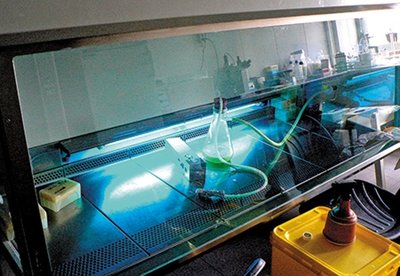
Nonionizing Radiation: (Ultraviolet, UV) Causes thymine dimers in DNA, leading to mutations. Used to disinfect air, water, and surfaces in healthcare and laboratory settings.
Filtration
Filtration physically removes microbes from air or liquids using filters with defined pore sizes.
HEPA Filters: Remove 99.97% of airborne particles ≥0.3 μm, used in air purification but do not sterilize air.
Membrane Filters: Used to sterilize liquids; pore sizes can remove bacteria, protists, and even viruses.
LifeStraws: Portable water filters that remove pathogens from drinking water.
Chemical Methods to Control Microbial Growth
Germicides: Types and Applications
Chemical agents used to control microbial growth are called germicides. They are classified by their ability to kill (microbiocidal) or inhibit (microbiostatic) microbes, and by their application (disinfectant for inanimate objects, antiseptic for living tissue).
Germicide Levels
Low-level: Destroy some bacteria, fungi, and viruses, but not endospores or Mycobacterium tuberculosis.
Intermediate-level: Destroy all bacteria (including M. tuberculosis), fungi, and viruses, but not endospores.
High-level: Destroy all microbes and endospores.
Medical Equipment Classification
Critical Equipment: Contacts sterile body sites or vascular system; must be sterilized.
Semicritical Equipment: Contacts mucous membranes or non-intact skin; should be free of bacteria, fungi, and viruses, with low numbers of endospores.
Noncritical Equipment: Contacts intact skin; requires less stringent disinfection.
Major Classes of Germicides
Level | Germicide | Mode of Action | Pros/Cons |
|---|---|---|---|
Low | Detergents | Target lipid membranes | Cheap, low toxicity, pleasant scent; activity decreased in hard water, easily contaminated by Pseudomonas |
Intermediate | Alcohols (isopropanol, ethanol) | Target proteins and lipid membranes | Cheap, easily applied; flammable, can react with plastics |
Intermediate | Phenols | Target proteins and lipid membranes | Effective in hard water; residue, irritant, harsh, medicinal scent |
High | Aldehydes (formaldehyde, glutaraldehyde) | Target proteins, nucleic acids | Achieve sterility; toxic, irritant, residue |
High | Halogens (chlorine, iodine) | Oxidize proteins, nucleic acids | Sterilants at high concentrations; inactivated by organic material, corrosive |
High | Peroxygens (hydrogen peroxide, peracetic acid) | Oxidize proteins, nucleic acids | Effective sterilization; inactivated by organic matter, corrosive |
High | Ethylene oxide | Target proteins, nucleic acids | For heat/moisture-sensitive items; toxic, flammable |
- Alcohols (ethanol, isopropanol) are intermediate-level disinfectants that denature proteins and disrupt lipid membranes. Optimal concentration is 60–90%. Used for disinfecting small equipment.
- Aldehydes (formaldehyde, glutaraldehyde) are high- or intermediate-level disinfectants that react with proteins and nucleic acids. Used for sterilizing surgical instruments and medical equipment.
- Phenols and Bisphenols are intermediate-level germicides that destroy cell walls and interact with proteins. Used in disinfectants (e.g., Lysol) and personal hygiene products. Bisphenols (e.g., triclosan) disrupt plasma membranes and are found in some soaps and toothpaste.
- Halogens (chlorine, iodine) oxidize cell components. Chlorine bleach is widely used for disinfecting surfaces and water. Iodine is used as an antiseptic.
- Peroxygens (hydrogen peroxide, peracetic acid) are high-level germicides with strong oxidizing properties. Used as antiseptics and disinfectants.
- Ethylene Oxide is a gaseous sterilant that damages proteins and nucleic acids. Used for temperature- and moisture-sensitive materials, including electronic and plastic medical devices.
- Detergents are amphipathic molecules that remove water-soluble and insoluble substances. Anionic detergents (e.g., soaps) and cationic detergents (e.g., quaternary ammonium compounds) are used for cleaning and disinfection.
Effectiveness of Antiseptics
This graph compares the effectiveness of various antiseptics in reducing bacterial populations over time.
Factors Affecting Germicide Selection
Intended use of the item
Germicide reactivity and concentration
Treatment time
Type of infectious agent
Presence of organic/inorganic matter
Residue impact on equipment
Toxicity
Special Considerations for Microbial Control
Mycobacterium Control
Mycobacterium species (e.g., tuberculosis, leprosy) have waxy cell walls and are spread by airborne droplets. Control focuses on reducing airborne particles.
Endospore Control
Endospores are highly resistant dormant structures. Autoclaving is the most effective method for their elimination; other methods include hydrogen peroxide vapor and sporicides.
Viral Control
Enveloped viruses are sensitive to heat, drying, and detergents, while naked viruses are inactivated by chlorine-based agents.
Protozoan Control
Protozoan life stages may resist certain controls. Treatments include filtration, carbon dioxide, UV, and ozone.
Prion Control
Prions are infectious proteins that withstand autoclaving and chemical sterilization. Elimination requires a combination of chemical treatments and increased temperature and pressure during autoclaving.
