 Back
Controlling Microbial Growth: Physical and Chemical Methods
Study Guide - Smart Notes
 Tailored notes based on your materials, expanded with key definitions, examples, and context.
Controlling Microbial Growth
Growth Control Terminology
Understanding the terminology used in microbial growth control is essential for microbiology students. These terms describe the various methods and levels of microbial elimination or inhibition.
Sterilization: The complete destruction or removal of all microorganisms, including endospores and prions, from an object or environment.
Aseptic: Practices that prevent contamination of sterile environments or objects.
Disinfection/Disinfectants: The elimination of most or all pathogenic microorganisms (except endospores) on inanimate objects.
Antisepsis/Antiseptic: The reduction of microbial numbers on living tissue.
Degerming: The mechanical removal of microbes from a surface, such as skin, by scrubbing.
Sanitization: Reduction of microbial population to safe levels as determined by public health standards.
Pasteurization: Use of heat to kill pathogens and reduce spoilage organisms in foods and beverages.
Suffix –stasis/-static: Indicates inhibition of microbial growth (e.g., bacteriostatic).
Suffix –cide/-cidal: Indicates killing of microbes (e.g., bactericidal).
Microbial Death Rates
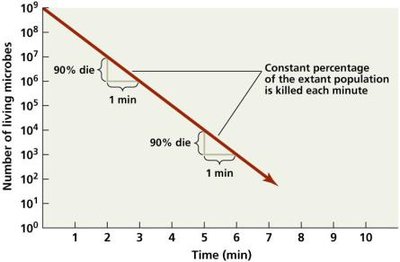
Microbial agents kill a constant percentage of cells over time, rather than simultaneously killing all cells. This concept is important for understanding the effectiveness of sterilization and disinfection processes.
Death Rate: The rate at which microbes are killed is usually exponential, meaning a constant percentage is killed per unit time.
Decimal Reduction Time (D-value): The time required to kill 90% of the microbial population under specific conditions.
Selection and Effectiveness of Antimicrobial Agents
The ideal antimicrobial agent is inexpensive, fast-acting, stable during storage, broad-spectrum, and harmless to humans, animals, and objects. Effectiveness depends on the nature of the site to be treated, susceptibility and number of microbes, and environmental conditions during application.
Site to be Treated: Harsh chemicals and extreme heat cannot be used on humans, animals, and fragile objects. The method and level of control must be based on the intended use or medical procedure.
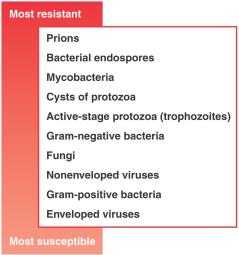
Susceptibility of Microorganisms: Microbes vary in their resistance to antimicrobial agents. High-level germicides kill all pathogens, including endospores; intermediate-level germicides kill fungal spores, protozoan cysts, viruses, and pathogenic bacteria; low-level germicides kill vegetative bacteria, fungi, protozoa, and some viruses.
Environmental Conditions: Factors such as temperature, pH, and presence of organic matter can affect the efficacy of antimicrobial agents.
Mode of Action: Antimicrobial Agents
Antimicrobial agents act by damaging the cell wall, cell membrane, proteins, or nucleic acids of microorganisms.
Cell Wall Damage: Weakens cell rigidity, leading to cell lysis due to osmotic effects.
Cell Membrane Damage: Disrupts control of molecule passage, loss of proton gradient, and ATP production.
Protein Damage: Causes misfolding or denaturation, inhibiting essential metabolic processes.
Nucleic Acid Damage: Alters DNA/RNA, inhibiting replication and protein synthesis.
Evaluating Disinfectants and Antiseptics
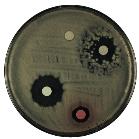
Diffusion susceptibility tests are used to evaluate the effectiveness of disinfectants and antiseptics. Swabs are taken before and after application, inoculated into growth medium, and monitored for microbial growth.
Zone of Inhibition: The area around a disk impregnated with an antimicrobial agent where microbial growth is prevented.
Physical Methods of Microbial Control
Heat-Related Methods
Heat is a common method for controlling microbial growth. It denatures proteins, disrupts cell walls and membranes, and affects nucleic acids.
Moist Heat Sterilization: More effective than dry heat; autoclaving uses pressure and steam (121°C, 15 psi) for sterilization of media and lab equipment.
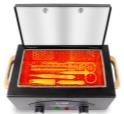
Dry Heat Sterilization: Requires higher temperatures (≥180°C for 2 hours); suitable for metal and glass instruments but not for plastics or rubber.
Boiling: Kills vegetative cells but not endospores or some viruses.
Pasteurization: Reduces pathogens in food and beverages; not sterilization. Methods include batch (30 min at 63°C), flash (15 sec at 72°C), and ultrahigh-temperature (1 sec at 134°C).
Incineration
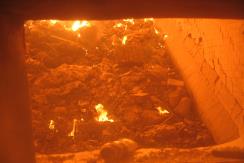
Incineration is the ultimate means of sterilization, destroying all forms of microbial life, including prions.
Refrigeration and Freezing
Both methods inhibit microbial growth by decreasing metabolism and reproduction rates. Refrigeration is a -static process, while freezing can be -cidal due to ice crystal formation.
Refrigeration: Slows down enzymatic activity and microbial growth.
Freezing: Can cause cell lysis upon thawing; effectiveness depends on cooling speed and presence of cryoprotectants.

Lyophilization and Desiccation
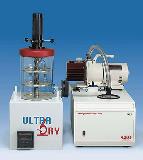
Lyophilization (freeze-drying) removes water at cold temperatures, preventing ice crystal formation and preserving microbial cultures. Desiccation inhibits growth by removing water, creating a hypertonic environment.
Lyophilization: Used for long-term preservation of microbes.
Desiccation: Only a -static process; tough cell walls and capsules can preserve cell structure.
Filtration
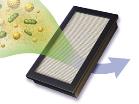
Filtration is used to sterilize heat-sensitive fluids and air. Filters trap microbes based on pore size.
Pore Size (μm) | Smallest Microbes Trapped |
|---|---|
5 | Multicellular algae, animals, fungi |
3 | Yeasts, larger unicellular algae |
1.2 | Protozoa, small unicellular algae |
0.45 | Largest bacteria |
0.22 | Largest viruses, most bacteria |
0.025 | Larger viruses, pliable bacteria |
0.01 | Smallest viruses |
Radiation
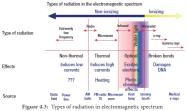
Radiation is used to sterilize heat-sensitive materials. It is classified as ionizing (electron beams, gamma rays, X-rays) or nonionizing (UV light).
Ionizing Radiation: Creates ions that disrupt DNA and proteins.
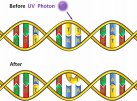
Nonionizing Radiation: Causes thymine dimers in DNA, suitable for disinfecting air and surfaces.
Chemical Methods of Microbial Control
Major Categories of Chemical Agents
Chemical agents are more effective against enveloped viruses and vegetative cells. Their effect varies with temperature, pH, exposure time, organic matter, concentration, and age.
Phenols and Phenolics: Denature proteins and disrupt cell membranes; effective in presence of organic matter.
Alcohols: Denature proteins and disrupt membranes; evaporate rapidly; used for skin antisepsis.
Halogens: Damage enzymes by denaturation; include chlorine, iodine, bromine, and fluorine.
Heavy Metals: Denature proteins; include silver, mercury, copper.
Surfactants: Reduce surface tension; include soaps and detergents.
Oxidizing Agents: Kill by oxidation; include hydrogen peroxide, ozone, peracetic acid.
Aldehydes: Cross-link functional groups to denature proteins and inactivate nucleic acids.
Gaseous Agents: Denature proteins and DNA; used in closed chambers.
Enzymes: Act against microorganisms; lysozyme digests peptidoglycan.
Antimicrobics: Include antibiotics, semisynthetic, and synthetic chemicals.
Phenols and Phenolics
Phenols and phenolics are commonly used in healthcare settings, labs, and homes. They denature proteins and disrupt cell membranes, remaining active for prolonged periods.
Alcohols
Alcohols are effective at denaturing proteins and disrupting cell membranes. They are used for skin antisepsis but are not effective against fungal spores or bacterial endospores.
Halogens
Halogens are diverse and broadly applied. They damage enzymes and are used in water treatment, surgical scrubs, and disinfection.
Heavy Metals
Heavy metals denature proteins and are used in specific applications such as preventing blindness (silver nitrate) and controlling algal growth (copper).
Surfactants
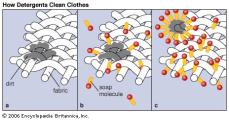
Surfactants, including soaps and detergents, reduce surface tension and aid in degerming. Detergents disrupt cellular membranes and are ideal for medical and industrial applications.
Oxidizing Agents
Oxidizing agents kill microbes by oxidation of enzymes and membrane lipids. Hydrogen peroxide, ozone, and peracetic acid are common examples.

Aldehydes
Aldehydes cross-link functional groups to denature proteins and inactivate nucleic acids. They are used for embalming, disinfecting rooms, and sterilizing instruments.

Gaseous Agents
Gaseous agents such as ethylene oxide denature proteins and DNA. They are used in closed chambers for sterilization but can be hazardous.
Enzymes
Enzymes such as lysozyme digest bacterial cell walls and are used to control microbes in food and medical environments.
Antimicrobial Agents
Antimicrobial agents, including antibiotics, are used for disease treatment and microbial control. Selective toxicity is a key feature, targeting structures or enzymes unique to microorganisms.
Cell Wall Synthesis: Penicillins, cephalosporins, bacitracin
Protein Synthesis: Erythromycin, tetracycline, streptomycin
Membrane Structure: Polymyxins
Nucleic Acid Synthesis: Rifampicin, novobiocin, quinolones
Other Metabolic Pathways: Trimethoprim, sulfanilamide
Example: Salvarsan (arsphenamine) was the first synthetic antimicrobial agent, used to treat Treponema pallidum (syphilis).
