 Back
BackDigestive System Infections: Microbiology Study Notes
Study Guide - Smart Notes
 Tailored notes based on your materials, expanded with key definitions, examples, and context.
Digestive System Infections
Overview
Infections of the digestive system are caused by a variety of bacteria, viruses, and protozoa. These infections can affect both the upper and lower digestive tract, leading to a range of symptoms from mild discomfort to severe, life-threatening disease. Understanding the causative agents, mechanisms of pathogenesis, and methods of prevention and treatment is essential for microbiology students.
Bacterial Diseases of the Upper Digestive System
Dental Caries (Tooth Decay)
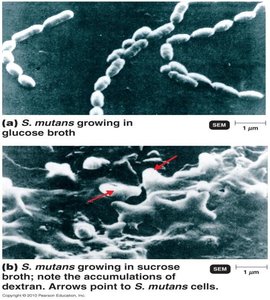
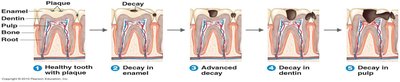
Dental caries, commonly known as cavities, are among the most prevalent bacterial infections affecting the teeth. The primary causative agent is Streptococcus mutans, which utilizes dietary sugars to produce a sticky slime layer, allowing adherence to tooth surfaces. The bacteria perform lactic acid fermentation, producing acid that degrades tooth enamel.
Key Points:
Etiology: Mainly caused by Streptococcus mutans.
Pathogenesis: Acid production from sugar fermentation degrades enamel.
Prevention: Brushing, flossing, and fluoride treatment (which strengthens enamel).
Periodontal Disease
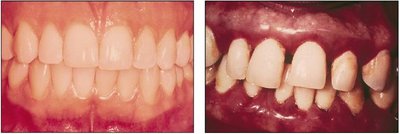
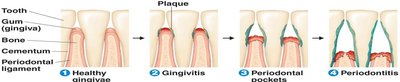
Periodontal disease encompasses gum disease and gingivitis, resulting from bacterial enzymes that degrade gum tissue and cause inflammation. Gingivitis is characterized by gum inflammation and bleeding. Advanced cases may require antibiotics and surgery.
Key Points:
Etiology: Mixed bacterial infection.
Symptoms: Gum inflammation, bleeding, and tissue degradation.
Prevention: Good oral hygiene (brushing and flossing).
Treatment: Antibiotics and surgery in severe cases.
Gastritis
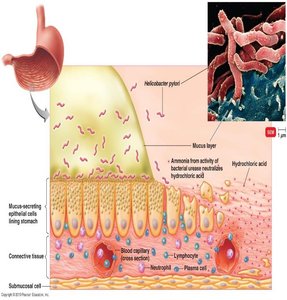
Gastritis is inflammation of the stomach lining, most commonly caused by Helicobacter pylori. This bacterium produces ammonia to neutralize stomach acid and degrades the protective mucous lining, allowing acid to damage the stomach wall.
Key Points:
Etiology: Helicobacter pylori.
Pathogenesis: Ammonia production, mucous degradation, tissue damage.
Treatment: Antibiotics and acid-inhibiting drugs.
Viral Diseases of the Upper Digestive System
Oral Herpes Simplex
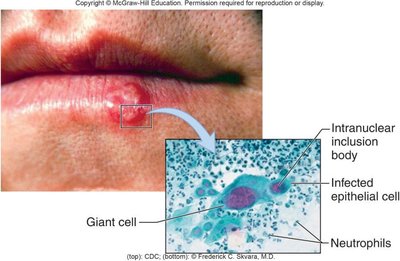
Oral herpes simplex is caused by Herpes Simplex Virus type I (HSV-1). It establishes a latent infection, with many cases being asymptomatic. Recurrent cold sores are common, and the virus can infect other body parts, such as the fingers (herpetic whitlow).
Key Points:
Etiology: Herpes Simplex Virus-I (HSV-1).
Symptoms: Cold sores, latent infection, possible spread to other sites.
Treatment: Topical acyclovir (effective on active lesions only).
Mumps
Mumps is a viral infection transmitted by droplets, causing fever, loss of appetite, headache, and swelling of the salivary glands. It is generally mild in children but can cause severe complications in adults, including sterility and, rarely, meningitis or death.
Key Points:
Etiology: Mumps virus.
Symptoms: Swollen salivary glands, fever, headache; severe complications in adults.
Prevention: Live attenuated vaccine (MMRV).
Bacterial Diseases of the Lower Digestive System
General Features
Infections of the lower digestive system often cause gastroenteritis (inflammation of the stomach and intestines), with symptoms such as abdominal cramps, nausea, vomiting, and diarrhea. Dysentery is a severe form with blood and mucus in the stool. Intoxication results from ingestion of preformed toxins, while foodborne illness involves ingestion of bacteria that multiply in the gut.
Cholera
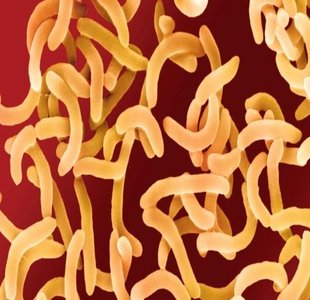
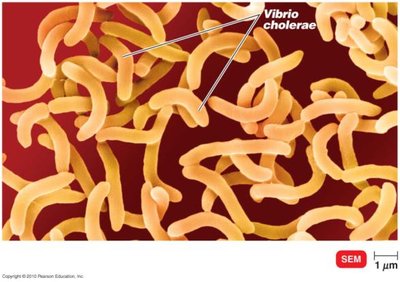
Cholera is caused by Vibrio cholerae, which produces a potent enterotoxin that induces massive secretion of electrolytes and water into the intestine, leading to severe dehydration and potentially death if untreated.
Key Points:
Etiology: Vibrio cholerae.
Pathogenesis: Cholera toxin causes water loss (up to 20 liters/day).
Treatment: Rehydration therapy; prevention via clean water and sanitation.
Shigellosis
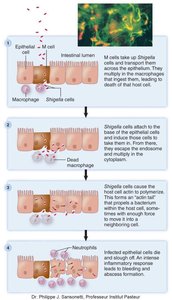
Shigellosis is caused by Shigella species, closely related to E. coli. The bacteria invade intestinal epithelial cells, causing inflammation and dysentery. Some strains produce Shiga toxin, which can lead to hemolytic uremic syndrome.
Key Points:
Etiology: Shigella genus.
Pathogenesis: Invasion of epithelial cells, Shiga toxin production.
Treatment: Antibiotics and rehydration therapy.
Prevention: Proper sanitation.
E. coli Gastroenteritis
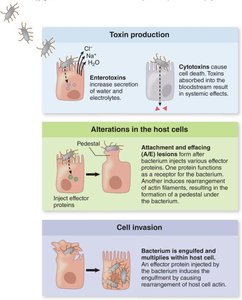
Escherichia coli is a common gut bacterium, but certain strains possess virulence factors that cause disease. Enterotoxigenic E. coli (ETEC) produces a cholera-like toxin, while enterohemorrhagic E. coli (EHEC), including O157:H7, produces Shiga toxins that can cause severe bloody diarrhea and kidney damage.
Key Points:
ETEC: Causes watery diarrhea; self-limiting.
EHEC: Causes bloody diarrhea, hemolytic uremic syndrome; antibiotic resistance is a concern.
Treatment: Rehydration therapy; antibiotics for severe cases.
Salmonellosis and Typhoid Fever
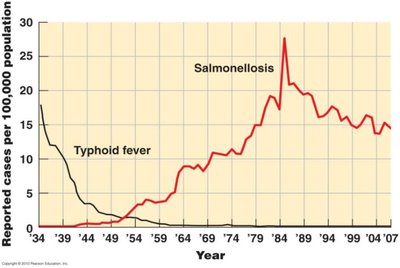
Salmonellosis is caused by non-typhoidal Salmonella species, typically transmitted via contaminated food. Typhoid fever, caused by Salmonella typhi, is more severe and can lead to systemic infection and organ failure.
Key Points:
Salmonellosis: Symptoms include fever, nausea, abdominal pain, and diarrhea; treated with rehydration therapy.
Typhoid fever: More virulent; treated with bacteriostatic antibiotics.
Clostridium difficile Infection
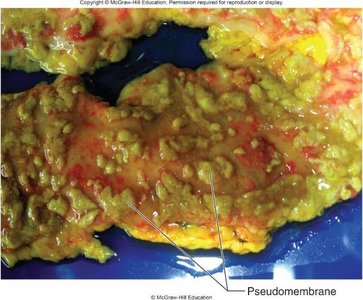
Clostridium difficile is highly resistant to antibiotics and can colonize the large intestine when normal microbiota are disturbed, often after antibiotic use. It causes antibiotic-associated diarrhea and may lead to pseudomembranous colitis.
Key Points:
Pathogenesis: Overgrowth after microbiota disruption; toxin production.
Treatment: Antibiotics, probiotics, and fecal transplants.
Viral Diseases of the Lower Digestive System
Viral Gastroenteritis
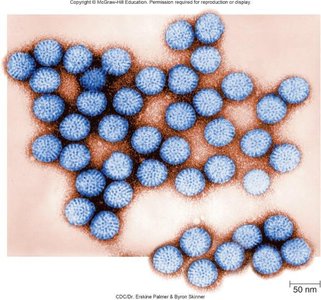
Viral gastroenteritis is caused by enteroviruses such as rotavirus and Norwalk virus. It is characterized by diarrhea, vomiting, and low fever, and is highly contagious via the fecal-oral route.
Key Points:
Etiology: Rotavirus, Norwalk virus.
Symptoms: Diarrhea, vomiting, low fever.
Treatment: Rehydration therapy; prevention by hand washing and vaccination (for some viruses).
Viral Diseases of the Liver
Hepatitis
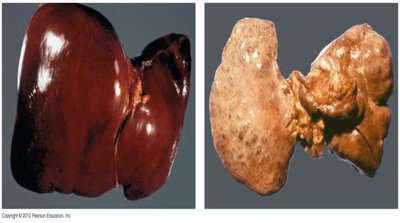
Hepatitis refers to inflammation of the liver caused by several unrelated viruses: Hepatitis A, B, and C. Each has distinct modes of transmission, clinical courses, and prevention strategies.
Hepatitis A: Fecal-oral transmission; acute, self-limiting; vaccine available.
Hepatitis B: Blood and bodily fluids; can become chronic; subunit vaccine available; may lead to cirrhosis and liver cancer.
Hepatitis C: Bloodborne (often via contaminated needles); chronic infection; no vaccine; can be cured with antiviral therapy.

Protozoan Diseases of the Digestive System
Giardiasis
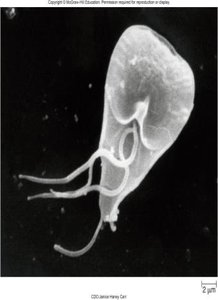
Giardiasis, also known as "beaver fever," is caused by Giardia lamblia and is transmitted by drinking water contaminated with animal feces. Symptoms include indigestion, nausea, flatulence, and explosive diarrhea.
Treatment: Metronidazole.
Cryptosporidiosis
Cryptosporidiosis is caused by Cryptosporidium and is transmitted via improperly treated drinking water. The organism is resistant to chlorine but can be removed by ozone or UV treatment. It can be fatal in immunocompromised patients.
Symptoms: Fever, nausea, abdominal cramps, watery diarrhea.
Additional info: These notes cover the main bacterial, viral, and protozoan infections of the digestive system, their pathogenesis, clinical features, and prevention/treatment strategies, as relevant to a college-level microbiology course.
