 Back
BackDigestive System Infections: Microbiology Study Notes
Study Guide - Smart Notes
 Tailored notes based on your materials, expanded with key definitions, examples, and context.
Digestive System Infections
Overview of the Digestive System
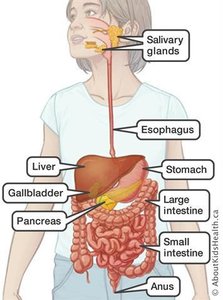
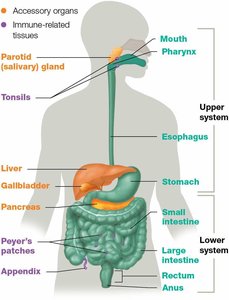
The digestive system is responsible for breaking down food into small molecules that can be absorbed and utilized by the body. It consists of the gastrointestinal (GI) tract and accessory organs, and is a major entry and exit portal for pathogens. The GI tract is divided into the upper and lower systems, and contains a significant portion of the body's immune system.
GI Tract: Extends from the mouth to the anus, facilitating transportation, digestion, and absorption of nutrients.
Accessory Organs: Include the liver, gallbladder, and pancreas, which play essential roles in digestion.
Mucosa-Associated Lymphatic Tissues (MALT): Immune tissues in the GI tract, especially the small intestine, are critical for defense against infection.
Upper and Lower GI Tract
The GI tract is anatomically and functionally divided into upper and lower sections, each with distinct roles and associated organs.
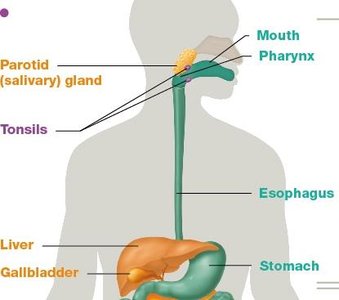
Upper GI Tract: Includes the mouth, pharynx, esophagus, stomach, and accessory organs such as the parotid (salivary) glands and liver. The stomach's acidic environment limits microbial growth, and bile from the liver inhibits many bacteria.
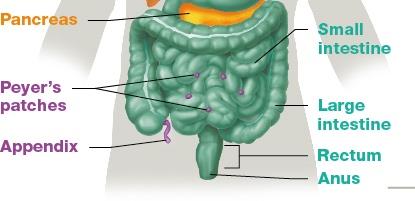
Lower GI Tract: Comprises the small and large intestines, rectum, and anus. The small intestine is the main site for chemical digestion and nutrient absorption, while the large intestine absorbs water and vitamins, and compacts waste for excretion.
Barriers to Digestive System Infections
The GI tract has several barriers that limit pathogen colonization and infection:
Protective Mucus: Acts as a physical barrier preventing microbial attachment.
Enzymatic and Chemical Defenses: Salivary enzymes (e.g., lysozyme), digestive enzymes, gastric acidity, and bile salts (especially effective against Gram-positive bacteria) inactivate or kill microbes.
Immune Defenses: MALT samples the GI environment and initiates immune responses if pathogens are detected.
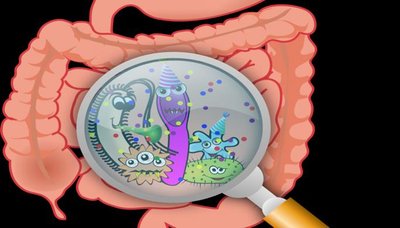
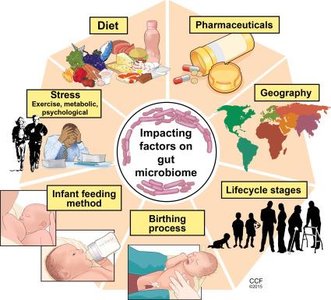
Normal Microbiota: The gut microbiome is highly diverse and dense, playing a significant role in health and disease.
Roles of the Digestive System Microbiome
The GI microbiome is essential for maintaining health and preventing disease:
Protection Against Pathogens: Competes for surfaces and nutrients, and produces antimicrobial substances.
Maintains Mucosal Barrier: Supports the structure and function of the GI lining.
Assists Digestion: Metabolizes nutrients, synthesizes vitamins, and produces antioxidants.
Modulates Immunity and Health: Influences immune development, metabolism, and is linked to various diseases (e.g., diabetes, allergies, cancer, depression, inflammatory conditions).
Digestive System Infections
Transmission and Epidemiology
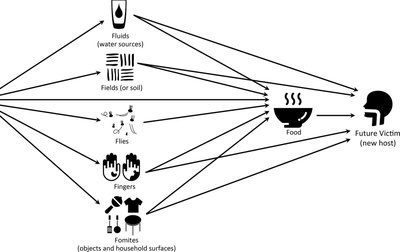
Most intestinal pathogens are transmitted via the fecal–oral route, primarily through ingestion of contaminated food or water. Effective hand hygiene, sanitation, and food safety practices are critical for prevention.
8 Fs of Fecal–Oral Transmission: Feces, Fluids, Fields, Flies, Fingers, Fomites, Food, Folks.

Signs and Symptoms of GI Tract Infections
Symptoms of digestive system infections can range from mild to severe:
Mild: Abdominal pain, fever, vomiting, diarrhea, gastritis, enteritis, gastroenteritis.
Severe: Dehydration, dysentery (bloody/mucous diarrhea), hypovolemic shock (life-threatening low blood volume).
Diagnostic Tools
Diagnosis of GI infections may involve:
Fecal sample analysis (culture, molecular/immunodetection, microscopy for parasites/eggs).
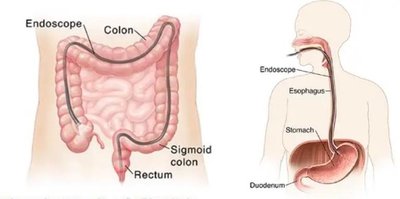
Endoscopy (upper or lower) to observe tissue damage, though specific pathogen identification requires biopsy or culture.
Viral Digestive System Infections
Mumps Virus
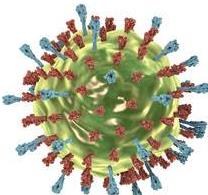
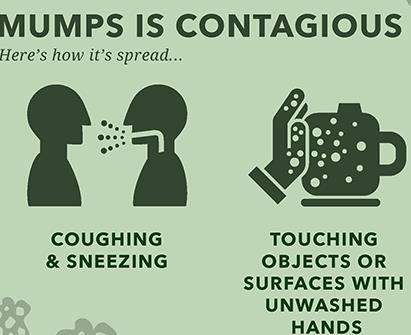
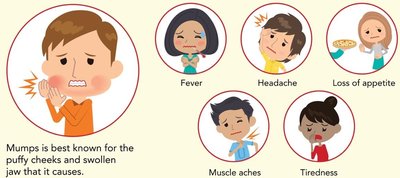
Mumps is a highly contagious viral infection affecting the parotid (salivary) glands. It is transmitted via respiratory droplets and saliva, and can cause swelling of the salivary glands, fever, headache, and fatigue. Up to 40% of infections are asymptomatic but still contagious.
Complications: Hearing loss, encephalitis, meningitis, pancreatitis, oophoritis, orchitis.
Treatment: Supportive care only.
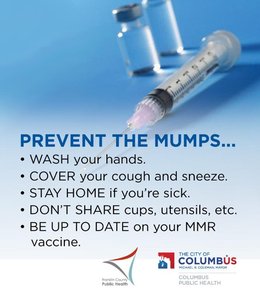
Prevention: MMR vaccine (Measles, Mumps, Rubella).
Viral Gastroenteritis (Rotavirus & Norovirus)
Viral gastroenteritis is an inflammation of the GI tract lining, commonly caused by rotavirus (mainly in children) and norovirus (all ages). Transmission is highly contagious via fecal-oral or oral-oral routes, and outbreaks are common in close-contact settings.
Symptoms: Acute onset of watery diarrhea, nausea, vomiting, abdominal cramps, fever, and malaise. Dehydration is the most serious complication.
Treatment: Supportive care with oral rehydration; severe cases may require IV fluids.
Prevention: Hand hygiene, surface disinfection, safe food/water practices, and rotavirus vaccination for infants.
Viral Hepatitis (A-E)
Hepatitis refers to inflammation of the liver, most commonly caused by five unrelated viruses (HAV, HBV, HCV, HDV, HEV). Transmission routes and disease progression vary by virus.
HAV & HEV: Fecal-oral transmission, usually acute, preventable by HAV vaccine (no US vaccine for HEV).
HBV & HCV: Bloodborne, can cause acute and chronic infections, leading to cirrhosis, liver cancer, and liver failure. HBV is vaccine-preventable; HCV is curable with antivirals but has no vaccine.
HDV: Requires HBV co-infection; more severe disease; prevented by HBV vaccination.
Bacterial Digestive System Infections
Helicobacter pylori
Helicobacter pylori is a curved, Gram-negative bacterium that colonizes the stomach mucosa. It is associated with gastritis, peptic ulcers, and stomach cancer. Transmission is oral-oral or fecal-oral, and infection is often lifelong unless treated.
Virulence Factors: Urease (acid neutralization), flagella (motility), adhesins (colonization), exotoxins (VacA, CagA).
Diagnosis: Breath, stool, or blood tests; endoscopy with biopsy for confirmation.
Treatment: Antibiotics plus proton pump inhibitors.
Prevention: Complete therapy, hand hygiene, safe food handling.
Foodborne Infections vs. Food Poisoning
Feature | Foodborne Infection | Food Poisoning |
|---|---|---|
Description | Pathogen establishes infection after ingestion | Illness caused by ingested toxin; no infection |
Common Agents | E. coli, Salmonella, Campylobacter, Shigella, Listeria | Toxins from Staphylococcus aureus, Bacillus cereus, Clostridium perfringens |
Symptom Onset | 1–5 days or longer | 30 min – 6 hours |
Symptoms | Fever, headache, muscle aches, nausea, diarrhea, abdominal pain | Nausea, vomiting, sometimes diarrhea and abdominal pain |
Recovery | Days to weeks | Usually within 24 hours |
Escherichia coli (E. coli)
E. coli is a Gram-negative, motile rod that is part of the normal gut microbiota but includes pathogenic strains. Transmission is mainly fecal-oral. Pathogenic strains can cause gastroenteritis, urinary tract infections, and more.
E. coli O157:H7: Shiga toxin-producing strain causing severe diarrhea, dysentery, and hemolytic uremic syndrome (HUS). Transmission via contaminated food (especially beef, produce), low infectious dose, and person-to-person spread.
Treatment: Supportive care; antibiotics and antidiarrheals are contraindicated due to risk of HUS.
Prevention: Hand hygiene, avoid undercooked beef, consume only pasteurized products, wash produce.
Salmonella enterica
Salmonella enterica is a Gram-negative, flagellated rod with many serovars. It is the most common cause of food poisoning in the US, often associated with poultry, eggs, and reptiles.
Transmission: Ingestion of contaminated food (especially poultry, eggs), contact with animal feces.
Symptoms: Fever, abdominal cramps, diarrhea, nausea, vomiting; may progress to dysentery.
Treatment: Supportive care; antibiotics for severe cases (if E. coli O157:H7 ruled out).
Prevention: Hand hygiene, proper food handling, thorough cooking, avoid cross-contamination.
Vibrio cholerae
Vibrio cholerae is a comma-shaped, Gram-negative bacterium producing cholera toxin. It causes cholera, a severe diarrheal disease transmitted via contaminated water or food, especially in areas with poor sanitation.
Symptoms: Profuse watery diarrhea ("rice water stools"), rapid dehydration, hypovolemic shock.
Treatment: Oral rehydration solution, IV fluids for severe cases, antibiotics as adjunct.
Prevention: Safe water, sanitation, vaccination (Vaxchora), food safety.
Clostridioides difficile (C. diff)
Clostridioides difficile is a spore-forming, anaerobic, Gram-positive rod. It is a major cause of healthcare-associated infections, often following antibiotic use that disrupts normal microbiota.
Symptoms: Diarrhea, abdominal pain, pseudomembranous colitis, toxic megacolon, sepsis.
Treatment: Specific antibiotics, probiotics, fecal transplant, surgery for severe cases.
Prevention: Hand hygiene with soap and water, surface disinfection with bleach, avoid unnecessary antibiotics, patient isolation.
Protozoan and Helminth Digestive System Infections
Protozoan GI Infections: Giardia lamblia
Giardia lamblia is a single-celled eukaryote causing giardiasis, the most common human parasitic GI disease in the US. Transmission is fecal-oral, often via contaminated water, food, or direct contact.
Life Cycle: Exists as cysts (infectious, environmentally resistant) and trophozoites (active, disease-causing).
Symptoms: Diarrhea (foul-smelling, greasy), bloating, cramps, nausea, dehydration; many infections are asymptomatic.
Diagnosis: Stool examination for cysts/trophozoites.
Treatment: Antiparasitic drugs (e.g., metronidazole).
Prevention: Hand hygiene, avoid untreated water, cook food thoroughly.
Helminth GI Infections
Helminths are multicellular parasitic worms, including flatworms (tapeworms) and roundworms (nematodes). Transmission is typically fecal-oral via ingestion of eggs or larvae in contaminated food, water, or soil.
Tapeworms (Taenia, Hymenolepis, Diphyllobothrium): Acquired by eating undercooked meat or fish containing larvae. Most infections are asymptomatic; severe cases can cause abdominal symptoms or cysticercosis (pork tapeworm eggs).
Roundworms (Ascaris lumbricoides, Enterobius vermicularis): Ascaris is the most common human helminth infection globally, transmitted via contaminated soil or produce. Pinworms are common in children, transmitted by ingesting eggs from contaminated surfaces.
Diagnosis: Stool examination for eggs or worms; tape test for pinworms.
Treatment: Anthelmintic drugs; surgery for severe blockages.
Prevention: Hand hygiene, proper sanitation, cook food thoroughly, avoid contaminated water/soil.
Summary Table: Major Digestive System Pathogens
Pathogen | Transmission | Key Disease(s) | Prevention |
|---|---|---|---|
Mumps virus | Respiratory droplets, saliva | Mumps (parotitis) | MMR vaccine |
Rotavirus/Norovirus | Fecal-oral | Gastroenteritis | Hand hygiene, rotavirus vaccine |
HAV/HEV | Fecal-oral | Acute hepatitis | HAV vaccine, sanitation |
HBV/HCV/HDV | Bloodborne, sexual, perinatal | Acute/chronic hepatitis, cirrhosis, cancer | HBV vaccine, safe practices |
H. pylori | Oral-oral, fecal-oral | Gastritis, ulcers, cancer | Hand hygiene, complete therapy |
E. coli O157:H7 | Fecal-oral, foodborne | Dysentery, HUS | Food safety, hand hygiene |
Salmonella enterica | Foodborne, animal contact | Salmonellosis | Food safety, hand hygiene |
Vibrio cholerae | Fecal-oral, waterborne | Cholera | Water sanitation, vaccine |
C. difficile | Fecal-oral, healthcare | Colitis, diarrhea | Hand hygiene, avoid unnecessary antibiotics |
Giardia lamblia | Fecal-oral, waterborne | Giardiasis | Water safety, hand hygiene |
Tapeworms/Roundworms | Foodborne, soil, fecal-oral | Helminthiasis | Food safety, sanitation |
